
Are you struggling to navigate the complex maze of fad diets and intensive workout regimes that seem impossible to sustain alongside a demanding Indian lifestyle? The 3-3-3 rule for weight loss offers a simplified, habit-based architectural framework designed to bridge the gap between clinical necessity and daily feasibility. By focusing on three balanced meals, targeted hydration by mid-afternoon, and a manageable movement baseline, this method addresses the core metabolic challenges prevalent in modern urban and NRI households.
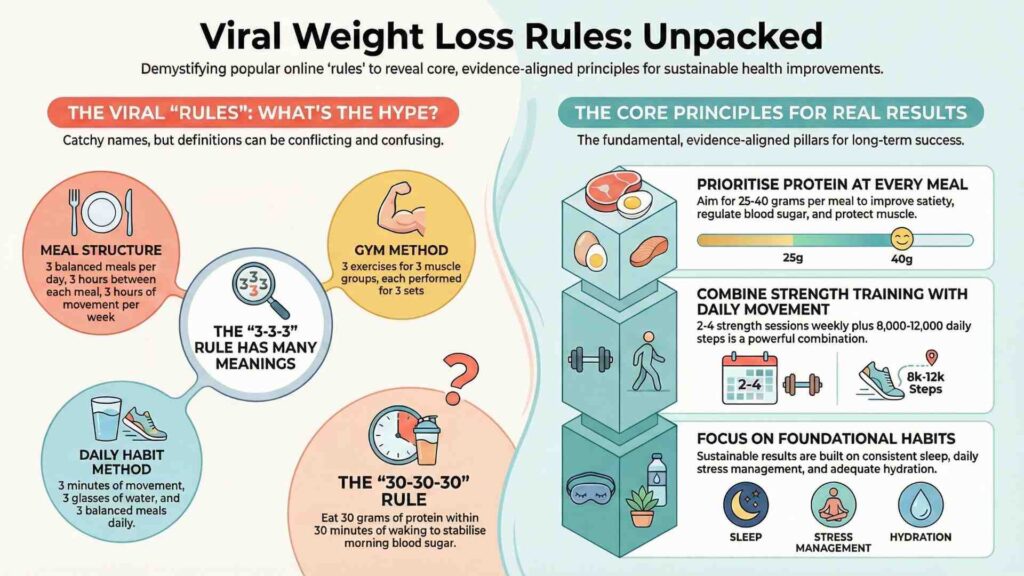
The 3-3-3 rule for weight loss is a structured habit-based framework requiring individuals to consume three balanced meals daily, finish three bottles of water (approximately 1.5–2 liters) by 3:00 PM, and complete three hours of physical activity per week. This method simplifies metabolic health through consistency rather than extreme caloric restriction.
What is the 3-3-3 weight loss method in the Indian context?
Table of Contents
- 1 What is the 3-3-3 weight loss method in the Indian context?
- 2 How to follow 3-3-3 rule in India for maximum results?
- 3 Is 3-3-3 rule effective for diabetes weight loss?
- 4 3-3-3 rule for PCOS weight loss: A hormonal perspective?
- 5 Why is 3-3-3 rule for belly fat more effective than cardio alone?
- 6 3-3-3 diet plan for weight loss: Indian meal examples?
- 7 Importance of 3-3-3 rule in nutrition for thyroid health?
- 8 Weight loss tips for Indian lifestyle: Managing the NRI context?
- 9 3-3-3 rule vs intermittent fasting: Which is better?
- 10 How the 3-3-3 rule helps hypertension (BP) and heart health?
- 11 3-3-3 weight loss results: Real-life Indian success stories?
- 12 FAQs on the 3-3-3 weight loss method
- 13 Practical Conclusion: Your Roadmap to Success
- 14 Contact Us
- 15 Disclaimer
The 3-3-3 weight loss method is categorized by clinical nutritionists as a behavioral intervention rather than a restrictive diet. In a landscape where the Indian Council of Medical Research (ICMR) reports that unhealthy diets contribute to 56% of the national disease burden, the simplicity of this rule serves as a critical entry point for lifestyle modification. The rule is constructed on three pillars: three balanced meals per day, three bottles of water consumed by 3:00 PM, and three cumulative hours of exercise per week. This structure guards against blood-sugar crashes, unmanaged hunger, and the sedentary patterns typical of the 21st-century professional.
Unlike the “3×3 rule before noon”—a viral variation focusing on 3,000 steps, 30g of protein, and a third of water before 12:00 PM—the standard 3-3-3 method provides a full-day metabolic rhythm. For the Indian population, which exhibits a unique phenotype marked by high abdominal fat and insulin resistance even at normal weight levels, this rhythmic approach is particularly effective. It moves away from the “gorging” or “nibbling” extremes, aligning instead with the body’s natural circadian fluctuations in hunger and satiety hormones.

The evolution of habit-based weight management
The shift toward habit-based models like the 3-3-3 rule is a response to the documented failure of high-intensity, short-term diets. Research from the University of Colorado indicates that while intermittent fasting can be effective, consistent daily caloric management often produces more sustainable results for those with metabolic resistance. The 3-3-3 method acts as a “base-camp” for metabolic health, providing the structural stability required before more advanced interventions, such as GLP-1 therapies or hormonal balancing, are introduced.
Historically, the concept of three square meals is a relatively modern construct, but it has become a standard for stabilizing blood glucose levels in modern societies. In India, where traditional meal timings have been disrupted by long commutes and late-night digital engagement, re-establishing this three-meal cadence is vital for regulating hormones like leptin and ghrelin, the primary drivers governing appetite and fat storage.
Why the 3:00 PM hydration target matters
The specificity of the hydration pillar—finishing 1.5 to 2 liters of water by mid-afternoon—is grounded in renal and metabolic synchronization. Water accounts for approximately 60% of an adult’s body weight, and subclinical dehydration is frequently misidentified by the brain as hunger, leading to unnecessary snacking in the late afternoon. By front-loading water intake, individuals can naturally manage these false hunger cues.
Furthermore, adequate hydration is essential for lipolysis, the metabolic process of breaking down lipids. National Academy of Medicine guidelines suggest that healthy people of all genders need approximately 9 and 13 cups of fluid daily. The 3-3-3 rule ensures that the majority of this requirement is met during the hours of peak metabolic activity, supporting digestive function and waste removal without disrupting nocturnal sleep cycles.
How to follow 3-3-3 rule in India for maximum results?
Following the 3-3-3 rule in India requires navigating a food environment where refined carbohydrates and ultra-processed snacks are omnipresent. Success begins with the “Balanced Plate” model. According to the ICMR-NIN 2024 guidelines, a healthy Indian plate should consist of 400g of vegetables, 100g of fruit, and a significant portion of pulses or lean proteins, with cereals and millets limited to approximately 50% of the total intake. This balance is crucial for addressing the “Asian Indian Phenotype,” where individuals may develop metabolic disorders at a lower BMI than Western counterparts.
Implementation involves planning three nutrient-dense meals that avoid the traditional “carb-heavy” trap. For example, replacing a large portion of white rice with protein-rich lentils or fiber-dense millets like ragi and jowar can significantly improve the glycemic response. The goal is to move from 62% carbohydrate-based energy toward a more balanced profile that includes at least 15-20% protein.

Crafting the three balanced meals
The 3-3-3 diet plan for weight loss emphasizes whole, unprocessed foods. Breakfast should be consumed within 90 minutes of waking to stabilize cortisol levels, particularly for people managing PCOS. A protein-forward breakfast, such as moong dal chilla or boiled egg whites, provides sustained energy and reduces the likelihood of a mid-morning sugar crash.
Lunch should serve as the day’s primary fuel source, combining complex carbohydrates like brown rice or bajra roti with a protein source (dal/paneer/chicken) and a large bowl of fiber-rich sabzi. Dinner, ideally consumed by 8:00 PM, should be the lightest of the three meals to allow the digestive system to rest before sleep. This rhythm prevents late-night insulin spikes, which are directly correlated with the accumulation of visceral fat.
| Meal Type | Veg Strategy | Non-Veg Strategy | Key Metabolic Benefit |
| Breakfast | Moong Dal Chilla + Mint Chutney | Boiled Egg Whites + Whole Wheat Toast | Jumpstarts thermogenesis |
| Lunch | Bajra Roti + Mixed Veg + Dal + Curd | Brown Rice + Fish Curry + Salad | Sustained glucose release |
| Dinner | Vegetable Khichdi + Buttermilk | Grilled Chicken + Stir-fry Broccoli | Reduced nocturnal insulin load |
The role of protein in habit formation
Protein is the most satiating macronutrient, and its inclusion in all three meals is non-negotiable for 3-3-3 rule success. Research shows that replacing just 5% of carbohydrate calories with plant or dairy proteins significantly lowers the risk of prediabetes and abdominal weight gain. For those following vegetarian diets, this means prioritizing paneer, sprouts, and Greek yogurt, while non-vegetarians should focus on lean sources like chicken breast and fatty fish rich in omega-3s.
Protein’s thermic effect—the energy required for digestion—is also higher than that of fats or carbohydrates. This means that by simply altering the macro-composition of the three meals without drastically cutting portions, individuals can increase their daily energy expenditure. This is particularly important for the “Metabolically Obe$e Non-Obe$e (MONO)” subtype—a clinical term describing people with a higher level of internal visceral fat despite having a body weight that appears within a lean or normal range, potentially impacting metabolic health.
Is 3-3-3 rule effective for diabetes weight loss?
Managing type 2 diabetes in the Indian context requires a precise approach to meal timing and glycemic load. The 3-3-3 rule is effective for diabetes because it eliminates the “grazing” pattern that keeps insulin levels chronically elevated. The ICMR-INDIAB study revealed that diabetes prevalence in urban India is reaching 25% in major cities. A structured three-meal pattern helps in maintaining HbA1c levels within the target range by providing predictable glucose inputs.
For individuals with diabetes, the “three hours of movement” pillar should be strategically timed. Engaging in light activity, such as a 10-minute walk after each of the three meals, can significantly reduce postprandial blood sugar spikes. This practice, known as “glucose clearing,” utilizes the large muscles of the legs to soak up glucose from the bloodstream without requiring high doses of insulin.
Glycemic stability and insulin sensitivity
Wait times between meals are as important as the meals themselves. Spacing meals by at least 3-4 hours allows the body to transition into a “post-absorptive” state, where it can begin to access stored glycogen for energy. In contrast, frequent snacking—an increasing habit for urban Indians—prevents this metabolic shift, keeping the body in a fat-storage mode.
Clinical data suggests that fewer, larger meals result in lower average daily blood glucose than frequent small feedings. This is a critical insight for diabetes management: the 3-3-3 rule’s three-meal structure may be superior to traditional “six small meals” advice for improving insulin sensitivity over the long term.
Hydration and diabetic complications
In diabetes, adequate hydration is a protective factor for kidney health. The 3-3-3 rule’s hydration target supports renal filtration, helping to clear excess glucose through urine. Furthermore, research indicates that water intake can improve the viscosity of the blood, which is often a concern in people with high blood sugar and hypertension.
Individuals with diabetes must be cautious with the type of hydration. While the rule focuses on water, traditional Indian beverages like unsweetened buttermilk (chaas) or lemon water (nimbu paani) without sugar can be incorporated to meet the volume targets while providing electrolytes.

3-3-3 rule for PCOS weight loss: A hormonal perspective?
Polycystic Ovary Syndrome (PCOS) affects one in five Indian people in the reproductive age group and is a leading cause of metabolic dysfunction. The 3-3-3 rule for PCOS weight loss is specifically designed to tackle the underlying insulin resistance and chronic low-grade inflammation that drive the condition. Lifestyle modifications, including diet and exercise, remain the first-line treatment recommended by global clinical guidelines.
For those managing PCOS, the “three balanced meals” must be high in fiber and anti-inflammatory nutrients. Ingredients like turmeric, ginger, and leafy greens should be staples. These foods help in lowering androgen levels and restoring hormonal regularity.
Circadian alignment and Early TRE
One of the most profound insights for PCOS is the power of circadian alignment. Research has found that “Early Time-Restricted Eating” (e-TRE)—where all three meals are consumed within an early window, such as 8:00 AM to 6:00 PM—led to significantly greater reductions in waist circumference and fasting insulin than mid-day eating. By following the 3-3-3 rule within an early window, people can optimize their metabolism in harmony with their body’s biological clock.
This timing is crucial because insulin sensitivity is naturally higher in the morning. Large meals consumed late at night are more likely to be stored as fat and can worsen hormonal imbalances.
Stress management and cortisol control
The movement pillar for PCOS requires a nuanced approach. While the 3-3-3 rule calls for three hours of activity, high-intensity exercise can sometimes increase cortisol, which in turn spikes insulin and aggravates symptoms. Experts recommend “slow intentional movement,” such as yoga, Pilates, or strength training with moderate weights. These activities improve insulin sensitivity without the inflammatory stress of extreme cardio.
| PCOS Action | Physiological Purpose | Recommended Indian Habit |
| Fiber-first Eating | Blunts glucose spikes | Eat salad/sabzi before roti |
| Spearmint Tea | Lowers androgens | Drink twice daily between meals |
| Post-meal Stroll | Controls insulin spikes | 10-minute walk after every meal |
| Early Dinner | Reduces night cortisol | Finish dinner by 7:30 PM |

Why is 3-3-3 rule for belly fat more effective than cardio alone?
Belly fat, or visceral fat, is considered a significant health factor as it wraps around internal organs and secretes pro-inflammatory cytokines. In India, abdominal fat accumulation is a significant health challenge, with the ICMR-INDIAB study reporting that 39.5% of the population is affected. The 3-3-3 rule for belly fat is effective because it targets the metabolic drivers of visceral storage: insulin, cortisol, and hydration.
Visceral fat is actually more metabolically active than subcutaneous fat, meaning it is often more responsive to consistent habit change than localized exercise. The key is the combination of the three pillars working in synergy.
The science of visceral fat reduction
Physical activity is a highly effective way to manage visceral fat. The 3-3-3 rule’s requirement of 180 minutes of movement per week falls within the “sweet spot” for fat oxidation. When individuals engage in regular movement, the body first draws energy from these accessible fat stores to fuel the activity.
Furthermore, the hydration pillar of the 3-3-3 rule helps in reducing fluid retention and bloating, which can sometimes be mistaken for abdominal weight. Drinking 1.5-2 liters of water daily ensures that the lymphatic system can effectively remove metabolic byproducts.
Why localized exercises won’t work alone
A common misconception is that abdominal exercises can “spot-reduce” fat. Scientific evidence confirms that our bodies do not function this way; crunches may tone the muscles, but they do not burn the fat covering them. The 3-3-3 rule focuses on overall metabolic rate through three balanced meals and consistent weekly movement, which naturally leads to a reduction in total body fat, including the abdominal region.
For maximum results, the “three hours of movement” should include at least two sessions of strength training. Muscle tissue is more metabolically active than fat tissue, meaning the more muscle you develop, the more calories your body burns even while resting.

3-3-3 diet plan for weight loss: Indian meal examples?
Creating an Indian diet plan for 3-3-3 rule success requires understanding regional kitchen diversity. Whether you are in a North Indian household using wheat or a South Indian home prioritizing rice, the principles of the 3-3-3 method remain the same: portion control, high fiber, and lean protein.
The ICMR-INDIAB study warns that Indian diets are often protein-deficient, with the average adult getting only 12% of calories from protein. To correct this, every meal in your 3-3-3 plan must contain a defined protein element.
North Indian 3-3-3 modifications
In North India, the reliance on parathas and white bread (maida) is a contributor to weight gain. For the 3-3-3 rule, transition to rotis made from “Ancient Grains” like bajra, jowar, or multi-grain blends. Instead of frying vegetables, use techniques like sautéing with minimal oil.
- Breakfast: Vegetable Poha or Besan Cheela (gram flour pancake).
- Lunch: Two Jowar Rotis + seasonal sabzi (lauki/tinda) + a bowl of dal + cucumber raita.
- Dinner: Paneer Tikka (grilled) + clear vegetable soup.
South Indian 3-3-3 modifications
South Indian cuisine is rich in fermented foods like idli and dosa, which are excellent for gut health but can be high in simple carbohydrates if made purely with white rice. To follow the 3-3-3 rule, use a 2:1 ratio of lentils to rice in your batters or swap white rice for red rice or foxtail millet.
- Breakfast: Three steamed Idlis with vegetable sambar (protein-heavy) and a small portion of coconut chutney.
- Lunch: A small bowl of brown rice + rasam + sautéed beans + grilled fish or curd.
- Dinner: Quinoa Upma with lots of vegetables or a bowl of vegetable millet khichdi.
| Regional Style | Common Pitfall | 3-3-3 Correction |
| North Indian | Excessive oil/ghee in parathas | Use non-stick tawa; pair with curd |
| South Indian | High rice-to-dal ratio in idli | Increase dal; use millets/red rice |
| Western Indian | Sugar in dals/vegetables | Eliminate added sugar; use spices for flavor |
Importance of 3-3-3 rule in nutrition for thyroid health?
Thyroid health is intricately linked to metabolic speed. In people with hypothyroidism, the basal metabolic rate (BMR) can drop, making weight management more challenging. The 3-3-3 rule provides the structure needed to manage these “hormonal headwinds.” Consistent meal timing is especially important because TSH levels are sensitive to the fasting vs. postprandial state.
Research indicates that TSH levels are significantly lower after a meal. By following a strict three-meal schedule, people with thyroid conditions can ensure their medication is taken at the same time every day—ideally 60 minutes before breakfast—to maximize absorption.
Micronutrients and the “Balanced” Pillar
For thyroid health, the “balanced” part of the 3-3-3 rule must focus on Iodine, Selenium, and Tyrosine. Selenium, found in eggs and legumes, is the catalyst that converts the inactive T4 hormone into the active T3 hormone that your cells can use.
Moreover, thyroid patients often face chronic constipation due to slowed digestion. The high-fiber requirement of the 3-3-3 rule is a natural remedy for this, while also helping to manage cholesterol levels frequently seen in these cases.
Avoiding the “Goitrogen” trap
While the rule encourages vegetable intake, people with thyroid conditions should be aware of goitrogens—substances that can interfere with iodine uptake. Raw cruciferous vegetables like broccoli, cauliflower, and kale should be cooked, as heat neutralizes the goitrogenic compounds. Including anti-inflammatory spices like turmeric in all three meals can further support the immune system.

Weight loss tips for Indian lifestyle: Managing the NRI context?
For Non-Resident Indians (NRIs) living in the US, UK, or Canada, the 3-3-3 rule for weight loss is a powerful tool against the “obesogenic” environment of Western countries. NRIs often face a dual challenge: the loss of traditional, freshly cooked meals and the easy accessibility of calorie-dense food.
Implementing the 3-3-3 rule as an NRI involves mastering the art of the “Indian Grocery Swap” and adapting to different lifestyle pressures.
Grocery swaps in the NRI context
Many NRIs find it difficult to procure freshly milled chakki-ka-atta. However, local alternatives can fit perfectly into the 3-3-3 structure.
- Quinoa instead of Rice: Quinoa has a similar texture but provides significantly more protein and fiber.
- Greek Yogurt instead of Dahi: Greek yogurt is strained, meaning it has twice the protein of regular dahi, which is excellent for reaching the 3-3-3 protein goals.
- Kale/Spinach for Saag: Readily available in Western supermarkets, these can be prepared with traditional Indian tempering to provide necessary fiber.
Movement in a colder climate
For NRIs in colder regions, the “three hours of movement” might not always be possible outdoors. This is where “active indoor living” becomes essential. Utilizing the stairs in your home—climbing 100 stairs daily—is a highly effective form of strength-cardio fusion.
Additionally, traditional Indian household chores are surprisingly effective at burning calories. In the absence of domestic help, tasks like mopping and sweeping can contribute significantly to your weekly movement goals.
| Task | MET Value | Calories per 30 mins (75kg person) |
| Mopping (Standing) | 3.5 | 138 kcal |
| Sweeping (Moderate) | 3.8 | 150 kcal |
| Making Bed/Linens | 3.3 | 130 kcal |
| Hand-washing Clothes | 4.0 | 158 kcal |
The formula for energy expenditure: Calories/min=(MET×Weight×3.5)/200.
3-3-3 rule vs intermittent fasting: Which is better?
A common question for those seeking sustainable results is how the 3-3-3 rule for weight loss compares to Intermittent Fasting (IF). While IF focuses on the timing of food intake, the 3-3-3 rule focuses on the structure of intake.
Recent research suggests that reducing total caloric intake and meal frequency (fewer, but balanced meals) may be more effective for weight management than simply restricting meals to a narrow window. This is because many individuals may consume excessively during their IF “feeding window,” negating the metabolic benefits of the fast.
The sustainability factor
The 3-3-3 rule is often more sustainable for those with active social lives or family responsibilities. It allows for a standard breakfast, lunch, and dinner, which aligns with traditional Indian family routines. Intermittent fasting can sometimes lead to social isolation or excessive consumption behaviors in individuals with a history of disordered eating.
Moreover, the 3-3-3 rule includes hydration and movement targets, which are often missing from basic IF protocols. By addressing all three levers of metabolic health—nutrition, hydration, and activity—the 3-3-3 rule provides a more holistic framework.
How the 3-3-3 rule helps hypertension (BP) and heart health?
Hypertension affects 35.5% of the Indian population. The 3-3-3 rule for weight loss is remarkably effective for BP management because it integrates the core principles of the DASH diet: low sodium, high potassium, and consistent hydration.
Adequate hydration—the second 3 of the rule—helps in maintaining blood volume and improving the flexibility of blood vessels. When the body is dehydrated, it produces a hormone called vasopressin, which causes blood vessels to constrict and blood pressure to rise.
The impact of movement on BP
Regular exercise is a cornerstone of hypertension management. Completing three hours of movement per week can reduce systolic blood pressure significantly. In a study of sedentary patients with metabolic syndrome, 40-50 minutes of walking three times a week for 12 weeks dropped systolic BP from 141 mmHg to 129 mmHg.
This improvement is equivalent to the effect of some blood pressure medications. By following the 3-3-3 movement target, individuals can naturally lower their cardiovascular risk.
Sodium control in the 3-3-3 plan
The “balanced meals” in a 3-3-3 plan should prioritize home-cooked food. This is vital because a large percentage of salt intake comes from processed and restaurant foods. By preparing three meals at home, individuals can control salt use, keeping intake below the recommended 5g of salt per day.
3-3-3 weight loss results: Real-life Indian success stories?
The effectiveness of the 3-3-3 rule is best illustrated by the results seen in the Indian community. In 2025, several high-profile weight loss journeys have highlighted the power of sustainable lifestyle changes.
Samvit Mishra: 19kg in 3 months
Samvit Mishra, a professional with a full-time job and no gym membership, lost 19kg in less than three months by adopting the principles of the 3-3-3 rule. He focused on simple, natural foods for his three meals—poha and fruits for breakfast, boiled vegetables for lunch, and early, light dinners. For his movement pillar, he climbed 100 stairs daily and cycled for 30 minutes three times a week.
Pranjal Pandey: From 150kg to 68kg
Nutritionist Pranjal Pandey achieved a significant transformation by shifting to a complete lifestyle change. Her journey emphasized high water intake, prioritizing protein in every meal, and ensuring at least 10 minutes of walking after every meal. Her story demonstrates that determination and a structured habit rule are more important than expensive memberships.
| Success Story | Starting Weight | Ending Weight | Key 3-3-3 Tactic |
| Samvit Mishra | 98 kg | 79 kg | Stair climbing + home-cooked meals |
| Pranjal Pandey | 150 kg | 68 kg | Post-meal walking + high protein |
FAQs on the 3-3-3 weight loss method
Is the 3-3-3 rule backed by scientific research?
While the specific “3-3-3” formula hasn’t been studied in a single randomized trial, its individual components—three balanced meals, hydration, and 150-180 minutes of exercise—are all strongly supported by research from leading health organizations.
What counts as a “bottle” of water?
A standard bottle typically ranges from 500ml to 700ml. The goal is to consume approximately 1.5 to 2 liters of water by 3:00 PM to align with your metabolic peak and ensure proper hydration before the evening.
Can I follow the 3-3-3 rule if I don’t have time for the gym?
Absolutely. The 3-3-3 rule is designed for non-gym audiences. Walking, climbing stairs, cycling, or even vigorous household chores like mopping count toward your three-hour weekly movement goal.
Is it safe for someone with PCOS or Thyroid issues to follow this?
Yes, but with modifications. People with thyroid issues should ensure they don’t over-consume raw goitrogenic vegetables, and those with PCOS should focus on low-GI carbohydrates and “slow intentional movement” rather than high-intensity cardio.
What if I miss a meal or a workout?
Consistency is more important than perfection. If you miss a meal, don’t double up at the next one. Simply resume the pattern. The 3-3-3 rule is a long-term habit framework, not a temporary restriction.
Practical Conclusion: Your Roadmap to Success
The 3-3-3 rule for weight loss is not a temporary fix; it is a blueprint for a healthier life in a modern Indian context. By mastering the three pillars—eating three balanced meals, hydrating by 3:00 PM, and committing to 180 minutes of movement weekly—you address the metabolic root causes of weight gain. For the busy professional, the NRI, or the homemaker, this framework provides the clarity needed to succeed where other diets have failed.
The data is clear: India is facing a metabolic health crisis, but the power to reverse these trends lies in our daily habits. Start small. Prep your meals, carry your water bottle, and find joy in movement. Whether it is a brisk walk in a park in Bengaluru or climbing stairs in an apartment in New Jersey, the 3-3-3 rule is your companion on the journey to a fitter, more energetic you.
Ready to personalize your 3-3-3 journey? Get a customized plan from our senior experts at DietDekho.
Contact Us
We understand how overwhelming nutrition and weight loss information can feel. With so many opinions and confusing advice online, it’s easy to feel stuck or unsure about what to do next.
At Diet Dekho, you never have to figure it out alone. You can contact us anytime with any questions or concerns. Our expert dietitians are available 24/7 to guide, support, and help you stay on track. Whether your goal is weight loss or building healthier habits, we’re here to make the journey simpler and more sustainable for you.
Disclaimer
This blog is intended to help readers make healthier food choices. Your health should always be the top priority. Before starting any restrictive or special diet, especially if you have a medical condition or health concern, please consult a doctor or a qualified dietitian. Each body responds differently to food and lifestyle changes. Always choose what is safe and suitable for you.

Abhinav is the Founder of Diet Dekho, helping people manage weight and lifestyle health through simple, practical nutrition and personalized diet plans.