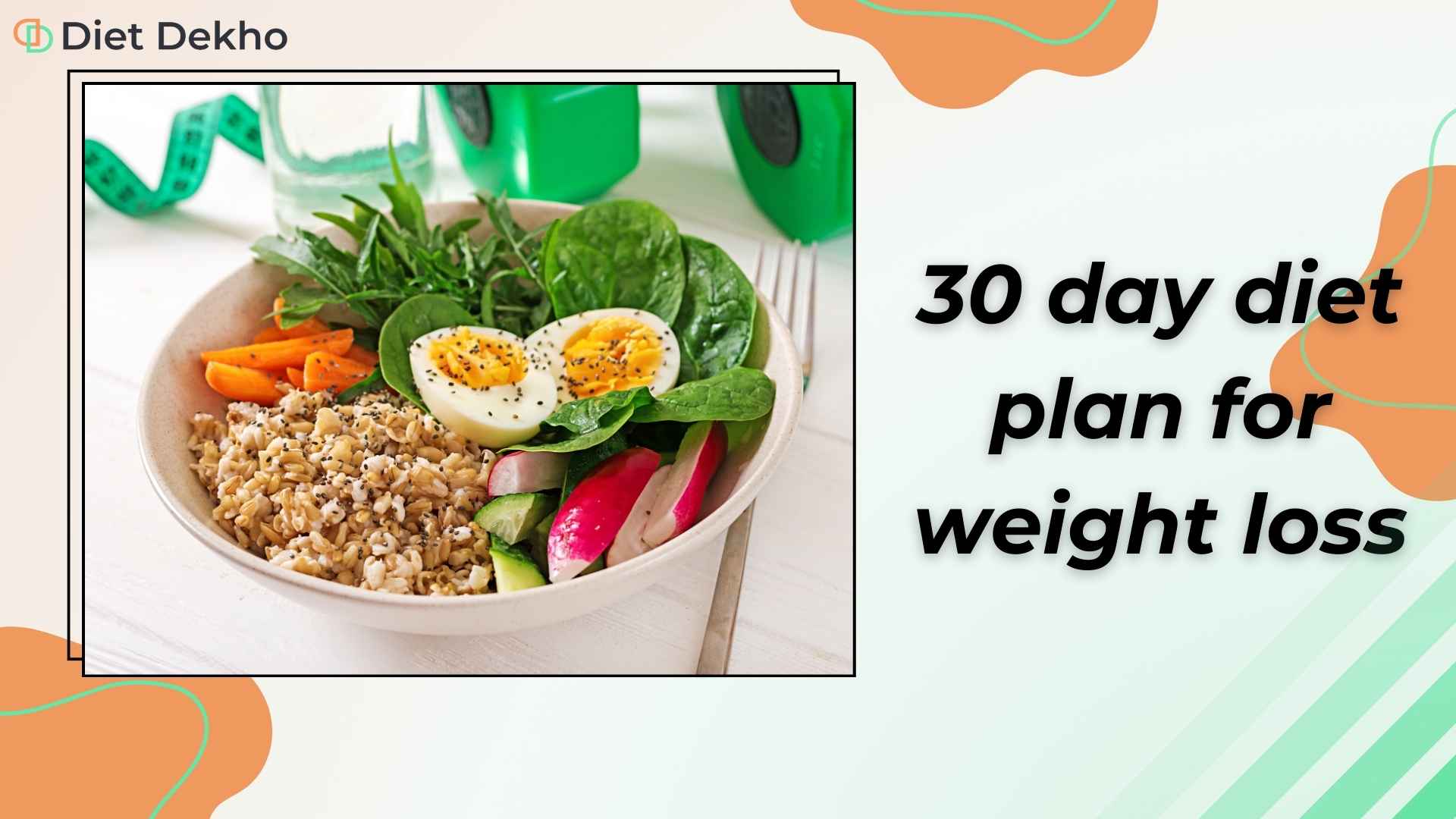
Are you sick of the scales not moving? It can be challenging to find time for yourself, but the first step towards a healthier you is committing to a structured 30 day diet plan aimed at weight loss. We can make this journey easier by collaborating. A successful 30 day diet plan for weight loss involves consuming 400 grams of vegetables, along with complex carbohydrates and lean proteins such as dal or paneer, each day.
By creating a 500-calorie daily deficit through portion control and traditional Indian meal swaps, you can sustainably lose 0.5–1 kg per week while effectively managing metabolic health, PCOS, and blood sugar levels.
Why Your 30-Day Weight Loss Diet Plan Starts with Your Mindset
Table of Contents
- 1 Why Your 30-Day Weight Loss Diet Plan Starts with Your Mindset
- 2 How Do I Overcome the Frustration of Slow Progress?
- 3 Why Do Extreme Restrictions Fail in a 1-Month Weight Loss Plan?
- 4 Why Does My Weight Fluctuate So Much?
- 5 What is the best way for busy people to eat Indian food for 30 days?
- 6 How can I set up my daily routine so that I always get the same results?
- 7 What Are the Common Pitfalls of a 30-Day Weight Loss Challenge?
- 8 How Do I Stay Motivated When Progress Feels Slow?
- 9 Talk to a Diet Dekho Expert to Take the Next Step
Before we talk about rotis and dals, we need to talk about what’s happening in your head. Most people fail their 30 day diet plan for weight loss not because they lack a chart but because they lack the right mindset. In India, food is more than fuel; it’s love, culture, and social connection.
When you start a 1-month diet plan for weight loss, don’t think of it as a month of “punishment”. Think of it as a reset. Research indicates that possessing a “growth mindset”—the ability to view failures as opportunities for learning—is a significant predictor of success. If you have a busy job or a family to care for, your goal isn’t perfection; it’s progress.
I often tell my clients at Diet Dekho that “discipline beats willpower every time.” Willpower is like a battery that drains by the end of a long workday. Discipline is having a plan so you don’t have to “decide” what’s for dinner when you’re exhausted.
How Do I Overcome the Frustration of Slow Progress?
It is incredibly frustrating to eat “right” for four days only to see the scale stay exactly the same. What this means for your daily routine is that you must look beyond the number on the scale.
Weight loss isn’t linear. You might lose two kilograms in week one and nothing in week two. Often, the difference is caused by hormone changes or holding on to water. Women with PCOS or who are about to get their period may retain water, making it seem like they’re losing fat.
Instead of getting discouraged, focus on “Non-Scale Victories” (NSVs). Are your clothes fitting better? Do you have more energy for your kids? Is your digestion improving? These are the true indicators that your one-month weight loss diet plan is effective.
Why Do Extreme Restrictions Fail in a 1-Month Weight Loss Plan?
We have all seen those “lose 10 kg in 10 days” ads. The short answer is: they don’t work for the long term. When you follow an extreme 30 day weight loss challenge that cuts out all carbs or restricts you to 800 calories, your metabolism slows down to protect itself.
In the Indian context, completely cutting out rice or roti often backfires, leading to cycles of restriction followed by overeating. You might resist the paratha for three days, but on the fourth day, you end up eating four of them because you’re starving.
The WHO recommends a balanced diet that includes whole grains and limits free sugars to less than 5% of total energy intake. Sustainable weight loss is about 0.5 to 1 kg per week, which adds up to a safe 2–4 kg per month.

Why Does My Weight Fluctuate So Much?
If you step on the scale after a heavy Sunday dinner and see a 2 kg jump, don’t panic. You didn’t gain 2 kg of fat overnight. Fat gain requires a massive caloric surplus. What you’re seeing is likely “water weight”.
The science of satiety and fluctuations is simple:
- Glycogen Storage: Your body stores carbohydrates as glycogen in your muscles and liver.
- The Water Link: Every 1 gram of glycogen is stored with roughly 3 to 4 grams of water.
- The Result: When you eat a carb-heavy Indian meal (like pulao or biryani), your body refills its glycogen stores and pulls in water. When you start your 30 day diet plan for weight loss, the initial “big drop” is usually this water leaving your system as glycogen is used.
What is the best way for busy people to eat Indian food for 30 days?
Let’s simplify this. You don’t need to invest in costly “superfoods” to achieve weight loss. Your Indian kitchen is already an excellent resource for nutritious meals that can help you shed pounds. A report from the ICMR-NIN in 2024 says that unhealthy diets are directly linked to 56.4% of all diseases in India.
This is how to set up your plate for a successful Indian diet plan to lose weight:
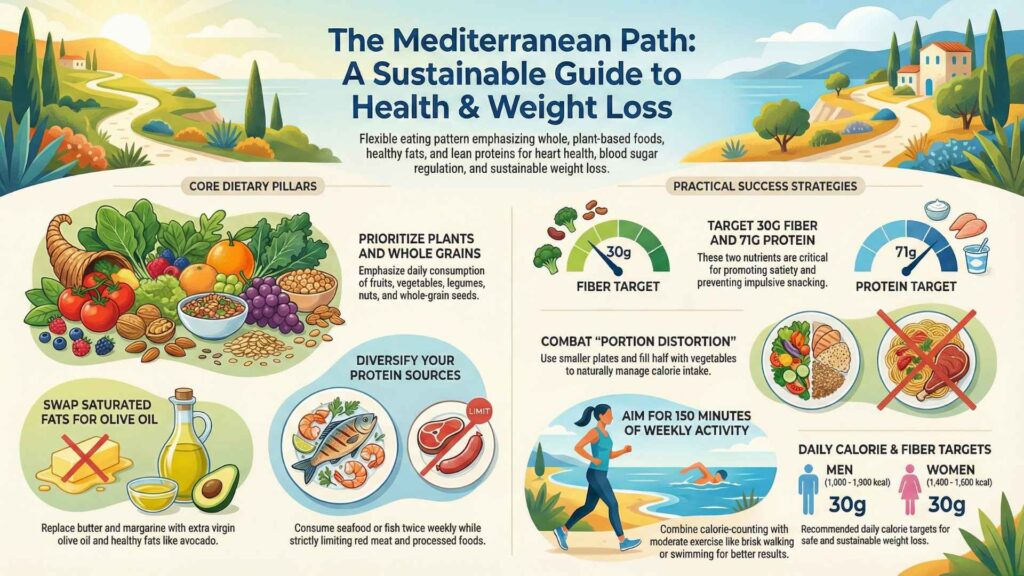
- The Half-Plate Rule: Fill 50% of your plate with vegetables (sabzi or salad). This ensures you get the recommended 400g of daily fibre and micronutrients.
- Protein in Every Meal: Whether it’s dal, sprouts, paneer, eggs, or lean chicken, protein-rich food keeps you full and protects your muscles.
- Smart Carb Swaps: Replace white rice with millets (ragi, jowar, bajra) or brown rice. Millets have a lower glycaemic index (GI), which means they don’t raise your blood sugar as much.
It’s more important to focus on the “glycaemic load” than just the “glycaemic index” for people with PCOS or diabetes. Pairing a carb (like rice) with a fibre (dal and salad) slows down sugar absorption.
How can I set up my daily routine so that I always get the same results?
know it’s hard to stay consistent when every day feels different. Let’s simplify this and put your routine into a clear, easy-to-follow column format so your day runs on autopilot.
When your meals and timing are predictable, results also become predictable.
Simple Daily Routine for Consistent Weight Loss
| Time | What to Do | What to Eat / Drink | Why This Helps |
|---|---|---|---|
| Early Morning | Start your digestion gently | Warm lemon water or jeera water | Helps reduce bloating and prepares your gut for the day |
| 8:30 AM | Eat a filling, home-style breakfast | Vegetable poha, oats upma, or moong dal chilla | Keeps you full longer and prevents mid-morning cravings |
| 1:30 PM | Balanced lunch using half-plate rule | 1–2 multigrain phulkas (no ghee) + big bowl seasonal sabzi + dal or curd | Controls portions without feeling deprived |
| 4:30 PM | Smart evening snack | Roasted makhana, roasted chana, or a small handful of walnuts | Prevents overeating at dinner and avoids sugar crashes |
| 7:30–8:00 PM | Light, early dinner | Vegetable khichdi, moong dal soup, or grilled paneer with stir-fried vegetables | Easier digestion and better sleep |
| Before Bed | Wind down | No food, only water if needed | Gives your body time to rest and recover |

What Are the Common Pitfalls of a 30-Day Weight Loss Challenge?
I see many people start a 30 day weight loss challenge with high energy, only to quit by day 10. Here is why:
- The “Detox” Myth: You don’t need “detox teas”. Your liver and kidneys detox your body 24/7. Focus on fibre and water instead.
- Drinking Your Calories: Sugary tea, “fresh” fruit juices without fibre, and sodas can add 300-500 hidden calories to your day.
- Skipping Meals: This often backfires. Skipping lunch leads to intense evening hunger, causing you to overeat at dinner.
- Sleep Deprivation: If you sleep less than 7 hours, your “hunger hormones” (ghrelin) go up, and your “fullness hormones” (leptin) go down. You will literally feel hungrier the next day.
How Do I Stay Motivated When Progress Feels Slow?
Slow progress is still progress. If you are losing 0.5 kg a week, you are doing it right. Rapid weight loss often means you are losing muscle, which actually makes it easier to gain the weight back later.
For our NRI readers or busy professionals: meal prep is your best friend. On Sundays, chop your veggies, boil your sprouts, and prepare your batters. When healthy food is ready to eat, you are much less likely to order takeout.
Don’t forget that you are worth the work. To lose weight, you need to take care of your stress, get some exercise, and eat mindfully. Harvard Health Publishing says that losing even 5% of your body weight can greatly lower your risk of type 2 diabetes and heart disease.
Talk to a Diet Dekho Expert to Take the Next Step
Your body is unique. A generic chart can’t take into account your specific thyroid levels, PCOD symptoms, or busy work schedule. It’s always best to talk to a professional to get a plan that is macro-balanced and fits your medical history and way of life.

FAQs
1. Can I include rice in a 30-day weight loss diet plan?
Yes, you can. However, portion control is key. Limit yourself to a small bowl (approx. 3/4 cup) and pair it with fibre-rich dal and a large portion of vegetables to lower the overall glycaemic load of the meal.
2. How much weight can I realistically lose in a month?
A healthy and long-lasting range is 2 to 4 kg (4 to 8 lbs). While some individuals experience a significant decrease in weight during the first week due to water retention, a weekly weight loss of 0.5 to 1 kg is the recommended goal for long-term fat loss.
3. Is “ghee” allowed in a weight loss diet?
Yes! Desi ghee has healthy fats and conjugated linoleic acid (CLA), which can help your metabolism. The secret is to not overdo it; only 1 to 2 teaspoons a day.
4. How do I lose weight if I have PCOS or thyroid problems?
If you have PCOS, eat foods that are high in protein and low in GI. Also, remember the “30-30-30 rule”: eat 30 grammes of protein in the 30 minutes after you wake up. You should take your thyroid medicine at least an hour before you eat if you have ones.
5. Should you eat Indian snacks like samosas once in a while?
An occasional treat won’t ruin your progress, but for a consistent 30 day diet plan for weight loss, it’s better to swap fried snacks for roasted alternatives like makhana or chana to avoid inflammatory trans fats.
Disclaimer: This blog post was written to help you make healthier food choices altogether. So, be aware and take care. The important thing to consider is your health before starting a restrictive diet. Always seek advice from a doctor or dietitian before starting if you have any concerns.

Dr. Ritika is a nutrition and lifestyle expert with 2+ years of experience, helping clients manage weight and health through practical, personalized diet plans.