
The journey from a body weight of 70kg to a target of 55kg represents more than a numeric shift on a scale; it is a profound biological transition involving a 21.4% reduction in total body mass. For many of my clients, this journey often begins with a moment of realization. Consider Hema, an IT professional who, at 44, found herself facing chronic knee issues and a lack of energy that she described as pathetic. Her struggle is not unique. Many busy professionals and homemakers find that weight creeps up at a rate of roughly half a kilogram per year between the ages of 18 and 55, often substituting muscle mass for fat mass. This report examines the metabolic, psychological, and nutritional pathways required to achieve a 70kg to 55kg weight loss while navigating modern sedentary lifestyles and complex medical conditions like PCOS, Diabetes, and Hypertension.
The Metabolic Blueprint of the 70kg to 55kg Weight Loss Journey
Table of Contents
- 1 The Metabolic Blueprint of the 70kg to 55kg Weight Loss Journey
- 2 Nutritional Foundations: The 1500 Calorie Indian Framework
- 3 Specialized Strategies for PCOD and PCOS Management
- 4 Addressing Hypothyroidism: Igniting the Slow Metabolism
- 5 Diabetes and Hypertension: The Clinical Duo
- 6 The NRI Challenge: Navigating Weight Loss Abroad
- 7 Practical Meal Prep: The Secret Weapon for Busy Professionals
- 8 A 7-Day Structured Weight Loss Diet Plan
- 9 Breaking the Plateau: What to Do When the Scale Stops Moving
- 10 Success Stories: Relatable Transformations
- 11 Conclusion: Your Path to a Healthier You
Understanding why we gain weight is the first step in learning how to lose it. Research from the Harvard T.H. Chan School of Public Health suggests that obesity is driven primarily by diet rather than a simple lack of exercise. Our bodies are evolutionarily programmed to store fat to survive famine, which creates a biological mismatch in our current environment of caloric abundance. When we attempt to lose weight, our bodies often fight back by slowing metabolism and increasing hunger signals.
For an individual starting at 70kg, a 1500 calorie diet plan provides the necessary energy to function while creating a deficit large enough to trigger fat oxidation. However, success is not solely about willpower. A landmark study led by researchers at Harvard University found that nearly one-third of people who follow a healthy diet may not lose weight due to their genetic makeup, yet they still experience massive improvements in heart health and insulin sensitivity. This means that even if the scale is slow to move, the internal biological shifts—like reducing liver fat and visceral adiposity—are working to protect your long-term health.
Calculated Weight Loss Trajectories and BMI Targets
In the Indian clinical context, BMI thresholds are lower than global standards due to a higher predisposition for abdominal obesity. The following table outlines the BMI transitions for a typical individual (height 155cm) moving from 70kg to 55kg.
| Weight (kg) | BMI (155cm Height) | Clinical Classification (Indian Standards) |
| 70 | 29.1 | Obesity Grade 1 |
| 65 | 27.1 | Obesity Grade 1 |
| 60 | 25.0 | Overweight |
| 55 | 22.9 | Normal Weight |
The goal of this weight loss diet plan is to move the individual from a state of metabolic risk into a “Normal Weight” category, which is defined in India as 18.5-22.9 kg/m2. Reducing weight by 5–15% is clinically shown to reverse Type 2 Diabetes, improve PCOS symptoms, and lower blood pressure.
Nutritional Foundations: The 1500 Calorie Indian Framework
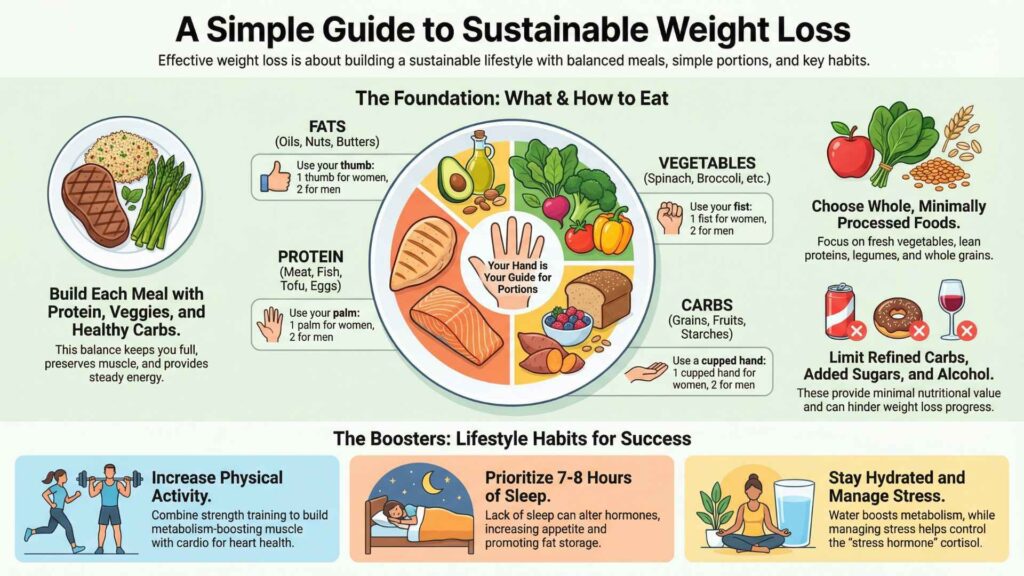
I know it is hard to find time for complicated cooking when you are balancing a career or a household. Let’s simplify this by looking at the traditional Indian plate through a modern lens. The core of a successful weight loss diet plan involves transitioning from refined carbohydrates to “lente” or slow-digesting carbohydrates. These are foods high in viscous fiber that blunt the post-meal blood glucose response, keeping you full for longer.
Macronutrient Distribution for Satiety and Muscle Preservation
When we reduce calories, the body often burns muscle for energy. To prevent this, we must prioritize protein. Protein is the most satiating macronutrient; it suppresses the hunger hormone ghrelin and preserves lean tissue. For someone weighing 70kg, aiming for 1.2 to 1.6 grams of protein per kilogram of body weight is a solid starting point.
| Macronutrient | Targeted Percentage | Indian Source Examples |
| Complex Carbohydrates | 45-55% | Millets (Ragi, Jowar), Brown Rice, Oats |
| Lean Protein | 15-25% | Paneer, Dal, Soya, Fish, Egg Whites |
| Healthy Fats | 20-30% | Walnuts, Almonds, Flaxseeds, Cold-pressed Oils |
| Fiber | 25-40g Daily | Green Leafy Veggies, Psyllium Husk, Whole Fruits |
What this means for your daily routine is that every meal must have a “protein anchor.” If you are eating a roti, pair it with a thick bowl of dal or a portion of paneer. If you are having breakfast, choose a moong dal chilla over a plain toast.

Specialized Strategies for PCOD and PCOS Management
For my clients struggling with PCOD/PCOS, weight loss can feel like an uphill battle due to insulin resistance. The beautiful truth is that traditional Indian foods naturally address these mechanisms. High-fiber vegetables like broccoli, mustard greens, and bottle gourd (lauki) help maintain blood sugar levels and decrease the workload of the pancreas.
The Role of Grains and Spices in Hormonal Balance
Choosing the right grains is essential for managing the hormonal imbalances associated with PCOS. Millets like Ragi have a Glycemic Index of only 35, compared to white rice which can be as high as 73. Incorporating spices like cinnamon and fenugreek (methi) is also vital. Methi seeds have been shown to reduce fasting glucose levels by over 13% and improve insulin sensitivity.
I often suggest a “Hormone-Balancing Kadha” for my PCOS clients. By simmering spearmint leaves, cinnamon, and ginger, you can create a drink that helps reduce androgen levels and fights inflammation. This isn’t just a home remedy; it’s about using the anti-inflammatory properties of our local spices to support your endocrine system.
Addressing Hypothyroidism: Igniting the Slow Metabolism
If you have been diagnosed with hypothyroidism, you know that your metabolism feels like it is stuck in first gear. This happens because the thyroid gland isn’t producing enough hormones to regulate energy use. A hypothyroidism diet plan for weight loss focuses on nutrients like selenium, zinc, and iodine to support thyroid hormone synthesis.
Foods to Include and Avoid for Thyroid Health
| Nutrient | Indian Food Sources | Clinical Benefit |
| Selenium | Brown Rice, Lentils, Sunflower Seeds | Converts T4 to active T3 hormone |
| Zinc | Chickpeas (Chana), Peanuts, Moong Dal | Supports overall immune and thyroid function |
| Magnesium | Spinach (Palak), Almonds, Pumpkin Seeds | Aids in hormone production and balance |
| Iron | Amaranth, Drumstick Leaves (Moringa) | Prevents the fatigue often seen in thyroid patients |
One common mistake I see is the consumption of raw goitrogenic vegetables. While vegetables like cabbage and cauliflower are healthy, they contain substances that can interfere with thyroid function if eaten raw. However, cooking, steaming, or sautéing these vegetables changes their properties, making them perfectly safe to include in your meal plan. Also, be wary of soy products as they can interfere with the absorption of thyroid medication.

Diabetes and Hypertension: The Clinical Duo
Managing diabetes and high blood pressure while trying to lose weight requires a strict focus on portion control and sodium reduction. In India, the average daily salt intake is roughly 8 grams—well above the National Institutes of Health (NIH) and WHO recommendation of 5 grams.
The Hidden Salt Crisis in Indian Diets
For hypertension patients, the real danger is “hidden salt” found in everyday items. Pickles, papads, and store-bought masalas are major culprits. Over time, this high salt intake makes blood vessels stiffer and increases resistance to blood flow.
What this means for your daily routine is that we must retrain our taste buds. This is called “taste conditioning.” By replacing salt with lemon juice, fresh herbs, or black pepper, you can lower your blood pressure within weeks.
For my friends living in the USA, Canada, or the UK, I know that your environment is working against you. Nearly 80% of grocery store products in the USA are heavily processed, which often leads to constant bloating and stubborn weight gain. You might find that you have developed food intolerances that you never had back home.
Smart Grocery Swaps for NRIs
Losing weight 70kg to 55kg as an NRI requires navigating local stores like Walmart or Costco with a strategy. You don’t have to replace roti with lettuce wraps; you just need to choose better ingredients.
| Indian Staple | NRI Supermarket Alternative |
| Refined Atta | Stone-milled Whole Wheat or Almond Flour |
| White Rice | Quinoa or Brown Basmati |
| Full-fat Yogurt | Low-fat Greek Yogurt (Unsweetened) |
| Refined Oil | Avocado Oil or Cold-pressed Olive Oil |
| Sugary Snacks | Dry-roasted Chickpeas or Seaweed Snacks |
The social pressure to eat out is another hurdle. When attending events, I suggest being the one who brings a healthy dish to share. This ensures there is always something that aligns with your goals.

Practical Meal Prep: The Secret Weapon for Busy Professionals
I hear this every day: “I don’t have time to cook healthy meals every night.” I’m going to let you in on the biggest secret used by successful weight loss maintainers: meal prep. If you prep your food, you remove the need for decision-making when you are tired and hungry.
The All-Purpose Onion-Tomato Masala
Most North Indian curries start with the same base. You can make a massive batch of this “master gravy” on Sunday and freeze it in ice cube trays.
- Sauté: Brown 4 cups of onions in a little oil, add ginger-garlic paste, and 2 cups of tomatoes.
- Freeze: Once cooled, pour into ice cube trays.
- Execute: On a busy Tuesday, just pop out three cubes, add your veggies or protein (like paneer or chicken), and dinner is ready in under 10 minutes.
Dals and idlis also freeze beautifully. You can pressure-cook a large batch of dal and store it in portions. Reheating idlis in a microwave with a damp paper towel makes them as soft as if they were freshly steamed.
A 7-Day Structured Weight Loss Diet Plan
This plan is designed to be home-based, practical, and effective for non-gym audiences. It focuses on high-protein, fiber-rich Indian meals that fit into a busy schedule.
Days 1-3: The Metabolic Kickstart
| Day | Breakfast | Lunch | Snack | Dinner |
| Day 1 | Moong Dal Chilla with Mint Chutney | 1 Roti + Lauki Sabzi + 1 Bowl Dal | 1 Orange + 5 Almonds | Clear Veg Soup + 100g Grilled Paneer |
| Day 2 | Veg Oats Upma + Green Tea | Brown Rice + Mixed Sprouts Curry | Buttermilk + Roasted Makhana | 1 Bajra Roti + Sautéed Spinach |
| Day 3 | 2 Idli with Sambhar | 1 Roti + Bhindi Sabzi + Masoor Dal | 1 Apple + 2 Walnuts | Quinoa Khichdi + Curd |
Days 4-7: Consolidating the Deficit
On Day 4, many people experience a slight dip in energy. This is your body adjusting to burning fat. Stick with it.
| Day | Breakfast | Lunch | Snack | Dinner |
| Day 4 | Besan Cheela with Veggies | 150g Grilled Chicken/Tofu + Salad | Green Tea + Roasted Chana | Moong Dal Soup + Stir-fried Beans |
| Day 5 | Veg Poha with Peanuts | 1 Millet Roti + Dal + Cucumber Raita | Coconut Water + Pumpkin Seeds | Paneer Bhurji + 1 Roti |
| Day 6 | Boiled Egg Whites (3) + Toast | Veg Pulao (Brown Rice) + Curd | Handful of Peanuts | Mixed Veg Soup + 1 Jowar Roti |
| Day 7 | Ragi Dosa + Coconut Chutney | Millet Khichdi + Kadhi + Salad | 1 Seasonal Fruit | Grilled Fish/Tofu + Sautéed Broccoli |

Breaking the Plateau: What to Do When the Scale Stops Moving
It is completely normal for weight loss to stall after the first 5-8kg. This is your body reaching a new equilibrium. As you lose weight, your metabolism naturally declines because a smaller body requires fewer calories to function. To push past this, we don’t necessarily need to eat less; we need to eat differently.
Strategies to Restart Fat Loss
- Increase Protein: Protein has the highest thermic effect. Increasing your protein intake can boost calorie burning by up to 30% during digestion.
- Boost NEAT: Non-Exercise Activity Thermogenesis (NEAT) is the energy we spend doing everything except formal exercise. If you are a sedentary professional, start using a standing desk or take a 15-minute walk after every meal. This can reduce sugar spikes by 30-50%.
- Manage Stress and Sleep: High stress leads to elevated cortisol, which tells your body to store fat in the belly. Aiming for 7-8 hours of sleep is non-negotiable for weight loss.
- Intermittent Fasting: Trying a 14-16 hour fasting window between dinner and breakfast can help stabilize insulin levels and encourage the body to burn stored fat.
Success Stories: Relatable Transformations
The 70kg to 55kg journey is a mental game as much as a physical one. Kate Daniel, who lost over 70kg, emphasizes that “slips became data, not failure”. When she had a bad day, she didn’t spiral into guilt; she simply asked what led to that choice and moved on.
Similarly, Harshna Mota, who lost 15kg, found that the key was making lasting lifestyle changes rather than looking for a quick fix. She started with small wins, like walking and then gradually moved to cycling and yoga as her energy levels improved.
Conclusion: Your Path to a Healthier You
Losing 15kg is a significant commitment, but it is one that will pay dividends for the rest of your life. By focusing on whole, home-cooked Indian meals, managing your underlying health conditions with specific nutritional choices, and prepping your meals to save time, you can reach your goal of 55kg. Remember, weight management doesn’t have a beginning or an end; it is a continuous journey of self-care.
If you are ready to take the first step toward a lighter, more energetic version of yourself, I am here to guide you. Every small promise you keep to yourself today builds the momentum for a total transformation tomorrow.
Ready to start your personalized journey? Fill out our assessment form here: https://dietdekho.com/form/

Frequently Asked Questions (FAQs)
1. How can I lose weight fast from 70kg to 55kg?
While everyone wants fast results, the most effective weight loss diet is one you can stick to long-term. Aim for a loss of 0.5kg to 1kg per week by maintaining a 1500 calorie diet plan and increasing your daily movement. Consistency is more important than speed.
2. Is a high protein diet for weight loss safe for people with medical conditions?
In most cases, yes. Protein helps preserve muscle mass and keeps you full. However, if you have chronic kidney disease or other severe medical conditions, you must consult your doctor before significantly increasing protein intake.
3. What is the best Indian diet plan for weight loss for busy professionals?
The best plan involves meal prepping. Using a frozen onion-tomato masala base allows you to cook healthy, low-calorie meals in minutes. Focus on quick options like moong dal chilla, egg whites, and one-pot millet khichdi.
4. Can I follow this 70kg to 55kg weight loss plan if I have PCOS?
Absolutely. In fact, losing just 5-10% of your body weight can significantly improve PCOS symptoms. Focus on low-GI millets, anti-inflammatory spices like turmeric and cinnamon, and high-fiber vegetables.
5. How do I manage hidden salt in a hypertension diet?
Avoid packaged snacks, pickles, and papads. Instead, flavor your food with lemon, ginger, and fresh herbs. Retraining your taste buds takes a few weeks, but it is one of the most effective ways to lower blood pressure.
Disclaimer: This blog post was written to help you make healthier food choices altogether. So, be aware and take care. The important thing to consider is your health before starting a restrictive diet. Always seek advice from a doctor/dietitian before starting if you have any concerns.
BOOK YOUR APPOINTMENT
Abhinav is the Founder of Diet Dekho, helping people manage weight and lifestyle health through simple, practical nutrition and personalized diet plans.