The transformation of the domestic environment from a place of rest to a primary site for health intervention represents a significant shift in modern metabolic management. For many, the journey begins with a moment of stark realization. Consider the experience of a primary school parent who, while walking a child to class, experienced a physical failure of clothing—a coat that literally “exploded” due to weight gain. This visceral moment of discomfort often serves as the catalyst for seeking weight loss at home, yet the path forward is frequently obscured by conflicting data and unrealistic expectations. In the United States, individuals reside in an obesity-promoting environment where low-cost, high-calorie foods are ubiquitous and daily energy expenditure has reached historic lows. Achieving lasting change in such an environment requires more than just willpower; it necessitates a sophisticated understanding of nutritional biochemistry, behavioral economics, and adaptive exercise physiology.
The Metabolic Architecture of Adiposity and Health
The traditional understanding of weight management has centered on the Body Mass Index (BMI), a metric calculated by dividing an individual’s weight in kilograms by the square of their height in meters. While BMI provides a rapid classification for higher-weight status (25–29.9) and obesity (≥ 30), clinical experts at the National Institutes of Health (NIH) caution that it is an imperfect tool. It fails to account for the distribution of adipose tissue or the presence of lean muscle mass, which are more accurate predictors of long-term health outcomes.
Cardiometabolic Health vs. The Scale
Recent research from the Harvard T.H. Chan School of Public Health has reframed the definition of success in weight loss at home. A 2025 study found that nearly one-third of individuals who adhered to healthy dietary interventions saw significant improvements in metabolic health without losing a substantial amount of weight. These “weight-resistant” individuals experienced a reduction in visceral fat—the adipose tissue that surrounds vital organs—and saw increases in HDL (“good”) cholesterol.
| Metabolic Indicator | Impact of Healthy Dieting Without Weight Loss | Clinical Implication |
| Visceral Fat | Significant Reduction | Lowered risk of type 2 diabetes and organ inflammation |
| HDL Cholesterol | Increase (+1.44% per kg potential) | Improved cardiovascular resilience |
| Leptin Levels | Decrease (-2.79% per kg potential) | Reduced biological drive for hunger |
| Insulin Sensitivity | Improvement (-2.46% drop in fasting insulin) | Better blood sugar regulation and energy stability |
This data suggests that the biological response to a home workout plan for beginners and improved nutrition is deeply individual. Researchers identified 12 specific DNA methylation sites that predict long-term weight loss, indicating that some people are biologically wired to respond differently to the same caloric deficit. What this really means is that a lack of movement on the scale does not equate to a failure of the intervention; internal metabolic shifts are often the more critical victory.
The Role of Visceral Fat in Chronic Disease
Visceral fat is not merely stored energy; it is an active endocrine organ that secretes inflammatory cytokines. These chemicals contribute to insulin resistance and atherosclerosis. Effective weight loss at home focuses on reducing this “hidden” fat through a combination of dietary adjustments and physical activity. Even a modest weight reduction of 5% can yield profound benefits, significantly lowering blood pressure, cholesterol, and blood sugar levels. For an individual weighing 200 pounds, a loss of just 10 pounds can move them out of a high-risk category for chronic diseases.
Nutritional Engineering and Satiety Mechanics
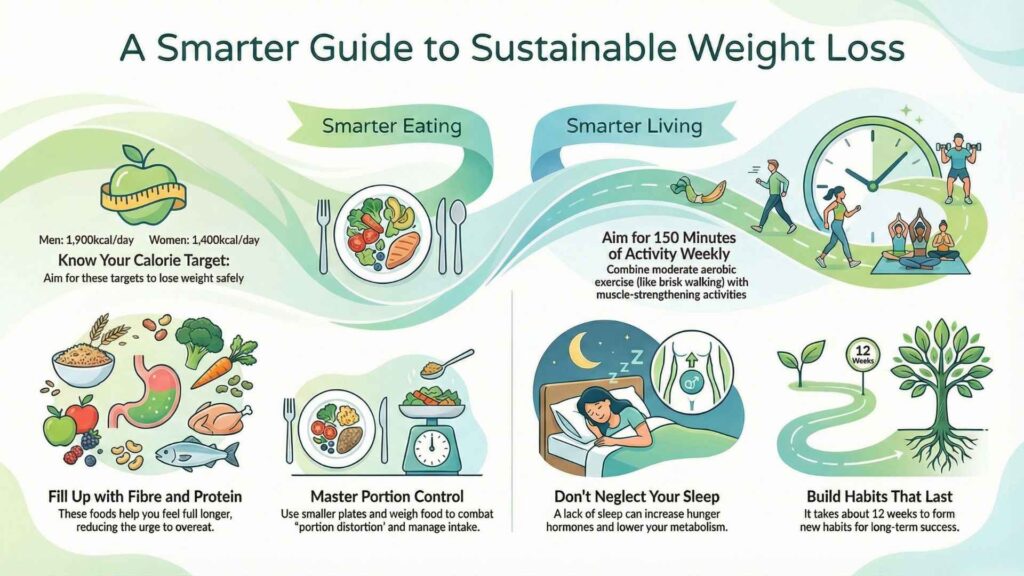
At the core of any weight loss strategy is the principle of energy balance. To lose weight, an individual must consume approximately 500 fewer calories than they burn daily, which typically leads to a loss of one pound per week. However, the source of these calories dictates the body’s hormonal response and the sustainability of the plan.
Protein: The Satiety Powerhouse
Protein is the most critical macronutrient for those pursuing weight loss at home. The body requires more energy to metabolize protein than it does for fats or carbohydrates, a phenomenon known as the thermic effect of food. High-protein snacks for weight loss—such as Greek yogurt, hard-boiled eggs, or canned tuna—provide a dual benefit: they increase energy expenditure and suppress the hunger hormone, ghrelin.
| Protein Source | Protein Content | Benefit for Home Weight Loss |
| Canned Tuna (171g) | 50 grams | High satiety, essential omega-3 fatty acids |
| Greek Yogurt (156g) | 16 grams | Rich in calcium and probiotics for gut health |
| Beef Jerky (28g) | 9 grams | Portable, convenient, and low in sugar |
| Hard-Boiled Egg (1) | 6 grams | Contains nearly every nutrient the body needs |
Clinical evidence suggests that a high-protein breakfast, specifically one including eggs, can reduce total caloric intake throughout the rest of the day by promoting long-lasting fullness. For beginners, incorporating at least 25–30 grams of protein into every meal is a fundamental strategy for preventing muscle loss during a calorie deficit.
The Fiber-Metabolism Synergy
Fiber serves as a physiological volume-expander, slowing gastric emptying and providing a sense of fullness that prevents overeating at subsequent meals. Research highlights that individuals who increase their fiber intake to 30 grams daily can achieve weight loss comparable to more complex and restrictive diets. Sources such as lentils, chickpeas, and leafy greens are essential components of the best diet for weight loss at home, particularly in the Indian context where these are dietary staples.
Behavioral Psychology and Domestic Environmental Control
The domestic environment is often a minefield of “hidden” calories and triggers for emotional eating. Achieving weight loss at home requires a deliberate re-design of one’s surroundings to favor healthy choices.
Mindful Eating and Sensory Awareness
Many individuals consume hundreds of unnecessary calories while distracted by work, television, or mobile devices. Mindful eating encourages the practitioner to engage all senses—sight, smell, texture, and taste—during a meal. It takes approximately 20 minutes for the brain to receive satiety signals from the stomach. By slowing down the pace of consumption and chewing food thoroughly, individuals can significantly reduce their caloric intake before the urge to consume excessively takes hold.
The Impact of Tracking and Journaling
Successful weight management is almost universally linked to some form of self-monitoring. Whether using a digital app or a physical journal, recording food intake, physical activity, and sleep quality provides the data necessary for mid-course corrections.
- Weight Fluctuations: Weight can fluctuate by 2 to 4 pounds within a few days due to fluid retention, sodium intake, or hormonal shifts in some people.
- The Scale Trap: Relying solely on the scale can be demotivating. Practitioners are encouraged to track non-scale victories, such as improved energy levels, better sleep, and changes in how clothing fits.
- Goal Specificity: Effective goals are actionable rather than abstract. Instead of aiming to “lose 10 pounds,” a practitioner should aim to “walk 15 minutes, three days a week”.
Environmental Restructuring and Plate Mechanics
The “out of sight, out of mind” principle is a powerful tool for weight loss at home. Removing “problem foods”—those an individual is likely to indulge in excessively—is more effective than relying on willpower alone. Furthermore, the size of serving containers has a direct neurological impact on consumption. A study from Cornell University found that individuals using large bowls consumed 16% more cereal than those with smaller bowls, while those using oversized wine glasses poured 12% more liquid.

Exercise Physiology for the Beginner: Efficiency Over Intensity
The best home workout plan for beginners is not necessarily the most intense, but the most consistent. The American College of Sports Medicine (ACSM) recommends a combination of 150 minutes of moderate-intensity cardio and two days of strength training each week.
Gender-Specific Efficacy in Exercise
One of the most profound recent findings in exercise science is the difference in how people of different genders may respond to physical activity. A Harvard Health study revealed that some individuals gain greater cardiovascular protection from significantly less exercise than others.
| Demographic Group | Weekly Moderate Activity Goal | Risk Reduction (CHD) |
| Group 1 (Estrogen-dominant physiology) | 250 minutes | 30% reduction |
| Group 2 (Testosterone-dominant physiology) | 530 minutes | 30% reduction |
This disparity is often driven by sex hormones; for instance, estrogen aids fat burning and blood vessel health, while higher proportions of slow-twitch muscle fibers process oxygen more efficiently. For a busy individual looking for easy exercises to lose weight fast, this means that even short, consistent bouts of activity—such as gardening or brisk walking—can provide maximum health gains.
The Power of Bodyweight Training (BWT)
Bodyweight exercises for weight loss are the gold standard for home-based fitness because they require zero equipment and focus on functional, compound movements. Protocols such as High-Intensity Interval Training (HIIT) have been shown to improve cardiorespiratory fitness in as little as 11 minutes per session.
- Modified Burpees: Target the entire body and increase heart rate rapidly.
- Squats and Lunges: Build lower-body strength and improve mobility.
- Planks and Mountain Climbers: Strengthen the core and improve stability.
Muscle tissue is metabolically more active than fat tissue. A pound of muscle burns approximately three times more calories at rest than a pound of fat. Therefore, incorporating resistance training is essential to avoid the metabolic slowdown often associated with calorie-restricted diets.

Yoga and the Parasympathetic Weight Loss Connection
While often categorized as a low-calorie activity, yoga for weight loss at home functions through several indirect metabolic and psychological channels. Beyond the physical postures (asanas), yoga emphasizes breathwork and mindfulness, which can shift the nervous system from a “fight-or-flight” state to a “rest-and-digest” state.
Cortisol Regulation and Emotional Eating
Chronic stress leads to elevated levels of cortisol, a hormone that promotes the accumulation of visceral fat and triggers cravings for high-sugar, high-fat comfort foods. By reducing stress through yoga, practitioners can effectively “turn off” the hormonal signal to store fat. Furthermore, yoga increases interoception—the ability to perceive internal bodily signals—which helps individuals distinguish between emotional distress and true physical hunger.
Comparative Benefits of Yoga Styles
| Yoga Style | Primary Benefit | Target Audience |
| Vinyasa/Flow | Aerobic conditioning and heart rate elevation | Those seeking fat burning home workouts |
| Hatha | Flexibility, balance, and stress reduction | Beginners and those with joint pain |
| Power Yoga | Muscle strengthening and major group activation | Individuals focusing on body composition |
| Restorative | Cortisol reduction and sleep improvement | People struggling with stress-related weight gain |
Regional Strategies: Weight Loss in the Indian Domestic Context
Achieving weight loss at home in India involves navigating a rich culinary heritage. However, the Indian diet also offers a wealth of superfoods that can accelerate progress when used correctly.
From Refined Grains to Complex Carbohydrates
A successful Indian diet plan for weight loss focuses on replacing white rice and maida (refined flour) with whole grains and millets. Grains like ragi, jowar, and bajra have a lower glycemic index, meaning they release energy slowly and keep insulin levels stable, preventing the fat-storage response.
| Indian Staple Swap | Nutritional Benefit | Impact |
| White Rice $\rightarrow$ Brown Rice/Millet | Higher fiber and micronutrients | Sustained energy, lower insulin spike |
| Naan $\rightarrow$ Multigrain Roti | Reduced refined starch | Better digestion and fullness |
| Samosa $\rightarrow$ Roasted Makhana | Lower fat, higher protein/fiber | Healthy snacking without empty calories |
| Fried Paneer $\rightarrow$ Grilled Paneer | Reduced saturated fat | Lean protein for muscle preservation |
Metabolic Boosters in the Indian Pantry
Common Indian spices and ingredients have significant thermogenic properties. Capsaicin in chili peppers can boost metabolism and support fat burning. Amla (Indian gooseberry) is rich in antioxidants that support liver function and metabolism, while curd and buttermilk serve as natural probiotics, improving the gut health necessary for efficient weight management.

Meal Prep Logistics for the Modern Household
One of the primary reasons weight loss plans fail is a lack of preparation. Meal prep for weight loss is not about creating gourmet meals; it is about building “decision-proof” systems that prevent the reliance on fast food during a busy week.
The “Bulk and Batch” Strategy
Successful meal preppers often dedicate a single day (e.g., Sunday) to preparing core components of their meals. This might include:
- Grains: Boiling a large batch of quinoa or brown rice to use throughout the week.
- Proteins: Grilling chicken breasts, baking salmon patties, or preparing lentil dal in bulk.
- Vegetables: Chopping and roasting large quantities of broccoli, peppers, and sweet potatoes.
Portable Bento-Style Nutrition
The “bento box” approach allows for variety and portion control, ensuring that lunch contains a balanced ratio of lean protein, complex carbs, and fiber-rich vegetables. For example, a bento box might include teriyaki-glazed chicken, a boiled egg, steamed edamame, and a portion of brown rice. This prevents the “portion creep” that often happens when dishing from a large communal pot.
The 30-Day Home Weight Loss Challenge Framework
For many beginners, a 30-day home weight loss challenge serves as a “reset” for their routine, providing the momentum needed for long-term lifestyle changes. A structured 30-day plan typically follows a five-day training split with designated rest days for recovery.
Sample Weekly Progression
- Week 1: Adaptation: Focus on learning proper form and building the habit of daily movement. Workouts should be low-intensity (20 minutes) to avoid burnout.
- Week 2: Volume: Increase the number of repetitions or the duration of cardio sessions. Begin focusing on “non-scale victories” like improved energy.
- Week 3: Intensity: Introduce HIIT or increase resistance (e.g., using heavier dumbbells or tighter resistance bands).
- Week 4: Consolidation: Review progress and plan for the transition into a long-term maintenance phase. Focus on sustaining the new habits without the “challenge” structure.
| Day of Week | Workout Focus | Estimated Duration |
| Monday | Full Body Strength (Squats, Push-ups) | 30 Minutes |
| Tuesday | Indoor Cardio (Brisk Walk/Dance) | 45 Minutes |
| Wednesday | Upper Body + Core | 20 Minutes |
| Thursday | Active Recovery (Yoga/Stretching) | 20 Minutes |
| Friday | Lower Body Strength (Lunges, Bridges) | 30 Minutes |
| Saturday | HIIT or Group Virtual Class | 30 Minutes |
| Sunday | Rest and Meal Prep | N/A |

Virtual Fitness and the Technology of Accountability
In 2025, the proliferation of virtual fitness classes has solved the problem of isolation in home weight loss. These platforms provide professional coaching, real-time feedback, and a sense of community that mimics the gym environment.
Online Coaching Platforms
- Future: This app pairs individuals with a dedicated human coach who creates personalized plans and checks in daily via the app.
- Peloton: Beyond the bike, the Peloton app offers a vast library of live and on-demand classes ranging from strength training to yoga.
- Nike Training Club: A completely free resource that provides structured programs across various difficulty levels, making it a strong starting point for budget-conscious beginners.
- Centr: This app integrates fitness, nutrition, and mental health, providing a holistic approach that includes guided meditations and healthy recipe databases.
The Role of Wearable Technology
Fitness trackers like the Fitbit or Apple Watch provide objective data on calorie burn, heart rate, and sleep quality. For beginners, hitting a daily step goal—even if broken into short 10-minute bouts—is one of the most effective predictors of long-term weight maintenance.
Essential Home Workout Equipment for 2025
While bodyweight exercises are effective, a few strategic investments can enhance the variety and intensity of a home workout plan for beginners.
Budget-Friendly Fundamentals
- Resistance Bands: These are the most cost-effective and space-saving tools available.
- Adjustable Dumbbells: Replacing up to 15–20 pairs of traditional weights, adjustable dumbbells allow for progressive overload without consuming an entire room.
- Stability Balls: These are excellent for strengthening the back and core and can even be used as a chair to promote “active sitting”.
- Walking Pads: These smaller, foldable treadmills allow for steady-state cardio while watching television or working at a standing desk.
| Equipment | Estimated Price | Key Advantage |
| Resistance Bands | $25 – $40 | Portability and safety |
| Adjustable Dumbbells | $100 – $200 | Space efficiency |
| Yoga Mat | $15 – $30 | Joint protection and grip |
| Walking Pad | $200 – $400 | Low-impact cardio |

Common Pitfalls: Why Home Weight Loss Stalls
The failure to lose weight at home is rarely a result of poor character; it is usually a result of poor strategy. Avoiding these common errors can ensure steady progress.
The Myth of Cardio-Only Fat Loss
Many beginners focus exclusively on cardio, assuming it is the fastest way to burn fat. However, excessive cardio without strength training can lead to the loss of muscle mass. Since muscle is the primary driver of metabolism, losing it makes it easier to regain fat in the future. A balanced approach that prioritizes strength training alongside moderate cardio is far more effective for long-term body composition changes.
The “Diet Food” Trap
Products labeled as “low-fat” or “diet” often replace fat with added sugars or artificial sweeteners to maintain flavor. These hidden sugars can spike insulin levels and increase hunger. It is far more effective to focus on whole, single-ingredient foods—such as fruits, vegetables, and lean meats—than to rely on processed “health” foods.
Dehydration and Metabolic Drag
Water is essential for the biochemical processes involved in fat metabolism. Dehydration causes the metabolism to slow down, making weight loss more difficult. Furthermore, the brain often misinterprets thirst signals as hunger signals. Drinking a glass of water 20–30 minutes before a meal can lead to an automatic reduction in daily calorie intake.
Clinical Innovations: GLP-1 Medications and Habit Persistence
The emergence of anti-obesity medications (AOMs) such as semaglutide and tirzepatide has changed the conversation around weight loss at home. These medications can lead to a 15–20% reduction in body weight by mimicking hormones that regulate appetite.
The Role of Behavior in the Medical Era
While these medications are powerful tools, they are not a replacement for healthy habits. Clinical trials show that individuals who discontinue these medications without having established robust dietary and exercise routines often regain much of the weight they lost. The current medical consensus is that AOMs should be used to facilitate the transition to a healthy lifestyle.
Conclusions and Actionable Steps
Sustainable weight loss at home is achievable when viewed as a long-term recalibration of one’s biology and environment. Success is not measured solely by the number on a scale, but by the internal metabolic improvements that reduce chronic disease risk.
- Prioritize Protein: Aim for at least 1.2–1.5 grams of protein per kilogram of body weight to maintain muscle and manage hunger.
- Move Daily: Incorporate 30 minutes of activity, prioritizing strength training to keep your metabolism high.
- Control Your Environment: Remove trigger foods from your home and use smaller plates to leverage behavioral psychology.
- Embrace Virtual Support: Use apps like Future or Peloton to bridge the accountability gap often felt at home.
- Be Patient: A safe loss of 1–2 pounds per week is the most predictive of long-term success.

Frequently Asked Questions
How can I lose belly fat at home effectively?
To lose belly fat, focus on a high-fiber, high-protein diet that lowers insulin levels. Combine this with moderate cardio and strength training. Harvard research suggests that even if the scale doesn’t move, a healthy diet specifically targets visceral belly fat.
What is the best home workout plan for beginners with no equipment?
A simple HIIT or bodyweight circuit is best. Exercises like squats, lunges, planks, and mountain climbers engage multiple muscle groups and can be done in as little as 11–20 minutes three times a week.
How do high protein snacks for weight loss help me stay on track?
Protein has a high thermic effect and suppresses ghrelin, the hunger hormone. Snacks like Greek yogurt or eggs keep you full longer, preventing the energy crashes that lead to consuming processed foods excessively.
Are virtual fitness classes worth it for beginners?
Yes. Classes provided by apps like Peloton or Nike Training Club offer expert guidance on form and motivation. For those who need direct accountability, remote coaching apps like Future provide 1-on-1 human interaction.
What is a 30 day home weight loss challenge?
It is a structured fitness and nutrition plan designed to build momentum. It typically involves five days of alternating strength and cardio workouts, along with meal prep strategies, to help beginners establish a lasting routine.
Take Control of Your Health Today
Achieving your fitness goals doesn’t require an expensive gym membership or a radical lifestyle overhaul. It starts with simple, evidence-based changes in your own home. If you’re ready to create a personalized plan that works for your unique biology and schedule, let our experts guide you.
Start your transformation by filling out the(https://dietdekho.com/form/) and join our community of health-conscious individuals today.
BOOK YOUR APPOINTMENT
Abhinav is the Founder of Diet Dekho, helping people manage weight and lifestyle health through simple, practical nutrition and personalized diet plans.