
Imagine standing in front of the mirror, looking at a version of yourself that feels unfamiliar. Maybe you’re like Ayushi, a 21-year-old student who hit 93 kgs and felt her confidence slipping away every single day. You want a change, and you want it now. But here’s the thing: most people chase fast weight loss by running into a wall of starvation, only to bounce back heavier than before. At Diet Dekho, we’ve seen over 20,000 clients navigate this journey, and what we’ve learned is that the fastest way to lose weight isn’t about doing less—it’s about doing things smarter. What if you could drop the weight without giving up the flavors you love? What if you could turn your body into a fat-burning machine while you sleep? Let’s break it down into the actual science of how your body sheds fat.
Understanding the Biological Engine of Fat Loss
To lose weight fast, we first have to respect the laws of physics. Your body operates on a simple energy balance equation. If you consume fewer calories than your body requires for its daily functions, you enter a calorie deficit. This forces your system to tap into its internal energy stores—primarily body fat and glycogen. However, a calorie isn’t just a calorie when it comes to how your body feels.
The Calorie Deficit and Metabolic Adaptation
Standard clinical advice often points toward a deficit of 500 to 1,000 calories per day to lose about 0.5 to 1 kg per week. While this works, rapid weight loss often requires a more nuanced approach to prevent metabolic adaptation. This is when your brain thinks you’re starving and slows down your heart rate and temperature to save energy. What this really means is that if you cut too hard for too long, your weight loss will stall. The secret is finding the “sweet spot” where you’re eating enough to keep your thyroid happy but little enough to burn fat.
| Macronutrient | Energy Density | Role in Rapid Loss |
| Protein | 4 kcal/g | Preserves muscle, boosts metabolism |
| Carbohydrates | 4 kcal/g | Primary energy source, regulates insulin |
| Fats | 9 kcal/g | Supports hormones, provides satiety |
| Fiber | 0-2 kcal/g | Increases fullness, stabilizes blood sugar |
Experts from Harvard Health suggest that for a weight loss plan to be the best way to lose weight, it must be something you can sustain indefinitely. Success isn’t just about the number on the scale today; it’s about where that number is five years from now.
The Ketogenic Protocol: Flipping the Metabolic Switch
When people ask about a keto diet plan, they are usually looking for rapid weight loss. The ketogenic diet works by drastically reducing carbohydrates—usually to under 50 grams per day—and replacing them with healthy fats. This shift forces your body into a state called ketosis. In this state, your liver begins turning fatty acids into ketones, which become your brain’s primary fuel source instead of glucose.
How Ketosis Drives Fat Oxidation
In a standard diet, your body is a “sugar burner.” It looks for glucose first. By removing the glucose, you force the body to become a “fat burner”. This is particularly effective for those wondering how to lose belly fat, as the reduction in insulin—the body’s primary fat-storage hormone—allows the body to access deep visceral fat stores. Research shows that both keto and Mediterranean diets can lead to significant reductions in BMI and waist circumference within just three months.
Managing the Transition: The Keto Flu
If you’ve heard of the “keto flu,” you know that the first week can be rough. As your body sheds glycogen, it also sheds a lot of water and electrolytes. This can lead to headaches, fatigue, and irritability. To lose weight fast on keto without feeling like a zombie, you must stay hydrated and keep your salt intake up. It’s also important to note that keto isn’t just about eating bacon. A successful meal plan for weight loss on keto includes high-quality fats like avocado, olive oil, and nuts, paired with plenty of leafy greens to keep your gut healthy.
Intermittent Fasting: The Power of the Clock
If keto is about what you eat, intermittent fasting is about when you eat. This is perhaps the most beginner-friendly strategy for those who don’t want to count every single calorie. By cycling between periods of eating and fasting, you give your insulin levels a chance to drop low enough that fat burning becomes effortless.
The 16:8 Method and Metabolic Syndrome
The most popular version is the 16:8 method: you fast for 16 hours and eat all your meals within an 8-hour window. National Institutes of Health (NIH) research highlights that people with metabolic syndrome who followed an 8-to-10-hour window lost an average of 6.6 pounds over three months without changing their diet quality. The weight lost was almost entirely fat, not muscle, which is the holy grail of rapid weight loss.

Common Intermittent Fasting Schedules
| Protocol Name | Fasting Duration | Best For |
| 12:12 | 12 Hours | Absolute beginners, steady habits |
| 16:8 | 16 Hours | Daily fat loss, insulin control |
| 20:4 (Warrior) | 20 Hours | Advanced fat burning, convenience |
| 5:2 Diet | 2 Days (500 kcal) | Weekly caloric management |
| OMAD | 23 Hours | Maximum autophagy, aggressive loss |
One thing to keep in mind is chronobiology. Your body is more insulin-sensitive in the morning.17 This means that an eating window that ends earlier—say, 10 AM to 6 PM—is generally more effective for fast weight loss than eating late into the night.
Bioactive Superfoods: Your Natural Fat-Burning Allies
While there are no “magic pills,” certain fat burning foods and weight loss drinks can give your metabolism a measurable edge. These work by increasing thermogenesis—the process of your body producing heat—or by directly boosting fat oxidation.
Green Tea and the EGCG Connection
Green tea, and especially matcha, contains a powerful antioxidant called EGCG. When paired with caffeine, EGCG blocks an enzyme that normally breaks down norepinephrine, a hormone that tells your fat cells to release energy. One study showed that drinking matcha before a brisk walk significantly increased fat oxidation compared to walking alone. To get the most out of these weight loss tips, try drinking your green tea mid-morning without any added sugar.
Spices and Thermal Effects
Spices like chili peppers, ginger, and turmeric aren’t just for flavor. Capsaicin in chili peppers has been shown to boost calorie burn and increase feelings of fullness. Ginger can reduce hunger and inflammation, helping you achieve a flatter stomach not just through fat loss, but through reduced bloating. Turmeric contains curcumin, which helps turn off the inflammatory signals that make your body hold onto fat in the first place.
Healthy Fats that Burn Fat
It sounds counterintuitive, but eating fat can help you lose weight fast. Medium-chain triglycerides (MCTs), found in coconut oil and MCT oil, are sent straight to your liver to be used for energy rather than being stored in your fat cells. They have been shown to boost metabolism by up to 120 calories a day. Adding a small amount of MCT oil to your morning coffee can help suppress your appetite until your first meal.

The Hydration Factor: Water-Induced Thermogenesis
If you’re looking for the fastest way to lose weight, look no further than your kitchen tap. Most people are chronically dehydrated, and the brain often confuses thirst signals with hunger8 But water does more than just fill your stomach.
Boosting Metabolic Rate with Water
Drinking 500 ml (about two cups) of water can increase your resting metabolic rate by 30% for over an hour.21 This is known as water-induced thermogenesis. About 40% of this effect comes from your body using energy to warm the water up to body temperature. In an 8-week study, higher-weight participants who drank 1.5 liters of extra water daily—specifically 500 ml before each meal—lost significantly more weight and body fat than those who didn’t.
The Role of Water in Lipolysis
Water is also a required ingredient for the biochemical breakdown of fat, a process called lipolysis. Without enough water, your body cannot efficiently mobilize stored fat to be burned as fuel. Furthermore, increased hydration expands the volume of your cells, which signals to the body that it is in a “fed” state, improving insulin sensitivity and reducing the urge to overeat.
Sleep: The Secret Pillar of Fast Weight Loss
You can have the perfect keto diet plan and a rigorous gym routine, but if you aren’t sleeping, you’re fighting an uphill battle. Sleep is when your body regulates the hormones that control your appetite and metabolism.
The Ghrelin and Leptin Balance
When you are sleep-deprived—getting less than 7 hours a night—your levels of ghrelin (the “hunger hormone”) spike, while your levels of leptin (the “fullness hormone”) plummet. This hormonal shift makes it nearly impossible to resist high-calorie, sugary snacks. A study found that sleep-deprived people consume an average of 200 to 500 extra calories per day, usually in the form of late-night snacking.
Fat Loss vs. Muscle Loss
Here is the most shocking statistic: in a clinical trial, participants on a calorie deficit who slept 8.5 hours lost 55% more body fat than those who slept only 5.5 hours. Those who didn’t sleep enough ended up losing mostly muscle mass, which actually slows down your metabolism in the long run. What this really means is that sleeping 8 hours a night is just as important as your workout if you want to lose weight fast.
| Sleep Hours | Fat Loss Efficiency | Muscle Preservation |
| 8.5 Hours | High (Optimal fat oxidation) | Excellent |
| 5.5 Hours | Low (Metabolic defense active) | Poor (60% more muscle loss) |

Behavioral Psychology: Hacking Your Habits
Success in fast weight loss is often a game of “inches.” Small changes in your environment can lead to massive changes on the scale over time. This is where mindful eating comes into play.
Mindful Eating Tricks
It takes about 20 minutes for your stomach to tell your brain it’s full. If you scarf down your meal in 5 minutes, you’ll eat way more than you need. Here are some pro weight loss tips to slow things down:
- The Non-Dominant Hand: Try eating with your left hand (if you’re a righty). It forces you to focus on every bite.
- Smaller Plates: Using a smaller plate makes a standard portion look huge, tricking your brain into feeling satisfied.
- No Distractions: Turn off the TV. When you eat while distracted, you don’t register the flavor or the fullness cues, leading to overeating.
Dealing with Emotional Eating
Many of us eat because we’re stressed, bored, or lonely, not because we’re hungry. Finding non-food rewards is key. Whether it’s a hot bath, a 5-minute meditation, or calling a friend, having a “plan B” for when stress hits can save you thousands of calories a week.
Building a Sustainable Meal Plan for Weight Loss
A great low carb diet doesn’t have to be boring. At Diet Dekho, we specialize in making healthy versions of your favorite comfort foods. The key is substitution, not deprivation.
The Art of the Swap
Instead of cutting out the foods you love, try redesigning them. Take macaroni and cheese: by using non-fat milk, reducing the butter, and adding two cups of fresh spinach and diced tomatoes, you can cut the calories by almost 50% while actually increasing the volume of the food.
| High-Calorie Food | Healthy Swap | Calorie Saving |
| Whole Milk | Fat-Free or Almond Milk | 60-100 kcal |
| Potato Chips | Diced Pineapple or Berries | 118 kcal |
| Cream Soup | Vegetable Broth Soup | 45 kcal |
| White Rice | Cauliflower Rice | 150+ kcal |
For those following an intermittent fasting and keto diet plan, your meals should be centered around high-quality protein (like salmon or chicken breast), healthy fats, and a mountain of non-starchy vegetables like spinach, broccoli, and bell peppers.
Safety First: Protecting Your Metabolism
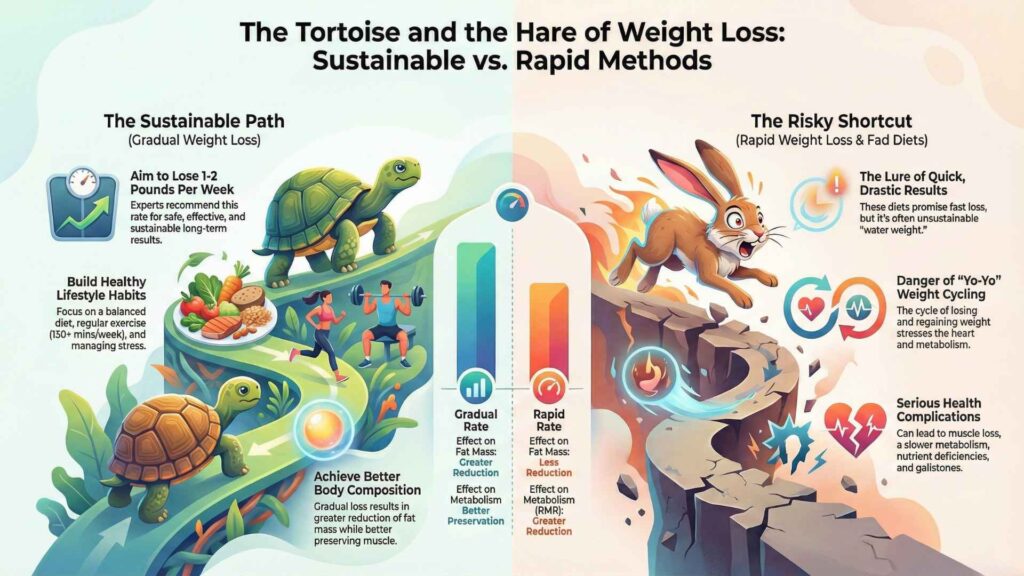
While we all want results yesterday, losing weight too fast can have side effects. If you drop weight too rapidly without enough protein, you’ll lose bone density and muscle mass. This is why we always recommend a personalized diet plan that considers your medical history, especially if you have PCOD, diabetes, or thyroid issues.
The Importance of Protein
Protein is the single most important macronutrient for fast weight loss. It has a high “thermic effect,” meaning you burn calories just digesting it. More importantly, it keeps you full and protects your muscle tissue while the fat melts away. Aim for a serving of protein the size of your palm at every meal.

Expert FAQs: Your Fast Weight Loss Questions Answered
What is the fastest way to lose weight without exercise?
The fastest way to lose weight without exercise is focusing on a calorie deficit through high-protein, high-fiber foods and implementing intermittent fasting. While exercise helps, 80% of your results will come from your nutrition. Reducing liquid calories (soda, juice, alcohol) is the quickest win for most beginners.
Can I lose belly fat in a week?
You can certainly reduce bloating and lose water weight in a week, which will make your stomach look flatter. However, actual fat loss takes time. To how to lose belly fat for good, you need a sustained low-insulin environment, which is best achieved through a low carb diet or time-restricted eating.
Is a keto diet plan safe for everyone?
While highly effective for rapid weight loss, keto isn’t for everyone. People with kidney disease, type 1 diabetes, or certain gallbladder issues should avoid it. It’s always best to consult with a dietitian to ensure your meal plan for weight loss is balanced and includes all necessary micronutrients.10 Research indicates that both the ketogenic (keto) and Mediterranean diets are effective in helping patients with a higher body weight or obesity lose weight and lower blood pressure.
Which weight loss drinks actually work?
The best weight loss drinks are those that are zero-calorie and bioactive. Green tea, black coffee, and lemon water are all scientifically backed. They help by boosting metabolism and providing satiety without the sugar crashes of commercial “diet” drinks.
Why am I not losing weight even on a calorie deficit?
You might be experiencing a plateau. This often happens due to hidden calories in “healthy” foods, lack of sleep, or high stress levels that increase cortisol. Tracking your intake for a few days can help identify where “portion creep” might be happening.
Your Path to a Healthier You
Weight loss isn’t a straight line, and it’s definitely not a race. Whether you’re a student like Ayushi or a busy professional managing health complications like PCOD, the principles remain the same: eat whole foods, respect your body’s clock, and prioritize your rest.
You don’t have to do this alone. At Diet Dekho, our coaches have helped thousands of people impact their lives through practical, easy-to-follow plans that don’t involve starvation. Are you ready to take the first step toward the version of yourself you’ve always wanted to see?
Start your transformation today. Fill out our Health Assessment Form and let’s build a plan that finally works for you.
BOOK YOUR APPOINTMENT
Abhinav is the Founder of Diet Dekho, helping people manage weight and lifestyle health through simple, practical nutrition and personalized diet plans.