
The path to sustainable fat loss often begins with a single, common struggle: the mid-morning slump. Consider the case of Rohan, a 30-year-old marketing professional who started every day with a large bowl of sweetened cornflakes or white bread toast. By 11:00 AM, his energy would vanish, replaced by an intense craving for samosas or sugary tea. This cycle of blood sugar spikes and crashes is not a failure of willpower but a failure of fuel. When the body is deprived of the correct macronutrients at the start of the day, it enters a state of metabolic distress that triggers hunger signals. Choosing the right Indian breakfast for weight loss is the most effective way to break this cycle. It is about more than just cutting calories; it is about choosing ingredients that communicate satiety to the brain and fire up the metabolic furnace.
The Science of the Morning Metabolic Spark
Table of Contents
- 1 The Science of the Morning Metabolic Spark
- 2 Protein: The Architect of Satiety and Muscle Preservation
- 3 Moong Dal Chilla: The Gold Standard for Fat Loss
- 4 Oats Chilla: Integrating Modern Fiber into Traditional Palates
- 5 Besan Chilla: The Reliable Pantry Staple
- 6 South Indian Breakfast for Weight Loss: Beyond Idli and Dosa
- 7 Poha for Weight Loss: The Vegetable-to-Grain Ratio
- 8 Daliya: The Ancient Secret to a Flat Stomach
- 9 Paneer Bhurji: The Low-Carb Vegetarian King
- 10 Egg Bhurji and Boiled Eggs: The Bioavailable Standard
- 11 Sprouted Moong Salad: The Living Food for Fat Loss
- 12 The Power of Millets: Ragi, Jowar, and Bajra
- 13 The Importance of Timing and Hydration
- 14 Lifestyle Synergies: Sleep and Stress Management
- 15 Common Mistakes to Avoid
- 16 A 7-Day Sample Breakfast Diet Plan
- 17 Summary and Key Takeaways
- 18 Frequently Asked Questions
- 19 Conclusion
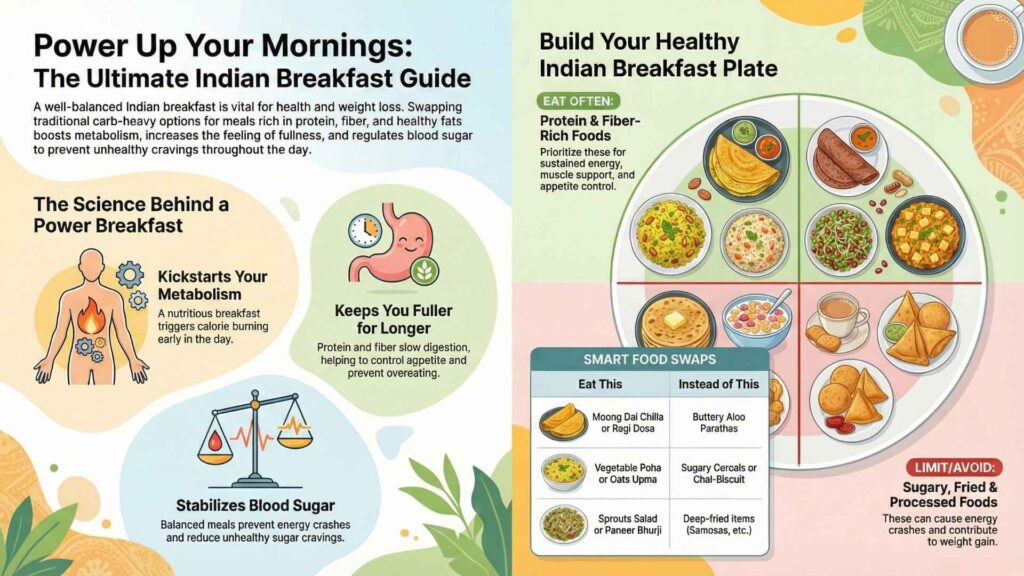
Every time a meal is consumed, the body spends energy to digest, absorb, and process the nutrients. This is known as the Thermic Effect of Food (TEF) or Diet-Induced Thermogenesis (DIT). Protein is the undisputed champion of this process. While fats and carbohydrates require very little energy to process, protein uses up to 30% of its own caloric value just to be digested. This means that a high protein Indian breakfast essentially provides a metabolic “head start.” By choosing protein-rich options like moong dal chilla or paneer bhurji, the body begins burning fat more efficiently from the very first hour.
Furthermore, the quality of the carbohydrates matters. Most traditional Indian breakfasts have shifted toward refined grains like white rice or maida, which spike insulin levels. Insulin is the body’s primary fat-storage hormone. When insulin is high, fat burning (lipolysis) is effectively shut down. Transitioning to complex carbohydrates found in millets, oats, and whole pulses allows for a slow release of glucose, keeping insulin stable and enabling the body to access stored fat for energy throughout the morning.
Protein: The Architect of Satiety and Muscle Preservation
Satiety is not just a feeling of being full; it is a complex hormonal orchestration. High-protein intake triggers the release of GLP-1 and PYY, hormones that signal the brain to stop eating. Simultaneously, it suppresses ghrelin, the hormone that makes the stomach growl. For beginners in fitness, protein serves a dual purpose. As the body enters a calorie deficit to lose weight, there is a risk of losing muscle mass along with fat. Muscle is metabolically active tissue; losing it slows down the basal metabolic rate (BMR).
Consuming 25–35 grams of protein during breakfast provides the necessary amino acids to stimulate muscle protein synthesis. This is particularly critical in the Indian context, where the ICMR-INDIAB study highlights that nearly 40% of the population is protein-deficient. Increasing protein intake is not just for bodybuilders; it is a fundamental requirement for anyone looking for the best breakfast for belly fat. Lean protein sources like eggs, low-fat paneer, and lentils help preserve the lean mass that keeps the metabolism running high.
Macronutrient Distribution in Common Indian Breakfasts
| Breakfast Dish | Protein (g) | Fiber (g) | Complex Carbs (g) | Satiety Level |
| Moong Dal Chilla (2) | 22 – 28 | 7 – 9 | 15 – 20 | Very High |
| Paneer Bhurji (100g) | 18 – 21 | 1 – 2 | 4 – 6 | High |
| Vegetable Poha (1 cup) | 5 – 7 | 3 – 5 | 35 – 40 | Moderate |
| Oats Idli (3) | 8 – 10 | 5 – 7 | 25 – 30 | High |
| Egg Bhurji (2 eggs) | 12 – 14 | 2 – 3 | 2 – 4 | High |
Moong Dal Chilla: The Gold Standard for Fat Loss
If there is one dish that perfectly encapsulates healthy Indian breakfast ideas, it is the moong dal chilla. Made from soaked and ground yellow or green moong lentils, this savory pancake is a nutritional powerhouse. One moong dal and paneer chilla provides approximately 194 calories, with over 12 grams of high-quality plant protein. What makes this the best breakfast for weight management is its versatility. By adding finely chopped spinach, carrots, and onions, the fiber content increases, slowing down digestion even further.
The inclusion of low-fat paneer as a stuffing transforms a standard chilla into a high protein Indian breakfast that rival any western protein shake. The fiber in moong dal, approximately 4.1g per quarter cup, has been linked to lower levels of LDL cholesterol. For those managing blood sugar, the low glycemic index of moong dal prevents the insulin spikes that are common with rice-based breakfasts.
Preparing the Perfect Weight Loss Chilla
To ensure the moong dal chilla remains a low calorie Indian breakfast, the cooking method is vital. Using a high-quality non-stick pan allows for minimal oil usage—ideally just a teaspoon of cold-pressed oil or desi ghee. Adding ginger and green chilies to the batter does more than just enhance flavor; ginger is known for its thermogenic properties, and the capsaicin in chilies can slightly boost the metabolic rate. Pairing the chilla with a fresh mint and coriander chutney provides a boost of Vitamin C and antioxidants without adding significant calories.

Oats Chilla: Integrating Modern Fiber into Traditional Palates
Oats have gained immense popularity as a weight loss recipes staple, but many find sweet oatmeal unappealing. The oats chilla offers a savory, Indianized solution. Oats are rich in beta-glucan, a type of soluble fiber that forms a gel-like substance in the gut, slowing down the absorption of glucose and cholesterol. This fiber-rich profile makes oats chilla an excellent tool for appetite control, keeping the stomach full for 3–4 hours.
By mixing powdered oats with besan (chickpea flour) or curd, the protein profile is enhanced. Curd adds probiotics, which are essential for a healthy gut microbiome—a factor increasingly linked to successful weight management. A serving of two oats chillas provides roughly 250–300 calories and 10–14 grams of protein, making it an ideal choice for health-conscious individuals.
Besan Chilla: The Reliable Pantry Staple
When time is short, besan chilla is the ultimate convenience food for fitness beginners. Chickpea flour (besan) is naturally high in protein and iron. Unlike refined wheat flour, besan contains complex carbohydrates that digest slowly. To maximize its weight-loss potential, the batter should be “vegetable-heavy.” Adding grated bottle gourd (lauki) or zucchini increases the volume of the chilla without adding calories, a strategy known as volume eating.
Besan also has a lower glycemic index than most grains, meaning it helps in maintaining stable blood sugar levels—crucial for preventing the cravings that often derail weight loss efforts. When paired with a small bowl of curd, the combination provides a complete amino acid profile, ensuring the body gets the high protein Indian breakfast it needs to maintain muscle mass.
South Indian Breakfast for Weight Loss: Beyond Idli and Dosa
Traditional South Indian breakfasts are often perceived as high-carb due to the rice content. However, the South Indian breakfast for weight loss can be exceptionally effective when the rice-to-dal ratio is modified. Fermentation is the secret weapon here. The fermentation process increases the bioavailability of nutrients and introduces gut-friendly bacteria that aid digestion.
For those seeking the best breakfast for belly fat, Pesarattu (moong dal dosa) is the clear winner. Unlike regular dosa, which uses rice, Pesarattu is made from whole green moong dal. It offers nearly triple the protein of a standard idli. Another excellent variation is the ragi dosa. Ragi, or finger millet, is incredibly high in calcium and fiber, making it a satiating option that supports bone health.

Comparative Satiety of South Indian Staples
| Dish | Main Ingredient | Preparation | Calorie Density | Digestion |
| Regular Idli | Rice & Urad Dal | Steamed | Low | Easy |
| Pesarattu | Whole Moong Dal | Pan-fried (Low Oil) | Medium | Slow |
| Ragi Dosa | Finger Millet | Pan-fried (Low Oil) | Medium | Very Slow |
| Oats Idli | Oats & Curd | Steamed | Low | Moderate |
Poha for Weight Loss: The Vegetable-to-Grain Ratio
Poha, or flattened rice, is a light and easily digestible breakfast. However, for it to be effective poha for weight loss, the preparation must change. The typical street-style poha is high in carbs and low in protein. To fix this, one must adopt the “Sprouts Poha” method. By substituting half the flattened rice with sprouted moong or chickpeas, the protein and fiber content doubles.
Adding a handful of roasted peanuts provides healthy fats, which are essential for hormone production and long-term satiety. A generous squeeze of lemon at the end is more than just a flavor enhancer; the Vitamin C improves iron absorption from the poha and vegetables, combating the fatigue often associated with a calorie deficit.
Daliya: The Ancient Secret to a Flat Stomach
Daliya, or broken wheat, is one of the most underrated weight loss recipes in the Indian kitchen. It is a whole grain that includes the bran, germ, and endosperm of the wheat, providing a massive 18 grams of fiber per 100 grams of dry grain. This high fiber content acts like a broom in the digestive tract, promoting regular bowel movements and reducing bloating.
A vegetable daliya recipe cooked with carrots, beans, and moong dal is essentially a complete meal in a bowl. It has a very low glycemic index (41–50), meaning it provides a slow, sustained release of energy. This prevents the mid-day energy dips that lead to mindless snacking. For those looking for simple weight loss strategies, replacing white rice or refined semolina (upma) with daliya is a powerful first step.

Paneer Bhurji: The Low-Carb Vegetarian King
For those following a low carb Indian breakfast, paneer bhurji is the ultimate solution. Paneer is a dense source of casein protein, which is slow-digesting and keeps hunger at bay for hours. A 100g serving of paneer bhurji provides about 18–20 grams of protein, making it an excellent muscle-building fuel for fitness beginners.
To keep it weight-loss friendly, use low-fat paneer and sauté it with plenty of onions, tomatoes, and capsicum. The vegetables add volume and fiber without significantly increasing the calorie count. If you need a bit of crunch, pair it with a single slice of multigrain toast or a small whole-wheat phulka.
Egg Bhurji and Boiled Eggs: The Bioavailable Standard
Eggs are often cited as the perfect protein by organizations like the National Institutes of Health (NIH). They contain all nine essential amino acids in the perfect ratio for human absorption. Research shows that eating eggs for breakfast can lead to greater weight loss compared to a bagel-based breakfast of equal calories.
Egg bhurji, or Indian-style scrambled eggs, allows you to “sneak” in fiber-rich vegetables like spinach and mushrooms. For those pressed for time, two boiled eggs are the simplest high protein Indian breakfast available. They are portable, portion-controlled, and provide a steady stream of energy for the brain and body.
Sprouted Moong Salad: The Living Food for Fat Loss
Sprouted moong salad is perhaps the most nutrient-dense option in the healthy Indian breakfast ideas repertoire. Sprouting increases the protein content of the beans and makes the nutrients more bioavailable. One bowl of sprouted moong salad contains only about 90–100 calories but offers 7–9 grams of protein and 5–6 grams of fiber.
This is a “negative calorie” style food because the energy required to chew and digest the crunchy sprouts often exceeds the calories they provide. Adding chopped cucumber, tomato, and pomegranate makes it a refreshing, enzyme-rich meal that supports gut health and skin radiance.

The Power of Millets: Ragi, Jowar, and Bajra
Millets are making a massive comeback in the Indian fitness world, and for good reason. Grains like Ragi (finger millet), Jowar (sorghum), and Bajra (pearl millet) are gluten-free and far more nutritious than wheat or rice. They are particularly effective for weight loss because they increase gastric volume, staying in the stomach longer and delaying hunger signals.
Pearl millet (bajra), in particular, has shown a high satiety index in clinical studies. Making a bajra rotla or a ragi malt for breakfast provides a dense hit of iron and calcium. For beginners, millets might seem intimidating, but they can be easily used as flours to make chillas or as whole grains in khichdi.
The Importance of Timing and Hydration
Here’s the thing: what you eat is only half the battle; when you eat also matters. Experts suggest that eating breakfast within 2 hours of waking up helps stabilize blood sugar and prevents the body from entering a “starvation mode” that slows down the metabolism.
Hydration is equally critical. Drinking 500ml of water upon waking helps flush out toxins and prepares the digestive system for the morning meal. Many people mistake thirst for hunger. By staying hydrated, you can often avoid the mid-morning snack cravings that contribute to unwanted weight gain.
Lifestyle Synergies: Sleep and Stress Management
It’s a well-documented fact in Harvard Health research that lack of sleep sabotages weight loss. When you don’t sleep enough, your body produces more ghrelin and less leptin, making you feel ravenous the next day.24 A sleepless night also disrupts blood sugar control, making even a healthy breakfast less effective.
Stress management is the final piece of the puzzle. Chronic stress leads to high cortisol levels, which specifically encourages the body to store fat in the abdominal area—the dreaded belly fat. Incorporating 10 minutes of deep breathing or a short morning walk before breakfast can lower cortisol and make your body more receptive to fat-burning.

Common Mistakes to Avoid
Many people believe they are eating a healthy Indian breakfast, but they are unknowingly sabotaging their progress. Here are the most common pitfalls:
- Too Much Oil: Even a moong dal chilla becomes unhealthy if it’s dripping in oil. Stick to 1 teaspoon.
- Skipping Protein: A plate of plain poha or upma is mostly carbs. Always add sprouts, paneer, or eggs.
- Sugary Additions: Adding sugar to your morning tea or jaggery to your porridge can spike insulin and halt fat burning.
- Juicing Instead of Eating: Fruit juices strip away the fiber. Always eat the whole fruit to keep the satiety benefits.
A 7-Day Sample Breakfast Diet Plan
| Day | Breakfast Menu | Primary Goal |
| Monday | Moong Dal Chilla with Paneer Filling | Muscle Preservation |
| Tuesday | Vegetable Daliya Khichdi | Gut Health & Fiber |
| Wednesday | 2 Boiled Eggs with Whole Wheat Toast | Bioavailable Protein |
| Thursday | Oats Chilla with Curd | Satiety & GI Control |
| Friday | Sprouts Poha with Peanuts | Light yet Filling |
| Saturday | Paneer Bhurji with Capsicum | Low Carb High Protein |
| Sunday | Ragi Dosa with Vegetable Sambar | Mineral Boost & Variety |
Summary and Key Takeaways
The secret to a successful weight loss journey isn’t starvation; it’s a strategic Indian breakfast for weight loss. By prioritizing high protein Indian breakfast options, you are effectively telling your body to burn fat while preserving muscle. Whether it’s the fiber-rich daliya recipe, the protein-packed moong dal chilla, or the gut-friendly South Indian breakfast for weight loss, the power lies in the quality of your ingredients.
Remember, weight loss is a marathon, not a sprint. Consistency is your greatest ally. Start by making one small change this week—perhaps swapping your sugary cereal for a savory chickpea pancake. For a more personalized approach tailored to your body type and lifestyle, we invite you to consult with our experts at Diet Dekho.

Frequently Asked Questions
Which is the best Indian breakfast for weight loss?
The moong dal chilla stuffed with vegetables or paneer is widely considered the best option. It provides a high protein-to-calorie ratio, is rich in fiber, and has a low glycemic index, which keeps you full for longer and prevents fat-storing insulin spikes.
Can I eat poha and still lose weight?
Yes, you can eat poha for weight loss if you modify the recipe. Use red or brown poha for more fiber, and ensure that at least 50% of the dish consists of vegetables and sprouts. Avoid adding too many fried peanuts or potatoes to keep the calorie count in check.
Is South Indian breakfast good for weight loss?
South Indian breakfasts can be excellent for weight loss if you choose wisely. Options like ragi dosa, oats idli, or Pesarattu (moong dal dosa) are high in protein and fiber. Avoid large portions of white rice idlis and limit high-calorie coconut chutney.
How much protein should be in a high protein Indian breakfast?
For effective weight management and muscle preservation, aim for 20 to 30 grams of protein in your morning meal. This can be achieved by combining lentils (dals) with dairy (paneer/curd) or including eggs in your routine.
Is daliya better than oats for weight loss?
Both are excellent choices as they are high in fiber. Daliya (broken wheat) is slightly higher in insoluble fiber, which is great for digestion, while oats contain beta-glucan, which is superior for heart health and cholesterol management. Rotating both in your diet plan is the best strategy.
Conclusion
Ready to stop guessing and start seeing results? Your weight loss journey deserves a plan that is as unique as you are. At Diet Dekho, we specialize in creating culturally relevant, science-backed nutrition plans that fit your busy lifestyle. Don’t let another morning go by on autopilot. Take control of your metabolism and feel the difference that a high-protein, nutrient-dense breakfast can make.
BOOK YOUR APPOINTMENT
Abhinav is the Founder of Diet Dekho, helping people manage weight and lifestyle health through simple, practical nutrition and personalized diet plans.