
Have you ever wondered why that 30-day juice cleanse or the “lose 5kg in a week” challenge always ends with the weight coming back twice as fast? The reality is that achieving significant, lasting Weight Loss in 6 Months requires more than just willpower; it requires a deep understanding of how your body’s internal clock and metabolism respond to change. For busy professionals and homemakers managing conditions like PCOS or thyroid issues, the 180-day window is not just a timeline—it is the biological gold standard for creating a permanent health transformation.
To achieveWeight Loss in 6 Months, an individual should aim for a steady reduction of 0.5 kg to 1 kg per week, resulting in a total loss of 12 kg to 24 kg. This timeframe allows the body to preserve muscle mass, stabilize hunger hormones like ghrelin, and prevent metabolic slowdown. By integrating Indian whole grains like millets, high-protein dals, and consistent daily movement, one can achieve a realistic body transformation that is medically safe and sustainable for the long term.
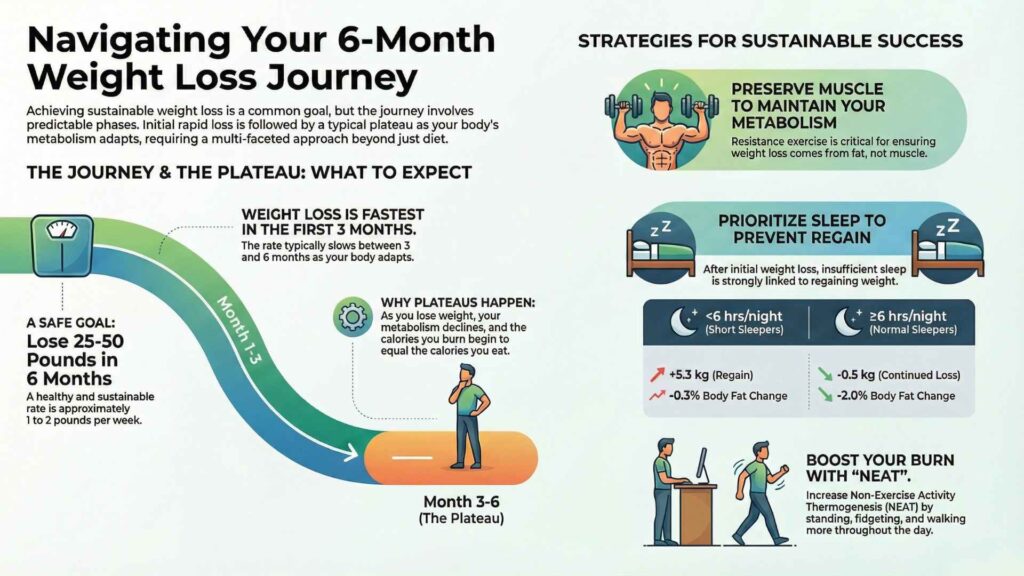
Is Losing Weight in 6 Months Better Than a 30-Day Crash Course?
The debate between rapid weight loss and a six-month gradual approach is often settled by the scale in the short term, but the physiological evidence favors the latter for long-term survival and health. When an individual attempts a 30-day crash course, the initial weight loss is frequently a result of glycogen depletion and water shed. Glycogen is the sugar stored in muscles and the liver, and because it is chemically bound to water, losing it creates an illusion of fat loss. In contrast, Weight Loss in 6 Months targets the body’s adipose tissue (stored fat) while allowing time for the metabolic rate to adjust to a smaller body size without crashing.
The clinical superiority of the six-month approach is evidenced by the lower risk of developing secondary health complications. Rapid weight loss—exceeding 1.5 kg per week—is a primary trigger for gallstone formation. The gallbladder, situated beneath the liver, often develops stones due to shifts in cholesterol and bile concentration during extreme caloric restriction. Furthermore, a 24-week timeline provides the necessary duration to improve cardiometabolic markers. Studies from Harvard T.H. Chan School of Public Health indicate that even a 5% weight loss over several months can lead to significant drops in insulin, triglycerides, and liver fat. For an Indian adult weighing 80 kg, this modest 4 kg loss can be the catalyst for reversing pre-diabetes and improving heart health.
| Feature | 30-Day Crash Diet | 6-Month Sustainable Plan |
| Primary Loss Type | Water & Muscle | Adipose (Fat) Tissue |
| Metabolic Impact | Severe Slowdown | Gradual Adaptation |
| Hormonal Response | High Hunger (Ghrelin) | Stabilized Satiety (Leptin) |
| Gallstone Risk | High (up to 25%) | Low to Minimal |
| Sustainability | Low (Rebound likely) | High (Habit formation) |
.
The Cycle of Quick Fixes: Why We Fail When We Rush?
The psychological and physiological pull of the “quick fix” is rooted in the body’s evolutionary desire to conserve energy. When we rush weight loss, we trigger the body’s ancient defense mechanisms against starvation. This leads to the “yo-yo dieting” cycle, where an individual loses weight rapidly, hits a wall of extreme hunger, and eventually regains more than they lost. The short answer is that the body does not understand the concept of a “wedding diet” or a “vacation slim-down”; it only perceives a sudden lack of food as a threat to survival.
In the Indian lifestyle, where social gatherings and festivals are frequent, rapid diets fail because they are socially isolating and unrealistic. A busy professional cannot survive on celery juice while managing 10-hour workdays and family obligations. Rushing the process often results in diet fatigue, where the mental effort needed to follow rigid rules runs out, increasing the likelihood of overeating or periods of excessive intake.
Weight Loss in 6 Months succeeds because it integrates into the daily routine. It allows for “smart swaps” and occasional indulgences, making the process feel like a lifestyle rather than a punishment.
The Role of Metabolic Adaptation in Failure
What this means for your daily routine is that the more you push your body to lose weight quickly, the harder it pushes back. This phenomenon, called “adaptive thermogenesis,” means the body becomes more efficient at burning fewer calories. If you drop your calories to 800 per day, your body may eventually lower its resting metabolic rate to match that, making it impossible to lose more weight without further starvation. By extending the goal to Weight Loss in 6 Months, you keep the metabolic fire burning by providing enough fuel for daily activity while maintaining a manageable deficit of 500 to 750 calories.

3 Myths About Rapid Weight Loss That Ruin Your Metabolism
There are several misconceptions that drive people toward dangerous dieting practices. Understanding the science behind these myths is the first step toward a successful body transformation.
Myth 1: Excessive Sweating Equals High Fat Loss
In the humid Indian climate, many believe that working out in heavy clothes or without a fan to induce sweating will lead to faster results. In simple terms, sweat is merely a cooling mechanism composed of water and electrolytes; it has no direct relationship with the oxidation of fat cells. While you may see a lower number on the scale immediately after a sweaty session, that weight returns as soon as you rehydrate. True fat loss occurs through a consistent caloric deficit and metabolic activity, not through dehydration.
Myth 2: Skipping Meals is an Effective Way to Cut Calories
I know it’s hard to find time, especially for busy homemakers or NRIs managing household chores, but skipping meals like breakfast actually slows down weight loss in 6 months. When you skip a meal, your blood sugar drops, leading to an increase in neuropeptide Y, a neurotransmitter that stimulates a powerful urge to eat high-fat, high-sugar foods later in the day. Research shows that people who eat a protein-rich breakfast are more likely to have stable energy levels and better portion control at lunch and dinner.
Myth 3: Carbs are the Enemy of Weight Loss
The “No-Carb” myth is particularly damaging in the Indian context, where grains like rice and wheat are staples. The problem is not carbohydrates themselves, but the type of carbohydrate. Refined carbs like white rice and maida cause rapid insulin spikes, which signal the body to store fat. However, complex carbohydrates found in millets (Ragi, Jowar) and whole grains provide essential fiber that actually aids in weight management by keeping you full for longer.
The Science of Sustainability: What Happens to Your Body in 180 Days?
The 180-day period is biologically significant because it spans the timeframe required for the body’s “set point” to potentially shift. The set point is the weight range your body tries to maintain through internal homeostatic controls. When you lose weight, your body produces more ghrelin (the hunger hormone) and less leptin (the fullness hormone) to drive you back to your starting weight.
However, staying at a lower weight for 6 months allows these hormonal signals to begin stabilizing. Research indicates that the weight loss plateau typically seen at the 6-month mark is a physiological sign that the body has adjusted to its new size. This is why weight loss in 6 months is far more likely to be permanent than a one-month effort; you are essentially “teaching” your body to accept a new, healthier baseline weight.
The Impact of 6 Months on Visceral Fat and Muscle
Losing weight slowly over 24 weeks ensures that a higher percentage of the weight lost is from visceral fat—the dangerous fat stored around internal organs—rather than muscle tissue. Muscle is metabolically active, meaning it burns calories even when you are resting. Rapid dieting can cause a 25% loss in lean body mass, which permanently damages your ability to keep the weight off. By prioritizing protein and resistance training over 6 months, you can actually build or maintain muscle while losing fat, resulting in a toned, healthy appearance.
| Biological Marker | 1 Month Progress | 6 Month Transformation |
| Muscle Mass | Significant Loss Possible | Preservation/Growth |
| Skin Elasticity | May sagging | Better adaptation |
| Gut Microbiome | Disrupted by restricted diets | Diverse and healthy |
| Cholesterol (HDL) | Minimal Change | Significant Increase |
| Liver Fat | Initial reduction | Significant clearance |

Phase-by-Phase: Your 6-Month Indian Diet and Lifestyle Roadmap
A successful body transformation is not a single sprint but a journey through distinct phases. Each phase requires a different focus to keep the momentum alive and avoid the dreaded 3-month plateau.
Phase 1: The Habit Foundation (Months 1–2)
The goal of the first 60 days is “stabilization.” This phase is about cleaning the slate without overwhelming the system. I know it’s hard to find time to cook elaborate meals, so the focus here is on simple, home-cooked staples. Start by replacing refined oils with small amounts of ghee or cold-pressed oils, and introduce a consistent morning routine.
- Morning Ritual: Start with a glass of warm lemon water with chia seeds or jeera water to aid digestion.
- Activity: Aim for 30 minutes of brisk walking or 20 minutes of beginner yoga five days a week.
- Nutrition: Focus on “The Perfect Thali” rule—half the plate filled with vegetables, one-quarter with protein (dal, paneer, or lean meat), and one-quarter with whole grains.
Phase 2: Metabolic Shift and Intensity (Months 3–4)
This is the most critical period for achieving weight loss in 6 months. By Month 3, the body has adapted to the initial changes, and progress may slow. This is the time to “shock” the metabolism by increasing physical activity and fine-tuning macronutrients.
- Activity: Move from steady-state walking to High-Intensity Interval Training (HIIT) or resistance training like squats and lunges. This helps preserve muscle as you lose fat.
- Nutrition: Increase protein intake. For vegetarians, this means adding sprouts, soya chunks, or Greek yogurt to every meal. Protein has a high thermic effect, meaning your body burns more energy just digesting it.
Phase 3: Fine-Tuning and Maintenance (Months 5–6)
In the final 60 days, the focus shifts to aesthetic changes and long-term habits. You may notice your clothes fitting much better even if the scale doesn’t move significantly. This phase is about ensuring you have the tools to maintain your results for years, not just weeks.
- Activity: Focus on “Non-Exercise Activity Thermogenesis” (NEAT). This includes taking the stairs, walking while on phone calls, and standing more often.
- Nutrition: Practice mindful eating and portion control. Use smaller steel plates (common in Indian households) to naturally reduce portion sizes by 25%.
Smart Swaps for Your Favorite Desi Meals to Keep You on Track
Indian cuisine is naturally rich in fiber and nutrients, but modern preparation methods often add excessive calories through sugar and refined oils. By making small, strategic adjustments, you can enjoy your favorite “comfort foods” while continuing your progress toward weight loss in 6 months.
Transforming Breakfast and Snacks
Traditional breakfasts like Poha and Upma are great, but they are often purely carbohydrate-based. Let’s simplify this: add a handful of boiled sprouts or a side of curd to these dishes to balance the meal. For snacks, instead of deep-fried samosas or kachoris, opt for roasted makhana (fox nuts) seasoned with turmeric and black pepper. Makhana is a low-calorie powerhouse rich in antioxidants and protein.
Millet: The Secret to Appetite Control
Millets like Ragi (Finger Millet) and Jowar (Sorghum) are the “ancient secrets” of the Indian pantry. Ragi is particularly beneficial for those managing diabetes or PCOS because it is entirely gluten-free and has a low glycemic index of around 35. Replacing your nightly wheat roti with a Jowar or Bajra roti can significantly reduce calorie intake while providing more iron and calcium to support bone health.
| Classic Desi Food | The “Weight Loss in 6 Months” Swap | The Benefit |
| White Rice Pulao | Vegetable Millet Khichdi | Higher fiber, more vitamins |
| Potato Sabzi | Lauki (Bottle Gourd) Sabzi | Lower calories, detoxifying |
| Maida Bread | Multigrain Roti | Sustained energy, no sugar spikes |
| Fried Vada | Steamed Idli or Dhokla | Zero oil, easy on digestion |
| Buffalo Milk Curd | Skimmed Milk Curd | Lower saturated fat |

Beyond the Scale: Tracking Energy, Sleep, and Inch Loss
One of the biggest mistakes in any weight journey is relying solely on the weighing scale. Your weight can fluctuate by 1–2 kg in a single day due to water retention, hormones, or salt intake. To truly measure your success, you must look for “Non-Scale Victories” (NSVs). These are signs that your body is getting healthier from the inside out.
Energy and Mental Clarity
Have you noticed that you no longer feel “afternoon slump” or that you can climb a flight of stairs without getting winded? This is a major victory! As you lose fat and improve your diet, your body becomes more efficient at utilizing energy. Research indicates that a healthy diet and consistent exercise lead to improved mental clarity and reduced “brain fog,” helping you navigate your busy workdays with ease.
The Connection Between Sleep and Fat Loss
Losing weight and eating better leads to more restorative sleep. In simple terms, when you sleep well, your body repairs muscle tissue and regulates cortisol, the stress hormone linked to belly fat storage. If you find yourself falling asleep within minutes of hitting the pillow and waking up without an alarm, you are winning at your 6-month transformation.
Common Pitfalls: Why Most People Quit at the 3-Month Mark
It is a scientific fact that approximately 85% of people hit a plateau a few months into their journey. This is the point where the initial “water weight” is gone, and the real fat loss begins—which is a much slower process. Most people quit here because they feel their efforts are no longer working.
The “Behavioral Drift” Trap
I know it’s hard to stay perfect every day, but often, “behavioral drift” creeps in. This means you might be underestimating your portion sizes or being a bit more sedentary than you were in Month 1. For instance, a small handful of extra nuts or a second helping of dal can add 200–300 hidden calories that cancel out your deficit. Using a food journal or a tracking app for just one week can help you identify where these extra calories are coming from.
Hormonal Resistance (PCOS and Thyroid)
For women with PCOS or individuals with hypothyroidism, the 3-month mark can be frustrating. These conditions cause a “sluggish” metabolism that requires even more patience. What this means for your daily routine is that you must prioritize micronutrients like iodine (from iodized salt and dairy) and selenium (from eggs and lentils) to keep your thyroid functioning optimally. Don’t let a slow scale discourage you; your internal metabolic health is still improving!

Slow Progress is Still Progress: Keeping the Momentum Alive
The most important thing to remember is that 1% improvement every day leads to massive results in 180 days. Weight loss in 6 months is about “consistency over perfection.” If you have a bad day—perhaps a wedding or a late-night office party—don’t throw away the whole plan. Just get up and start fresh the next morning.
In the Indian context, “Ghar ka Khana” (home-cooked food) is your strongest ally. Simple roti, dal, and sabzi prepared with minimal oil are far superior to expensive “diet meals” or supplements. By returning to these roots and making smart millet-based swaps, you are building a lifestyle that will keep you healthy for the next 60 years, not just the next 6 months.
Medical Specifics for Weight Loss in 6 Months
When managing medical conditions, your diet must be therapeutic, not just restrictive.
Guidelines for PCOS and Diabetes
Managing PCOS requires focusing on low-glycemic index (GI) foods. Grains like Ragi and Steel-cut oats prevent the insulin spikes that drive PCOD symptoms like acne and irregular periods. Aim for at least 25 grams of fiber daily from vegetables like broccoli, spinach, and beans to improve insulin sensitivity.
Guidelines for Hypothyroidism
If you have thyroid issues, avoid raw cruciferous vegetables like cabbage and cauliflower, as they can interfere with thyroid hormone absorption. However, they are perfectly safe once cooked. Focus on getting enough Zinc from pumpkin seeds and chickpeas to help “switch on” your metabolism.
Guidelines for Hypertension (BP)
The DASH (Dietary Approaches to Stop Hypertension) diet is your blueprint. This involves limiting salt intake and increasing potassium through fruits like bananas and oranges. Reducing sodium helps your body flush out excess water, making you feel lighter and reducing the strain on your heart.
Start Your Permanent Transformation with a Diet Dekho Expert Plan
Losing weight is a deeply personal journey, and while general guidelines help, nothing beats a plan tailored to your specific body type, age, and medical history. At Diet Dekho, we specialize in making Indian diets work for you, whether you’re a busy professional in Mumbai or an NRI in London.
Get a Personalized Macro-Balanced Plan with a Diet Dekho Expert Our consultants understand that you can’t give up your favorite dal or paratha. We help you fit them into your 6-month roadmap so you lose weight without feeling deprived. https://dietdekho.com/form/
Start Your Journey to Holistic Health with a Diet Dekho Consultant If you are managing PCOS, Thyroid, or Diabetes, you need a plan that balances your hormones while you shed the kilos. Let us help you reach your goals safely. https://dietdekho.com/form/

FAQs: Weight Loss in 6 Months
How much weight can I lose in 6 months naturally? Most healthy adults can realistically lose 12 to 24 kg in 6 months by following a steady pace of 0.5 to 1 kg per week. This rate is recommended by the NIH and ICMR because it ensures you are losing fat while preserving your metabolic rate and muscle mass.
Can I lose belly fat with an Indian diet in 6 months? Yes. By replacing refined carbs like white rice and maida with millets (Ragi, Jowar) and increasing protein from dals and paneer, you can effectively target visceral belly fat. Pair this with 30 minutes of daily walking to see significant results.
Why did my weight loss stop after 3 months? This is a common “weight loss plateau.” As your body gets smaller, it needs fewer calories to function. To restart progress, you must either slightly reduce your calorie intake or increase the intensity of your exercise, such as adding resistance training.
Is rice allowed during a 6-month weight loss plan? Yes, but portion control is vital. You should switch to brown rice or red rice, which has more fiber, and limit your intake to about 3/4 cup per meal. Always pair rice with a double serving of vegetables or dal to lower the overall sugar spike.
What is the best morning drink for fat loss? Warm water with lemon and chia seeds or jeera (cumin) water are excellent for kickstarting digestion and reducing bloating. While they aren’t magic bullets, they support a healthy metabolism when combined with a balanced diet.
Conclusion: A Reassuring Path Forward
The journey toward weight loss in 6 months is not about being perfect every single day; it’s about making better choices more often than not. Whether you are a busy professional trying to find 20 minutes for a walk or a homemaker managing the family’s health alongside your own, know that every small change counts. By choosing millets over maida, protein over processed snacks, and steady progress over crash diets, you are giving yourself the gift of long-term health. Stay consistent, celebrate your energy and inch loss, and trust the process. You’ve got this!
Disclaimer: This blog post was written to help you make healthier food choices altogether. So, be aware and take care. The important thing to consider is your health before starting a restrictive diet. Always seek advice from a doctor or dietitian before starting if you have any concerns.
BOOK YOUR APPOINTMENT
Abhinav is the Founder of Diet Dekho, helping people manage weight and lifestyle health through simple, practical nutrition and personalized diet plans.