
Have you ever wondered if that glass of water on your desk is the secret to fitting back into your favorite festive wear? While we often focus on what we eat, we rarely talk about what we drink. For many of us living a busy Indian lifestyle, understanding Water Intake and Its Role in Weight Loss is the simplest metabolic “unlock” available.
Direct Answer: How does water help you lose weight? In simple terms, adequate hydration boosts your metabolism through water-induced thermogenesis and helps you feel full before meals. By drinking about 500ml of water 30 minutes before eating, you can naturally reduce your calorie intake. Additionally, water is biologically essential for hydrolysis—the process where your body chemically breaks down stored fat for energy.
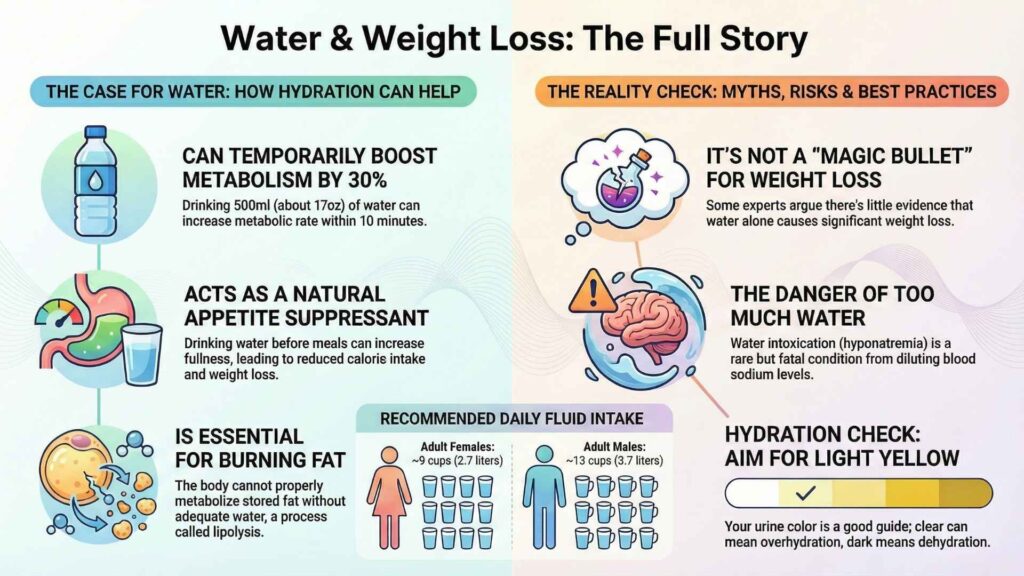
Can drinking water actually help you lose weight?
I know it’s hard to find time for the gym between office meetings and household chores. However, science shows that water is not just a thirst-quencher; it is a metabolic catalyst. When you drink water, your body has to work to process it. For instance, drinking cold water forces your body to expend energy to warm the fluid to your core temperature of 37∘C. This process, known as water-induced thermogenesis, can temporarily spike your resting energy expenditure by up to 30% for about an hour.
Furthermore, the relationship between Water Intake and Its Role in Weight Loss is rooted in how your body handles fat. To burn fat, your body must first break it down into usable energy. This chemical reaction requires water molecules to cleave the fat cells—a process scientists call lipolysis. If you are even mildly dehydrated, your body struggles to mobilize these fat stores, effectively slowing down your progress.
How much water should you drink to lose weight in India?
The “eight glasses a day” rule is a good starting point, but our diverse climate requires more specific targets. The Indian Council of Medical Research (ICMR) and the National Institute of Nutrition (NIN) recently updated their guidelines for 2024 to reflect our unique needs.
For healthy adults, the baseline is roughly 2 to 2.7 liters per day for women and 3.2 to 3.7 liters for men. However, if you are a heavier person or live in a humid city like Mumbai or Chennai, you may need more. A simple way to calculate this is to multiply your body weight in kg by 0.03. For example, if you weigh 70 kg, your target is 2.1 liters. If you are actively pursuing weight reduction, clinicians often suggest aiming for the higher end of the range, around 35–40ml per kg of body weight.

What is the best time to drink water for weight reduction?
Timing is everything. One of the most effective habits you can adopt is the “30-minute pre-meal rule.” Clinical trials have shown that drinking 500ml of water 30 minutes before your main meals (breakfast, lunch, and dinner) can lead to significant weight loss.
This works because water fills your stomach and triggers stretch receptors that send satiety signals to your brain. Consequently, you naturally eat smaller portions without feeling deprived. Additionally, I recommend starting your day with a habit called Ushapan—drinking 2 glasses of warm water immediately upon waking. This Ayurvedic practice “awakens” your digestive fire (Agni) and helps flush out metabolic waste accumulated overnight.
Does drinking warm water really boost fat loss?
In the Indian tradition, we have long valued warm water for its “lightness.” Ayurveda teaches that warm water (between 40∘C and 60∘C) is easier for the body to assimilate than ice-cold water. While cold water burns a few extra calories through thermogenesis, warm water excels at improving digestion and reducing bloating.
Furthermore, warm water helps liquefy fats in the digestive tract, making them easier for your body to process. If you struggle with a slow metabolism or feel “heavy” after meals, sipping warm water can stimulate your gut motility and help you feel lighter. Many people find that adding a slice of lemon or a pinch of ginger to warm water makes it more palatable while also providing a small boost to fat metabolism.
How does hydration impact PCOS, Diabetes, and Thyroid?
Managing medical conditions like PCOS or Diabetes adds another layer to your weight loss journey. For these individuals, Water Intake and Its Role in Weight Loss is even more critical.
- PCOS/PCOD: Women with PCOS often deal with insulin resistance and hormonal acne. Staying hydrated helps your kidneys flush out excess hormones and metabolic byproducts. Moreover, proper hydration suppresses vasopressin, a hormone that can worsen insulin resistance if it stays too high.
- Diabetes: High blood sugar levels prompt the kidneys to flush out excess glucose through urine, which can lead to dehydration. Drinking 3-4 liters of water helps dilute blood sugar and protects your kidneys.
- Thyroid Disorders: Hypothyroidism often causes water retention and a sluggish metabolism. Drinking warm water can support your Basal Metabolic Rate (BMR) and help reduce the “puffy” feeling caused by fluid retention.
- Hypertension (BP): Chronic dehydration makes the body hold onto sodium, which constricts blood vessels and raises blood pressure. If you have hypertension, aiming for 10–12 glasses of filtered water can help keep your vessels flexible and flush out excess salt.

Water vs. Detox drinks: Which is better?
You might see “fat-cutter” teas or “detox” waters on social media. Let’s simplify this: most of the weight loss from these drinks comes from the water itself, not the “magical” ingredients. However, traditional Indian infusions can provide specific benefits that plain water doesn’t.
- Jeera (Cumin) Water: This stimulates digestive enzymes and is excellent for reducing belly fat and bloating.
- Methi (Fenugreek) Water: Highly beneficial for those with diabetes or PCOS, as it helps stabilize blood sugar and reduces hunger cravings.
- Ajwain (Carom Seed) Water: Perfect for “water weight” and gas relief, especially after a heavy meal.
While these are great, they should complement—not replace—your plain water intake. Always prioritize your 2.5 to 3 liters of pure water first.
Practical hydration habits for the Indian lifestyle
I know it’s hard to find time, but you can build these habits into your existing routine without much effort:
- The Office Nudge: Keep a 1-liter bottle at your workstation. Aim to finish one before your lunch break and another before you leave for the day.
- The Tea Rule: For every cup of Masala Chai or coffee you drink, have one glass of water. Caffeine is a mild diuretic, and this habit ensures you stay balanced.
- Eat Your Water: Include water-rich Indian vegetables like Lauki (bottle gourd), Kheera (cucumber), and Tarbooj (watermelon) in your diet. These provide hydration along with fiber, which keeps you full longer.
- Morning Reset: Before you reach for your morning tea, drink 500ml of warm water. This replaces the fluids you lost while sleeping and sets a healthy tone for the day.
7-Day Hydration Blueprint for Weight Loss
If you want to see results, consistency is the key. Try this simple schedule for one week:
| Time of Day | Action | Benefit |
| 7:00 AM | 2 glasses of warm water (Ushapan) | Wakes up metabolism and aids digestion |
| 8:30 AM | 1 glass 30 mins before breakfast | Reduces breakfast portion sizes |
| 11:00 AM | 1 glass of Coconut water or Jeera water | Electrolyte balance and craving control |
| 12:30 PM | 2 glasses 30 mins before lunch | Helps you eat 10-20% fewer calories |
| 4:00 PM | 1 cup Green tea or Ajwain water | Beats the afternoon energy slump |
| 7:30 PM | 1-2 glasses 30 mins before dinner | Prevents overeating during the final meal |
| 9:30 PM | A few sips of warm water (optional) | Calms the nervous system for better sleep |

Frequently Asked Questions (FAQs)
1. Can drinking 8 glasses of water a day help me lose 5kg in a month? No, water alone is not a magic solution. While it supports Water Intake and Its Role in Weight Loss by boosting metabolism and reducing hunger, you still need a balanced diet and regular movement. Think of water as the “oil” that helps your weight-loss engine run faster.
2. Should I drink water even if I am not thirsty? Yes. In our climate, thirst is often a “late” indicator of dehydration. If you wait until you are thirsty, your metabolism might already be slowing down. Additionally, the brain often confuses thirst with hunger, leading to unnecessary snacking.
3. Does cold water “freeze” fat in the body? This is a common myth. Cold water does not freeze fat. In fact, cold water might slightly increase calorie burn because your body spends energy warming it up. However, for most people, warm water is better for digestion and comfort.
4. Is it safe to drink 5 liters of water a day? Usually, 2.5 to 3.5 liters is enough for most healthy people. Drinking excessive amounts (over 5-6 liters) can lead to a dangerous condition called hyponatremia, where your blood sodium levels drop too low. Always listen to your body and stick to the recommended range.
5. How do I know if I am drinking enough water? The simplest way is to check your urine color. If it is clear or pale yellow, you are likely well-hydrated. If it is dark yellow or amber, you need to increase your intake immediately.
Conclusion
Success in your weight loss journey often comes down to the small, repeatable habits you practice every day. By prioritizing Water Intake and Its Role in Weight Loss, you are giving your body the essential tools it needs to burn fat, regulate hormones, and maintain high energy levels. Whether you are managing PCOS, navigating a busy office schedule, or simply looking to feel lighter, that next glass of water is your most valuable ally.
Start tomorrow morning with a warm glass of water. Your body will thank you for it.
Ready to start your personalized health journey? If you need a custom diet plan that accounts for your medical history and lifestyle, our expert dietitians at DietDekho are here to guide you. Click here to fill out our consultation form!
Disclaimer: This blog post was written to help you make healthier food choices altogether. So, be aware and take care. The important thing to consider is your health before starting a restrictive diet. Always seek advice from a doctor or dietitian before starting if you have any concerns.
BOOK YOUR APPOINTMENT
Dr. Ritika is a nutrition and lifestyle expert with 2+ years of experience, helping clients manage weight and health through practical, personalized diet plans.