
Have you ever wondered why, despite eating “healthy” home-cooked meals, the scale refuses to budge? Many people find themselves stuck in a cycle of frustration, but the fundamental truth remains that a consistent calorie deficit diet plan is the only scientifically proven way to ensure fat loss while maintaining metabolic health.
What is a calorie deficit diet plan? Simply put, a calorie deficit diet plan involves consuming fewer calories than the body burns for energy through daily movement, digestion, and metabolic functions. In an Indian context, this typically requires reducing daily intake by 500–750 calories, prioritizing high-fiber vegetables, lean plant or animal proteins, and whole grains while strictly limiting refined sugars and excessive oils.
How to calculate calorie deficit for weight loss?
The first step in any successful nutritional journey is understanding the specific energy needs of the body. Estimating the calorie deficit requires a clear understanding of the Total Daily Energy Expenditure (TDEE), which encompasses the Basal Metabolic Rate (BMR), the thermic effect of food, and active energy expenditure. For the Indian population, the Indian Council of Medical Research (ICMR) and the National Institute of Nutrition (NIN) provide specific reference values based on physical activity levels (PAL).
Understanding the ICMR energy requirements
According to the 2020 and 2024 ICMR-NIN guidelines, energy requirements are categorized by the intensity of work performed daily. These values serve as the baseline from which a deficit is subtracted.
| Category | Adult Men (kcal/day) | Adult Women (kcal/day) |
| Sedentary Work | 2110 | 1660 |
| Moderate Work | 2710 | 2130 |
| Heavy Work | 3470 | 2720 |
To calculate a personalized calorie deficit diet plan, an individual should determine their current activity level. A sedentary person primarily sits or stands for light work, whereas moderate activity includes brisk walking or dancing. For fat loss, experts suggest reducing the maintenance intake by 500 calories per day, which should result in a sustainable weight loss of approximately 0.5 kg per week.
The role of BMR and physical activity levels
Basal Metabolic Rate is the number of calories the body needs to maintain basic life functions like breathing and circulation while at rest. In the Indian context, the ICMR has noted a reduction in BMR estimates by 10% for males and 9% for females in recent years, reflecting a more sedentary national lifestyle.
What this means for a daily routine is that the margin for error in calorie consumption is smaller than previously thought. If the TDEE is 2000 calories, consuming 2100 calories daily—just one extra biscuit or an additional teaspoon of oil—can lead to weight gain over time.
Determining the safe lower limit
While creating a deficit is essential, the body requires a minimum amount of energy to function safely. The National Institutes of Health (NIH) and Harvard Health emphasize that calorie intake should not fall below 1200 calories for women or 1500 calories for men, except under strict medical supervision.
I know it’s hard to find time to track every bite, but falling below these limits can lead to nutrient deficiencies, hair loss, and a significant drop in metabolic rate, making it harder to maintain weight loss in the long run.
Why is the Indian “Thin-Fat” phenotype important for weight loss?
The clinical management of obesity in India must account for a unique physiological profile known as the “thin-fat” phenotype. This describes individuals who may have a normal Body Mass Index (BMI) but possess high levels of body fat and significant insulin resistance.
Redefining obesity for the Indian body type
The Endocrine Society of India (ESI) notes that traditional Western BMI categories often fail to capture the metabolic risk for Indians. Consequently, the criteria for being a higher-weight person or having obesity in India are more stringent.
| Parameter | Criteria for Higher Weight/Obesity (India) |
| Body Mass Index (BMI) | >= 23 kg/m2 (Higher Weight); >= 25 kg/m2 (Obesity) |
| Waist Circumference | > 90 cm (Men); > 80 cm (Women) |
| Waist-Hip Ratio | > 0.9 (Men); > 0.8 (Women) |
Higher body fat at relatively lower body weights means that even individuals who may not appear to have excess weight can benefit from a calorie deficit diet plan in India, particularly to reduce visceral fat and lower the risk of diabetes and hypertension.
Addressing normal weight obesity
Normal weight obesity occurs when a person has a BMI within the 18.5–22.9 range but has a body fat percentage exceeding 25% for men or 30% for women. For these individuals, the focus of a personalized diet plan for weight loss India should be on “recomposition”—losing fat while preserving muscle mass through increased protein intake and moderate calorie restriction.
In simple terms, looking lean on the outside does not always mean being healthy on the inside. Reducing abdominal fat through a structured calorie deficit is a primary defense against the metabolic syndrome that currently affects millions of Indian households.

How to start a calorie deficit diet for beginners?
Embarking on a new nutrition plan can feel overwhelming, especially with the variety of oils and grains used in Indian cooking. Let’s simplify this by breaking it down into actionable phases that fit a busy lifestyle.
Phase 1: The audit and awareness stage
Before cutting calories, one must understand where they are currently coming from. For at least three days, use a tracking app or a simple journal to record everything consumed, including the hidden calories in “chai” sugar and “tadka” oil. Research indicates that people often underestimate their calorie intake by 30–40% when they do not track it.
Phase 2: Mastering portion control with the Thali method
An effective Indian fat loss diet for beginners does not require giving up cultural staples; it requires rearranging them. The “My Plate for the Day” concept developed by the NIN recommends a specific distribution of food groups to ensure nutrient density.
- 50% of the plate: Should be filled with vegetables, either as a stir-fry (sabzi) or a fresh salad.
- 25% of the plate: Should consist of high-quality protein such as dal, paneer, sprouts, or lean meat.
- 25% of the plate: Should be reserved for whole grains like ragi, bajra, or brown rice.
Phase 3: Gradual implementation
I know it’s tempting to start with a very restrictive 1200 calorie Indian diet chart immediately, but a gradual reduction is more sustainable. Start by removing 200–300 calories for the first week, primarily from refined sugars and deep-fried snacks, before moving toward a full 500-calorie deficit.
What are the best Indian foods for calorie deficit?
Choosing the right ingredients is the “secret sauce” to staying full while losing weight. In India, we are blessed with a variety of naturally low-calorie, high-fiber foods that can be the foundation of a successful calorie deficit diet plan.
High-volume, low-calorie vegetables
Vegetables with high water content allow for larger servings without a significant caloric load. Lauki (bottle gourd), tori (ridge gourd), and kaddu (pumpkin) are excellent for weight loss.
| Vegetable | Serving Size | Calories (approx.) |
| Lauki (Cooked) | 1 cup | 30–40 |
| Spinach (Palak) | 1 cup | 7 |
| Cauliflower | 1 cup | 25 |
| Cucumber | 1 medium | 15 |
Adding these to your daily routine means you can eat a satisfying volume of food while keeping total energy intake low. For instance, a bowl of lauki soup before dinner can naturally reduce the amount of roti or rice you consume later.
The power of Indian spices and herbs
Spices are not just for flavor; many have thermogenic properties that can slightly boost metabolism. Turmeric (haldi) contains curcumin, which helps reduce inflammation often associated with obesity. Ginger and black pepper are also known to improve digestion and support metabolic efficiency.

Can you follow a high protein Indian vegetarian diet for weight loss?
A common myth is that a vegetarian diet cannot provide enough protein for fat loss. While it requires more planning, a high protein Indian vegetarian diet for weight loss is entirely possible and highly effective for muscle preservation.
Essential vegetarian protein sources
Dals and legumes are the backbone of Indian protein, but they must be prepared with minimal oil to fit into a calorie deficit diet plan. Soya chunks, paneer (low-fat), and Greek yogurt (a great high-protein substitute for regular dahi) are also excellent choices.
| Protein Source | Serving Size | Protein (g) | Calories |
| Moong Dal (Cooked) | 1/2 cup | 4.4 | 100 |
| Paneer (Low-Fat) | 100g | 18–20 | 180–200 |
| Soya Chunks | 30g (raw) | 15 | 105 |
| Greek Yogurt | 1 cup | 15–20 | 120–150 |
| Boiled Chana | 1/2 cup | 7 | 130 |
Optimizing protein absorption
To get the best results, it is helpful to combine different protein sources. For example, eating a mix of cereal and pulse (like in khichdi) ensures you get all essential amino acids. Adding a side of curd or sprouts to every meal is a simple habit that significantly boosts total protein intake without adding excessive calories.
How to track calories in Indian home food?
Tracking calories in a Western diet is often as simple as reading a label, but Indian home-cooked meals are complex. Between the “andaza” (estimation) of spices and the variable use of oil, accuracy can be a challenge.
Measurement hacks for the Indian kitchen
The short answer is: you must measure your raw ingredients. One tablespoon of oil contains roughly 120–130 calories. If you use three tablespoons of oil for a family curry, that’s nearly 400 calories just from fat.
- Use a digital scale: Weigh your dry atta (flour) or rice before cooking. 30g of wheat flour is approximately 100 calories.
- Standardize your katori: Use the same bowl for every meal so you can visualize portion sizes consistently.
- Track the “Tadka”: Always account for the oil or ghee used for tempering.
Utilizing AI and technology
I know it’s hard to find time to enter every ingredient manually. Apps like NutriScan allow you to take a photo of your plate—whether it’s aloo paratha or chicken biryani—and use AI to estimate the calorie count based on regional Indian cooking styles. This is particularly helpful for busy professionals who often eat outside or have less control over meal preparation.

What is the best calorie deficit for PCOS weight loss?
Polycystic Ovary Syndrome (PCOS) is a hormonal disorder that makes weight loss notoriously difficult due to insulin resistance. However, research shows that a modest weight loss of 5–15% can significantly improve symptoms and restore hormonal balance.
Low Glycemic Index (GI) strategies
For PCOS, a calorie deficit diet plan must focus on the quality of carbohydrates. High-GI foods like white rice and white bread cause insulin spikes that worsen PCOS. Switching to millets like ragi, bajra, or jowar provides a slower release of energy, which helps stabilize blood sugar and reduce cravings.
Anti-inflammatory foods for hormone health
Inflammation is a key driver of PCOS symptoms. Incorporating anti-inflammatory spices like cinnamon (which improves insulin sensitivity) and turmeric is highly beneficial. Spearmint tea is another home-based solution that has been shown to reduce androgen levels in women with PCOS.
| PCOS-Friendly Food | Benefit |
| Ragi / Bajra | Low GI, high fiber for insulin control |
| Fenugreek (Methi) | Reduces fasting glucose levels |
| Walnuts / Flaxseeds | Omega-3s to reduce inflammation |
| Leafy Greens | High folate for metabolic health |
Is a 1200 calorie Indian diet chart suitable for everyone?
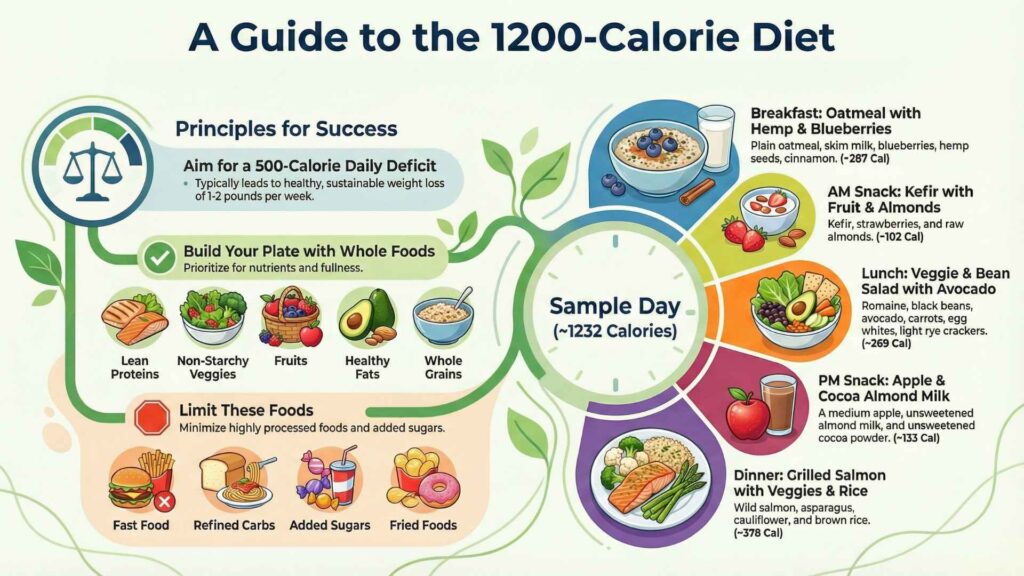
The 1200-calorie threshold is often cited as the “gold standard” for weight loss, but it is not a one-size-fits-all solution. In fact, for a physically active man, 1200 calories might be too low, potentially causing muscle loss and extreme fatigue.
Who should follow a 1200 calorie plan?
A 1200 calorie Indian diet chart is generally most appropriate for sedentary women who have a lower BMR. For individuals with moderate to high activity levels, a 1500–1800 calorie plan is usually more effective for long-term adherence.
A sample 1200 calorie day
- Breakfast (8:30 AM): 2 Moong dal chillas with mint chutney (250 kcal).
- Mid-Morning (11:00 AM): 1 small orange or 5-6 soaked almonds (80 kcal).
- Lunch (1:30 PM): 1 Multigrain roti, 1 cup dal, 1 cup stir-fried spinach, and a large bowl of salad (350 kcal).
- Evening (4:30 PM): 1 cup buttermilk (chaas) or green tea with a handful of roasted makhana (120 kcal).
- Dinner (8:00 PM): 1 bowl of vegetable soup and a small portion of paneer bhurji or grilled fish (300 kcal).
- Before Bed (Optional): Warm water with a pinch of turmeric.

How does intermittent fasting with calorie deficit Indian diet work?
Intermittent fasting (IF) is not a diet itself, but a timing strategy that can make staying in a calorie deficit diet plan much easier. By limiting the eating window, you naturally reduce the opportunities for snacking.
The 16:8 Protocol for Indian Lifestyles
The 16:8 method is the most popular, involving a 16-hour fast and an 8-hour eating window (e.g., 12:00 PM to 8:00 PM). This works well for many Indians who find it easier to skip a heavy breakfast and focus on a substantial lunch and dinner.
Benefits of combining IF with Indian staples
Unlike some Western diets that heavily restrict carbs, intermittent fasting with calorie deficit Indian diet allow you to enjoy staples like dal and roti in moderation during your eating window. Fasting can also improve insulin sensitivity, which is particularly beneficial for those with type 2 diabetes or PCOS.
Tips for Success:
- Stay hydrated: Drink water, black coffee, or herbal teas during the fasting window.
- Prevent overeating: Treat the eating window as a time for nourishment, not a reason to over-indulge in fried snacks or sweets.
- Focus on protein: Ensure every meal in your window has a good protein source to prevent muscle loss.
What are the best budget friendly calorie deficit meals?
Losing weight shouldn’t be expensive. You don’t need “superfoods” like avocados or kale to succeed. Traditional, budget friendly calorie deficit meals are readily available in every local Indian market.
Economic and nutritious staples
- Kala Chana (Black Chickpeas): Extremely cheap, high in protein, and very filling. A bowl of kala chana chaat is a powerhouse of nutrition.
- Dalia (Broken Wheat): A great alternative to rice that is rich in fiber and very affordable.
- Seasonal Gourds: Lauki, tori, and tinda are usually the cheapest vegetables available and are perfect for low-calorie volume.
- Sprouted Moong: You can sprout moong at home for pennies, creating a high-protein snack that lasts for days.
The “Batch Cooking” strategy
What this means for your daily routine is that you can save both money and time by preparing large batches of basic dals or boiled legumes on the weekend. These can then be quickly tempered with fresh vegetables during the week for a fast, healthy meal.

How to manage diabetes, thyroid, and BP while in a deficit?
Managing medical conditions requires a more clinical approach to a calorie deficit diet plan. Always seek advice from a doctor before making major changes, as your medication dosage may need to be adjusted.
Nutritional priorities for Diabetes
The 2024 ICMR guidelines highlight that unhealthy diets contribute to rising diabetes rates. Focusing on fiber (25–30g daily) and limiting added sugars to less than 5% of total calories is crucial. Whole grains should make up at least 50% of your cereal intake to prevent sudden blood sugar spikes.
Strategies for Hypothyroidism and Weight Loss
Hypothyroidism slows down the metabolism, making the calorie deficit feel harder. It is essential to focus on:
- Iodine and Selenium: Found in iodized salt, eggs, and sunflower seeds.
- Zinc: Found in dals, chickpeas, and nuts.
- Avoid raw goitrogens: Cook vegetables like cabbage and cauliflower to neutralize compounds that interfere with the thyroid.
- Medication Timing: Take your thyroid medication on an empty stomach at least 30–60 minutes before your first meal to ensure proper absorption.
DASH Diet for Hypertension (BP)
The DASH diet focuses on reducing salt intake to less than 5g per day. Replacing table salt with spices like lemon juice, amchur (mango powder), and fresh coriander can provide flavor without the sodium that increases blood pressure.
What are the best calorie deficit snacks Indian?
The 4 PM hunger pang is where most weight loss plans go to die. Instead of reaching for a biscuit or a samosa, keep these calorie deficit snacks Indian options ready.
Quick and healthy munchies
| Snack | Portion | Calories | Why it works |
| Roasted Makhana | 1 cup | 100 | High volume, very crunchy |
| Roasted Chana | 30g | 110 | High protein and fiber |
| Buttermilk (Chaas) | 1 glass | 30 | Hydrating and probiotic |
| Sprouted Moong | 1/2 cup | 100 | Nutrient dense and filling |
| Boiled Egg White | 2 pieces | 34 | Pure, high-quality protein |
I know it’s hard to resist office snacks, but having a small container of roasted makhana in your bag can be a lifesaver. These “desi” snacks are not only cheaper but far superior to packaged “diet” chips.
How can NRIs manage an Indian low calorie meal plan abroad?
Living abroad often means limited access to fresh Indian vegetables like lauki or tindora. However, an Indian low calorie meal plan can easily be adapted using local ingredients found in Western supermarkets.
Western swaps for Indian favorites
- Quinoa for Rice: Quinoa has a similar texture to broken rice but offers significantly more protein and a lower GI.
- Greek Yogurt for Dahi: It is much higher in protein and can be used to make a thicker, more satisfying raita.
- Tofu for Paneer: Tofu is lower in calories and saturated fat than traditional paneer, making it a great choice for a calorie deficit diet plan.
- Oats for Poha: If you can’t find thick poha, steel-cut oats can be prepared in a “masala” style with mustard seeds and curry leaves for a fiber-rich breakfast.
Healthy cooking in a global context
Utilizing modern appliances like air fryers or ovens can help NRIs recreate “tandoori” style dishes without the heavy use of oil or butter found in restaurants. This allows you to enjoy the flavors of home while staying within your daily calorie goals.

FAQs: Your Top Questions Answered
How many calories to lose weight in India?
Most sedentary Indian adults need between 1200 and 1500 calories (for women) or 1500 and 1800 calories (for men) to lose weight. This typically creates the necessary 500-calorie deficit from their maintenance level.
What is the fastest way to lose belly fat with Indian food?
There is no “magic” food for spot reduction. However, focusing on high-fiber foods like dals, leafy greens, and millets while strictly limiting refined sugar and white flour will help reduce overall body fat, including abdominal fat.
Can I eat mango or banana on a calorie deficit diet plan?
Yes, but portion control is key. One medium mango can have up to 180 calories, while a medium banana has about 90–100 calories. It is better to have these as a mid-morning snack rather than after a full meal.
Is ghee allowed for weight loss?
Yes, in moderation. ICMR-NIN guidelines suggest 20–25g of visible fat daily for a healthy adult. Using one teaspoon of ghee per day is healthy for digestion and satiety, but excessive use will quickly blow your calorie budget.
How do I stop sugar cravings while dieting?
Ensure you are eating enough protein and fiber in your main meals, as this prevents the blood sugar crashes that lead to cravings. Drinking adequate water and getting 7–8 hours of sleep also helps regulate hunger hormones.
Conclusion: Your Path to a Healthier You
Achieving your weight loss goals through a calorie deficit diet plan is not about deprivation; it is about making informed, mindful choices that honor your health and your culture. By understanding your body’s unique needs, rearranging your plate with more vegetables and protein, and using technology to track your progress, you can break the cycle of unsuccessful dieting.
The journey to a healthier version of yourself starts with the next meal. Whether you are managing PCOS, diabetes, or simply a busy professional life, a structured calorie deficit is your most reliable tool. Stay consistent, be patient with yourself, and remember that every small change adds up to a massive transformation.
Ready to take the next step toward a healthier lifestyle? Let our expert dietitians create a plan tailored just for you.
Disclaimer: This blog post was written to help you make healthier food choices altogether. So, be aware and take care. The important thing to consider is your health before starting a restrictive diet. Always seek advice from a doctor or dietitian before starting if you have any concerns.
BOOK YOUR APPOINTMENT
Dr. Ritika is a nutrition and lifestyle expert with 2+ years of experience, helping clients manage weight and health through practical, personalized diet plans.