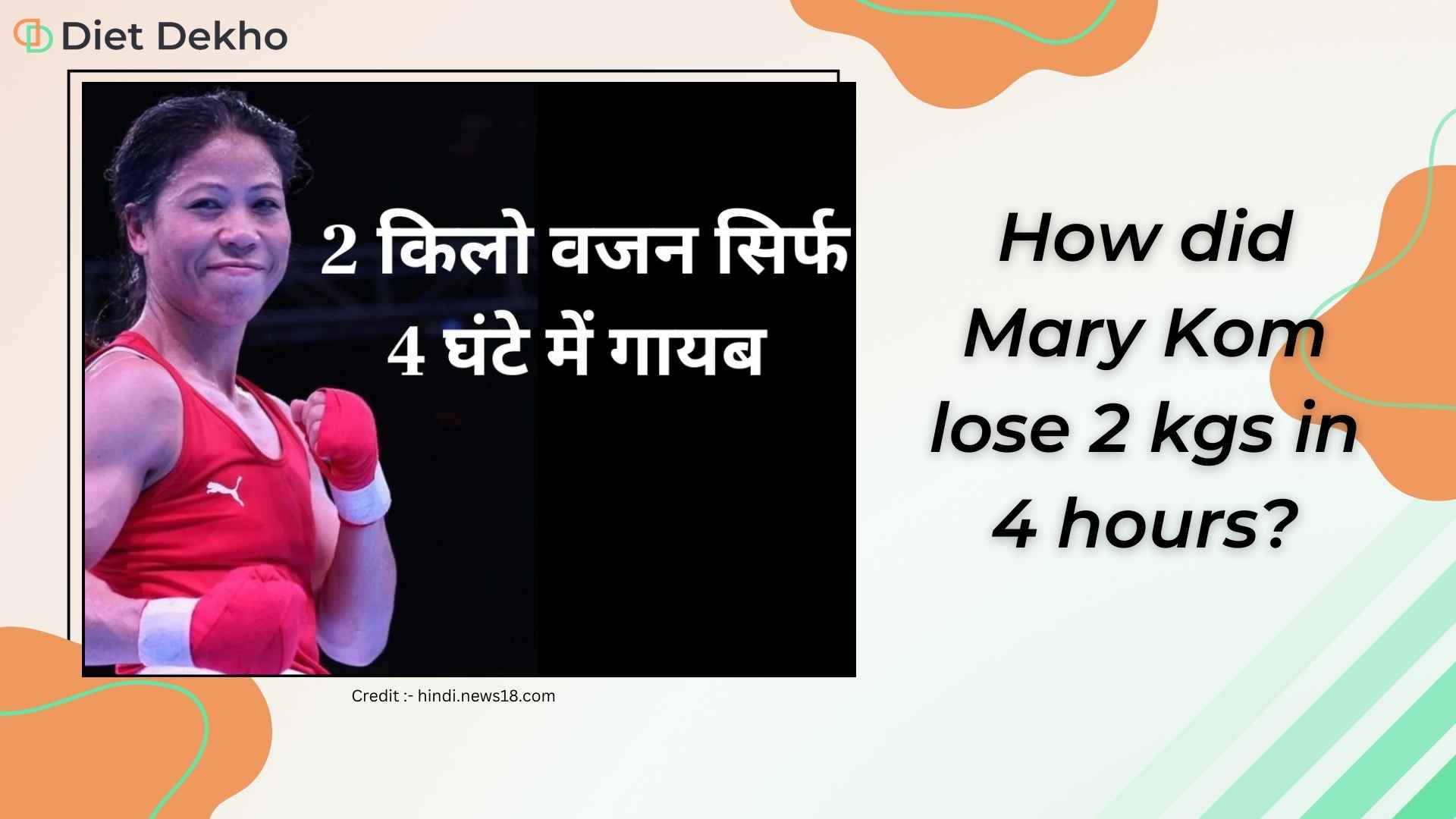
Have people ever wondered how an elite athlete can drop significant weight in mere hours to qualify for a global competition? The Mary Kom weight loss strategy demonstrates the extraordinary discipline of an Olympic medalist who successfully shed two kilograms in a single afternoon to meet tournament requirements. This achievement highlights the divergence between acute athletic weight manipulation and the sustainable fat loss needed for long-term health.
The Mary Kom weight loss strategy involved intense, continuous skipping for one hour to lose 2 kg in a 4-hour window during the 2018 Silesian Open. This method targets water weight through perspiration rather than fat. While effective for athletes, the general public should prioritize gradual weight loss (0.5 kg/week) through the ICMR-recommended balanced Indian plate.

How did Mary Kom lose 2 kgs in 4 hours at the Silesian Open?
The incident occurred during the Silesian Open Boxing Tournament in Gliwice, Poland, in 2018. Upon arrival, the five-time world champion discovered she was slightly over the 48-kg limit required for her weight class. With only four hours remaining before the official weigh-in, the risk of disqualification was imminent. Facing this challenge, the athlete utilized a high-intensity skipping routine for a full hour without rest.
This specific intervention leveraged the body’s thermoregulatory mechanisms to induce rapid fluid loss. In the world of combat sports, this is known as “making weight” or “weight cutting,” where the goal is to qualify for a lower weight category to gain a competitive advantage in strength and size. By the time the weigh-in commenced, the 2-kg excess had been eliminated, allowing the boxer to compete and eventually secure a gold medal.
The physiological basis for this rapid change is the excretion of water through sweat and the depletion of glycogen stores. Glycogen, the body’s stored form of glucose, is chemically bonded with significant amounts of water—roughly three to four grams of water for every gram of glycogen. By skipping at a high intensity, which can burn 10 to 16 calories per minute, the athlete effectively “wrung out” the body’s moisture, reaching the target weight just in time.
The Role of Skipping in Acute Mass Reduction
Skipping, or jump rope, is categorized as a high-intensity cardiovascular exercise that engages multiple muscle groups including the legs, core, and arms. For professional boxers, skipping is a foundational skill that builds the stamina, heart-lung capacity, and bone density required for the ring. In an emergency context, the continuous nature of skipping creates a sustained elevated heart rate, maximizing caloric expenditure and heat production.
| Exercise Type | Calories Burned per Minute | Metabolic Focus | Equipment Needed |
| High-Intensity Skipping | 10 – 16 kcal | Cardiovascular / Thermogenesis | Skipping Rope |
| Brisk Walking | 4 – 6 kcal | Aerobic / Fat Oxidation | None |
| Running (15 km/h) | 12 – 15 kcal | Cardiovascular | Running Shoes |
| Yoga (Hatha) | 2 – 4 kcal | Flexibility / Core | Yoga Mat |
For the general Indian population, particularly busy professionals and homemakers, skipping offers a space-efficient and cost-effective method to improve fitness. While the Mary Kom weight loss strategy used skipping for an extreme short-term goal, daily sessions of 15 to 20 minutes can significantly contribute to a long-term calorie deficit.

Why the Mary Kom weight loss strategy differs from typical fat loss
It is critical to distinguish between the acute weight cut performed by an elite athlete and the chronic weight loss desired by those managing medical conditions like PCOS or diabetes. Weight cutting is a transient state of dehydration and nutrient depletion, whereas sustainable fat loss involves the gradual reduction of adipose tissue while preserving lean muscle mass.
In a competitive setting, athletes often undergo “Rapid Weight Regain” (RWG) immediately after the weigh-in by consuming electrolyte-rich fluids and high-carbohydrate meals. This allows them to enter the ring heavier and more energized than their official weigh-in category. For a non-athlete seeking a healthier lifestyle, such rapid fluctuations can lead to metabolic adaptation, making it harder to maintain a healthy weight over time.
| Metric | Athlete Weight Cutting | Sustainable Fat Loss |
| Primary Goal | Meet tournament weight limit | Improve health and body composition |
| Target Tissue | Water and Glycogen | Adipose Tissue (Fat) |
| Timeframe | 1 to 48 hours | Weeks to Months |
| After-Effect | Rapid regain upon rehydration | Long-term weight maintenance |
| Health Risk | High (Electrolyte imbalance) | Low (When gradual) |
The pursuit of rapid results often leads individuals toward fad diets or extreme exercise routines that mirror the Mary Kom weight loss strategy without the necessary medical supervision. For those managing hypertension or thyroid issues, these extreme shifts can be dangerous, as the cardiovascular system is placed under significant strain during acute dehydration.
How can Indian households implement a balanced “My Plate” for health?
The Indian Council of Medical Research (ICMR) 2024 guidelines provide a comprehensive framework for achieving sustainable weight loss within an Indian lifestyle context. Rather than focusing on a single hour of exercise, these guidelines emphasize a balanced daily intake that promotes satiety and nutrient density.
The ICMR “My Plate for the Day” model represents a 2000-kcal diet that can be adjusted for weight loss by reducing cereal intake while maintaining the proportions of vegetables and protein. For most sedentary or moderately active Indian adults, a reduction of 500 to 750 calories from the daily requirement is the gold standard for progress.
ICMR 2024 Recommended Proportions for an Indian Plate
To ensure the body receives all necessary macronutrients and micronutrients, the ICMR recommends specific weights for raw food groups. Following these proportions helps prevent “hidden hunger”—a state of micronutrient deficiency despite adequate calorie intake.
| Food Group | Raw Weight (g/day) | Nutrient Contribution |
| Vegetables | 400 g | Fiber, Vitamins, Minerals |
| Fruits | 100 g | Antioxidants, Vitamin C |
| Cereals & Millets | 250 g | Carbohydrates, B-Vitamins |
| Pulses / Legumes | 85 g | Plant Protein, Iron |
| Milk / Curd | 300 ml | Calcium, Probiotics |
| Nuts & Seeds | 35 g | Healthy Fats, Omega-3s |
| Fats & Oils | 27 g | Essential Fatty Acids |
For individuals with abdominal obesity—a common concern in India—the ICMR suggests targeting a waist circumference of less than 90 cm for men and 80 cm for women. Achieving this requires a shift from refined carbohydrates like white rice and maida toward fiber-rich whole grains and pulses.

What role do millets play in the Mary Kom weight loss strategy?
While the acute phase of the Mary Kom weight loss strategy focused on exercise, her long-term fitness is supported by a diet that includes traditional Indian staples. Millets, often called “nutri-cereals,” have gained prominence in the Indian healthcare context for their ability to provide sustained energy without the rapid blood sugar spikes associated with refined grains.
Millets like Ragi (Finger Millet), Jowar (Sorghum), and Bajra (Pearl Millet) are rich in fiber, which delays the absorption of fats and carbohydrates. This delay is particularly beneficial for weight loss because it increases satiety, preventing the mid-morning or late-night cravings that often derail health goals.
Glycemic Index and Nutrient Density of Indian Grains
The Glycemic Index (GI) measures how quickly a food raises blood glucose levels. Foods with a low GI are preferred for weight management and for individuals managing diabetes or PCOS.
| Grain Type | Glycemic Index (Approx.) | Key Benefits |
| Ragi | 35 – 55 | Exceptionally high in Calcium and Iron |
| Jowar | Low | Gluten-free and rich in antioxidants |
| Bajra | 55 | High protein and magnesium content |
| Brown Rice | 50 | High fiber compared to white rice |
| White Rice | 70+ | Low fiber, rapid sugar spike |
Substituting one portion of white rice with a millet-based dish, such as Ragi dosa or Jowar roti, can significantly improve the metabolic profile of a meal. For NRIs living abroad, these grains are increasingly available in local grocery stores and serve as a vital link to traditional Indian health wisdom.
How to manage weight with PCOS and PCOD effectively?
Polycystic Ovary Syndrome (PCOS) is a common hormonal disorder in Indian women, often exacerbated by insulin resistance and obesity. For this audience, the Mary Kom weight loss strategy of high-intensity movement must be paired with careful nutritional choices to reduce androgen levels and restore hormonal balance.
Clinical studies indicate that a modest weight loss of 5-15% can significantly improve menstrual cycles and ovulation in women with PCOS. The focus should be on an anti-inflammatory diet that includes leafy greens, fatty fish, and whole grains to combat the systemic inflammation associated with the condition.
Nutritional Architecture for PCOS Management
In women with PCOS, insulin levels are often chronically elevated, which stimulates the ovaries to produce excess testosterone. By focusing on high-fiber foods and lean proteins, patients can lower their insulin response and break the cycle of hormonal imbalance.
- High-Protein Anchors: Including moong dal, eggs, or paneer in every meal helps regulate hunger hormones like ghrelin.
- Low-GI Carbohydrates: Replacing maida with whole-wheat or millet-based rotis prevents insulin spikes.
- Anti-Inflammatory Spices: Using turmeric (curcumin) with black pepper can reduce inflammation by nearly 30%.
Safety considerations are paramount; rapid weight loss through extreme fluid restriction can further disrupt the delicate endocrine system in women with PCOS.26 A gradual approach, as advocated by Harvard Health, ensures that the body does not enter a state of high stress that could worsen hormonal symptoms.

Is rapid weight loss safe for people with diabetes and BP?
The Mary Kom weight loss strategy was performed by a world-class athlete with a high level of cardiovascular fitness. For individuals with Type 2 Diabetes or Hypertension (BP), the safety of rapid weight loss is a subject of medical concern. While losing weight is generally beneficial for these conditions, the rate and method of loss matter significantly.
For diabetics, rapid weight loss—especially through fasting or extreme exercise—can lead to hypoglycemia (dangerously low blood sugar). For those with hypertension, sudden dehydration reduces plasma volume, which can lead to dizziness, lightheadedness, and even acute kidney injury.
The DASH Approach in the Indian Kitchen
The Dietary Approaches to Stop Hypertension (DASH) diet is highly effective for reducing blood pressure and supporting weight loss. This can be easily adapted to the Indian context by focusing on the following food groups:
| DASH Food Group | Indian Choices | Weight Loss Benefit |
| Whole Grains | Oats, Dalia, Multigrain Roti | Stable energy, high fiber |
| Vegetables | Saag, Bhindi, Tinda, Lauki | Low calorie, high potassium |
| Low-fat Dairy | Skimmed milk curd (Dahi) | Calcium for blood pressure regulation |
| Lean Protein | Dal, Chana, Grilled Chicken | Satiety and muscle maintenance |
Expert insights from the NIH emphasize that even a modest 5-10% weight reduction can lower the risk of cardiovascular events and improve HbA1c levels in diabetics. The goal is to move toward these targets through a consistent caloric deficit of 500 calories per day, rather than the extreme measures used in athletic weight cuts.
How does thyroid health influence the weight loss journey?
Many Indians, particularly women, struggle with hypothyroidism, where a slow metabolism makes weight loss feel nearly impossible. The Mary Kom weight loss strategy of regular, disciplined training is actually very beneficial for thyroid health, as exercise can help stimulate metabolic activity.
However, the rapid “cut” method can backfire for thyroid patients. Severe calorie restriction and rapid weight loss can decrease the peripheral conversion of the prohormone T4 to its active form, T3. This further slows the metabolism, leading to a frustrating plateau or rapid weight regain.
Managing Hypothyroidism with Lifestyle Changes
To support the thyroid while pursuing weight goals, individuals should focus on “nutrient density” rather than “calorie counting” alone.
- Iodine and Selenium: Consuming adequate amounts of milk, curd, and nuts ensures the thyroid has the raw materials needed for hormone production.
- Regular Cardio: Brisk walking or light skipping for 30 minutes daily can help counteract a sluggish metabolic rate.
- Circadian Rhythm: Maintaining consistent sleep and wake times, as recommended by the Ministry of Health, supports hormonal homeostasis.
A supportive dietitian approach focuses on these small, sustainable shifts. When the body feels nourished and safe, the thyroid functions more effectively, making the Mary Kom weight loss strategy—in its moderate, consistent form—much more achievable.

What are the best home-based routines for busy professionals?
A major barrier to fitness for many Indians is a lack of time or access to a gym. The Mary Kom weight loss strategy is a perfect example of why a gym is not a necessity. Much of her training involves bodyweight exercises and simple tools like a skipping rope.
For homemakers and busy professionals, the concept of “Non-Exercise Activity Thermogenesis” (NEAT) is a powerful tool. This refers to the energy expended during daily tasks like cleaning, walking to the market, or taking the stairs. Increasing NEAT, combined with a 20-minute daily home workout, can produce significant results over time.
A Sample 30-Minute Home Workout Routine
This routine is inspired by the athletic training of champions but scaled for the average person to prevent injury and ensure consistency.
- Warm-up (5-10 mins): Brisk walking in place or light stretching to increase blood flow.
- HIIT Circuit (15 mins): 30 seconds of skipping (or “shadow skipping” without a rope) followed by 30 seconds of rest. Repeat 10-15 times.
- Strength Training (5 mins): Bodyweight squats, push-ups (against a wall if needed), and planks to build muscle mass.
- Cool Down (5 mins): Light yoga poses like Naukasana or Trikonasana to improve core strength and flexibility.
Consistency is more important than intensity. As the athlete herself stated, “Regular practice… I never miss my training”. For those with a busy schedule, splitting this into two 15-minute sessions can be just as effective.
How to use Indian spices as fat-burning catalysts?
The Indian kitchen is a treasure trove of metabolic catalysts. While no spice can replace a calorie deficit, certain traditional ingredients can support the body’s fat-burning processes. These are particularly useful for individuals with PCOD or diabetes who struggle with insulin resistance.
The Power of the Spice Box
Spices should be viewed as “medicinal tools” that complement the Mary Kom weight loss strategy of discipline and movement.
| Spice | Active Compound | Primary Benefit | Best Way to Use |
| Turmeric | Curcumin | Reduces inflammation and improves insulin sensitivity | Use in dals with black pepper |
| Cinnamon | Cinnamaldehyde | Regulates blood sugar and reduces sugar cravings | Add to morning tea or oats |
| Fenugreek | Soluble Fiber | Lowers fasting glucose and improves digestion | Soak seeds overnight and drink the water |
| Cumin (Jeera) | Thymol | Stimulates digestive enzymes and boosts metabolism | Drink warm Jeera water on an empty stomach |
Integrating these into daily rituals—such as starting the day with warm lemon water or adding ajwain to rotis—helps optimize the digestive environment for weight loss.

What are the psychological secrets to lasting weight loss?
One of the most profound aspects of the Mary Kom weight loss strategy is the mental resilience required to perform under pressure. For the general public, the “mental game” of weight loss is often where the battle is won or lost.
Research suggests that sustainable weight loss occurs when there is an “identity shift.” Instead of seeing oneself as “on a diet,” one must start seeing oneself as a “person who prioritizes health”. This psychological shift makes healthy choices feel natural rather than restrictive.
Behavioral Hacks for Success
- Mindful Eating: Focus on the sight, smell, and taste of food. This prevents overeating and increases the enjoyment of healthy meals.
- Progress Tracking: Maintain a food and activity journal. This provides accountability and helps identify patterns that may lead to weight gain.
- Manage Stress: Chronic stress elevates cortisol, which promotes belly fat storage. Techniques like listening to music or practicing deep breathing are essential.
- The Power of “Why”: Understanding the deep motivation for weight loss—such as being able to play with grandchildren or reducing medication—helps maintain focus during difficult times.
By adopting the discipline of an athlete but the patience of a student, long-term health becomes an achievable reality rather than a fleeting goal.
Is the Mary Kom weight loss strategy right for you?
In conclusion, the Mary Kom weight loss strategy serves as an incredible example of what the human body can achieve in an emergency. However, for the millions of Indians seeking to manage weight and chronic health conditions, the lesson is not in the “4 hours” but in the “years of discipline.”
True transformation comes from the intersection of traditional Indian nutrition, consistent movement like skipping, and the modern clinical guidelines provided by the ICMR. Whether a professional in Mumbai, a homemaker in Delhi, or an NRI in London, the tools for health are already present in the Indian kitchen and the local environment.
The journey toward a healthier weight should be one of empowerment and self-care. By making small, informed changes to the daily plate and incorporating regular activity, everyone can find their own “gold medal” version of health.
Take control of your health journey today. For personalized support, visit:

Frequently Asked Questions (FAQs)
How did Mary Kom lose 2 kgs in 4 hours?
Mary Kom lost the weight primarily through intense, continuous skipping for one hour, which induced heavy sweating and eliminated excess water weight. This was done to qualify for her weight category at the 2018 Silesian Open.
Is it safe to lose weight as quickly as Mary Kom?
For the general public, rapid weight loss of 2 kg in 4 hours is unsafe and can lead to severe dehydration and electrolyte imbalances. Health experts and the ICMR recommend a steady loss of 0.5 kg per week for long-term safety and success.
Can skipping help reduce belly fat for people with PCOS?
Yes, skipping is an effective high-intensity exercise that can help reduce visceral fat and improve insulin sensitivity, both of which are crucial for managing PCOS. However, it should be paired with a low-GI Indian diet for best results.
What should I eat to lose weight without going to the gym?
Focus on the ICMR-recommended “My Plate” by filling half your plate with vegetables and fruits. Replace white rice with millets like Jowar or Ragi and ensure every meal has a protein source like dal or eggs to keep you full.
How can I stay motivated to lose weight like an athlete?
Adopt an “identity shift” where you see yourself as a healthy person. Use small behavioral hacks like meal prepping on weekends and tracking your daily steps to build consistency, which is the hallmark of any champion’s routine.
Contact Us
We understand how overwhelming nutrition and weight loss information can feel. With so many opinions and confusing advice online, it’s easy to feel stuck or unsure about what to do next.
At Diet Dekho, you never have to figure it out alone. You can contact us anytime with any questions or concerns. Our expert dietitians are available 24/7 to guide, support, and help you stay on track. Whether your goal is weight loss or building healthier habits, we’re here to make the journey simpler and more sustainable for you.
Disclaimer
This blog is intended to help readers make healthier food choices. Your health should always be the top priority. Before starting any restrictive or special diet, especially if you have a medical condition or health concern, please consult a doctor or a qualified dietitian. Each body responds differently to food and lifestyle changes. Always choose what is safe and suitable for you.

Dr. Ritika is a nutrition and lifestyle expert with 2+ years of experience, helping clients manage weight and health through practical, personalized diet plans.