
I know it is hard to find time to focus on yourself when your daily schedule is packed with meetings or household chores. You might have seen the stunning transformation of one of India’s most loved personalities and wondered if such a change is possible for someone who doesn’t live in a gym. The Shehnaaz Gill weight loss journey is a powerful example of how consistent, small changes in an Indian household setting can lead to massive health improvements.
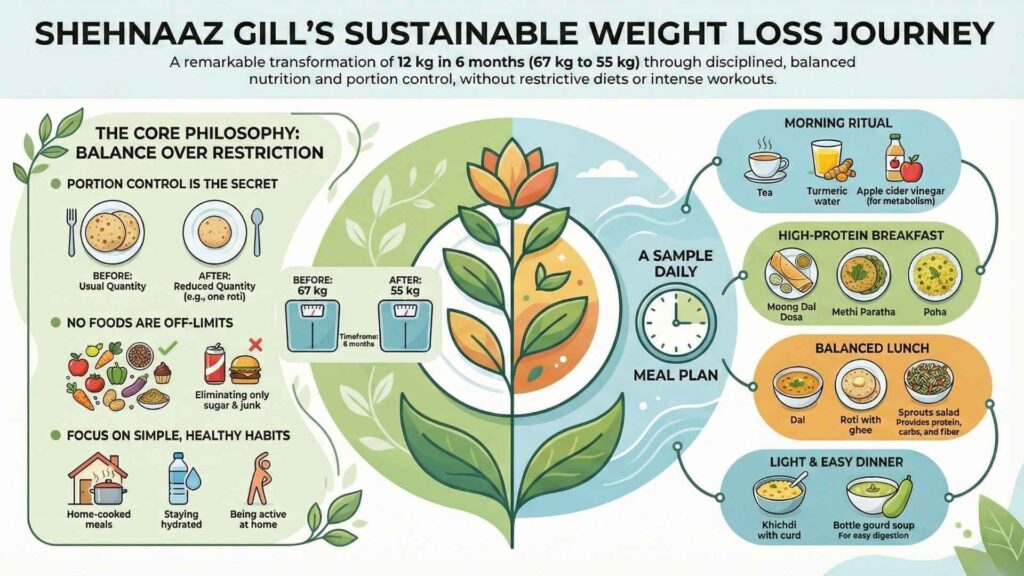
The short answer is that the Shehnaaz Gill weight loss journey was achieved by losing 12 kilograms in six months during the COVID-19 lockdown through strict portion control and a simple, repetitive Indian vegetarian diet. By reducing her meal sizes by half and focusing on protein-rich staples like moong dal and khichdi, she transformed her health without an intensive exercise regimen.
Why did Shehnaaz Gill decide to change her lifestyle?
Before we look at the meals, let’s simplify the “why” behind this change. For many of us, the motivation to lose weight comes from a mix of health concerns and the desire to feel better in our own skin. In the celebrity world, this is often amplified by public scrutiny. During her time on a major reality show, the actress faced significant body shaming and mockery regarding her weight. What this means for your daily routine is that motivation often starts with a mental click—a decision that your health and self-image are worth the effort of discipline.
The lockdown provided a unique window of opportunity. With work coming to a standstill, she chose to use that time for self-improvement rather than falling into sedentary habits. This period is central to understanding how did Shehnaaz Gill lose weight in lockdown because it removed the usual excuses of “no time” or “eating out” that many busy professionals and NRIs face.
How did Shehnaaz Gill lose weight in lockdown?
Many people believe that weight loss requires expensive equipment or a personal trainer. However, the secret to how did Shehnaaz Gill lose weight in lockdown was actually a return to basics. She focused on the relationship between her plate and her hunger. Instead of following a trending “fad” diet, she chose a path of restriction in quantity rather than a restriction of traditional Indian food groups.
She essentially followed a “one-dish” rule. If she had lentils for lunch, she would have the same for dinner. This lack of variety might sound boring, but in simple terms, it helps reduce “sensory-specific satiety,” which is a fancy way of saying we eat more when there are many different flavors on our plate. By keeping it simple, she made it easier for her body to manage digestion and for her mind to stick to the plan.
What was the specific Shehnaaz Gill diet plan?
The Shehnaaz Gill weight loss journey was built on a foundation of early morning rituals and protein-heavy breakfasts. Let’s simplify this by looking at how she structured her day. She started her morning with a metabolism-boosting drink. This wasn’t a magic potion, but a combination of traditional Indian wisdom and gut-health science.
| Time of Day | Choice of Food/Drink | Nutritional Purpose |
| Early Morning | Warm Water + Turmeric + ACV | Anti-inflammatory and blood sugar balance |
| Breakfast | Moong Dal Chilla or Methi Paratha | High protein and slow-releasing energy |
| Lunch | 1 Roti + Dal + Sabzi + Sprout Salad | Balanced fiber, carbs, and healthy fats |
| Evening Snack | Roasted Makhana (Fox Nuts) | Low-calorie, high-fiber satisfying crunch |
| Dinner | Khichdi or Bottle Gourd (Lauki) Soup | Easy to digest, light for overnight rest |
The role of the morning “Sunrise Elixir”
Starting the day with turmeric water and apple cider vinegar (ACV) serves two main purposes. Turmeric contains curcumin, which helps reduce inflammation in the body. For someone managing PCOS or high blood pressure, reducing inflammation is a critical step toward hormonal balance. ACV helps in improving insulin sensitivity, which means your body becomes better at using the sugar in your blood for energy instead of storing it as fat.
Breakfast: The protein-first approach
What this means for your daily routine is that your first meal should keep you full until lunch. She avoided sugary cereals and opted for moong dal, dosas, or methi parathas. Moong dal is especially beneficial for Indians as it is easy to digest and rich in plant-based protein. The ICMR guidelines recommend that a significant portion of our daily protein should come from legumes like these.
Can a Sattvik diet help with weight loss?
A major part of the Shehnaaz Gill weight loss journey later included an adherence to a Sattvik diet for nearly a year. In simple terms, a Sattvik diet is a vegetarian eating plan from Ayurveda that focuses on fresh, pure, and easy-to-digest foods. She even avoided onions and garlic during this phase, following the practices of the Brahmakumaris.
While you don’t necessarily have to give up onion and garlic to lose weight, the Sattvik approach encourages “mindful eating.” When food is simple and not overly spiced, you become more aware of your body’s natural hunger signals. This discipline helped her manage her thyroid issues, which had previously made it very difficult for her to keep weight off.

Managing weight loss with thyroid and PCOS
I know it’s hard to stay motivated when a medical condition like hypothyroidism or PCOS is working against you. The actress has been open about her thyroid struggles. In such cases, the metabolism is naturally slower. What this means for your daily routine is that consistency becomes your most important tool.
| Medical Condition | Dietary Adjustment in the Shehnaaz Journey | Clinical Reasoning |
| Hypothyroidism | Increased Iodine/Selenium (Seeds & Curd) | Supports thyroid hormone production |
| PCOS / PCOD | Focus on Low-GI foods (Ragi/Bajra) | Reduces insulin spikes and androgen levels |
| Diabetes | High Fiber (Sprouts & Vegetables) | Prevents rapid blood sugar increases |
| Hypertension | Low Salt & High Potassium (Lauki) | Helps manage fluid balance and BP |
For those with thyroid issues, the Shehnaaz Gill weight loss journey suggests that avoiding processed foods and focusing on whole grains like bajra or ragi rotis instead of maida is vital. According to the National Institutes of Health (NIH), managing caloric intake through high-fiber foods is the first-line treatment for weight issues in PCOS patients.
The power of portion control over restriction
The short answer to how she achieved such a dramatic change without the gym is portion control. She famously said that if she was hungry for two rotis, she would eat only one. This isn’t about starving yourself; it’s about learning the difference between being “not hungry” and being “stuffed.”
The ICMR recently released the 2024 Dietary Guidelines for Indians, which emphasize that 56.4% of the disease burden in India is due to unhealthy diets. The guidelines suggest that we should limit our cereal intake and increase our intake of vegetables and pulses. Shehnaaz naturally followed this by adding more vegetables to her poha and choosing thick dals over watery ones.
Why is the “Plate Method” perfect for Indian homes?
Let’s simplify this further. You don’t need to weigh every gram of food. At DietDekho, we recommend the “Plate Method,” which mirrors the Shehnaaz Gill weight loss journey principles.
Imagine your standard 9-inch dinner plate:
- Fill 50% with Vegetables: Use gourds, leafy greens, or stir-fried bell peppers. These are high in volume but low in calories.
- Fill 25% with Protein: This could be a bowl of thick moong dal, a piece of paneer, or two egg whites. Protein is essential for keeping your muscles strong while you lose fat.
- Fill 25% with Whole Grains: This is where you place your one roti or half a cup of brown rice. By keeping this section small, you manage your insulin levels effectively.

Hand gestures: The easy way to measure portions
If you are a busy professional or a homemaker, you might not have time for complex apps. What this means for your daily routine is using your own hand as a guide. This method is used worldwide and is perfectly suited for the Indian diet.
| Hand Part | Food Type | Serving Size Equivalent |
| A Clenched Fist | Carbohydrates (Rice/Poha) | 1 Cup (Your daily max per meal) |
| The Palm | Protein (Paneer/Tofu) | 3 oz (Approx. size of your palm) |
| A Cupped Hand | Dals and Sprouts | 1/2 Cup |
| Two Cupped Hands | Raw or Cooked Vegetables | The amount needed to fill half your plate |
| The Thumb | Fats and Oils | 1 Tablespoon (Limit to 1-2 per day) |
Using these hand gestures allows you to eat at weddings, restaurants, or in a hurry while still staying true to the Shehnaaz Gill weight loss journey spirit of moderation.
The role of Indian superfoods: Makhana and Lauki
In simple terms, certain Indian foods act as “fillers” that help you stay on track. During the COVID-19 lockdown, the actress relied heavily on makhana as her go-to snack. Makhana, or fox nuts, are rich in protein and antioxidants. They are much better for your heart and waistline than fried namkeens or biscuits.
Similarly, her dinner often featured bottle gourd (lauki) soup or khichdi. Lauki is 92% water, making it extremely low in calories but very filling. For those managing hypertension or blood pressure, the high potassium content in lauki helps in balancing sodium levels in the body.
Understanding the “MONO” Indian phenotype
You might have heard the term “skinny fat.” In the medical world, the ICMR-INDIAB study found that 71.6% of Indians are metabolically unhealthy, even if they look thin. This pattern is often described as “metabolically unhealthy at a normal weight” (MONW).
What this means for your daily routine is that weight loss isn’t just about the number on the scale; it’s about the fat inside your body. The Shehnaaz Gill weight loss journey wasn’t just about looking different; it was about reversing her thyroid struggles and improving her metabolic health. By cutting out chocolates, ice cream, and non-vegetarian food, she reduced the internal inflammation that causes long-term diseases like diabetes.
Can you lose weight without the gym?
I know it’s hard to believe, but the Shehnaaz Gill weight loss journey proves that 70-80% of weight loss happens in the kitchen. She lost 12kg without any structured workout routine initially. However, for long-term health, staying active is important.
Instead of a punishing gym session, you can focus on NEAT (Non-Exercise Activity Thermogenesis). This includes:
- Taking the stairs instead of the lift.
- Walking while talking on the phone.
- Doing 30 minutes of brisk walking or yoga at home.
- Cleaning or household chores that keep you moving.
These small movements help keep your metabolism active throughout the day, which is especially important for those with a slow-functioning thyroid.

ICMR Guidelines: A roadmap for Indians
To make your health journey as successful as the Shehnaaz Gill weight loss journey, it helps to follow the latest expert advice. The ICMR and National Institute of Nutrition (NIN) have provided 17 key guidelines for better health.
- Cereal Cap: Ensure no more than 45% of your calories come from grains (roti/rice).
- Protein Mix: Get at least 15% of your calories from pulses and beans.
- Salt and Sugar: Limit salt to less than 5g (one teaspoon) a day and avoid added sugars.
- No Supplements: Avoid protein powders unless prescribed; get your nutrients from real food like dal and paneer.
Shehnaaz’s decision to cut out sweets and non-vegetarian food helped her naturally align with these guidelines, reducing the “disease burden” on her body.
Reaching your goal: The mental game
The most inspiring part of how did Shehnaaz Gill lose weight in lockdown was her willpower. She decided that she wanted a new version of herself to emerge once the world reopened. For anyone reading this, whether you are an NRI in the US or a busy mom in Delhi, the challenge is the same: staying consistent when results aren’t immediate.
What this means for your daily routine is setting small, achievable goals. Don’t aim to lose 20kg in a month. Aim to eat one less roti at dinner tonight. Aim to replace your evening biscuit with a handful of roasted makhana. These small wins build the confidence you need for the long haul.
Sample 7-day Indian meal plan (Inspired by Shehnaaz)
I know it’s hard to plan every meal, so let’s simplify this with a template you can use this week. This plan is high in fiber and protein, perfect for managing PCOS or thyroid concerns.
| Day | Breakfast | Lunch | Dinner |
| Mon | Moong Dal Chilla | Dal + 1 Roti + Salad | Lauki Sabzi + 1 Roti |
| Tue | Vegetable Poha | Sprouts Curry + 1 Roti | Khichdi + Curd |
| Wed | Methi Paratha (No oil) | Paneer Bhurji + Salad | Vegetable Soup |
| Thu | Oats Upma | Rajma + Brown Rice (1/2 cup) | Tofu Stir-fry |
| Fri | Besan Chilla | Dal + 1 Roti + Buttermilk | Mixed Veg Khichdi |
| Sat | Poha + Sprouts | Soya Chunk Curry + Salad | Lauki Soup + Makhana |
| Sun | Ragi Dosa | Chole + 1 Roti + Raita | Moong Dal Soup |
Note: Always drink 2-3 liters of water daily to help flush out toxins and keep your energy levels up.

Frequently Asked Questions (FAQs)
How did Shehnaaz Gill lose 12kg so quickly?
The Shehnaaz Gill weight loss journey was successful because she stayed consistent for six months during the lockdown. She focused on strictly controlling her portions, eating 50% less than usual, and choosing simple Indian vegetarian foods like moong dal and khichdi while cutting out all sugar and junk food.
Can I lose weight with a thyroid problem like she did?
Yes, it is possible. While thyroid issues slow down your metabolism, the actress proved that by focusing on high-fiber, low-GI foods and strict discipline, you can still achieve your goals. It’s important to take your medication on an empty stomach and consult your doctor for a tailored plan.
What are the best snacks for weight loss in an Indian diet?
As seen in the Shehnaaz Gill weight loss journey, roasted makhana (fox nuts) is one of the best snacks. Other great options include roasted chana (chickpeas), boiled sprouts, or a handful of soaked almonds and walnuts. These are better than biscuits as they contain more fiber and protein.
Is it necessary to stop eating non-veg to lose weight?
While Shehnaaz chose to stop eating non-vegetarian food during her transformation, it is not strictly necessary. You can still lose weight by choosing lean proteins like grilled chicken or fish. However, her choice helped her reduce the variety on her plate, which made portion control easier for her.
What is the “one-dish” rule she followed?
The “one-dish” rule means eating the same simple meal for both lunch and dinner. For example, if she had dal and one roti for lunch, she would eat the same for dinner. This reduces the urge to overeat and simplifies the cooking process for busy professionals.
Conclusion: Your turn to transform
The Shehnaaz Gill weight loss journey is a reminder that you don’t need a fancy gym or a complicated diet to see results. The short answer is that health starts with what you choose to put on your plate every single day. By using the Plate Method, practicing portion control, and choosing traditional Indian superfoods, you can manage your weight even with busy schedules or medical conditions.
What this means for your daily routine is that you have the power to change starting with your next meal. Be patient with yourself, stay consistent, and remember that every small choice adds up.
Ready to start your own transformation? Let’s make it happen together.
BOOK YOUR APPOINTMENTDisclaimer: This blog post was written to help you make healthier food choices altogether. So, be aware and take care. The important thing to consider is your health before starting a restrictive diet. Always seek advice from a doctor or dietitian before starting if you have any concerns.

Dr. Ritika is a nutrition and lifestyle expert with 2+ years of experience, helping clients manage weight and health through practical, personalized diet plans.