
Ever wondered why our grandmothers insisted on eating what grows in our backyard rather than what is flown in from across the ocean? Ramphal health benefits include secret ways to support glowing skin, stable blood sugar, and painless joints that many seek in expensive supplements. In fact, this native treasure is a nutritional powerhouse specifically designed for the Indian body.
Ramphal health benefits include boosting immunity through high Vitamin C, managing adult acne with Vitamin B6, and reducing joint pain via its anti-inflammatory properties. Specifically, this native Indian fruit has a moderate glycemic index of 54, making it a safe, fiber-rich choice for managing diabetes and PCOS when consumed in controlled 100g portions.
The Forgotten Winter Gem: Why Ramphal Health Benefits Deserve a Spot on Your Plate?
In our effort to be healthy, many of us have started looking toward the West for “superfoods.” We buy expensive kale and imported berries, often ignoring the nutritional powerhouses growing right in our own Indian soil. I know it is hard to find time to research every fruit, but the Ramphal health benefits found in Annona reticulata are too significant to ignore.
Ramphal is a hyper-local fruit, which means it is perfectly suited for the Indian climate and the Indian body. Historically, it has been a part of our traditional diet, recognized for its cooling properties and its ability to provide energy during the late winter. Consequently, unlike Sitaphal, which is popular and widely sold, Ramphal is often seen as the “quiet cousin,” yet its nutritional profile is arguably more diverse.
What this means for your daily routine is that you have access to a fruit that is naturally ripened and nutrient-dense. Furthermore, the ICMR-NIN guidelines have recently shifted their focus, encouraging Indians to consume at least 100 grams of fresh, seasonal fruit daily to combat the rising burden of non-communicable diseases.
Understanding the ICMR-NIN 2024 Dietary Shifts
| Food Category | 2011 Guidelines | 2024 Guidelines | Significance of the Change |
| Fresh Fruits | General advice | 100 g/day | Direct focus on micronutrient density |
| Vegetables | 300 g/day | 400 g/day | Addressing metabolic health through fiber |
| Green Leafy Vegetables | 50 g/day | 100 g/day | Enhancing iron and folate levels |
| Added Sugar Limits | No specific target | < 5% of total calories | Combating the diabetes epidemic |
The Sweet Struggle: Can I Enjoy Indian Winter Superfoods Without Spiking My Sugar?
One of the most frequent concerns I hear from clients managing diabetes or PCOS is the fear of “sweet” fruits. It is a daily struggle to balance the craving for something natural with the fear of a blood sugar spike. However, if you are looking for Ramphal nutrition for diabetes, let’s simplify this: the impact on your blood sugar is about fiber and Glycemic Index (GI).
Ramphal has a moderate GI of 54. In simple terms, this means it releases sugar into your bloodstream slowly, rather than causing the sharp surge you might get from a processed dessert. Moreover, for women with PCOS, insulin resistance is a major hurdle. The fiber in Ramphal acts like a natural brake, slowing down the absorption of fructose and helping to keep your insulin levels stable.

Ramphal vs Sitaphal: Analyzing Ramphal Nutrition for Diabetes
| Fruit Name | Glycemic Index (GI) | Fiber Content (per 100g) | Suitability for Diabetes/PCOS |
| Ramphal | 54 (Moderate) | 2.5 g | Suitable in moderation |
| Sitaphal | 54 (Moderate) | 2.4 g | Suitable in moderation |
| Mango | 51 – 56 | 1.6 g | Monitor portions closely |
| Papaya | 60 (Medium) | 1.7 g | Best consumed with protein |
| Apple | 36 – 44 | 2.4 g | Very suitable |
One of the biggest myths is that Ramphal is “too sugary.” However, Ramphal vs Sitaphal comparisons show that Ramphal is slightly lower in calories (90 kcal vs 94 kcal) and significantly higher in specific micronutrients like iron and Vitamin C (43mg vs 36mg). Specifically, for a busy professional managing anemia, this iron content is vital for maintaining high energy levels throughout the day.
Nature’s Pharmacy: How Bullock’s Heart Fruit Benefits Heal Your Body
The name “Bullock’s Heart” comes from the fruit’s shape, but its true power lies in its medicinal properties. Actually, the Bullock’s heart fruit benefits extend far beyond simple nutrition; the fruit contains a collection of bioactive compounds like acetogenins and flavonoids that act as natural medicine.
Ramphal Medicinal Uses for Joint Pain and Stiffness
If you find that your joints feel stiffer during the cold months, you are not alone. Ramphal medicinal uses include providing natural anti-inflammatory compounds that help reduce tissue damage and joint inflammation. Additionally, it contains antioxidants that neutralize free radicals, which are often the culprits behind winter aches. Consequently, regular intake can lead to improved mobility during the chilly season.
Annona Reticulata Health Advantages for Skin and Hair
For many professionals in their 30s, “adult acne” is a frustrating reality. Annona reticulata health advantages extend to your skin through high levels of Vitamin B6 and Vitamin C. Specifically, Vitamin B6 helps regulate oil production and hormone balance, while Vitamin C aids in the healing of scars and protects the skin from UV damage. Furthermore, including this fruit in your diet provides an internal “glow-up” by reducing the systemic inflammation that causes breakouts.
Winter Wellness Routine: Maximize Ramphal Health Benefits with Easy Recipes
I know it can be a challenge to figure out how to eat a fruit that looks so different from an apple. Let’s make it easy. To maximize Ramphal health benefits, you can use its creamy texture in various Indian-style preparations that suit your busy schedule. Specifically, pairing it with proteins can further stabilize its impact on your blood sugar.
The Best Time to Eat for Maximum Absorption
The most effective time to eat Ramphal is in the morning or as a mid-morning snack. In fact, during these hours, your metabolism is most receptive, allowing for better absorption of vitamins. On the other hand, for those with diabetes, it is best to avoid eating fruit late at night to prevent blood sugar spikes after sunset.
Quick Recipe Ideas:
- Ramphal Lassi: Blend pulp with fresh curd and a pinch of cardamom for a probiotic boost.
- Ramphal Smoothie Bowl: Mix pulp with milk and topped with soaked almonds. Healthy fats from nuts help slow down sugar absorption.
- Ramphal Chutney: Mix tangy-sweet pulp with green chilies and coriander for a refreshing side that aids digestion.

Don’t Let the Glow Fade: Avoiding Common Seasonal Health Mistakes
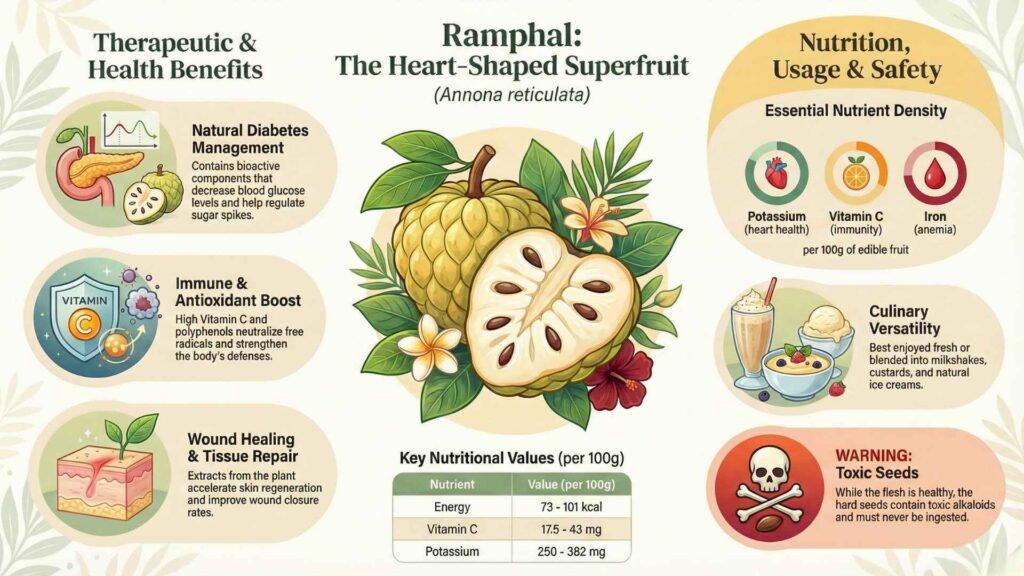
Even with all the Ramphal health benefits, eating it correctly is essential. Specifically, the most important safety rule involves the seeds. The seeds of the Annona family contain a compound called annonacin, which is toxic to the nervous system. Therefore, you must always ensure you remove every single seed before consumption.
Additionally, stick to the ICMR recommendation of about 100 grams per day. While the fruit is nutritious, excessive consumption can lead to bloating or a mild upset stomach in some people due to the high fiber content. Consequently, moderation is the key to enjoying this seasonal gem safely and reaping the long-term Ramphal health benefits.
Take Charge of Your Nutrition: Consult a Diet Dekho Expert Today
Every body is different. While the Ramphal health benefits are vast, your specific needs—whether you are managing a thyroid condition or trying to lose weight—require a personalized approach. At Diet Dekho, we specialize in creating macro-balanced plans that honor Indian traditions while utilizing modern science. According to Harvard Health, variety in fruit intake is essential for reducing chronic disease risk.
Start Your Journey to Holistic Health with a Diet Dekho Consultant
Summary of Insights
The latest research indicates that Ramphal health benefits offer a significant opportunity for Indians to improve metabolic health. With a moderate glycemic index of 54 and a unique concentration of Vitamin B6 and iron, this fruit is a superior choice for those managing diabetes, PCOS, and anemia. Furthermore, its anti-inflammatory properties provide a natural solution for winter joint pain, aligning with the new ICMR-NIN 2024 guidelines for seasonal, locally-grown produce.

FAQs Optimized for Featured Snippets
1. What are the top Ramphal health benefits?
Ramphal health benefits include improved immunity from Vitamin C, better skin health through Vitamin B6, and reduced joint pain from anti-inflammatory compounds. It also supports heart health with potassium and provides energy for those with anemia through its iron content.
2. Is Ramphal better than Sitaphal for weight loss?
Yes, Ramphal is often preferred for weight loss as it is slightly lower in calories and higher in fiber than Sitaphal. It also contains more iron and Vitamin C, making it a more nutrient-dense option for supporting energy and metabolism during a diet.
3. Is Ramphal nutrition for diabetes safe to consume?
Yes, Ramphal is safe for diabetics in moderation. Specifically, it has a moderate Glycemic Index of 54, which ensures a slow release of sugar. To manage your sugar levels better, limit intake to 100g and pair it with protein-rich nuts like almonds.
4. Why should you avoid Ramphal seeds?
Ramphal seeds are considered dangerous because they contain toxic kernels called annonacin. These can be harmful to the nervous system if ingested. Consequently, you should always remove the seeds carefully before making smoothies or eating the pulp.
Disclaimer:
This blog post was written to help you make healthier food choices altogether. So, be aware and take care. The important thing to consider is your health before starting a restrictive diet. Always seek advice from a doctor or dietitian before starting if you have any concerns.
BOOK YOUR APPOINTMENT
Dr. Ritika is a nutrition and lifestyle expert with 2+ years of experience, helping clients manage weight and health through practical, personalized diet plans.