
Are you tired of checking the scale every morning only to see the same number? I know it’s hard to find time for the gym, but the secret to shifting stubborn weight might be in your kitchen. By choosing the right fat burning foods, you can finally stop fighting your body. Consequently, a well-structured Indian weight loss diet plan becomes your most powerful tool for natural health transformation.
The Short Answer: Fat burning foods are natural ingredients that increase your metabolic rate through the thermic effect of food (TEF) or promote lasting fullness (satiety). In an Indian lifestyle context, staples like moong dal, amla, and methi seeds help stabilize blood sugar. Therefore, these ingredients encourage the body to use stored fat for energy more efficiently.
1. Struggling to Lose Weight Despite Your Best Efforts?
If you feel like you’re doing everything right—eating less and walking more—but the belly fat won’t budge, you aren’t alone. Many people in India deal with a “thin-fat” phenotype. This means they look relatively lean but carry dangerous visceral fat around their internal organs.
What this means for your daily routine is that standard weight loss advice often fails because it doesn’t account for South Asian metabolism. Consequently, we naturally have higher baseline insulin resistance. When your insulin is high, your body is effectively “locked” in fat-storage mode. Let’s simplify this: to lose weight, we need to choose natural fat burners that keep insulin low while keeping our energy high.
2. The Frustration of Slow Progress and Stubborn Fat
It is incredibly frustrating to watch “fitness influencers” lose weight in a week while you struggle for a month to lose one kilogram. Furthermore, there is a clear biological reason for this. According to the National Family Health Survey (NFHS-5), nearly one in four Indian adults is now a heavier person or a person in a higher weight body.
For busy professionals and homemakers, stress and poor sleep often lead to high cortisol levels. Cortisol is a hormone that specifically signals your body to store fat in the abdominal area. If you are managing PCOD/PCOS or a thyroid disorder, this hormonal battle is even tougher. However, recent Harvard research shows that a healthy Indian weight loss diet plan significantly improves your metabolic markers and reduces liver fat, even if the scale doesn’t move immediately.
3. Busting the Myth: Are Fat Burning Foods a Miracle Cure?
In simple terms: No, there is no “magic weight loss potion”. You might have seen viral videos about a “7-second morning trick” using lemon and coffee. In reality, while coffee can slightly blunt appetite, these rituals are more about behavior than biochemistry .
In fact, no single food will “torch” fat cells while you eat junk for the rest of the day. Instead, think of these fat burning foods as metabolic supporters. They help your body burn a few more calories during digestion and prevent you from reaching for that 4 PM samosa. Therefore, the goal is to use these weight loss superfoods as part of a consistent, long-term strategy rather than a quick fix.

4. How Certain Foods Naturally Rev Up Your Metabolism
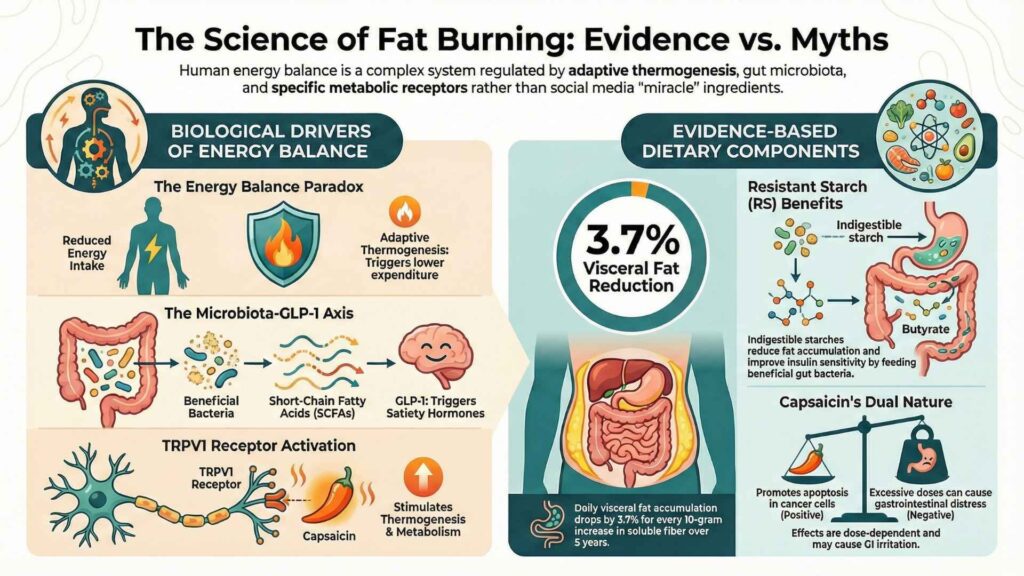
The secret lies in something called the Thermic Effect of Food (TEF). This refers to the energy your body uses just to digest what you eat.
- Protein Power: Protein has the highest thermic effect. It requires 20% to 30% of its own calories just to be digested, compared to only 0% to 3% for fats .
- Fiber Satiety: Fiber-rich foods take longer to break down. Consequently, they keep you full for hours and prevent insulin spikes .
- Trace Minerals: Your thyroid, which controls your metabolism, needs minerals like Iodine, Selenium, and Zinc to function. Therefore, including natural fat burners rich in these minerals is essential .
5. Top 10 Indian Fat Burning Foods for Your Kitchen
You don’t need expensive imports. Your local grocery store has everything you need to build a successful Indian weight loss diet plan.
1. Moong Dal (Green Gram)
Moong dal is light on digestion and packed with plant-based protein. It helps regulate blood sugar, which is crucial for those with diabetes or PCOS. In addition, its high fiber content promotes lasting satiety .
2. Amla (Indian Gooseberry)
Amla is a metabolic powerhouse. High in Vitamin C, it helps the liver detoxify and improves fat oxidation. Drinking a little amla juice in the morning can ignite your “digestive fire” and speed up the breakdown of food.
3. Paneer (Low-Fat)
Paneer contains casein protein, which digests slowly. Consequently, it provides a steady release of amino acids. This makes it a perfect evening meal to support fat metabolism while you sleep .
4. Kokum (Garcinia Indica)
Kokum contains hydroxycitric acid (HCA), which inhibits an enzyme that the body uses to make fat from excess carbs. Moreover, it is a natural appetite suppressant that helps reduce emotional eating .
5. Methi Seeds (Fenugreek)
Methi is rich in galactomannan, a fiber that helps improve insulin sensitivity. Soaking a teaspoon of methi seeds overnight and drinking the water is a time-tested way to manage blood sugar and hunger .

6. Millets (Jowar, Bajra, Ragi)
Swap your white rice for millets. These are “nutri-cereals” that provide sustained energy without the sugar crash. Consequently, they are essential fat burning foods for any modern pantry.
7. Eggs
Eggs are a complete protein source. Consuming eggs for breakfast has been shown to reduce total calorie intake throughout the day by enhancing fullness .
8. Ginger and Cinnamon
Ginger increases the thermic effect of food, while cinnamon helps target visceral fat by regulating insulin . In addition, ginger helps reduce inflammation in a person in a higher weight body .
9. Curd and Buttermilk (Chaas)
As natural probiotics, these support gut health. A healthy gut microbiome is essential for a vibrant metabolism and reducing bloating .
10. Makhana (Fox Nuts)
Makhana is a low-calorie metabolism boosting food rich in magnesium. Its low glycemic index helps avoid blood sugar spikes that lead to fat storage .
6. Sample Daily Routine: Incorporating Fat Burners from Morning to Night
Let’s simplify this into a realistic routine for a busy Indian lifestyle:
- Early Morning (7:00 AM): Warm water with Amla juice or soaked Methi seeds to kickstart your system.
- Breakfast (8:30 AM): Moong dal chilla with mint chutney or two boiled eggs. Avoid sugary cereals or plain white bread.
- Mid-Morning (11:00 AM): A seasonal fruit like a guava or apple to keep your energy stable.
- Lunch (1:30 PM): One Jowar roti, a large bowl of dal, and a generous portion of seasonal sabzi with cucumber raita.
- Evening (4:30 PM): Green tea with roasted makhana (fox nuts) or roasted chana .
- Dinner (8:00 PM): Grilled paneer or stir-fried tofu with vegetables. Try to finish dinner early to align with your body’s natural clock.
For pregnant people, it is important to consult a doctor before using high amounts of fenugreek or amla, as individual requirements vary during this stage.

7. Common Dieting Mistakes That Stop You from Burning Fat
I see many clients making these mistakes while thinking they are being “healthy.”
- Starvation Diets: Drastically cutting calories makes your body think there is a famine. Consequently, it responds by slowing your metabolism to “save” energy .
- Overeating “Healthy” Foods: Walnuts and avocados are great, but they are calorie-dense. Therefore, portion control is vital even for metabolism boosting foods.
- Mistaking Thirst for Hunger: Often, when you feel a craving, you’re just dehydrated. Drink a glass of water first .
- Skipping Protein: Without enough protein, you lose muscle mass. Since muscle burns more calories than fat, losing muscle slows your metabolic rate .
8. Small Sustainable Changes Lead to Lasting Health Results
The news emphasizes that obesity is a complex, chronic disease. However, small environmental changes—like walking more and reducing processed sugar—make a massive difference.
The 2024 ICMR-NIN guidelines suggest a simple goal for older people and adults: aim for at least 400g of vegetables and fruits every day. This isn’t about being perfect; it’s about being consistent. Even a 10-minute walk after meals can improve your insulin sensitivity and help your body process fat burning foods more effectively .
9. Ready to Transform Your Health? Book a Personalized Diet Plan with Diet Dekho Today!
Your journey doesn’t have to be a lonely one. At Diet Dekho, we specialize in creating macro-balanced plans that fit your traditional Indian palate and your busy schedule. Whether you are managing PCOS or simply want to feel lighter and more energetic, our experts are here to guide you.

Frequently Asked Questions
Q1: Which Indian food is best for burning belly fat? While no food targets just one area, high-protein and high-fiber ingredients like moong dal, millets (bajra/jowar), and methi seeds are excellent for reducing overall visceral fat and improving metabolism.
Q2: Can I eat paneer at night as part of an Indian weight loss diet plan?
Yes! Low-fat paneer is rich in casein protein, which digests slowly. Consequently, it helps prevent muscle loss and late-night hunger pangs .
Q3: Is Amla juice effective for weight loss? Amla juice boosts metabolism and aids digestion due to its high Vitamin C content. It works best when consumed on an empty stomach in the morning as part of a balanced diet.
Q4: Are there any fat burning foods safe for thyroid patients?
Yes. Foods rich in Selenium (like eggs and lentils) and Zinc (like pumpkin seeds and chickpeas) are very supportive of thyroid function and metabolism .
Disclaimer:
This blog post was written to help you make healthier food choices altogether. So, be aware and take care. The important thing to consider is your health before starting a restrictive diet. Always seek advice from a doctor or dietitian before starting if you have any concerns.

Dr. Ritika is a nutrition and lifestyle expert with 2+ years of experience, helping clients manage weight and health through practical, personalized diet plans.