Have you ever looked in the mirror and felt that your clothes just don’t fit right because you lack the necessary fill? While the rest of the world seems to be on a quest to shed kilos, I know how isolating it can feel when your goal is exactly the opposite. At DietDekho, we help you find high calorie foods for weight gain that work with your unique Indian lifestyle, ensuring you build strength rather than just adding fat.
To gain weight safely, you must consume a daily surplus of 300–500 calories using nutrient-dense, high calorie foods for weight gain like paneer, ghee, nuts, full-fat dairy, and starchy vegetables. Focus on clean bulking by combining these with proteins and complex carbohydrates to ensure weight is added as muscle and healthy tissue, rather than inflammatory fat.
Why eating more isn’t the only way to use weight gain foods list effectively?
I often hear from clients at DietDekho who are frustrated because they feel they are eating all day but the scale simply refuses to move. It is a common misconception that the only requirement for weight gain is a high volume of food. In simple terms, your body is a highly efficient machine, and for many people, the metabolic rate is so high that standard meal sizes are immediately burned off as energy.
What this means for your daily routine is that the quality and energy density of your food matter far more than the quantity. If you are filling up on high-volume, low-calorie items like watery soups, plain salads, or large amounts of puffed rice, you are stretching your stomach and feeling full without actually providing your cells with the surplus energy they need to build new tissue.
Why volume isn’t the same as nutrient density
The National Institute of Nutrition (NIN) and ICMR updated their dietary guidelines in 2024 to reflect the changing nutritional needs of the Indian population. While these guidelines emphasize the prevention of obesity, they also provide a roadmap for balanced nutrition that is essential for those who are underweight. Being underweight is not just about looking thin; it often indicates a deficiency in essential micronutrients and a lack of muscle mass that can lead to long-term health issues.
I know it’s hard to find time to eat properly, but choosing calorie dense foods for weight gain is the most effective way to hit your targets without feeling uncomfortably full. Let’s simplify this: weight gain is a physiological process of tissue synthesis. To create new muscle and healthy fat stores, your body needs a consistent surplus of energy that remains after all your daily activities—from breathing and thinking to walking and working—are accounted for.
Understanding energy expenditure in thin individuals
If your input exactly matches your output, your weight stays the same. If you are struggling to grow, your input is likely lower than you realize, or your body is not absorbing the nutrients effectively. Many underweight individuals have a higher Basal Metabolic Rate (BMR), meaning they burn more energy even while at rest.
| Component of Energy Expenditure | Role in Weight Gain | Impact for Underweight Individuals |
| Basal Metabolic Rate (BMR) | Energy used at rest for organ function | Often higher in ectomorph body types |
| Thermic Effect of Food (TEF) | Energy used to digest food | High-protein diets increase TEF significantly |
| Physical Activity Level (PAL) | Energy used in movement/exercise | Busy professionals burn more than they realize |
| NEAT | Non-exercise activity (fidgeting, etc.) | Subconscious movements that burn hidden calories |

How can healthy foods for weight gain help overcome the frustration of being underweight?
It can be incredibly demoralizing to live in a culture where every advertisement and health blog is focused on losing weight. When you are underweight, people often make insensitive comments like You’re so lucky, you can eat anything! or Don’t you eat at home? What they don’t understand is the physical and emotional toll that being underweight takes on a person.
For many of my clients at DietDekho, being underweight comes with a constant sense of fatigue and a lack of stamina. I know it’s hard to find time to focus on yourself when you’re busy with work or family, but being skinny isn’t always synonymous with being healthy. Clinical data suggests that about 20.1% of women and a significant portion of young adults in India remain underweight, a statistic that remains high even as obesity rates climb.
The hidden physical and emotional toll of being skinny
This thinness can lead to a weakened immune system, making you more susceptible to infections and slower to recover from common illnesses. In women, being underweight is a significant risk factor for hormonal imbalances that lead to irregular periods or difficulties with fertility, which we often see at DietDekho. For men, it can lead to low self-esteem and a feeling of being physically lesser than their peers.
The struggle to find clothes that fit properly is another hidden frustration. Many underweight individuals have to get their clothes custom-stitched because standard market sizes are too large, leading to a loss of confidence in professional and social settings. At DietDekho, we don’t just look at the numbers on the scale; we look at how your weight affects your quality of life.
Specific challenges for busy professionals and homemakers
Busy professionals often skip meals due to stress, which suppresses appetite and leads to muscle wasting. Homemakers frequently eat last and least, leading to nutritional deficiencies despite being surrounded by food. For both groups, incorporating high calorie foods for weight gain that are easy to prep is vital.
| Demographic Group | Primary Weight Gain Challenge | Emotional/Physical Impact |
| Busy Professionals | Lack of time to eat consistent meals | High stress, suppressed appetite |
| Homemakers | Eating last and least after the family | Nutritional deficiencies, low energy |
| NRIs | Acculturation and change in food quality | Rapid metabolism or loss of traditional diet |
Why are calorie dense foods for weight gain better than junk food?
A very common myth I hear is that if you want to gain weight, you should just eat pizza, burgers, samosas, and sweets every day. While it’s true that these foods are high in calories, they are empty calories. In simple terms, they provide energy but lack the vitamins, minerals, and proteins your body needs to actually build healthy muscle and bone.
When you rely on junk food, you are engaging in what we call dirty bulking. This often leads to the accumulation of visceral fat—the dangerous fat that sits around your internal organs—while your muscle mass remains low. You might see the number on the scale go up, but you will likely feel sluggish, bloated, and unfit despite being thin.
The danger of Thin-Fat syndrome in the Indian context
This is a major concern for us at DietDekho because it increases the risk of developing thin-fat syndrome, where a person has a healthy BMI but the metabolic profile of someone with obesity. Furthermore, a diet high in ultra-processed foods (UPFs) can cause significant spikes in your blood sugar and insulin levels. Over time, this can lead to insulin resistance, even in underweight individuals.
The ICMR guidelines specifically warn against the rising consumption of UPFs in India, noting that they contribute to 56.4% of the total disease burden in the country. What this means for your daily routine is that you should prioritize whole, natural weight gain foods list over packaged snacks to protect your long-term metabolic health.
Maida vs. Whole Grains: Choosing the right carbs
Let’s simplify this: maida (refined flour) causes rapid sugar spikes and fat storage. Whole grains like oats, brown rice, and millets provide sustained energy and help build lean mass. Choosing healthy foods for weight gain like ragi or bajra over white bread ensures you are nourishing your tissues, not just inflating your fat cells.
| Food Category | Dirty Bulk Choice (Avoid) | Clean Bulk Choice (Prefer) |
| Fats | Vanaspati/Dalda, Reused frying oil | Ghee, Cold-pressed oils, Nuts |
| Proteins | Processed meats, Fried chicken | Paneer, Eggs, Lentils, Sattu |
| Carbs | Maida (white flour), Sugary sodas | Oats, Brown rice, Sweet potatoes |

How do high calorie foods for weight gain work scientifically?
To understand how to gain weight, we need to look at the basic math of human biology. Your body requires a certain amount of energy just to keep your heart beating and your lungs breathing—this is your Basal Metabolic Rate (BMR). When you add in the energy needed for your daily tasks, you get your Total Daily Energy Expenditure (TDEE).
The short answer is: to gain weight, you must consume more calories than your TDEE. For most people, a healthy surplus is between 300 and 500 extra calories per day. This allows for a steady weight gain of about 0.5 kg per week. While that might seem slow, it is the most sustainable way to ensure your body is adding muscle and healthy tissue rather than just water weight or fat.
Understanding Basal Metabolic Rate (BMR) and TDEE
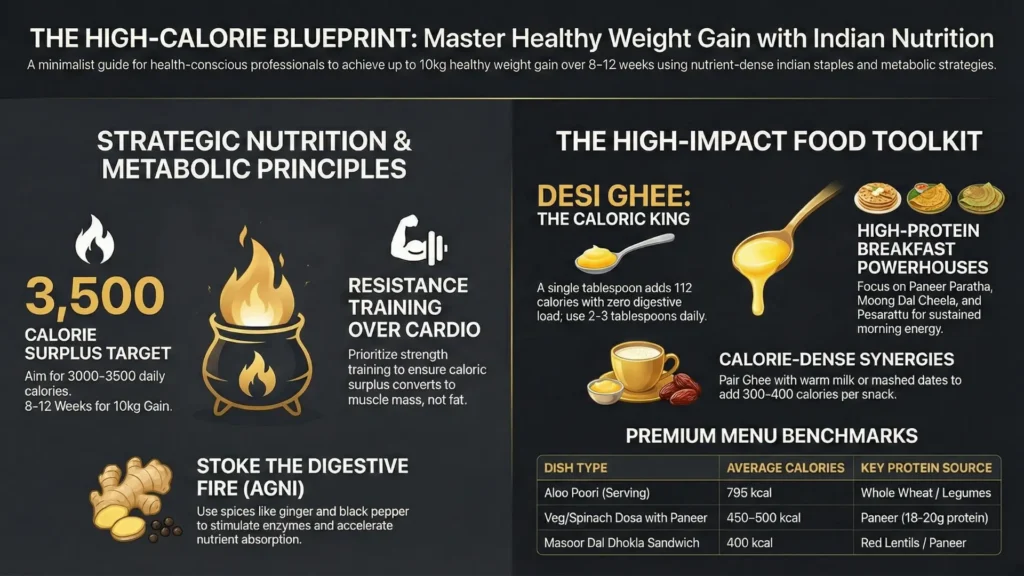
Your BMR is the energy your body needs to survive in a state of rest. For a sedentary adult male in India, this is typically around 2110 kcal. If you are active, your TDEE can easily exceed 2700-3000 calories. This is why identifying high calorie foods for weight gain that you actually enjoy is essential for staying consistent with your weight gain diet.
high calorie foods for weight gain are effective because they are energy dense. This means they contain a high number of calories in a small volume. For example, 100g of cucumber contains only 15 calories, whereas 100g of walnuts contains over 600 calories. If you have a small appetite, you cannot eat five cucumbers, but you can easily eat five or six walnuts.
The role of the Thermic Effect of Food (TEF)
Another scientific factor is the Thermic Effect of Food. Your body actually burns calories just to digest what you eat. Protein has the highest thermic effect, meaning your body works harder to process it. This is why we at DietDekho emphasize a balance; while you need protein to build muscle, you also need enough fats and carbohydrates so that your body doesn’t just burn the protein for energy.
| Nutrient Type | Calories Per Gram | Role in Your Body |
| Carbohydrates | 4 kcal | Primary fuel for daily activities and brain function |
| Protein | 4 kcal | The building blocks for muscle and tissue repair |
| Fats | 9 kcal | Dense energy source, essential for hormone production |

Best high calorie Indian foods to add to your daily meals
When we talk about high calorie foods for weight gain in an Indian context, we are lucky to have a variety of superfoods that have been part of our tradition for centuries. These are not just high in calories; they are packed with the nutrition your body craves.
Dairy and Ghee: The foundations of an Indian weight gain diet
Paneer is a vegetarian’s best friend when it comes to weight gain. It is a complete protein, meaning it contains all the essential amino acids. With about 265 calories and 18-20g of protein per 100g, it is a powerhouse for muscle growth. I suggest my clients at DietDekho include paneer at least 3-4 times a week, either grilled, in a curry, or as a stuffed paratha.
Desi Ghee is an excellent source of healthy fats and vitamins A, D, and E. It contains butyrate, which supports gut health and digestion—essential for people who find it hard to eat large meals. At 910 calories per 100g, ghee is the most efficient way to add hidden calories to your diet without increasing the volume of your plate.
Sattu and Nuts: Affordable calorie dense foods for weight gain
Sattu (roasted gram flour) is one of the most underrated weight gain foods list. It is highly digestible and provides a steady release of energy. You can make a Sattu Shake by mixing 2-3 tablespoons with milk, jaggery, and a banana. This traditional drink is far superior to most expensive mass gainer supplements found in the market.
A handful of nuts can change your caloric math for the day. Almonds, cashews, and walnuts provide about 600 calories per 100g. Dried fruits like dates and raisins are concentrated sources of natural sugars and minerals, providing quick energy and helping with healthy digestion.
| Indian Superfood | Serving Size | Calories (Approx) | Key Benefit |
| Ghee | 1 tsp | 45-50 | Brain health & calorie density |
| Paneer | 100g | 265 | Complete protein for muscle |
| Sattu | 2 tbsp | 100-120 | Plant protein & easy digestion |
| Banana | 1 medium | 90-110 | Potassium & quick energy |
| Peanuts | 1 handful | 150-180 | Heart-healthy fats & protein |

Sample 3,000 calorie Indian diet chart for consistent weight gain
Creating a diet plan for weight gain is about more than just a list of foods; it’s about timing and consistency. Most people who struggle to gain weight find it easier to eat 5-6 small meals rather than 3 large ones. This prevents the nausea and bloating that often comes with trying to overeat in one sitting.
Sample 3000-Calorie Indian Weight Gain Meal Plan
| Time | Meal | Suggested Food Items |
| 7:00 AM | Early Morning | 1 glass full-cream milk + 2 tsp milk powder + 5 soaked almonds + 2 dates |
| 9:00 AM | Breakfast | 2 Paneer Parathas with 1 tbsp ghee + 1 bowl thick curd |
| 11:30 AM | Mid-Morning | 1 Banana + 1 handful roasted peanuts or a piece of chikki |
| 1:30 PM | Lunch | 2 Ghee-laden Rotis + 1 cup Rice + 1 cup Dal + 1 cup Paneer sabzi + Salad |
| 4:30 PM | Evening Snack | 1 glass Sattu Milkshake OR bowl Vegetable Poha with extra peanuts |
| 7:00 PM | Mid-Evening | 1 cup Roasted Makhana (in ghee) + 1 Fruit (Mango or Sapota) |
| 9:00 PM | Dinner | 1.5 cups Veg Biryani with Ghee + 1 bowl Raita + 1 bowl green vegetable |
| 10:30 PM | Bedtime | 1 glass Warm Milk with a pinch of Haldi (Turmeric) and 1 tsp Honey |
Important safety considerations for medical conditions
- PCOS/PCOD: Use healthy foods for weight gain with low GI like ragi or jowar. Focus on healthy fats from nuts and seeds instead of sugar to balance hormones.
- Diabetes: Choose complex carbs like daliya or brown rice. Fortify your diet chart for weight gain with healthy fats like avocado or olive oil to avoid blood sugar spikes.
- Thyroid: If you have hyperthyroidism, eat every 2-3 hours to keep up with your high metabolic rate and focus on calorie-dense, cooked foods.
- Hypertension (BP): Stick to the DASH diet principles—use unsalted nuts and fresh fruits for extra calories, and keep your daily salt intake below 5g.

5 Common mistakes that are stopping your weight gain progress
I’ve worked with many people at DietDekho who were doing almost everything right, but a few small habits were holding them back. If you’re eating high calorie foods for weight gain but not seeing results, check if you’re making these mistakes.
1. Drinking Too Much Water Before Meals
Drinking a large glass of water just before your meal fills up your stomach. In simple terms, your brain gets a full signal before you’ve even started eating your calorie dense foods for weight gain.
- The Fix: Drink water 30 minutes after your meal, not during or before it.
2. Sleeping Too Little
Muscle and tissue growth happens while you sleep. If you are only sleeping 5-6 hours, your body releases cortisol, which can lead to muscle breakdown rather than growth.
- The Fix: Aim for 7-9 hours of quality sleep every night to allow for recovery and weight synthesis.
3. Relying Only on Cardio
If you are thin and only doing running or brisk walking, you are burning calories without giving your muscles a reason to grow.
- The Fix: Incorporate Strength Training. Simple bodyweight exercises like squats, lunges, and pushups tell your body to use those extra calories to build muscle mass.
4. Fear of Healthy Fats
Many Indians still fear ghee and butter because of old-fashioned health advice. However, if you are underweight, fats are your most efficient tool because they have double the calories of carbs or protein.
- The Fix: Use ghee, nuts, and cold-pressed oils as a regular part of your weight gain diet.
5. Lack of Consistency in Your Diet
Eating one massive 4,000-calorie meal once a week doesn’t count. Your body needs a steady surplus every single day. If you eat well for two days and then skip meals because you’re busy, your weight will stay stagnant.
- The Fix: Use a meal-tracking app or a simple diary to ensure you’re hitting your daily caloric surplus consistently.

Staying consistent: Why slow and steady gain is the healthiest approach
I know you want to see results quickly, but gaining 5 kg in a week is neither healthy nor sustainable. Rapid gain is usually just fat and water, which can lead to metabolic issues like high blood pressure or increased cholesterol. At DietDekho, we aim for a clean bulk—gaining muscle and healthy mass slowly over time.
A healthy rate of gain is about 0.5 kg to 1 kg per week. This allows your skin to stretch gradually and your internal organs to adapt to the new body mass. It also gives you time to build a sustainable relationship with food, rather than feeling like you’re constantly forcing yourself to eat.
Focus on progress markers, not just the scale
In simple terms, focus on how you feel rather than just the number on the scale. Are you feeling more energetic? Are you able to lift heavier things without getting tired? Is your skin looking healthier? These are all signs that your high calorie foods for weight gain are working.
| Progress Marker | What it Indicates | Why it Matters |
| Increased Strength | Muscle synthesis is occurring | Metabolism stays healthy and functional |
| Better Sleep Quality | Hormones are balancing out | Recovery and growth are optimized |
| Improved Mood | Brain is getting steady energy | Prevents brain fog and stress-induced loss |
| Clothes Fitting Better | Healthy fat and muscle distribution | Boosts self-confidence and body image |
Remember, your body is not a machine that changes overnight. I know it’s hard to find time to wait for results, but being patient with yourself is the greatest form of self-respect. The best food for weight gain is the one you can enjoy for six months, not just six days.

FAQs
Q1: Is milk better than water for weight gain?
Yes. While water is essential for hydration, milk provides calories, protein, and healthy fats. Replacing plain water with milk-based drinks like lassi, shakes, or plain milk can significantly increase your daily caloric intake without making you feel too full.
Q2: Can I gain weight if I have a very high metabolism?
Yes, but you need to be very strategic. You should focus on the most calorie dense foods for weight gain like ghee, nuts, and oils, and eat 6-8 small meals a day. This ensures a constant supply of energy, preventing your body from burning its own muscle for fuel.
Q3: Which fruit is best for gaining weight in India?
Bananas and Mangoes are the best choices. Bananas provide around 100 calories and are easy to eat on the go. Mangoes are higher in sugar and calories (about 150-200 per medium fruit). Avoid filling up on watery fruits like watermelon if your goal is gain.
Q4: Should I take protein supplements to gain weight?
In simple terms, food should always come first. Traditional options like Sattu or a mix of dairy and nuts are excellent. However, if you have a very busy lifestyle and cannot find time for a meal, a clean protein or mass gainer supplement advised by a DietDekho expert can act as a helpful bridge.
Q5: Is it okay to eat sweets to gain weight?
While sweets are high in calories, they can cause a sugar crash and lead to unhealthy fat gain. It’s better to choose healthy sweets like peanut chikki, dates, or homemade halwa made with ghee and nuts, which provide energy along with vital nutrients.
Contact Us
We understand how overwhelming nutrition and weight loss information can feel. With so many opinions and confusing advice online, it’s easy to feel stuck or unsure about what to do next.
At Diet Dekho, you never have to figure it out alone. You can contact us anytime with any questions or concerns. Our expert dietitians are available 24/7 to guide, support, and help you stay on track. Whether your goal is weight loss or building healthier habits, we’re here to make the journey simpler and more sustainable for you.
Disclaimer
This blog is intended to help readers make healthier food choices. Your health should always be the top priority. Before starting any restrictive or special diet, especially if you have a medical condition or health concern, please consult a doctor or a qualified dietitian. Each body responds differently to food and lifestyle changes. Always choose what is safe and suitable for you.

Dr. Ritika is a nutrition and lifestyle expert with 2+ years of experience, helping clients manage weight and health through practical, personalized diet plans.