At DietDekho, I often hear from people who feel like they are eating everything in sight but still can’t move the needle on the scale. If you are struggling with a slender frame and looking for a quick weight gain plan, you are not alone. Gaining weight in a healthy way is a science that involves much more than just eating more.
A successful quick weight gain plan requires a daily caloric surplus of 300 to 500 healthy calories using nutrient-dense Indian foods like ghee, paneer, and whole grains. Specifically, you should eat 5–6 small, frequent meals and prioritize resistance training. This approach helps you build lean muscle mass rather than unhealthy fat, ensuring sustainable progress for your body type.
Why am I not gaining weight despite eating?
I know it is frustrating to eat large meals and see no change in your physique. What this means for your daily routine is that your body might be burning energy faster than you can provide it. In simple terms, you likely have a very high Basal Metabolic Rate (BMR) or a high level of Non-Exercise Activity Thermogenesis (NEAT), such as fidgeting or constant movement.
Furthermore, many hard gainers have a body type known as an ectomorph. Ectomorphs are characterized by long limbs, a small bone structure, and a fast metabolism that processes carbohydrates very efficiently. Consequently, even a standard 2000-calorie diet is often not enough to trigger growth. You need a targeted quick weight gain plan that accounts for these biological factors.
The frustration of being naturally skinny in an Indian household
In many Indian families, being thin is often met with well-meaning but stressful comments from relatives. I understand how exhausting it feels to be told to just eat a banana or have more parathas. However, generic advice often overlooks the fact that everyone’s metabolic engine runs at a different speed.
The short answer is that your genetics play a significant role in your bone density and muscle distribution. Similarly, if you are managing conditions like hyperthyroidism or high stress, your body may be in a constant state of catabolism, which breaks down muscle tissue for energy. A structured fast weight gain strategy helps move beyond these hurdles by focusing on nutrient density.

Myth: Is eating junk food the fastest way to gain weight?
Let’s simplify this: eating Samosas, Pav Bhaji, and sweets might give you a high calorie count, but it won’t give you a healthy body. This is often called dirty bulking, and it can be dangerous. Specifically, these foods are loaded with trans fats and refined flours (Maida) that lead to visceral fat—the dangerous fat around your organs.
For example, a single plate of Pav Bhaji can have 600–700 calories, but most of that comes from saturated fats in butter and refined carbs. This can cause insulin resistance even in thin individuals, leading to the skinny fat phenotype. Instead, your rapid weight gain program should rely on traditional, home-cooked Indian meals that nourish your cells while adding mass.
How does the science of calorie surplus and muscle synthesis work?
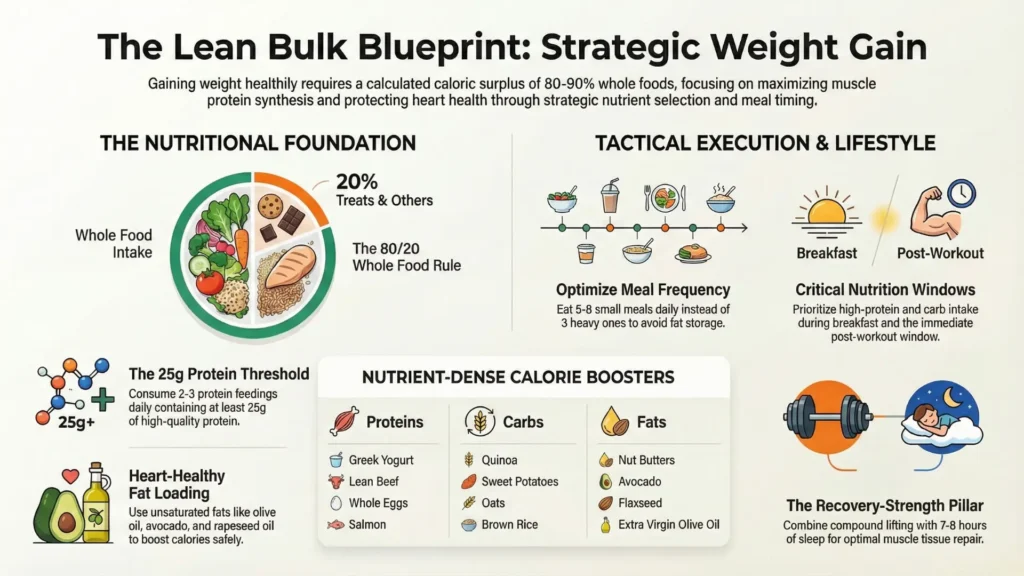
To gain weight, you must consume more energy than your body burns. Research suggests that an additional 1,500 to 2,000 kJ (about 350–500 calories) per day is the sweet spot for healthy growth. But remember, the goal is muscle, not just fat. Muscle protein synthesis (MPS) is the process where your body repairs and grows muscle fibers.
To trigger this, you need a consistent supply of protein throughout the day. Specifically, aiming for 1.2 to 1.6 grams of protein per kilogram of body weight is ideal for those doing light exercise. For a person weighing 50 kg, this means about 60−80 grams of protein daily. According to Harvard Health, spreading this intake across 5–6 mini-meals is much more effective than eating three large ones.
Which nutrient-dense Indian superfoods should I eat?
You don’t need foreign ingredients for a speedy healthy weight gain guide. Your kitchen already has the best tools.
The Power of A2 Ghee and Paneer
- A2 Desi Ghee: This is a pure fat source that provides 9 kcal per gram. It also helps your body absorb fat-soluble vitamins (A, D, E, K).
- Paneer: With about 18−20 grams of protein per 100 g, paneer is a powerhouse for building lean mass.
- Full-Fat Curd: It provides probiotics that improve your gut health, ensuring you actually absorb the nutrients you eat.
Energy-Dense Grains and Fruits
- Bananas and Mangoes: These are excellent sources of natural sugars and potassium, perfect for a quick energy boost.
- Ragi (Finger Millet): Ragi is rich in calcium and iron, which are vital for bone health as you add weight.
- Dry Fruits: Dates, figs, and almonds are high in Omega-3 fatty acids and minerals that reduce inflammation.

What is a sample 7-day quick weight gain meal structure?
This 7-day Indian weight gain diet focuses on providing approximately 2800 calories a day. I’ve designed this to be practical for a busy Indian lifestyle.
| Day | Breakfast (8:00 AM) | Mid-Morning (11:00 AM) | Lunch (1:30 PM) | Evening Snack (4:30 PM) | Dinner (8:30 PM) |
| Day 1 | 2 Paneer Parathas + 1 cup Curd | Banana Shake with Peanut Butter | 1 cup Rajma + 1 cup Rice + 2 Rotis + Ghee | Handful of Cashews + Jaggery Chikki | Chicken/Egg Curry + 2 Rotis + Sautéed Palak |
| Day 2 | Vegetable Poha with Peanuts + 2 Boiled Eggs | 1 cup Mango Smoothie with Flaxseeds | 1 cup Dal Tadka + 1 cup Paneer Bhurji + 2 Rotis | Roasted Makhana + 1 cup Tea | Fish Curry + 1 cup Brown Rice + Steamed Broccoli |
| Day 3 | 3 Idlis + Sambar + 1 cup Milk | Sweet Potato Chaat + Walnuts | 2 cups Veg Biryani + Raita + 1 bowl Dal | 1 cup Sprouts Bhel + Buttermilk | 2 Bajra Rotis + Ghee-rich Lauki Sabzi + Curd |
| Day 4 | 2 Besan Chillas with Paneer filling | 1 Banana + 2 Whole Grain Toasts with Nut Butter | 1 cup Chole + 1 cup White Rice + Ghee | Apple with Peanut Butter + Fruit Smoothie | 2 Multigrain Rotis + Palak Paneer + Salad |
| Day 5 | 1 bowl Daliya with Milk, Nuts, and Jaggery | 1 cup Yogurt with Pumpkin Seeds | 1 cup Mutton/Lamb Curry + 2 Rotis + 1 cup Rice | 1 Paneer Sandwich + Coconut Water | 1 bowl Mixed Veg Curry + 2 Rotis + Soya Sabzi |
| Day 6 | 2 Masala Dosas + Sambar + Coconut Chutney | 1 glass Lassi + Roasted Peanuts | 1 cup Moong Dal Khichdi with extra Ghee + Dahi | 1 cup Nachni Chips + Hummus | Grilled Paneer/Chicken + 1 cup Brown Rice |
| Day 7 | Stuffed Aloo Paratha + Butter + 1 glass Milk | Fruit Salad with Chia Seeds | 1 cup Chicken/Fish Curry + 1 cup Rice + 2 Rotis | 1 bowl Upma with Veggies + 2 Walnuts | 2 Rotis + Dal Makhani + Seasonal Sabzi |

Safety first: Managing weight gain with medical conditions
If you have a medical condition, a quick weight gain plan must be handled with care. Here is how to adjust based on your needs:
PCOS and Hormonal Balance
For women with PCOS, insulin resistance is a common concern. Consequently, you should avoid white sugar and refined flour. Specifically, use low-glycemic index (GI) grains like Ragi and Bajra. Adding cinnamon to your morning tea can also help improve insulin sensitivity by nearly 20%.
Type 2 Diabetes
If you are an underweight person with diabetes, focus on healthy fats rather than high-carb meals. For instance, use more nuts, seeds, and avocado. According to the NIH, increasing healthy fats allows for extra calories without causing major blood sugar spikes.
Thyroid and Hypertension
For hypothyroidism, ensure your diet includes enough Zinc and Selenium from sources like pumpkin seeds and eggs. If you have hypertension (high BP), avoid the extra salt in pickles and papads. Instead, use potassium-rich foods like bananas and coconut water to naturally regulate blood pressure.
What are common mistakes like skipping breakfast and over-reliance on cardio?
One of the biggest mistakes in any quick weight gain plan is over-training with cardio. While walking is healthy, excessive running or cycling can burn off the very calories you are trying to save for muscle growth. What this means for your routine is that you should limit intense cardio to twice a week and focus on lifting weights instead.
Similarly, skipping breakfast is a recipe for muscle loss. Your body has been fasting for 8–10 hours overnight; if you don’t refuel immediately, it may start breaking down muscle tissue for energy. Furthermore, rely on whole foods rather than just protein shakes. While supplements are helpful, the(https://in.fastandup.com/blogs/wellness/icmr-health-guidelines) suggests that whole grains and pulses provide better long-term nutrition.
How do I stay consistent on my journey to a stronger self?
Gaining weight is a marathon, not a sprint. You might not see a huge difference in the first few days, but consistency is key. For instance, try to eat at the same time every day to train your hunger hormones. If you find it hard to eat large amounts, use calorie boosters like adding a spoonful of ghee to your dal or nut butter to your toast.
In addition, make sure you are getting 7–8 hours of quality sleep. This is when your body actually builds the muscle you’ve been eating for. If you feel overwhelmed, remember that you don’t have to do this alone. Taking a structured approach helps you stay on track without the guesswork.

FAQs for Quick Weight Gain
Which Indian food is best for weight gain?
Traditional superfoods like A2 ghee, paneer, full-fat milk, bananas, and lentils (dal) with rice are excellent. These provide a balance of healthy fats, proteins, and complex carbohydrates necessary for building mass.
How much weight can I safely gain in a week?
A healthy target is 0.5 to 1 kg per week. Gaining weight faster than this often results in excess fat accumulation rather than muscle growth. Consistency over several months yields the best physical results.
Can I gain weight without eating junk food?
Yes, and it is highly recommended. Focus on a clean bulking approach using whole grains, nuts, seeds, and lean proteins. This prevents the skinny fat look and keeps your metabolic health in check.
Do I need supplements to gain weight?
While not strictly necessary, high-quality supplements like whey protein or creatine can help if you struggle to meet your protein targets through food alone. However, prioritize a food-first approach as recommended by health authorities.
Contact Us
We understand how overwhelming nutrition and weight loss information can feel. With so many opinions and confusing advice online, it’s easy to feel stuck or unsure about what to do next.
At Diet Dekho, you never have to figure it out alone. You can contact us anytime with any questions or concerns. Our expert dietitians are available 24/7 to guide, support, and help you stay on track. Whether your goal is weight loss or building healthier habits, we’re here to make the journey simpler and more sustainable for you.
Disclaimer
This blog is intended to help readers make healthier food choices. Your health should always be the top priority. Before starting any restrictive or special diet, especially if you have a medical condition or health concern, please consult a doctor or a qualified dietitian. Each body responds differently to food and lifestyle changes. Always choose what is safe and suitable for you.

Dr. Ritika is a nutrition and lifestyle expert with 2+ years of experience, helping clients manage weight and health through practical, personalized diet plans.