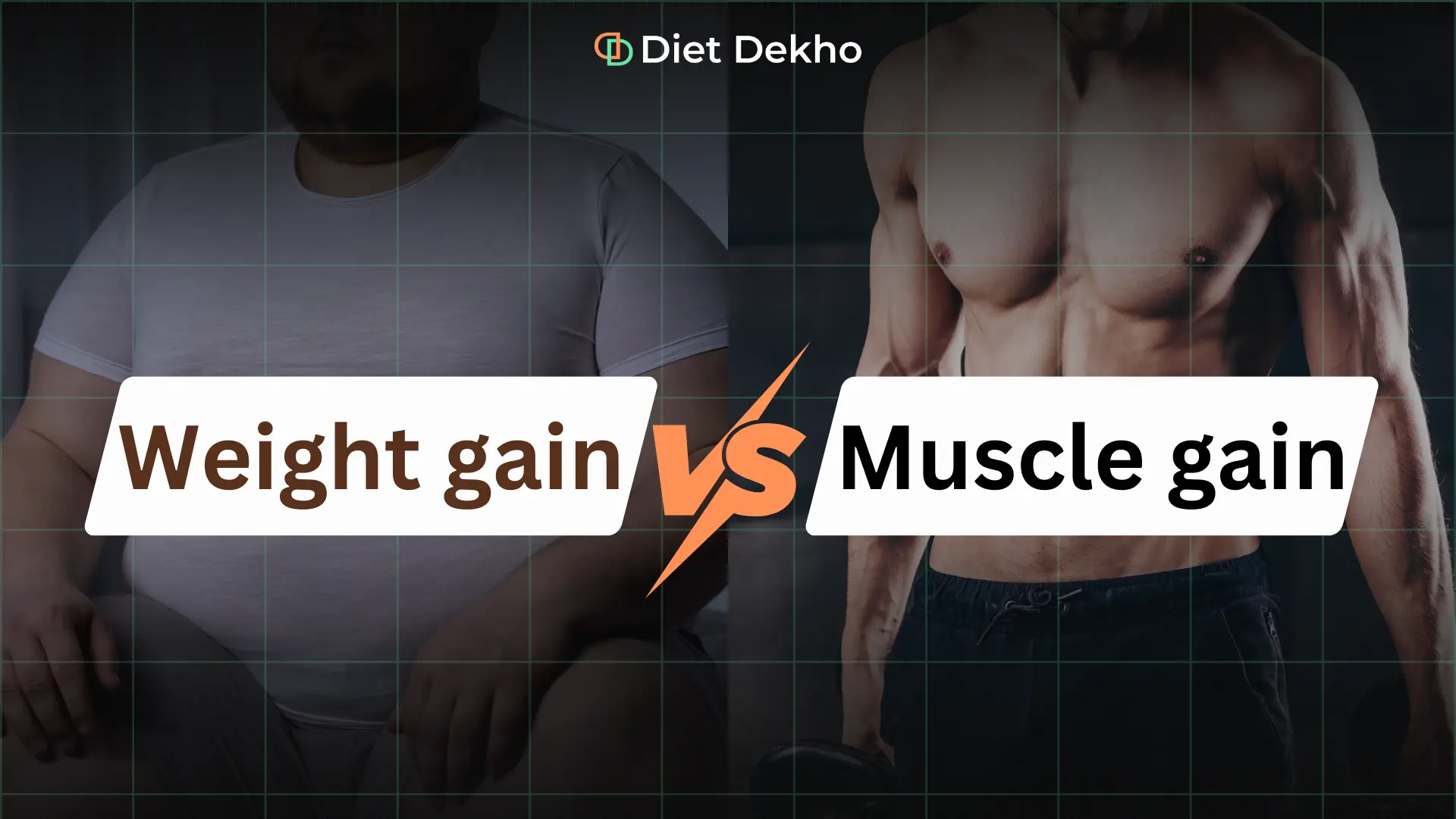
We often see people staring at the weighing scale with a mix of confusion and worry, wondering why the numbers aren’t telling the whole story. If you are trying to understand the real difference between muscle vs weight gain, you are already on the right path toward long-term metabolic health and a stronger, more resilient body.
The short answer is that weight gain is a simple increase in your total body mass, often including fat and water, while muscle gain specifically refers to increasing lean tissue through protein-rich nutrition and resistance training. In simple terms, muscle vs weight gain determines your health; while excess fat can be harmful, muscle gain improves your metabolism, stabilizes blood sugar, and provides a toned appearance, even if the scale stays the same.
Is it muscle vs weight gain?
It is quite common to feel a sense of achievement when the scale moves up if you are trying to bulk, or a sense of dread if you are trying to lose weight. However, DietDekho experts suggest that the number on the scale is a blunt instrument that does not account for the quality of the tissue you are adding to your frame. I know it’s hard to find time to analyze your body composition daily, but understanding muscle vs weight gain is the single most important factor in your fitness journey.
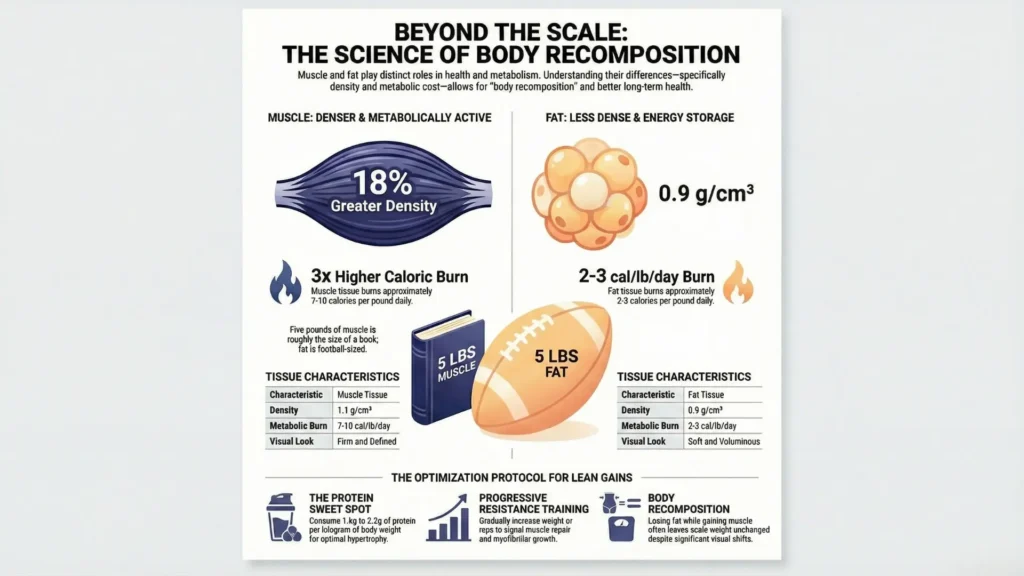
Muscle tissue is significantly denser than fat tissue, meaning it takes up much less space in your body for the same weight. In simple terms, a person who gains five pounds of muscle will look leaner and firmer, whereas a heavier person with five pounds of fat will appear softer and more voluminous. This is why many of our clients at DietDekho notice their clothes fitting better even when their weight remains unchanged.
Comparing Muscle and Fat Characteristics
| Feature | Muscle Tissue | Fat Tissue |
| Density | Higher (≈1.1g/cm3) | Lower (≈0.9g/cm3) |
| Metabolic Rate | High (7–10 kcal/lb/day) | Low (2–3 kcal/lb/day) |
| Physical Volume | Compact (like a small book) | Large (like a football) |
| Impact on Health | Improves insulin sensitivity | Increases inflammation risk |
| Texture | Firm and defined | Soft and less defined |
What this means for your daily routine is that you should stop obsessing over a single number. Instead, look for signs like increased strength, better posture, and more energy throughout the day. If you can lift a heavier grocery bag or climb the stairs without getting winded, you are likely gaining muscle, regardless of what the scale says.
Why the scale can be misleading
The scale measures everything: your bones, organs, water retention, and even the undigested food in your system. For Indians, who often have a thin-fat phenotype, relying solely on weight can be dangerous. You might have a normal weight according to your BMI but still carry high levels of visceral fat, which puts you at risk for diabetes and heart disease.
Let’s simplify this: your goal should be to improve your body composition—the ratio of fat to lean muscle—rather than just chasing a higher or lower weight. At DietDekho, we prioritize functional health, where muscle acts as a metabolic sink that helps clear glucose from your blood, especially important if you are managing conditions like PCOS or Type 2 Diabetes.

Why is muscle vs weight gain so confusing?
Many people experience a plateau where the scale doesn’t budge for weeks, leading to immense frustration. This often happens during a phase of body recomposition, where you are burning fat and building muscle simultaneously. While it feels like nothing is happening, your internal chemistry is undergoing a massive shift.
I know it’s hard to stay motivated when the visual progress is slow, but muscle builds at a much slower rate than fat accumulates. While you can gain a pound of fat in a week of overeating, gaining a pound of pure muscle often takes a month of consistent training and high-protein intake. This is a normal part of the process, and it shows that your body is becoming more efficient.
The role of water in the muscle vs weight gain debate
When you start a new strength training routine, your muscles often store more glycogen and water to repair the tiny tears caused by exercise. Each gram of glycogen can bind about 3g of water. This can cause a sudden jump on the scale that isn’t fat gain at all. It is simply your body’s way of preparing for future growth.
| Indicator | Muscle Gain | Fat Gain |
| Waist Measurement | Decreases or stays same | Increases |
| Energy Levels | Increases significantly | Often decreases |
| Strength | You can do more reps | No change or decreases |
| Clothing Fit | Tighter in chest/arms, looser in waist | Tighter in waist/hips |
In simple terms, if you feel stronger and your clothes fit differently, ignore the scale. Trust the process and focus on your performance metrics. At DietDekho, we often recommend tracking your non-scale victories, such as sleeping better or feeling less lethargic after a long day at the office.
The Science of Inflammation and Recovery
Another reason the scale might fluctuate is temporary inflammation. Strength training causes micro-trauma to muscle fibers, leading to a natural inflammatory response that holds onto fluid. If you see a small spike after a heavy workout day, don’t panic. It is a sign that your repair mechanisms are working.
What this means for your daily routine is that rest is just as important as the workout itself. Without adequate sleep and recovery time, your muscles cannot repair themselves, and you may end up gaining weight from stress-induced cortisol rather than building healthy lean mass.

Is all weight gain good for the body?
There is a persistent cultural myth in many Indian households that a heavier body is a sign of prosperity and health. However, DietDekho professionals want to clarify that not all mass is created equal. Gaining weight through excess body fat, particularly around the midsection, is a primary driver of non-communicable diseases (NCDs) like hypertension and coronary heart disease.
When we talk about muscle vs weight gain in the context of health, we must distinguish between subcutaneous fat (under the skin) and visceral fat (around the organs). Visceral fat is metabolically active in the worst way, releasing proinflammatory cytokines that lead to insulin resistance. On the other hand, muscle gain acts as a protective shield for your organs and skeletal system.
Health Risks of Excessive Fat vs. Benefits of Muscle
| Tissue Type | Impact on Diabetes | Impact on Heart Health | Impact on Aging |
| Excess Fat | Increases insulin resistance | Increases BP and cholesterol | Accelerates frailty and sarcopenia |
| Lean Muscle | Improves glucose uptake | Reduces resting heart rate | Protects bone density and mobility |
The short answer is that adding muscle mass is always good weight gain, whereas adding fat mass beyond a certain threshold is detrimental. For individuals managing PCOS or thyroid issues, excess fat can worsen hormonal imbalances, while muscle helps regulate the endocrine system more effectively.
Why BMI can be misleading for Indians
The Body Mass Index (BMI) is a standard tool, but it has significant limitations for the Indian population. Because many Indians have smaller frames and lower baseline muscle mass, a normal BMI can often hide a high body fat percentage. This is why we focus on Waist-to-Hip ratios and body composition analysis at DietDekho.
In simple terms, you could be Skinny Fat—having a low weight but high body fat. This condition is just as dangerous as being a heavier person with visible obesity. Building muscle is the only way to correct this imbalance and ensure your metabolic health is protected for the future.

How can Indian diet swaps help in muscle vs weight gain?
Building muscle in an Indian context requires a shift in how we view our traditional meals. Most Indian diets are high in carbohydrates (roti, rice) and low in high-quality protein. According to the IMRB, nearly 73% of Indian diets are protein-deficient. At DietDekho, we don’t ask you to give up your favorite foods; we simply suggest smarter swaps to ensure you are fueling muscle growth rather than fat storage.
I know it’s hard to change lifelong eating habits, but let’s simplify this. Protein is the building block of muscle. If you don’t eat enough protein, your body will actually break down your existing muscle to get the amino acids it needs for vital functions. This is why many people lose weight but end up looking soft—they are losing muscle instead of fat.
High-Protein Swaps for the Indian Kitchen
| Meal Category | Traditional High-Carb Option | Muscle-Building Swap | Protein Content Increase |
| Breakfast | Poha or Upma | Moong Dal Chilla with Paneer | +15g to 20g |
| Snack | Biscuits or Samosa | Roasted Chana or Makhana | +8g to 10g |
| Lunch | Extra Rice / Roti | Soya Chunks or Tofu Curry | +20g to 25g |
| Drink | Sugary Tea / Soda | Sattu Drink or Buttermilk | +10g to 15g |
| Dinner | Only Veggie Sabzi | Paneer Tikka or Egg Curry | +18g to 24g |
The Power of Sattu and Paneer
Sattu, made from roasted gram flour, is a traditional Indian superfood that contains up to 20g of protein per 100g. It is an excellent, affordable option for building muscle naturally. Similarly, Paneer is rich in casein protein, which digests slowly and keeps your muscles nourished for several hours, making it an ideal evening snack to prevent muscle breakdown overnight.
For our vegetarian clients, combining grains with lentils (like Rajma-Chawal or Dal-Roti) is essential because it creates a complete protein containing all the essential amino acids your body cannot produce on its own. At DietDekho, we recommend a 3:1 ratio of cereals to pulses to maximize the quality of the protein you consume.
Is muscle vs weight gain different for those with PCOS or Thyroid?
If you are managing PCOS, Thyroid, or Diabetes, the struggle with muscle vs weight gain is often more intense. Hypothyroidism causes the body’s metabolism to slow down, making patients feel lethargic and prone to fat gain. However, strength training is one way to combat these effects by increasing the number of calories burned at rest.
For women with PCOS, insulin resistance is a major hurdle. Skeletal muscle uses as much as 90% of your blood sugar. By increasing your lean mass, you are effectively providing more storage space for glucose, which lowers your insulin levels and can improve ovulation and other symptoms.
Safety Considerations for Medical Conditions
| Condition | Training Strategy | Precaution |
| Diabetes | Resistance training 3x/week | Monitor blood sugar; have a snack ready |
| PCOS | Mix of HIIT and strength | Focus on consistency over intensity |
| Thyroid | Low-impact aerobics + weights | Start slow as heart rate may be slower |
| Hypertension | Dynamic resistance (weights) | Avoid holding breath (Valsalva maneuver) |
I know it’s hard to find the energy when your hormones are out of balance, but in simple terms, muscle is your best metabolic medicine. At DietDekho, we ensure your plan accounts for these medical nuances, prioritizing safety and long-term recovery over quick-fix weight loss.

A sample daily routine for sustainable muscle growth
Consistency is the secret ingredient to achieving the right balance of muscle vs weight gain. You don’t need to spend hours in the gym; in fact, DietDekho experts suggest that short, intense home-based routines are often more sustainable for busy professionals and homemakers. The goal is to stimulate your muscles and then provide them with the right nutrients to recover.
What this means for your daily routine is creating a rhythm that supports your metabolism. I know it’s hard to find a full hour, but breaking your activity into 10-minute bouts can be just as effective for health markers. Below is a sample routine designed for an Indian lifestyle, focusing on home-available foods and simple movements.
Sample Home-Based Workout for Beginners
| Exercise | reps/duration | Benefit |
| Chair Squats | 12 reps x 3 sets | Strengthens legs and improves mobility |
| Wall Push-ups | 10 reps x 3 sets | Builds chest and arm strength without joint strain |
| Plank | 30 seconds | Core stability and spinal support |
| Glute Bridges | 12 reps x 3 sets | Excellent for lower back health and glute activation |
In simple terms, muscle gain comes from Progressive Overload. This means as an exercise becomes easy, you should add more repetitions or slow down the movement to keep challenging your muscles. At DietDekho, we encourage you to log your progress so you can see how much stronger you are becoming each week.
Common mistakes: Dirty bulking vs clean muscle gain
When people hear they need a caloric surplus to gain muscle, they often take it as an excuse to eat anything they want. This is known as dirty bulking—consuming high-calorie junk foods like samosas, sweets, and fried snacks to gain weight quickly. While you will certainly gain weight, most of it will be fat, and you may end up damaging your heart health and insulin sensitivity in the process.
Another common mistake is thinking that diet alone can build muscle. I know it’s hard to start a workout routine, but in simple terms, your muscles need a reason to grow. Without resistance training, the extra protein and calories you consume will simply be stored as fat. You cannot eat your way to muscle; you have to train your way there.

The Dangers of Dirty Bulking vs. Clean Bulking
| Feature | Dirty Bulking | Clean Bulking (DietDekho Style) |
| Food Choice | Processed, high-sugar, fried foods | Whole, nutrient-dense, fiber-rich foods |
| Result | Rapid weight gain, high fat accumulation | Gradual weight gain, mostly lean muscle |
| Health Impact | Risk of BP, high cholesterol, lethargy | Improved energy, stable blood sugar |
| Long-term | Requires a difficult cutting phase | Sustainable for life |
Another mistake we see at DietDekho is over-reliance on supplements. While whey protein can be helpful, it should only supplement a diet of real food. ICMR 2024 guidelines explicitly state that we should focus on obtaining high-quality protein through a variety of natural food sources rather than relying solely on powders.
Your fitness journey is a marathon, not a sprint
The most important thing to remember is that building a healthy body takes time. I know it’s hard to be patient when we are surrounded by ads promising transformations in 30 days, but biological reality is different. Real, sustainable muscle gain is a slow process that pays dividends for decades.
What this means for your daily routine is that you don’t have to be perfect; you just have to be consistent. The short answer is that one bad day won’t ruin your progress, just as one good day won’t build a perfect body. It is the sum of your habits over months and years that matters in the journey of muscle vs weight gain.
Why Muscle Mass is the Key to Longevity
As we age, we naturally lose muscle mass—a process called sarcopenia. By focusing on muscle gain now, you are essentially saving for your future health. Muscle protects your joints, prevents falls in old age, and keeps your immune system strong.
- Metabolic Flexibility: Muscle allows your body to switch between burning carbs and fats more easily.
- Hormonal Balance: Strength training helps regulate hormones like testosterone and growth hormone, which keep you feeling young and energetic.
- Mental Health: Regular exercise releases endorphins and has been shown to reduce symptoms of anxiety and depression.
At DietDekho, we believe that fitness should support your life, not consume it. Whether you are a homemaker managing a household, a professional dealing with back-to-back meetings, or someone managing a medical condition, building muscle is the most empowering thing you can do for your health.
Frequently Asked Questions
What is the main difference in muscle vs weight gain?
Muscle gain is the addition of lean, metabolically active tissue, whereas weight gain is a general increase in mass that often includes body fat and water. Muscle is denser and takes up about 18% less space than the same weight of fat, leading to a leaner look.
Can I turn my body fat into muscle?
In simple terms, no. Fat and muscle are two entirely different types of tissue, and it is physiologically impossible to turn one into the other. Your goal is to burn fat through a caloric deficit and build muscle through protein and strength training simultaneously.
Is it safe to do strength training if I have high blood pressure?
Yes, but you must be careful. Research shows that dynamic resistance training can help lower resting blood pressure over time. However, you should avoid holding your breath and start with lighter weights and higher repetitions. Always consult your doctor before starting.
How much protein do I really need for muscle vs weight gain?
While the baseline ICMR recommendation is 0.8g to 1g per kg of body weight, those looking to build muscle often need more—typically 1.2g to 1.6g per kg. For a 70kg person, this means aiming for 85g to 110g of protein daily, spread across your meals.
Can vegetarians build muscle effectively?
Absolutely. While meat sources are complete proteins, vegetarians can achieve the same results by combining foods like dal and rice, or by eating dairy products like paneer and curd. Soya chunks and sattu are also powerful plant-based protein sources for vegetarians.
Contact Us
We understand how overwhelming nutrition and weight loss information can feel. With so many opinions and confusing advice online, it’s easy to feel stuck or unsure about what to do next.
At Diet Dekho, you never have to figure it out alone. You can contact us anytime with any questions or concerns. Our expert dietitians are available 24/7 to guide, support, and help you stay on track. Whether your goal is weight loss or building healthier habits, we’re here to make the journey simpler and more sustainable for you.
Disclaimer
This blog is intended to help readers make healthier food choices. Your health should always be the top priority. Before starting any restrictive or special diet, especially if you have a medical condition or health concern, please consult a doctor or a qualified dietitian. Each body responds differently to food and lifestyle changes. Always choose what is safe and suitable for you.

Dr. Ritika is a nutrition and lifestyle expert with 2+ years of experience, helping clients manage weight and health through practical, personalized diet plans.