Are you working hard but feel frustrated because the scale isn’t moving? At DietDekho, we see this often. You might be losing inches, but the number on the scale stays stubborn. This happens because there is a massive difference between fat loss vs weight loss, and understanding this is the key to your health.
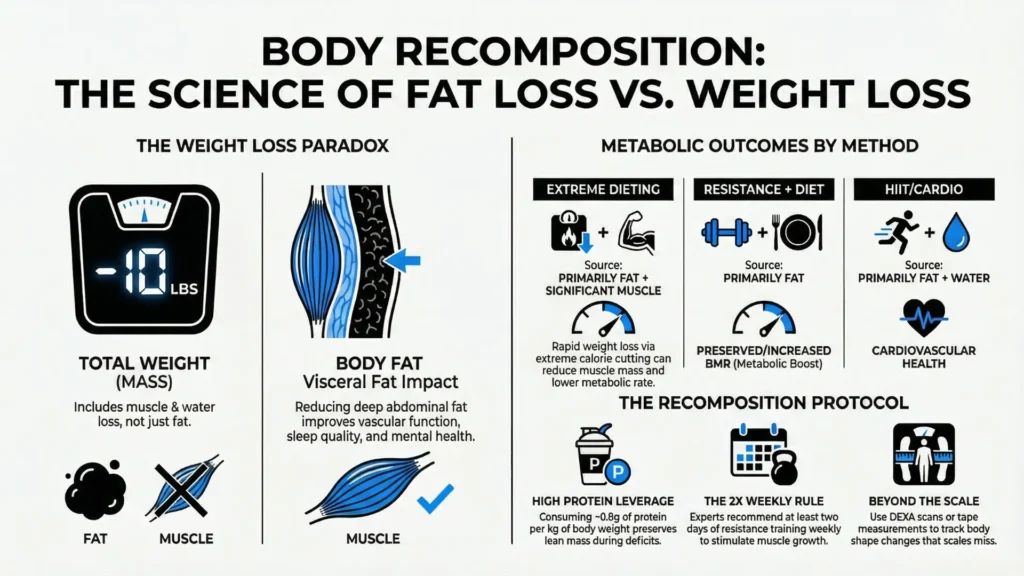
Weight loss is a drop in your total body mass, including water and muscle. Fat loss is the specific reduction of body fat while preserving lean muscle. For Indians managing PCOS or diabetes, focusing on fat loss vs weight loss is essential because muscle protects your metabolism while excess fat drives insulin resistance.
Why losing “weight” isn’t always the goal you want?
Many people come to DietDekho wanting to “lose 10 kilos.” But what are those 10 kilos made of? If you follow a crash diet, a large part of that weight might be water or, even worse, your hard-earned muscle. When you lose muscle, your metabolism slows down. This makes it much easier to gain all that weight back later.
For the Indian body, the scale can be very deceptive. Researchers have identified a unique “thin-fat” phenotype in Indians. This means many of us look “slim” but carry high levels of hidden internal fat around our organs. If you only focus on the scale, you might miss the real health risks. Focusing on fat loss vs weight loss helps you target the fat that actually causes heart disease and high blood sugar.
The science of body composition: Muscle vs. Fat?
I know it’s hard to find time to study biology, but let’s simplify this. Your body is like a house. Muscle is the furnace that burns wood (calories) even when you are sleeping. Fat is the storage room where extra wood is kept. One pound of muscle burns about 6 calories a day just by existing, while one pound of fat only burns 2 to 3 calories.
If you focus on fat loss vs weight loss, you keep your “furnace” running hot. If you just chase a lower number on the scale through starving, you might lose muscle. This shrinks your furnace, meaning you have to eat less and less just to maintain your weight. This is why people who do “extreme weight loss” often end up in a cycle of regaining weight. Healthy body composition changes mean your clothes fit better and you feel stronger, even if the scale hasn’t dropped much.

Stop falling for these 3 common Indian weight loss myths?
In my 10 years at DietDekho, I have heard many myths that prevent real progress. Let’s clear them up.
Myth 1: Sweating more means you are burning more fat
I often see people in the park wearing heavy jackets in the heat, thinking they are melting fat. In simple terms, sweat is just your body’s cooling system. It is water, not melted fat. While you might weigh less immediately after a sweaty session, that weight comes back the moment you drink a glass of water.
Myth 2: You can “spot-reduce” belly fat with crunches
You cannot choose where your body burns fat. Doing hundreds of sit-ups will strengthen your abdominal muscles, but they will stay hidden under a layer of fat until you create a consistent calorie deficit through your whole diet. Fat loss happens across the entire body based on your genetics and hormones.
Myth 3: Starving works for sustainable results
When you eat too little, your body goes into “survival mode.” It slows your metabolism and starts breaking down muscle for energy. This makes the fat loss vs weight loss battle much harder. You lose weight initially, but most of it is water and muscle, leaving you with a higher body fat percentage than before.
Practical Indian diet swaps for sustainable fat loss?
What this means for your daily routine is that we need to fix your plate, not just reduce it. At DietDekho, we recommend these “Smart Swaps” for the busy Indian lifestyle:
- Breakfast Swap: Instead of a butter-laden paratha or white bread, try a Moong Dal Chilla or Besan Cheela. These are packed with protein, which keeps you full for 4-5 hours and helps preserve muscle.
- Lunch Swap: Don’t give up rice or roti, but control the portion. Try the 50-25-25 rule: Fill 50% of your plate with vegetables (sabzi/salad), 25% with protein (dal/paneer/eggs), and only 25% with complex carbs like Ragi or Bajra.
- Snack Swap: Replace biscuits or fried namkeen with roasted makhana or roasted chana. These provide fiber and protein that satisfy cravings without spiking your insulin.
- Beverage Swap: Trade your sugary chai or soda for buttermilk (chaas) or lemon water. Probiotics in curd help with gut health, which is essential for managing PCOS and thyroid issues.

Mistakes that turn fat loss into muscle loss?
The biggest mistake is the “Protein Gap.” Most Indian diets are very high in carbs but low in protein. The ICMR (Indian Council of Medical Research) recommends about 0.8g to 1g of protein per kg of body weight. However, if you are managing PCOS or diabetes, you may need closer to 1.2g to 1.5g to protect your muscles.
Another mistake is avoiding resistance training. You don’t need a gym! Simple home-based movements like squats or wall push-ups tell your body to “keep the muscle and burn the fat”. Walking is great, but adding just 15 minutes of muscle-strengthening work twice a week can drastically change your fat loss vs weight loss results.
Safety Considerations for Special Conditions
If you have a medical condition, the fat loss vs weight loss approach is even more important:
- PCOS: 65-70% of Indian women with PCOS have insulin resistance. Fat loss improves insulin sensitivity, which helps balance your hormones and reduces facial hair or acne.
- Diabetes: Muscle is where your body stores most of its glucose. If you lose weight by losing muscle, your blood sugar levels may actually become harder to manage.
- Hypertension (BP): Visceral fat (the fat around your organs) can physically compress your kidneys, raising your blood pressure. Reducing this fat can lower your systolic blood pressure by about $1 \text{ mmHg}$ for every 1 kg lost.
- Thyroid: Hypothyroidism slows your metabolism by 10-15%. You must eat nutrient-dense foods like iodized salt and cooked cruciferous vegetables to support your thyroid while focusing on slow, steady fat loss.
Get a Personalized Macro-Balanced Plan with a Diet Dekho Expert
Start Your Journey to Holistic Health with a Diet Dekho Consultant
Frequently Asked Questions (FAQs)
1. Is it possible to lose fat but not lose weight? Yes. This is called body recomposition. If you are eating enough protein and doing basic resistance training, you can lose fat and gain muscle at the same time. The scale may stay the same, but you will look leaner and your clothes will fit better.
2. How do I know if I am losing fat and not just water? The scale is not the best tool. Instead, track your progress using a measuring tape (waist-to-hip ratio), how your clothes fit, and your energy levels. A decreasing waist size is a clear sign of losing visceral fat.
3. Why is fat loss slower than weight loss? Weight loss can be fast because it includes water and muscle, which the body drops quickly during crash diets. Fat loss is a metabolic process that takes time. Slow fat loss is more sustainable and better for your heart and hormones.
4. Which Indian foods help specifically with fat burning? While no food “melts” fat alone, spices like turmeric, ginger, and cinnamon help boost metabolism. High-protein foods like moong dal, paneer, and eggs help you feel full and burn more calories during digestion.
Conclusion
True health is about how you feel and how your body functions, not just a number on a machine. By shifting your focus from fat loss vs weight loss, you protect your metabolism and build a body that is resilient against disease. Start with small swaps—replace that white rice with millets and add a 15-minute walk after dinner. Your body will thank you.
Ready to see real changes?(https://dietdekho.com/form/)
Contact Us
We understand how overwhelming nutrition and weight loss information can feel. With so many opinions and confusing advice online, it’s easy to feel stuck or unsure about what to do next.
At Diet Dekho, you never have to figure it out alone. You can contact us anytime with any questions or concerns. Our expert dietitians are available 24/7 to guide, support, and help you stay on track. Whether your goal is weight loss or building healthier habits, we’re here to make the journey simpler and more sustainable for you.
Disclaimer
This blog is intended to help readers make healthier food choices. Your health should always be the top priority. Before starting any restrictive or special diet, especially if you have a medical condition or health concern, please consult a doctor or a qualified dietitian. Each body responds differently to food and lifestyle changes. Always choose what is safe and suitable for you.

Dr. Ritika is a nutrition and lifestyle expert with 2+ years of experience, helping clients manage weight and health through practical, personalized diet plans.