At DietDekho, we often meet individuals who feel they are doing everything right—counting every calorie, avoiding sweets, and walking daily—yet the numbers on the scale refuse to budge. Have you ever felt that no matter how hard you try, your body is working against you? If you’ve noticed your waistline expanding during high-pressure periods, you are likely experiencing stress weight gain.
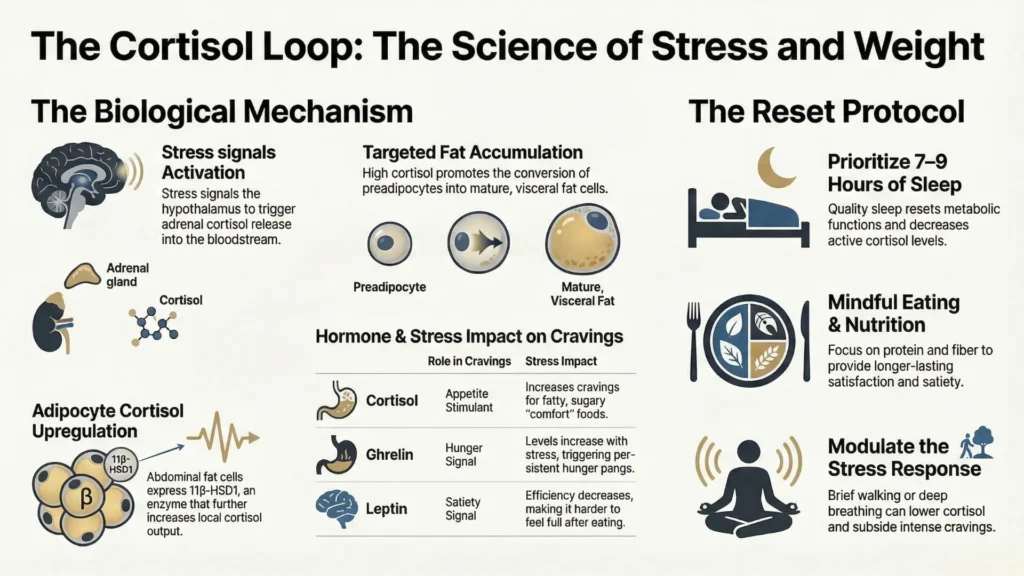
Stress stops weight loss by activating survival mechanisms through the hormone cortisol. This hormone slows metabolism, increases insulin resistance, and triggers intense cravings for high-calorie foods. Instead of burning fat, your body enters a protective mode, storing energy as stubborn cortisol belly fat to prepare for perceived threats.
Why does stress weight gain occur in an Indian work-life context?
It is incredibly frustrating to see the scale go up when you feel you have no energy left to give. I know it’s hard to find time for yourself when life feels overwhelming, but understanding the link between your mind and your metabolism is the first step toward relief. In India, we face unique pressures—from grueling commutes in cities like Bengaluru to the expectations of managing multi-generational households.
When you experience pressure, your body triggers the “fight or flight” system, releasing adrenaline and cortisol. Adrenaline provides quick energy, but cortisol sticks around to “recover” by replenishing energy stores. Because modern stress is often sedentary (sitting at a desk), this unused energy leads directly to stress weight gain.
The Prevalence of Metabolically Higher Weight in India
Data from the ICMR-INDIAB study (2025) highlights that a massive portion of the Indian population falls into the MONO category. This means many people who look to be at a “normal” weight still carry significant metabolic risk factors due to lifestyle stress.
| Category (ICMR-INDIAB-23) | Prevalence in India | Key Characteristic |
| MONO | 43.3% | Normal BMI but high metabolic risk |
| MOO | 28.3% | Higher weight with high metabolic risk |
| MHNO | 26.6% | Normal BMI and low risk factors |
| MHO | 1.8% | Higher weight but low risk factors |
The Impact of Urban Commutes and Screen Time
What this means for your daily routine is that your environment is a silent contributor to stress weight gain. Studies in cities like Pune and Bengaluru show that long commutes are linked to elevated physiological arousal and decreased motivation. Furthermore, excessive screen time—especially over 4 hours a day—is strongly associated with a higher risk of fat accumulation. When you combine a long commute with 8 hours of screen-based work, your body stays in a state of low-grade chronic stress, making fat loss nearly impossible without intervention.
Inclusive Perspectives on Hormonal Responses
Let’s simplify this: people of all genders experience the link between cortisol and weight differently, but the underlying biology is shared. Research from Harvard Health suggests that individuals may accumulate visceral fat around the midsection differently based on their specific hormonal profiles. While some may see weight gain primarily in the abdomen, others, especially those managing a “double burden” of career and home, may find fat storage becomes even more stubborn during major life transitions.

We’ve all been there—it’s 4:00 PM, the office pressure is peaking, and suddenly, the thought of a hot samosa or a packet of biscuits is the only thing that sounds good. At DietDekho, we call this the “Tension-Tiffin” connection. This is anxiety related weight gain fueled by your biology.
When cortisol levels are high, your brain looks for a way to “shut down” the stress response. High-fat and sugary comfort foods have a feedback effect that inhibits the parts of the brain producing stress-related emotions. In simple terms, your body is using emotional eating weight as a way to calm itself down.
Why Samosas Worsen Stress Induced Higher Weight
The tragedy of Indian office snack culture is that foods like samosas are made from refined wheat flour (maida) and deep-fried. This creates a high Glycemic Index (GI) food that causes a rapid spike in blood sugar. In the presence of high cortisol, your cells are already resistant to insulin. This unused sugar is signaled by insulin to be stored immediately as cortisol belly fat.
| Snack Item | Typical Portion | Calories | Impact on Insulin | Better Alternative |
| Samosa | 1 Medium | 250-300 | Very High Spike | Roasted Makhana |
| Biscuits | 4 Pieces | 180-220 | High Spike | Walnuts/Almonds |
| Bread Pakora | 1 Piece | 280-350 | Very High Spike | Sprouted Moong |
| Masala Chai | 1 Cup (with sugar) | 90-120 | Moderate Spike | Tulsi Tea |
Myths about stress induced higher weight: Does mental fatigue burn calories?
One of the most persistent myths I hear is that mental exhaustion is the same as physical exhaustion. While it feels true, the science of stress induced higher weight tells a different story.
The brain consumes about 20% of your daily energy. However, most of that energy is used for “background maintenance”—keeping your heart beating and your senses alert. When you engage in intense problem-solving, your brain’s energy consumption only increases by about 5%.
The Reality of Mental Fatigue
In simple terms, an entire day of mental work might only burn an extra 100 calories—the equivalent of a small apple. Yet, that mental work makes you feel physically drained because of fatigue mechanisms evolved to preserve resources. What this means for your routine is that “doing nothing” but thinking does not help with stress weight gain. In fact, mental fatigue often depletes your willpower, making you more likely to seek high-calorie rewards.
| Activity | Duration | Approx. Calories Burned | Primary Fuel Source |
| Focused Work | 30 Minutes | ~40-50 | Glucose |
| Brisk Walking | 30 Minutes | ~150-200 | Fat & Glucose |
| Yoga/Pranayama | 30 Minutes | ~120-180 | Glucose/Fat |

The Science of Cortisol: Understanding the link between cortisol and weight
To tackle stress weight gain, we must understand the chemistry of cortisol. Produced by your adrenal glands, cortisol helps regulate blood pressure and metabolism, but problems arise when it remains “on” for too long.
Why Cortisol Targets Your Belly
Cortisol has a unique relationship with an enzyme called 11-beta HSD-1, which is highly active in deep abdominal fat. When you are stressed, your body specifically targets the belly for fat storage because these cells have more cortisol receptors. This cortisol belly fat is dangerous because it wraps around internal organs (visceral fat), increasing inflammation and the risk of Type 2 diabetes.
Impact on Muscle and Metabolism
High cortisol also limits the release of testosterone, which is essential for maintaining muscle mass. BasalMetabolicRate(BMR)∝MuscleMass When you lose muscle due to chronic stress, your BMR drops, meaning you burn fewer calories even while sleeping, making stress weight gain a self-perpetuating cycle.
Solutions for cortisol belly fat: Indian Kitchen Swaps
I know it’s hard to find time to cook fancy meals, but we can make progress with simple stress relief foods India already offers. These home-based solutions are practical and backed by both Ayurvedic stress management and modern science.
The Power of Ashwagandha Tea
Ashwagandha is a powerful adaptogen that helps “buffer” your response to pressure, effectively lowering the levels of cortisol and weight triggers.
- How to Prepare (Ksheerapaka): Mix 1 cup water and 1 cup milk with 1 tsp (3g) Ashwagandha powder. Boil until reduced by half. Add a pinch of cardamom for digestion.
- Benefits: Studies show it can significantly lower serum cortisol and improve sleep quality, which is when the body burns the most fat.
Swapping Masala Chai for Tulsi
While we love sugary chai, the refined sugar can spike your cortisol further. Try Tulsi tea instead. Tulsi is a natural anti-stress agent that supports the adrenal glands and helps manage the “mental fog” associated with stress weight gain.

Routine Adjustments: Stress Management for the Non-Gym Audience
You don’t need a gym membership to fight stress weight gain. In fact, intense cardio can sometimes increase cortisol if you are already overtaxed. Instead, focus on “down-regulating” your nervous system through simple habits.
The 5-Minute Pranayama Reset
Breathing is the fastest way to signal safety to your brain.
- Anulom Vilom: Close your right nostril, inhale through the left. Switch and exhale through the right. This balances the brain and lowers the heart rate.
- Bhramari (Bee Breath): Inhale deeply, then exhale while making a low-pitched humming sound. The vibration is incredibly soothing for anxiety.
Desk Yoga for Busy Professionals
- Seated Twist: Place your right hand on your left knee and gently twist your upper body. This releases spinal tension and aids digestion.
- Seated Pigeon: Cross your right ankle over your left knee and lean forward. This opens the hips, which are often tight due to the emotional stress of sitting.
FAQs: Your Questions on Stress and Weight Answered
1. Does “stress belly” go away with just exercise? Exercise helps, but if your cortisol remains high, your body will prioritize fat storage in the abdomen. You must address the internal stress to see real results in reducing cortisol belly fat.
2. Why do I feel so hungry after a long day of office work? This is often “emotional hunger” triggered by cortisol. Your brain is seeking a dopamine reward to counteract the stress. Choosing high-protein snacks like roasted chana can satisfy this urge without a massive insulin spike.
3. Is it safe to take Ashwagandha with a thyroid condition? Ashwagandha can improve T4 to T3 conversion, which is beneficial. However, if you are on medication, always consult a DietDekho expert to ensure proper monitoring.
4. How long does it take to see results from stress management? While breathing exercises work instantly to calm you, it may take 4-8 weeks of consistent management (sleep, better snacks, adaptogens) to see the hormonal shift on the scale.

Reclaiming Your Health with DietDekho
Weight loss is a journey, and at DietDekho, we believe it should be supportive, not a punishment. If you have been struggling with stress weight gain, please be kind to yourself. You are navigating a complex biological response to a demanding world.
By making small, realistic changes—swapping snacks, incorporating simple breathing, and understanding your hormones—you can signal to your body that it is safe to let go of stored fat. We have helped over 19,600 people find this balance, and we are ready to help you too.
Get a Personalized Macro-Balanced Plan with a Diet Dekho Expert Start Your Journey to Holistic Health with a Diet Dekho Consultant
Contact Us
We understand how overwhelming nutrition and weight loss information can feel. With so many opinions and confusing advice online, it’s easy to feel stuck or unsure about what to do next.
At Diet Dekho, you never have to figure it out alone. You can contact us anytime with any questions or concerns. Our expert dietitians are available 24/7 to guide, support, and help you stay on track. Whether your goal is weight loss or building healthier habits, we’re here to make the journey simpler and more sustainable for you.
Disclaimer
This blog is intended to help readers make healthier food choices. Your health should always be the top priority. Before starting any restrictive or special diet, especially if you have a medical condition or health concern, please consult a doctor or a qualified dietitian. Each body responds differently to food and lifestyle changes. Always choose what is safe and suitable for you.

Dr. Ritika is a nutrition and lifestyle expert with 2+ years of experience, helping clients manage weight and health through practical, personalized diet plans.