Have you ever wondered why your weight stays stuck even when you are barely eating or following a strict calorie deficit? At DietDekho, we find that the missing piece of the puzzle for many clients is not more cardio, but the consistent inclusion of protein for weight loss. In a country where the average diet is overwhelmingly dominated by carbohydrates, understanding how this single nutrient changes your metabolic rate is essential for any sustainable health journey.
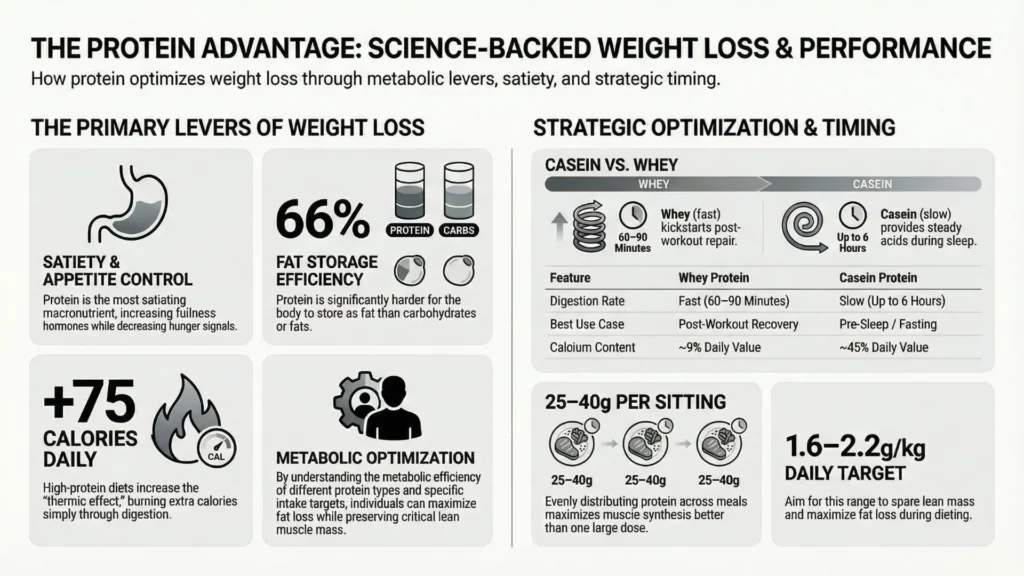
Incorporating protein for weight loss into an Indian diet works by suppressing the hunger hormone ghrelin and boosting metabolism through the thermic effect of food. Specifically, aiming for 1.2 to 2.2 grams of protein per kilogram of body weight helps preserve lean muscle, stabilizes blood sugar, and prevents the metabolic slowdown common in traditional vegetarian diets.
The Frustrating Plateau: Why Your Low-Calorie Indian Diet Is Not Showing Results?
The phenomenon of the weight loss plateau is frequently encountered by Indian health seekers who attempt to shed pounds by simply reducing their intake of staples like roti and rice. While cutting calories is a fundamental requirement for fat loss, the physiological response to a low-protein diet often leads to a metabolic slump. This happens because your body reduces its basal metabolic rate to conserve energy. Consequently, when the diet lacks sufficient protein for weight loss, the body may burn its own muscle tissue for energy, which further slows your progress.
The Impact of Carbohydrate Dominance on Metabolic Rate
Moreover, traditional Indian dietary patterns are characterized by a high intake of low-quality carbohydrates. Research suggests this is associated with a 14% to 30% higher risk of metabolic issues. For a busy professional, a typical day might consist of poha for breakfast and rice for lunch. While culturally significant, this pattern keeps insulin levels elevated. Specifically, high insulin acts as a metabolic “lock” on fat stores. Incorporating lean protein for dieting acts as a counterbalance, slowing the absorption of glucose and allowing for better insulin management.
Protein Deficiency Statistics in Modern India
Furthermore, the scale of protein deficiency in India is a significant public health concern. Recent surveys indicate that a vast majority of the urban population is failing to meet basic requirements.
| Metric | Statistical Finding | Significance |
| Urban Protein Deficiency | 60% to 73% of urban Indians | Highlights a massive nutrition gap despite food availability. |
| Source Dependency | 60% to 75% of protein comes from cereals | Cereal-based protein is often incomplete and less bioavailable. |
| Consumer Awareness | 74% cannot identify the correct ICMR RDA | Lack of awareness leads to unintentional underconsumption. |
| RDA Tracking | 85% do not estimate their daily protein intake | Leads to “hidden hunger” where nutrients are low. |

Muscle Preservation as a Metabolic Defense
In addition to hormone control, one of the most critical roles of protein rich fat loss is the preservation of lean body mass. When you enter a calorie deficit, your body naturally seeks to preserve fat stores for survival. However, muscle tissue is significantly more metabolically active than fat. Therefore, high-protein diets preserve energy expenditure by preventing the decline in lean mass . For individuals managing thyroid disorders or PCOS, protecting every gram of muscle is vital for preventing weight regain.
Beyond the Calorie Count: How Protein Naturally Silences Your Hunger Hormones
The struggle with weight loss is often described as a battle of willpower, but it is more accurately a battle of hormones. Specifically, the gut-brain axis regulates appetite through chemical signals. Protein intake for slimming is a powerful tool because it modulates these signals more effectively than fats or carbohydrates .
The Role of Ghrelin and Satiety Peptides
In simple terms, when protein enters your digestive system, it triggers the release of appetite-suppressing hormones. The most notable of these is ghrelin, often called the “hunger hormone.” While ghrelin levels typically rise before a meal, protein intake causes a more significant and prolonged suppression of this hormone .
| Hormone | Effect of Protein Intake | Physiological Result |
| Ghrelin | Strong suppression | Reduced desire to eat and fewer food cravings . |
| GLP-1 | Increased secretion | Slows gastric emptying, making you feel full longer . |
| CCK | Increased secretion | Signals the brain to stop eating during a meal . |
| Peptide YY (PYY) | Significant increase | Long-term satiety signal that prevents overeating . |
The Thermic Effect of Food (TEF) Explained
Furthermore, the thermic effect of food (TEF) represents the energy required to digest nutrients. Protein has a thermic effect of 20% to 30%, whereas carbohydrates are only at 5% to 10% . What this means for your daily routine is that if you consume 100 calories from a high-protein source like soya chunks, your body effectively “nets” only 70 to 80 calories after processing. Consequently, a high protein weight loss strategy increases your total daily energy expenditure without requiring extra gym time .
Insulin Regulation and Cravings
For individuals with PCOS or Type 2 Diabetes, protein plays a stabilizing role. Specifically, high-carb Indian meals cause rapid spikes in blood glucose. This results in a sharp drop in blood sugar later, triggering intense cravings for sweets. However, incorporating protein rich fat loss foods into every meal blunts this glucose spike. By slowing digestion, protein ensures a steady release of energy, which is critical for managing hormonal imbalances.

Poha vs. Paneer: Common Myths About Traditional Indian Breakfasts and Protein Content
There is a significant mismatch between the perceived healthiness of traditional Indian breakfasts and their actual protein density. Specifically, staples like poha, upma, and idli are often viewed as “light.” However, they are heavily weighted toward carbohydrates and offer very little protein for weight loss .
Analyzing the “Poha Trap”
For instance, poha is a common breakfast across India. While it is easy to digest, its protein content is negligible. A standard serving of poha provides only about 2.5 grams of protein. For a busy professional, this meal provides a quick burst of energy followed by a hunger crash. In contrast, substituting this with paneer or eggs drastically changes your satiety profile.
| Breakfast Item (100g) | Protein Content (g) | Satiety Level |
| Poha | ~2.5g | Low |
| Upma | ~3.0g | Low |
| Idli (2 pieces) | ~4.0g | Moderate |
| Paneer (Low-fat) | ~18.0g–25.0g | High |
| Moong Dal Chilla | ~7.0g–12.0g | High |
| Boiled Eggs (2) | ~12.0g | High |
The Myth of Dal as a Primary Protein Source
Moreover, a common belief in Indian households is that “dal is enough protein.” While raw pulses are protein-rich, the reality of a cooked bowl of dal is different. Because dal is typically cooked with a high water ratio, a single bowl provides only about 4 to 5 grams of protein. Therefore, to meet your daily protein requirement through dal alone, you would need to eat 12 to 15 bowls a day, which is impractical and leads to excessive carb intake.
Quality of Protein: Complete vs. Incomplete
Specifically, protein quality is determined by amino acids. Animal-based proteins like eggs and dairy are “complete” because they contain all nine essential amino acids. On the contrary, most plant proteins like dal are “incomplete.” However, the traditional combination of dal-chawal or rajma-roti is scientifically sound because they complement each other to form a complete protein.
The Diet Dekho Protein Blueprint: Practical Swaps for Your Daily Dal, Sabzi, and Roti
Sustainable weight loss does not require you to abandon traditional flavors. Instead, the Diet Dekho approach focuses on strategic swaps to increase the protein needs for Indians without increasing total calories.
The Roti Transformation
Specifically, the standard wheat roti can be enhanced to become a source of lean protein for dieting.
- The Sattu Mix: Replacing part of your wheat flour with sattu (roasted chana flour) increases protein and fiber. In fact, sattu is a low-GI food that provides 20g of protein per 100g.
- The Tofu/Paneer Dough: Moreover, kneading grated low-fat paneer or mashed tofu into your dough is a seamless way to add protein without changing the taste.
Re-imagining the Sabzi
Furthermore, Indian vegetable dishes are often sparse regarding protein.
- Soya Chunks: Soya chunks are a “vegetarian powerhouse,” offering 52 grams of protein per 100 grams—more than chicken or eggs . Adding them to your sabzi significantly boosts the protein rich fat loss potential of the meal.
- The Curd Pairing: Alternatively, simply adding a bowl of thick curd (dahi) to your meal provides an additional 6–10 grams of complete protein and probiotics.
Strategic Swaps Table for Daily Indian Meals
| Standard Meal | Diet Dekho Swap | Protein Gain |
| White Rice & Dal | Quinoa & Thick Dal with Soya | +15g protein. |
| Potato Sabzi | Paneer or Tofu Bhurji | +18g protein. |
| Plain Poha | Sprouts Poha with Peanuts | +8g protein. |
| Tea & Biscuits | Roasted Chana or Makhana | +6g protein. |
| Maida Paratha | Besan or Moong Dal Chilla | +10g protein. |

Your Daily High-Protein Roadmap: A Simple Sample Plan from Morning Tea to Dinner
Transitioning to a high protein Indian diet requires a structured approach. This roadmap ensures that your protein for weight loss is distributed throughout the day to maximize muscle repair and keep hunger silent .
Breakfast: The Satiety Foundation
Specifically, aim for 20g of protein to set the tone for the day.
- Vegetarian: 2 Moong Dal Chillas stuffed with 30g of grated paneer.
- Non-Veg: 2-3 Egg White Omelet with spinach and one slice of multigrain toast.
Lunch: The Macro-Balanced Plate
In addition to your vegetables, focus on a high-protein core.
- Plate Structure: One small roti, a large bowl of thick dal with soya chunks, and a serving of dahi.
- Non-Veg Swap: Replace dal with 100g of grilled chicken breast.
Evening Snack: The Hunger Bridge
Avoid the temptation of fried snacks. Instead, try these:
- Option: A glass of sattu buttermilk or 30g of roasted kala chana.
Dinner: The Lean Recovery Meal
Finally, dinner should be light on carbohydrates to prevent fat storage during sleep.
- Vegetarian: 100g of Paneer Tikka or Tofu stir-fry with bell peppers.
- Non-Veg: 120g of grilled fish or steamed chicken with sautéed zucchini.
Common Protein Pitfalls: Why Relying Only on Supplements Might Stall Your Progress
While the market is flooded with shakes, the ICMR and NIN emphasize that supplements should not replace a balanced diet . For the average Indian, whole foods remain the superior choice for long-term protein intake for slimming.
The Problem with Ultra-Processed Supplements
Specifically, many protein powders contain artificial sweeteners and thickeners. These can cause bloating and digestive distress, especially since 60–65% of Indians have some form of lactose intolerance. Moreover, relying solely on liquids can lead to “hidden” calorie intake without the benefit of chewing, which signals fullness to the brain.
Safety and Kidney Health
A common myth is that protein damages the kidneys. However, for healthy individuals, a high protein weight loss plan is safe if you stay hydrated . On the contrary, for those with Stage 3 Chronic Kidney Disease (CKD), protein intake must be strictly limited to 0.6–0.8g/kg/day to avoid further damage .

Small Changes, Big Results: Starting Your Protein Journey with Confidence and Hope
The journey to health is often viewed as a series of restrictive “no”s, but the DietDekho philosophy centers on the empowering “yes.” By saying yes to more protein for weight loss, you are saying yes to better energy and a faster metabolism. This is especially critical for those managing PCOD/PCOS or Thyroid issues.
The Emotional and Psychological Shift
Moving toward a high protein plan often results in improved mental clarity. Specifically, when you are no longer crashing from sugar spikes, you have the mental energy to stay consistent. Remember, weight loss is a marathon. Small adjustments—like adding soya to your pulao—create a sustainable lifestyle.
Personalized Nutrition: The Diet Dekho Difference
While these guidelines are research-backed, every individual has a unique metabolic signature. Your medical history dictates your specific daily protein requirement. For instance, someone with hypertension might need a different approach than a professional with PCOS.
| Condition | Recommended Protein Type | Key Focus |
| PCOS / PCOD | Lean Poultry, Tofu, Legumes | Insulin management. |
| Type 2 Diabetes | Paneer, Soya, Fish | Low-GI combinations. |
| Thyroid (Hypo) | Eggs, Dairy, Whole Grains | Iodine-rich; space out soy from meds . |
| Hypertension | Plant Proteins (Lentils, Nuts) | Potassium-rich, low-sodium . |
Conclusion: Empowering Your Metabolic Success
Integrating protein for weight loss into an Indian lifestyle is a return to metabolic balance. By understanding that dal is a starting point and embracing the power of sattu, soya, and paneer, you can effectively break through frustrating plateaus. The science is clear: protein is the most satiating nutrient we have. When used wisely, it transforms your body into a fat-burning powerhouse.
As you embark on this journey, remember that you do not have to do it alone. The complexities of managing PCOS or diabetes require a nuanced, expert-led approach. Whether you are a busy professional or a homemaker, a personalized plan can make all the difference.
Next Step: Consult a Diet Dekho Expert for a Personalized Protein-Rich Nutrition Plan (https://dietdekho.com/form/)

Frequently Asked Questions (FAQs)
1. How does protein help with appetite? Specifically, protein stimulates hormones like GLP-1 and PYY in the gut, which signal fullness. Simultaneously, it reduces the hunger hormone ghrelin, making it easier to stay in a calorie deficit without feeling hungry .
2. Can vegetarians get enough protein for weight loss from an Indian diet? Yes. While individual plant sources are often incomplete, combining them with grains or adding paneer and soya chunks provides all essential amino acids. Soya chunks, in particular, are an incredibly effective tool for vegetarian protein rich fat loss .
3. Is too much protein harmful to the kidneys? For healthy people, high protein intake is safe. However, for those with pre-existing kidney conditions, protein should be limited. It is also essential to stay hydrated to help your kidneys process the nitrogen from protein .
4. What is the best time to consume protein for weight loss? Research suggests that distributing your intake evenly across all meals is most effective. Specifically, aim for 20–30 grams per meal, starting with a high-protein breakfast to prevent evening cravings .
5. Is soy protein safe for those with thyroid or PCOS? For PCOS, soy is an excellent lean protein. For thyroid patients, soy is safe if iodine levels are adequate. Specifically, it is recommended to wait 4 hours after taking thyroid medication before eating soy .
Contact Us
We understand how overwhelming nutrition and weight loss information can feel. With so many opinions and confusing advice online, it’s easy to feel stuck or unsure about what to do next.
At Diet Dekho, you never have to figure it out alone. You can contact us anytime with any questions or concerns. Our expert dietitians are available 24/7 to guide, support, and help you stay on track. Whether your goal is weight loss or building healthier habits, we’re here to make the journey simpler and more sustainable for you.
Disclaimer
This blog is intended to help readers make healthier food choices. Your health should always be the top priority. Before starting any restrictive or special diet, especially if you have a medical condition or health concern, please consult a doctor or a qualified dietitian. Each body responds differently to food and lifestyle changes. Always choose what is safe and suitable for you.

Dr. Ritika is a nutrition and lifestyle expert with 2+ years of experience, helping clients manage weight and health through practical, personalized diet plans.