Could the simple act of changing when you eat, rather than just what you eat, be the ultimate solution to the growing waistlines across the country? In a nation where food is a celebration of culture and family, the concept of intermittent fasting India has moved beyond a mere trend to become a scientifically backed metabolic intervention. By realigning our modern eating habits with our biological clocks, we can address the specific health challenges that face the Indian population today.
Direct Answer: Is Intermittent Fasting Good for Indians? Yes, intermittent fasting is highly effective for Indians because it directly counteracts the “Indian Phenotype”—characterized by high abdominal fat and insulin resistance. By creating a 16-hour fasting window, the body switches from burning glucose to burning stored fat. When combined with traditional, protein-rich desi meals, it promotes sustainable weight loss and metabolic health.
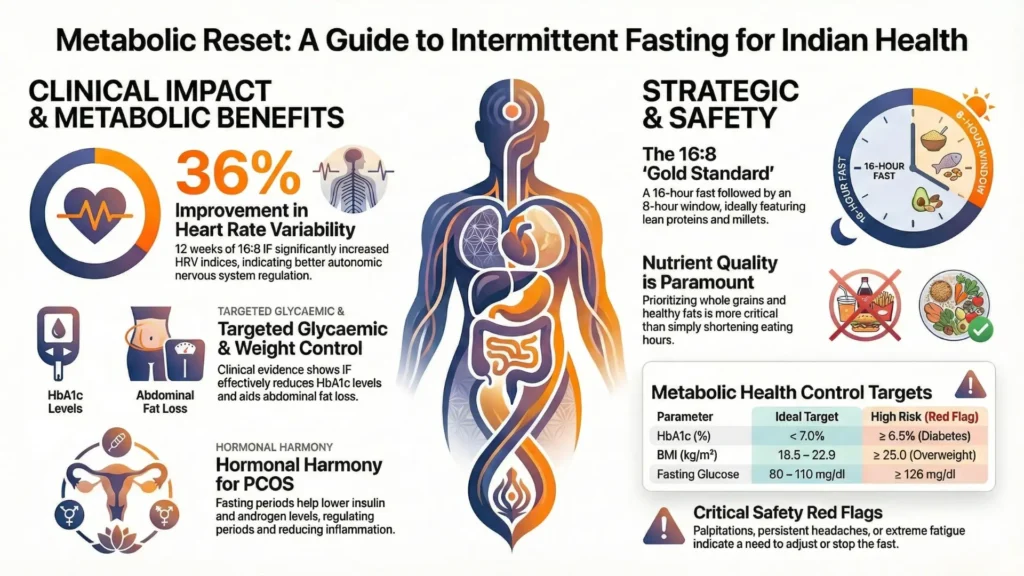
Why an Intermittent Fasting India Routine Feels Difficult (But Doesn’t Have to Be)
Many people at dietdekho often ask why starting a fasting routine feels so much harder in an Indian household compared to what they see in Western fitness videos. The answer lies in our deeply rooted socio-cultural framework, where food is the primary medium for social interaction and family bonding. In India, the “subjective norm”—the pressure to eat with others—is incredibly strong, and refusing a meal or a snack at a social gathering is often perceived as rude or socially isolating.
Our modern lifestyle has moved away from the traditional Indian discipline of early dinners and sunrise-based routines. Historically, many Indian communities followed a natural form of time-restricted eating without even calling it that. However, the rise of food delivery apps, 24-hour convenience, and “anytime eating” has disrupted our internal clocks. This constant availability of food means our digestive systems never get the rest they were evolutionarily designed to have.
The difficulty is further compounded by the high-carbohydrate nature of our staples. Whether it is rice in the South or wheat in the North, the Indian diet is inherently carb-heavy, providing about 62.3% of total daily calories from carbohydrates. These carbs cause frequent insulin spikes, which makes the initial transition to intermittent fasting India feel like a struggle against hunger and fatigue. However, once the body adapts, these symptoms disappear.
The Shift from Traditional Discipline to Modern Chaos
A few decades ago, late-night snacking was virtually non-existent in most Indian homes. Families typically ate their last meal before or shortly after sunset, leading to a natural fasting period of 12 to 14 hours. Today, the “anytime eating” culture has become a national health challenge, leading to an alarming rise in cardiometabolic diseases. Intermittent fasting India is essentially a return to those disciplined roots, but with a structured, scientific approach.
Navigating the Social and Familial Pressures
In a collectivist society like ours, an individual’s diet is rarely just their own; it involves the entire family. Research indicates that if the primary cook in the house—often the mother or spouse—is not involved in the planning, the fasting attempt is likely to fail. Success in an Indian intermittent fasting plan requires a shift in how we communicate our health goals to our loved ones, moving from “I am skipping a meal” to “I am following a scheduled nutritional plan.”
| Cultural Barrier | Impact on Fasting | Solution |
| Collectivist Eating | Pressure to eat at every social gathering | Schedule your eating window to include major social meals. |
| High-Carb Staples | Frequent insulin spikes and hunger | Increase protein and fiber to stay full longer. |
| “Anytime Eating” Habit | Constant snacking on processed foods | Use black tea or spiced water to curb mindless cravings. |
| Gender Roles | Dependence on others for meal prep | Involve family members in understanding the 16:8 schedule. |
Redefining the Indian Satiety Concept
In many Indian cultures, a meal is not considered “complete” or “satiating” without a heavy serving of grains like wheat or rice. This belief that we need high volumes of starch to feel nourished is one of the biggest mental hurdles. By understanding that satiety comes from protein and fiber density, we can make the transition to a restricted eating window much smoother. Following a consistent IF diet for Indians helps reset these hunger signals over time.

Understanding the Science: How Intermittent Fasting India Works for You
To appreciate the impact of intermittent fasting India, we must look at the “Carbohydrate Overload” crisis identified by the Indian Council of Medical Research (ICMR). The latest ICMR-INDIAB data reveals that most Indians derive over 60% of their energy from low-quality, refined carbohydrates like white rice and maida. This diet, combined with a sedentary lifestyle, creates the perfect storm for insulin resistance—a condition where your cells stop responding to the hormone that regulates blood sugar.
When you eat carbohydrates, your body breaks them down into glucose, raising your insulin levels. Because Indians eat frequent, carb-rich meals, their insulin levels stay high throughout the day. High insulin is a “fat-storage” signal; as long as it is present, your body cannot burn stored fat for energy. Intermittent fasting India acts as a metabolic circuit breaker by forcing insulin levels to drop low enough for the body to access its fat reserves.
The Mechanism of Metabolic Switching
After about 12 hours of fasting, the body exhausts its immediate supply of glucose stored in the liver. At this point, it undergoes “metabolic switching,” where it begins to break down fatty acids into ketones for fuel. For an Indian body accustomed to a constant stream of sugar and starch, this process can initially feel like a “crash.” However, this switch is exactly what is needed to reduce visceral fat—the dangerous fat stored around the organs.
Addressing the Indian Phenotype and Central Obesity
Indians are uniquely predisposed to “central obesity,” meaning they tend to carry more weight around the abdomen even if their overall Body Mass Index (BMI) is within a normal range. This is often called being “skinny fat.” This abdominal fat is metabolically active and highly inflammatory. Research shows that intermittent fasting India specifically targets this trunk fat and reduces waist circumference more effectively than simple calorie counting.
The Impact of Protein Deficiency on Metabolism
A significant finding from the ICMR-INDIAB study is that protein intake in India is suboptimal, averaging just 12% of daily calories, which is well below the recommended levels for maintaining muscle mass. When you fast without eating enough protein, your body may break down muscle for energy. This is why a successful fasting for weight loss India attempt must prioritize protein sources like paneer, dal, and eggs to keep the metabolic rate high.
| Macronutrient | Average Indian Intake | ICMR Recommendation | Role in Intermittent Fasting |
| Carbohydrates | 62.3% (Refined) | 45-55% (Complex) | Restricting window lowers insulin. |
| Protein | 12% | 15-20% | Essential to prevent muscle loss. |
| Fat | 25.1% | 20-30% | Healthy fats provide satiety during fast. |
| Fiber | 1.8% of energy | 25-30g daily | Slows digestion and reduces hunger. |
Cellular Benefits: Autophagy and Repair
One of the most profound scientific benefits of fasting is autophagy—a process where the body cleans out damaged cells to make room for newer, healthier ones. In the context of India’s high pollution levels and processed food consumption, this natural “detox” is vital. By giving the digestive system a break for 16 hours, you allow your body to focus its energy on cellular repair and reducing chronic low-grade inflammation.
Common Myths About an Indian Intermittent Fasting Plan
In India, dietary advice is often passed down through generations, leading to several persistent myths that can make fasting for weight loss India seem daunting or even dangerous. At dietdekho, we believe in debunking these with hard science.
Myth 1: You Must Eat Breakfast to Start Your Metabolism
The idea that “breakfast is the most important meal of the day” was largely a marketing success rather than a biological necessity. Research indicates that skipping breakfast as part of a structured fasting window does not “tank” your metabolism. In fact, for many Indians who are sedentary in the morning, postponing the first meal until noon can significantly improve insulin sensitivity and fat-burning.
Myth 2: Fasting Will Make You Weak and Faint
Many people fear that a 16-hour gap will lead to a drop in energy or “weakness.” On the contrary, once the body adapts to burning fat (ketosis), many individuals report increased mental clarity and energy. The “faintness” people feel is often just dehydration or an electrolyte imbalance rather than a lack of calories. Drinking salt-water or lemon water can instantly resolve this.
Myth 3: You Can’t Build Muscle While Fasting
There is a common misconception that fasting leads to muscle atrophy. However, studies show that intermittent fasting, when combined with resistance training and adequate protein intake, is excellent for “body recomposition”—losing fat while maintaining or even gaining muscle. The increase in Human Growth Hormone (HGH) during fasting actually helps protect muscle tissue.
Myth 4: Fasting Slows Down Your Metabolic Rate
While long-term starvation can slow metabolism, short-term intermittent fasting (16-24 hours) can actually boost it by increasing levels of norepinephrine, a hormone that helps burn fat. Your body is designed for periods of feast and famine; it does not go into “starvation mode” just because you skipped a meal.

Myth 5: You Can Eat Unlimited “Healthy” Food in the Window
A very common mistake in the intermittent fasting Indian lifestyle is thinking that calories don’t count as long as you are in the eating window. If you consume 3000 calories of “healthy” nuts, fruits, and millets in an 8-hour period, you will still gain weight. The goal is to maintain a caloric deficit, typically around 500 calories less than your daily burn.
| Myth | Science-Backed Fact | Source |
| “Starvation Mode” | Short-term fasting can actually increase metabolic rate via norepinephrine. | |
| “Muscle Loss” | Growth hormone increases during fasting, protecting lean muscle mass. | |
| “Brain Fog” | Ketones provide a stable energy source for the brain, improving focus. | |
| “Acidity” | Fasting gives the gut rest and can actually reduce bloating and acidity over time. |
A Practical 16:8 IF Diet for Indians: Meal Structure
The 16:8 method is the most popular approach for intermittent fasting India because it is flexible and sustainable. It involves fasting for 16 hours and eating all your meals within an 8-hour window (e.g., 12 PM to 8 PM). For this to work with Indian food, we must balance the heavy carb load of our traditional meals with higher protein and fiber.
The Macro-Balanced Philosophy at DietDekho
To achieve a fat loss diet India, we recommend a “Plate Method” for your two main meals. Half of your plate should be filled with fiber-rich vegetables (sabzi or salad), one-quarter with high-quality protein (dal, paneer, eggs, or chicken), and only one-quarter with complex carbohydrates (millets or whole wheat).
7-Day Indian Intermittent Fasting Sample Plan
| Day | 12:00 PM (Lunch – Break the Fast) | 4:00 PM (Snack) | 7:30 PM (Dinner – Last Meal) |
| Mon | 2 Whole Wheat Rotis, 1 bowl Moong Dal, 1 bowl Bhindi, Large Salad | Handful of Walnuts & Roasted Chana | 100g Grilled Paneer/Chicken with Sautéed Broccoli & Bell Peppers |
| Tue | 1 bowl Brown Rice, 1 bowl Fish Curry/Tofu, 1 cup Curd, 1 bowl Lauki Sabzi | 1 Seasonal Fruit (Apple/Guava) | 1 bowl Vegetable Dalia or Oats with added Sprouts |
| Wed | 2 Bajra Rotis, 1 bowl Chickpea Curry (Chole), 1 cup Buttermilk | 1 bowl Roasted Makhana with spices | 2 Boiled Eggs/Paneer Bhurji with 1 Roti and clear soup |
| Thu | 1 bowl Quinoa/Millets with Dal and Mixed Veggies, Salad | 1 cup Greek Yogurt or 1 glass Chaas | 100g Tandoori Chicken/Tofu with Mint Chutney and Green Salad |
| Fri | 2 Multigrain Rotis, 1 bowl Paneer/Egg Curry, 1 bowl Spinach Sabzi | 1 cup Green Tea and 5-6 Almonds | 1 bowl Moong Dal Soup and Stir-fried vegetables with Tofu |
| Sat | 2 Idlis with 1 bowl Sambar (extra veggies) and Coconut Chutney | 1 bowl Sprouted Moong Salad with onions and lemon | 150g Grilled Fish/Paneer and 1 bowl Mushroom/Vegetable Stew |
| Sun | 1 small portion Chicken/Veg Biryani (Brown Rice), 1 bowl Raita, Salad | 1 cup Coconut Water and handful of Peanuts | 1 bowl Millet Khichdi with plenty of vegetables and 1 tsp Ghee |

Identifying High-Quality Desi Protein Sources
Since many Indians struggle to meet the protein intake requirement, it is essential to include at least one of these in every meal of your IF diet for Indians:
- Vegetarian: Paneer (100g ≈ 18g protein), Greek Yogurt (1 cup ≈ 15-20g), Soy Chunks, Soya Paneer (Tofu), Moong Dal, Chickpeas, and Kidney Beans.
- Non-Vegetarian: Whole Eggs (1 egg ≈ 6g), Chicken Breast (100g ≈ 31g), Fish like Rohu or Salmon (100g ≈ 20-25g).
Managing Carbohydrates: The 3:1 Rule
For vegetarians, it is often helpful to follow a cereal-to-legume ratio of 3:1. This ensures you get a complete amino acid profile while keeping the total carbohydrate load manageable. Swapping white rice for “nutri-cereals” like Ragi, Jowar, and Bajra provides more fiber and a lower glycemic index, which helps prevent the insulin spikes that drive weight gain.
Managing Tea Cravings with an Indian Intermittent Fasting Plan
The true test of intermittent fasting India often happens at 4:00 PM during the tea break or at 9:00 PM during a family wedding. Managing these cravings and social pressures is what makes a plan sustainable for the long term.
The “Chai” Challenge: Fasting-Friendly Sips
In India, tea is not just a beverage; it is a cultural signifier. However, traditional milk tea with sugar contains enough calories to break your fast by triggering an insulin response.
- During the Fasting Window: Stick to black tea, green tea, or herbal infusions like ginger-tulsi. These contain virtually zero calories and can actually enhance fat burning through catechins like EGCG.
- The “Milk Drop” Strategy: If you absolutely cannot do without milk, keep it for your eating window. While some believe a tiny splash might not disrupt every individual’s metabolic state, for maximum weight loss results, it is best avoided during the 16 hours.
- Ayurvedic Spiced Water: Using spices like Jeera (cumin), Saunf (fennel), and Ajwain (carom) is a great home-based solution. These spices reduce bloating, aid digestion, and help suppress hunger pangs naturally.
Handling Indian Social Gatherings and Weddings
The South Asian food environment is designed for overconsumption. When you are at a function:
- Shift Your Window: If you know you have a late dinner party, start your eating window at 2:00 PM instead of noon. This allows you to participate in the meal without breaking your 16-hour fast.
- The “Water First” Rule: Drink a large glass of water before you enter the food area. Often, we eat out of thirst or social habit rather than actual hunger.
- Prioritize Protein Starters: Focus on paneer tikka, grilled fish, or roasted kababs. These are high in protein and will fill you up quickly, reducing the temptation to eat heavy biryanis or sweets.
Metabolism-Boosting Spiced Water Recipe
One of the most effective desi diet for fat loss hacks is the use of spice-infused water during the fasting window.
- Ingredients: 1 tsp Jeera, 1 tsp Saunf, 1/2 tsp Ajwain, 1 small Cinnamon stick.
- Preparation: Soak overnight in room-temperature water or simmer for 10 minutes in the morning.
- Benefit: This drink helps stabilize blood sugar, reduces the “heavy” feeling after meals, and provides a sense of fullness that helps you bridge the gap until your first meal.
| Ingredient | Ayurvedic Benefit | Metabolic Role |
| Jeera (Cumin) | Enhances Agni (digestive fire) | Increases secretion of digestive enzymes. |
| Saunf (Fennel) | Reduces bloating and gas | Natural appetite suppressant; high in antioxidants. |
| Ajwain (Carom) | Improves gut health | Helps break down belly fat and reduces water weight. |
| Cinnamon | Balances blood sugar | Modestly improves fasting blood glucose and insulin sensitivity. |

Mistakes Indians Make with Intermittent Fasting India
Even with the best intentions, many fall into traps that stall their progress. Awareness of these common intermittent fasting mistakes is the first step toward a successful transformation.
1. Breaking the Fast with a Carb-Bomb
After 16 hours of not eating, your body is highly sensitive to insulin. If the first thing you eat is a huge plate of white rice, parathas, or a sugary drink, you will cause a massive glucose spike. This is often why people feel extremely sleepy after their first meal. Instead, break your fast with a small protein-rich snack like almonds or an egg, then wait 20 minutes before having a larger meal.
2. Ignoring Hydration and Electrolytes
As your insulin levels drop during fasting, your kidneys release excess sodium and water. If you don’t replenish these, you will experience the “keto flu”—headaches, fatigue, and irritability. Many people doing intermittent fasting India forget to drink enough water when they aren’t eating. Aim for 2.5–3 liters of water a day, and consider adding a pinch of salt and lemon to your water during the fasting period.
3. Eating Too Little (The Under-fueling Trap)
Intermittent fasting is about when to eat, not just eating as little as possible. If you don’t eat enough during your 8-hour window, your body may lower its basal metabolic rate to conserve energy, stalling your weight loss. You still need to hit your macro-balanced targets for protein and healthy fats.
4. Relying on “Anytime” Packaged Snacks
The convenience of biscuits, namkeen, and rusk with evening tea is a hard habit to break. These are high-glycemic foods that cause insulin to skyrocket. If you are hungry between your lunch and dinner, choose “smart snacks” like roasted makhana, sprouts, or a handful of nuts.
5. Inconsistency and Excessive Consumption
Metabolic flexibility is built through consistency. If you fast for 5 days and then consume excessively all weekend, your body never fully adapts to burning fat. Research suggests that while you don’t need to be perfect, sticking to the schedule at least 5-6 days a week is necessary to see long-term results in blood pressure and glucose control.
| Common Mistake | Immediate Consequence | Corrective Action |
| Breaking fast with sweets/juice | Massive insulin spike and energy crash | Break fast with protein/fats (nuts, eggs). |
| Neglecting sleep | Increased cortisol and hunger hormones | Aim for 7-9 hours of quality sleep. |
| Lack of preparation | Choosing poor quality food when hungry | Meal prep your proteins and veggies in advance. |
| Over-reliance on “Vrat” foods | High calorie and carb intake | Focus on whole, unprocessed desi meals. |

Safety Considerations: PCOS, Diabetes, Thyroid, and BP
While intermittent fasting India is a powerful tool, it is not a “one-size-fits-all” solution. Certain health conditions require a more cautious and supervised approach.
Polycystic Ovary Syndrome (PCOS) and IF
PCOS affects between 3.7% and 22.5% of women in India and is deeply linked to insulin resistance. For these individuals, intermittent fasting can be highly beneficial by:
- Reducing androgen levels (male hormones) which helps with acne and hirsutism.
- Restoring menstrual regularity in up to 73% of cases by improving hormonal balance.
- Targeting visceral fat which is often higher in those with PCOS. Safety Note: Those with PCOS should avoid aggressive 24-hour fasts, as extreme stress can disrupt the delicate hormonal balance. A 14:10 or 16:8 window is generally safer.
Diabetes and Medication Management
If you have Type 2 Diabetes, intermittent fasting India can help lower your HbA1c and even lead to remission. However, if you are on insulin or oral medications like sulfonylureas, fasting can cause dangerous drops in blood sugar (hypoglycemia).
- Consult Your Doctor: Medication doses often need to be reduced or timed differently when you start fasting.
- Monitor Glucose: Use a Continuous Glucose Monitor (CGM) or regular finger-prick tests to see how your body responds.
Hypothyroidism and Hashimoto’s
Indian populations are particularly prone to thyroid dysfunction. While fasting can help with the weight gain associated with an underactive thyroid, extreme caloric restriction can further slow the metabolism. Ensure you are consuming iodine, selenium, and zinc-rich foods during your eating window and take your thyroid medication on an empty stomach with water only.
Hypertension and Heart Health
Fasting has been shown to improve blood pressure and cholesterol levels. However, those on BP medication must be careful, as weight loss and fasting can cause blood pressure to drop significantly, leading to dizziness. It is vital to stay hydrated and keep your doctor informed about your progress.
The “Red Zone”: When to Avoid Fasting
Intermittent fasting should not be practiced by:
- Pregnant People: The body needs a constant supply of nutrients for fetal brain and organ development.
- Breastfeeding Parents: Milk production requires an extra 350-500 calories daily. Fasting can significantly reduce milk supply and cause fatigue.
- Those with a history of Eating Disorders: Fasting can trigger restrictive or excessive eating behaviors.
- Adolescents in Active Growth: Nutritional requirements during puberty are too high for restrictive eating windows.

Your Next Step: Start Your Intermittent Fasting India Journey Today
At dietdekho, we have seen thousands of people transform their lives by simply reclaiming the natural rhythm of their bodies. The journey toward a healthier you doesn’t require expensive “superfoods” or a total rejection of your cultural identity. It requires a commitment to consistency and a better understanding of how your body fuels itself.
By adopting an Indian intermittent fasting plan, you are not just losing weight; you are protecting yourself against the rising tide of lifestyle diseases that currently affect over half of our population. Whether you choose the 14:10 method or the 16:8 approach, the key is to start slow and focus on quality protein and complex carbohydrates.
Get a Personalized Macro-Balanced Plan with a Diet Dekho Expert Our team of senior nutritionists can help you design a schedule that fits your work timings, your family’s eating habits, and your specific health conditions. We take the guesswork out of fasting so you can focus on results.
Start Your Journey to Holistic Health with a Diet Dekho Consultant Take the first step toward a more energetic and vibrant life. Your metabolic health is your most valuable asset—don’t wait for a medical emergency to start caring for it.
Book your consultation here: https://dietdekho.com/form/
Frequently Asked Questions (FAQs)
Q1: Can I drink black coffee with a little sugar during my fast?
No. Even a single teaspoon of sugar contains about 16 calories and can spike your insulin, effectively breaking your fast. If you need a sweetener, you might use a tiny amount of Stevia, but for the best results, stick to plain black coffee or tea.
Q2: Is a 12-hour fast enough to see results in India?
A 12:12 window is a great starting point for beginners to get used to the schedule. However, the most significant metabolic benefits, like “metabolic switching” and autophagy, usually begin after 14-16 hours of fasting.
Q3: Can I exercise while I am in the fasting window?
Yes! Exercising in a fasted state can actually accelerate fat loss because your insulin is low, allowing your body to access fat stores more easily. Just ensure you stay hydrated and listen to your body—if you feel dizzy, stop and have some electrolyte-rich water.
Q4: Will I feel hungry all the time?
You will likely feel hunger pangs during the first 3-5 days as your body adjusts and your hunger hormone, ghrelin, resets. Drinking warm herbal tea or spiced water can help manage these temporary waves of hunger.
Q5: What is the best time for intermittent fasting in India?
The most popular window is 12 PM to 8 PM, as it allows you to have a social dinner with your family. However, choosing the best time for intermittent fasting India depends on your body; an early window (e.g., 9 AM to 5 PM) is technically better for blood sugar control and matches the body’s natural circadian rhythm more closely.

Conclusion
Intermittent fasting India is perhaps the most culturally compatible and scientifically sound intervention for the modern Indian health crisis. By addressing our high carbohydrate intake and sedentary lifestyles through a structured eating window, we can effectively combat abdominal obesity and insulin resistance. The integration of traditional Indian spices, protein-rich desi meals, and the discipline of our ancestors provides a holistic path toward a healthier India.
Ready to customize your fasting plan? Visit(https://dietdekho.com/form/) to start your journey today.
Contact Us
We understand how overwhelming nutrition and weight loss information can feel. With so many opinions and confusing advice online, it’s easy to feel stuck or unsure about what to do next.
At Diet Dekho, you never have to figure it out alone. You can contact us anytime with any questions or concerns. Our expert dietitians are available 24/7 to guide, support, and help you stay on track. Whether your goal is weight loss or building healthier habits, we’re here to make the journey simpler and more sustainable for you.
Disclaimer
This blog is intended to help readers make healthier food choices. Your health should always be the top priority. Before starting any restrictive or special diet, especially if you have a medical condition or health concern, please consult a doctor or a qualified dietitian. Each body responds differently to food and lifestyle changes. Always choose what is safe and suitable for you.

Dr. Ritika is a nutrition and lifestyle expert with 2+ years of experience, helping clients manage weight and health through practical, personalized diet plans.