Do the challenges of constant exhaustion and brain fog leave the modern Indian professional feeling like a battery that refuses to hold a charge? In the fast-paced environment of urban living, identifying and incorporating Vitamin B12 Rich Food into the daily routine is the first step toward reclaiming physical and mental vitality.
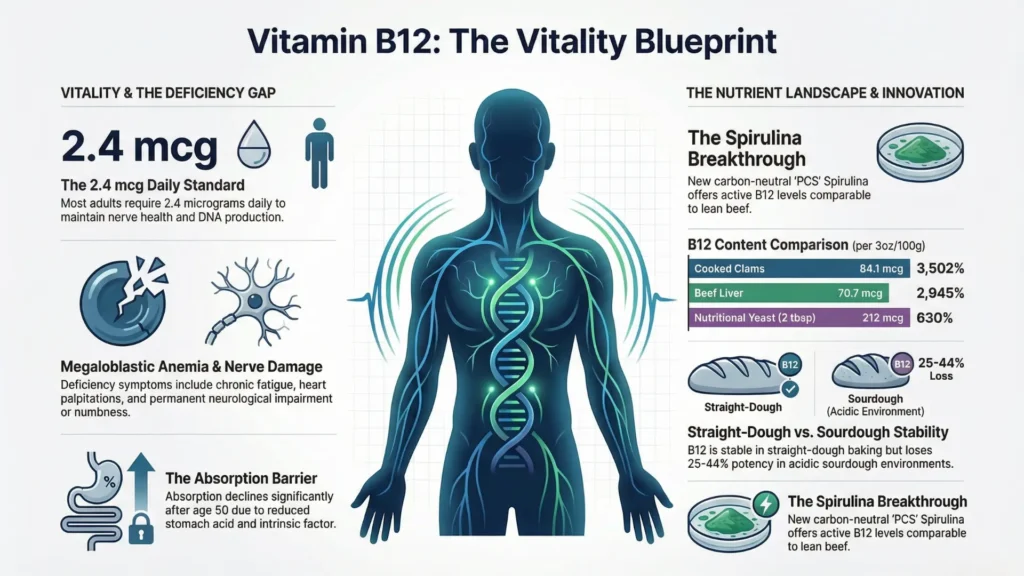
According to DietDekho, the journey to holistic health starts with understanding that Vitamin B12 Rich Food primarily include animal-derived products such as milk, curd, paneer, eggs, fish, and lean meats. For vegetarians in India, dairy serves as the most reliable natural source, while vegans must prioritize fortified cereals, plant-based milks, and nutritional yeast to meet their daily requirements of 2.4 mcg.
Why Do You Feel Tired All the Time? Understanding the B12 Gap
The phenomenon of persistent lethargy among Indians, particularly weight loss seekers and busy professionals, is frequently rooted in a systemic micronutrient deficit known as the Vitamin B12 gap. Clinical data reveals that Vitamin B12 deficiency is an unseen nutritional emergency in the Indian subcontinent, affecting more than 51% of the population across various demographic groups. This deficiency is significantly correlated with dietary patterns, where the prevalence among vegetarians can soar as high as 78%, compared to approximately 59% in non-vegetarian cohorts.
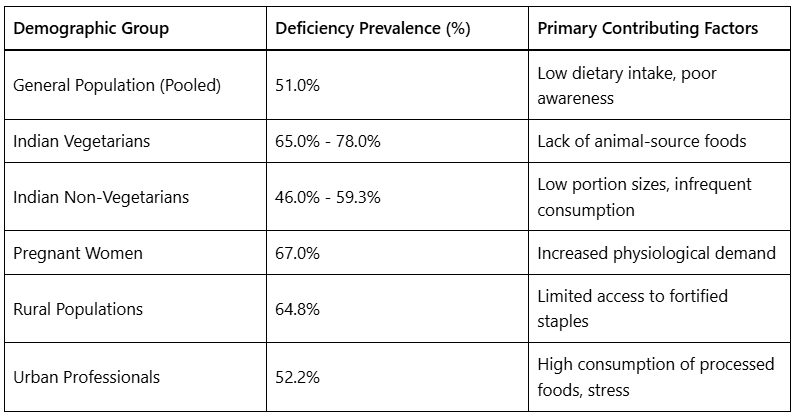
The statistics from a multicentric study in North India involving over 15,000 asymptomatic individuals highlight that nearly 24.2% of the population is biochemically deficient, with the highest prevalence seen in the 21-40 age group. This age bracket typically encompasses the most active segment of the workforce, suggesting that the “tiredness” often attributed to workplace stress may actually be a symptom of cellular-level depletion. Furthermore, a study in Pune identified that 58% of participants were deficient, with rural areas showing higher rates of 64.8% compared to 52.2% in urban centers.
The “B12 Gap” is not merely a result of inadequate intake but is also exacerbated by physiological barriers. The human body requires a complex mechanism involving stomach acid and a protein called intrinsic factor to absorb B12 from food. Many Indians, especially those managing diabetes or PCOS, take medications like Metformin, which can interfere with this absorption process over time. Consequently, even those who believe they are eating a balanced diet may be sliding into a deficit.
Recognizing the Signs of a Silent Deficit
Signs of low B12 levels often develop gradually, making them easy to overlook until they become severe. Initial symptoms include a general feeling of tiredness, lightheadedness, and shortness of breath during mild physical activity. As the deficiency progresses, it begins to impact the nervous system and the production of red blood cells.
| Stage of Deficiency | Common Symptoms | Biological Implication |
| Early/Mild | Fatigue, weakness, poor appetite | Reduced energy metabolism |
| Moderate | Palpitations, pale or yellowish skin, sore tongue | Megaloblastic anemia development |
| Advanced/Severe | Numbness, tingling in hands/feet, balance issues | Progressive nerve demyelination |
| Neuropsychiatric | Memory loss, irritability, depression, confusion | Cognitive decline and neurotransmitter imbalance |
For the homemaker managing a household or the NRI navigating a different food environment, recognizing these symptoms is crucial. When the body lacks sufficient B12, it cannot produce enough healthy red blood cells to carry oxygen, leading to the “tired all the time” feeling. This metabolic slowdown is particularly detrimental to weight loss seekers, as it reduces the capacity for exercise and lowers the resting metabolic rate.

Beyond Energy: Why Your Brain and Nerves Crave Vitamin B12
While the immediate impact of B12 is often felt in energy levels, its most profound roles are conducted behind the scenes in the brain and the central nervous system. Vitamin B12, also known as cobalamin, is the only biological compound containing cobalt, an element essential for the life of all mammals. It serves as a vital cofactor for DNA synthesis, meaning it is required for every new cell your body produces.
In the brain, Vitamin B12 is responsible for maintaining the myelin sheath—the fatty insulation that surrounds and protects nerve fibers. Without this protection, nerve signals slow down or become disrupted, leading to the “pins and needles” sensation often reported by those with chronic deficiency. This is why Vitamin B12 benefits and dosage are frequent topics of concern for patients with PCOD/PCOS or diabetes, who are already at a higher risk for nerve-related complications.
The Homocysteine Connection and Heart Health
A critical function of B12 is the regulation of homocysteine, an amino acid found in the blood. In conjunction with folate (Vitamin B9) and Vitamin B6, B12 breaks down homocysteine to create other chemicals the body needs. When B12 levels are low, homocysteine levels rise, a condition known as hyperhomocysteinemia.
High levels of homocysteine are toxic to the lining of the arteries and can increase the risk of blood clots, heart disease, and stroke. For individuals with hypertension or high blood pressure, maintaining adequate B12 levels is an essential strategy for vascular protection. Research has shown that reducing homocysteine through B-vitamin supplementation can help manage drug-resistant hypertension, potentially lowering blood pressure by 6 to 13 mmHg.
| Biochemical Marker | Impact of B12 Deficiency | Long-term Health Risk |
| Serum Homocysteine | Levels exceed 10-15 μmol/L | Atherosclerosis, stroke, heart attack |
| Methylmalonic Acid (MMA) | Levels rise as B12 falls | Most sensitive marker of early deficiency |
| Red Blood Cell Volume | Cells become abnormally large (MCV increases) | Megaloblastic anemia |
| Myelin Integrity | Protective nerve coating degrades | Irreversible neurological damage |
The implications for the Indian population are vast. Given the high rates of cardiovascular disease in India, the widespread B12 deficiency may be a significant, yet under-addressed, contributing factor to the national burden of heart disease and stroke.

The Vegetarian Challenge: Debunking Myths About Plant-Based B12 Sources
A major hurdle in the Indian diet is the reliance on plant-based foods, which are naturally devoid of bioactive Vitamin B12. Historically, it was believed that soil bacteria on unwashed vegetables or the fermentation process in traditional foods like idli and dosa provided sufficient B12. However, modern hygiene and agricultural practices have largely eliminated these incidental sources.
The Myth of Natural Plant Sources
It is often claimed that certain vegetarian foods like spirulina, seaweeds, or fermented soy are reliable B12 sources for vegetarians. Scientific analysis tells a different story. Most plant-based “sources” actually contain pseudo-B12, an inactive analog that the human body cannot use and which may even block the absorption of real B12.
| Alleged Source | The Scientific Reality | Bioavailability to Humans |
| Spirulina/Algae | Primarily contains pseudo-B12 (analogs) | Inactive; may hinder real B12 uptake |
| Fermented Soy (Tempeh) | B12 content is inconsistent and depends on bacteria | Unreliable; levels often trace |
| Unwashed Produce | Soil bacteria are inconsistent and unsafe | Negligible; carries risk of infection |
| Sprouts/Grains | Grains do not synthesize B12 | Zero, unless fortified artificially |
| Mushrooms | Only certain types (Shiitake/Button) have trace amounts | Low; requires high intake (50g+ dried) |
For the Indian vegetarian, these findings emphasize that dairy products are the only consistent, natural, and reliable source of Vitamin B12 in a meat-free diet. While fermented millets or homemade kanji are excellent for gut health, they should not be viewed as primary B12 providers but rather as facilitators of better absorption through a improved microbiome.
The Role of Fortification in Modern Diets
Fortification has emerged as a necessary intervention for those who do not consume animal products. Fortified breakfast cereals, plant milks (almond, soy, oat), and nutritional yeast are engineered to provide reliable doses of B12. For weight loss seekers and professionals who prefer plant-based diets, checking the labels for “fortified with Vitamin B12” is a non-negotiable habit. DietDekho recommends integrated meals where fortified cereals are paired with milk or dahi to maximize the nutrient profile.
Practical Food Guide: Top Vegetarian and Non-Veg B12 Sources in an Indian Kitchen
Navigating the Indian kitchen to find Vitamin B12 rich foods requires a focus on dairy for vegetarians and seafood or eggs for non-vegetarians. The daily B12 requirement for Indians is approximately 2.4 mcg for adults, which can be achieved through a combination of the following items.
Vegetarian Powerhouses: The Dairy Advantage
Milk and its derivatives are the most bioavailable B12 sources for vegetarians in India. Interestingly, the B12 in milk is often better absorbed than that in supplements because it is bound to specialized proteins that facilitate transport through the gut.
- Cow Milk: A single 250 ml glass provides nearly half (1.1 mcg) of the daily requirement. Buffalo milk, common in North India, may have slightly higher concentrations.
- Dahi (Curd): Freshly set homemade curd is a nutritional goldmine. 170 to 200 grams provides approximately 1.4 mcg of B12.
- Paneer: 100 grams of fresh paneer offers about 0.8 to 1.1 mcg of B12, making it an excellent protein-rich source for those on a weight loss diet.
- Swiss and Aged Cheeses: While less traditional, 50 grams of Swiss cheese can provide 1.5 mcg of B12.
| Vegetarian Source | Typical Serving | Estimated B12 (mcg) | Daily Value Contribution |
| Whole Milk | 1 cup (250ml) | 1.1 | ~46% |
| Plain Dahi | 1 bowl (200g) | 1.4 | ~58% |
| Paneer | 100g | 0.8 – 1.1 | ~33 – 45% |
| Fortified Cereals | 1 serving | 0.6 – 2.4 | 25 – 100% |
| Whey Powder | 1 scoop (32g) | 0.2 | ~8% |

Non-Veg Powerhouses: High-Concentration Sources
For those who include animal products in their diet, the options are even more concentrated. However, DietDekho notes that many non-vegetarian Indians only consume these foods once or twice a week, which might not be enough to sustain daily stores.
- Eggs: One large hard-boiled egg provides roughly 0.6 mcg (25% DV). It is essential to eat the yolk, as the whites contain only trace amounts.
- Fish: Seafood like Tuna, Salmon (Rawas), and Mackerel are exceptionally rich. A single serving of tuna can provide over 300% of the daily value.
- Chicken: While popular, chicken is lower in B12 than fish or red meat, providing about 0.3 mcg per 100g.
- Shellfish: Clams are the highest recorded source, with a single serving containing over 70 mcg, which is nearly 3000% of the RDA.
| Non-Veg Source | Typical Serving | Estimated B12 (mcg) | Daily Value Contribution |
| Clams (Cooked) | 75g | 74.0 | ~3000% |
| Tuna / Salmon | 100g | 4.8 – 9.0 | 200 – 375% |
| Lamb / Mutton | 100g | 2.4 | ~100% |
| Egg (Whole) | 1 large | 0.6 | ~25% |
| Chicken Breast | 100g | 0.3 | ~12% |
How to Ensure Absorption: Daily Habits to Fix Your B12 Levels Naturally
Consumption is only half the battle; absorption is where most B12 journeys fail. This is particularly true for those with medical conditions like PCOS, thyroid issues, or those on long-term medication.
The Impact of Medication on Your B12 Levels
Patients managing diabetes or PCOS are frequently prescribed Metformin to improve insulin sensitivity. However, clinical evidence shows that long-term Metformin use (averaging 13.6 years in some studies) is significantly associated with developing Vitamin B12 deficiency. Metformin interferes with the calcium-dependent absorption of the B12-Intrinsic Factor complex in the small intestine.
| Medication/Condition | Impact on B12 Absorption | Specific Risk for Indians |
| Metformin (PCOS/Diabetes) | Reduces absorption in the ileum | Very high; Metformin is first-line treatment |
| Antacids/PPIs | Reduces stomach acid needed to free B12 | High; widespread use for “acidity” |
| Hypothyroidism | Often co-exists with pernicious anemia | 40% of hypothyroid patients are deficient |
| Gastric Bypass Surgery | Removes areas where B12 is absorbed | Growing trend in urban weight loss |
Cooking Techniques to Preserve Vitamin B12
In the Indian kitchen, how we cook our food can determine how much B12 we actually receive. Vitamin B12 is relatively stable, but it can be destroyed by prolonged high heat.
- Boil Milk Carefully: Boiling milk for 2-5 minutes can destroy about 25-30% of its B12 content. It is better to bring milk to a boil once and then use it, rather than re-boiling it multiple times.
- Avoid Microwaving Meat/Milk: Microwave heating can lead to a 30-40% loss of B12 as the molecule is degraded into inactive forms.
- Light Cooking for Paneer: Instead of deep-frying paneer for curries, try lightly sautéing or adding it raw to salads and wraps to preserve its nutrient profile.
- Sun-Drying Mushrooms: Interestingly, sun-dried mushrooms have been found to have higher B12 levels than fresh ones.

Natural Boosters for Better Uptake
- Gut Health (Dahi and Kanji): A healthy gut microbiome is essential for B12 uptake. Regularly consuming dahi, buttermilk (chaas), or fermented idlis can create a favorable environment for absorption.
- Vitamin C and B12: While not a direct catalyst, Vitamin C from fruits like Amla (Indian gooseberry) supports overall nutrient absorption and red blood cell health, complementing the role of B12.
- Timing Your Tea/Coffee: Caffeine and tannins can interfere with the absorption of several vitamins and minerals. Avoid drinking tea or coffee immediately after a meal; wait at least 45 minutes.
Vitamin B12 and Your Medical Journey: Managing PCOS, Thyroid, and BP
For patients with underlying medical conditions, Vitamin B12 is not just a supplement; it is a vital part of condition management.
PCOS and the Fatigue Loop
Women with PCOS often struggle with chronic fatigue and mood swings. If they are on Metformin, the resulting B12 deficiency can exacerbate these symptoms, leading to a “fatigue loop”. Higher levels of B12 are associated with reduced homocysteine, which may help improve the metabolic profile and cardiovascular health of women with PCOS.
The Thyroid-B12 Connection
Up to 40% of patients with hypothyroidism are found to be B12 deficient. In autoimmune conditions like Hashimoto’s thyroiditis, the body may also produce antibodies against the stomach’s parietal cells (pernicious anemia), making oral absorption of B12 nearly impossible. If your thyroid symptoms like brain fog and cold hands don’t improve with medication, checking B12 levels is the next logical step.
Blood Pressure and Homocysteine
High blood pressure (hypertension) is often linked to elevated homocysteine levels, which damage the blood vessels. Ensuring adequate intake of Vitamin B12 rich foods is a natural way to keep homocysteine in check and protect your heart. For those with drug-resistant hypertension, B-vitamin supplementation under medical supervision has shown promising results in reducing both systolic and diastolic pressure..

Summary of Daily Vitamin B12 Strategies for Indians
To maintain optimal health and avoid the “silent deficit,” incorporate these home-based habits into your routine:
- Morning: Start with a bowl of dahi mixed with fortified cereal or a glass of cow milk.
- Lunch: Include paneer or a small portion of fish/egg. Ensure your meal is accompanied by a probiotic like chaas or fermented vegetables.
- Afternoon: Avoid having tea or coffee immediately after your main meals to prevent absorption interference.
- Evening: For snacks, opt for roasted foxnuts (makhana) seasoned with nutritional yeast for a cheesy, B12-packed flavor.
- Night: A small glass of turmeric milk (haldi doodh) before bed not only helps with sleep but contributes another dose of B12.
Frequently Asked Questions (FAQs)
1. Can vegetarians get enough Vitamin B12 naturally in India?
Yes, vegetarians can meet their Vitamin B12 needs by consuming 2-3 servings of dairy daily, such as milk, curd, and paneer. For those who are lactose intolerant or vegan, fortified foods like soy milk, almond milk, and breakfast cereals are essential alternatives.
2. How many eggs should I eat to meet my B12 requirement?
One large egg provides about 0.6 mcg of B12. To meet the adult requirement of 2.4 mcg solely from eggs, you would need to consume 4 eggs per day. Most people find it easier to combine eggs with other sources like milk or fortified foods.
3. What are the first signs of B12 deficiency?
The earliest signs include unexplained fatigue, weakness, a sore or red tongue, and mouth ulcers. You might also notice a slight yellowish or pale tinge to your skin and feel out of breath after minor activity.
4. Why does Metformin cause B12 deficiency?
Metformin interferes with the way Vitamin B12 is absorbed in the small intestine, specifically by affecting the calcium-dependent binding of the B12-intrinsic factor complex. Long-term users are advised to have their B12 levels checked annually.
5. Are there any fruits rich in Vitamin B12?
No, fruits are not a direct source of Vitamin B12. However, fruits like apples and bananas support gut health, which helps in the absorption of B12 from other foods.

Start Your Journey to Holistic Health with a Diet Dekho Consultant
Navigating nutritional gaps while managing conditions like PCOS, diabetes, or thyroid can be overwhelming for a busy professional or a homemaker. At DietDekho, we understand that every individual’s metabolic needs are unique. Our senior dietitians specialize in creating macro-balanced, Indian-context plans that prioritize home-based solutions and realistic habits. Whether you are looking for a B12-rich vegetarian diet or a plan to manage hypertension naturally, we are here to guide you.
Contact Us
We understand how overwhelming nutrition and weight loss information can feel. With so many opinions and confusing advice online, it’s easy to feel stuck or unsure about what to do next.
At Diet Dekho, you never have to figure it out alone. You can contact us anytime with any questions or concerns. Our expert dietitians are available 24/7 to guide, support, and help you stay on track. Whether your goal is weight loss or building healthier habits, we’re here to make the journey simpler and more sustainable for you.
Disclaimer
This blog is intended to help readers make healthier food choices. Your health should always be the top priority. Before starting any restrictive or special diet, especially if you have a medical condition or health concern, please consult a doctor or a qualified dietitian. Each body responds differently to food and lifestyle changes. Always choose what is safe and suitable for you.

Dr. Ritika is a nutrition and lifestyle expert with 2+ years of experience, helping clients manage weight and health through practical, personalized diet plans.