At DietDekho, we understand that finding the right foods for Vitamin C is essential for staying healthy in today’s busy Indian lifestyle. This guide helps you choose the best local options to bridge the nutritional gap and boost your natural defenses.
Direct Answer Block: The best foods for Vitamin C in an Indian diet include Amla (Indian Gooseberry), Guava, Moringa leaves, and Yellow Bell Peppers. While citrus fruits like oranges and lemons are popular, local superfoods like Amla provide up to 20 times more Vitamin C per serving. Consuming these raw or lightly steamed ensures maximum immunity support and metabolic health.
Why You Feel Fatigued and Fall Sick Often: The Hidden Vitamin C Gap
The pervasive sense of lethargy reported by busy professionals and homemakers across Indian metros is frequently a physiological manifestation of suboptimal ascorbic acid levels. Foods for Vitamin C are vital because this nutrient is a requisite cofactor in the biosynthesis of carnitine, which transports fatty acids into mitochondria for energy. Consequently, when carnitine synthesis is impaired, cellular energy metabolism falters, resulting in systemic fatigue that is often misinterpreted as simple stress.
In the Indian population, the prevalence of this deficiency is stark. Research indicates that nearly 73.9% of older people in Northern India and 45.7% in Southern India are Vitamin C deficient. These figures highlight a critical public health failure, where only a small fraction meets the criteria for adequate plasma levels. Furthermore, factors like biomass fuel use and tobacco habits significantly deplete the body’s antioxidant pool.
Beyond Oranges: Why Your Body Needs Natural Vitamin C Every Day
While the global narrative often positions the orange as the primary source, the Indian landscape offers many superior Vitamin C rich Indian foods. Ascorbic acid serves as a potent water-soluble antioxidant that protects the body from oxidative damage.
The Structural Necessity: Collagen and Tissue Repair
One of the most critical roles of these nutrients is their function in collagen synthesis. Collagen provides integrity to the skin, blood vessels, and bones. Therefore, for weight loss seekers, adequate collagen is essential for maintaining skin elasticity, while for older people, it is vital for preventing joint degradation.
Metabolic Regulation: PCOS, Diabetes, and Thyroid Health
For those managing conditions like PCOS, diabetes, and thyroid disorders, choosing specific foods for Vitamin C is a metabolic necessity. In PCOS, chronic inflammation is central to insulin resistance. Ascorbic acid has been shown to reduce pro-inflammatory cytokines and boost antioxidant enzyme activity .
Similarly, in Type 2 Diabetes, Vitamin C acts as a vasodilator by enhancing nitric oxide formation. This helps in reducing blood pressure and improving lipid profiles. For thyroid health, while research is ongoing, high intake has shown an inverse correlation with total thyroxine (TT4) levels, suggesting a protective role in endocrine regulation .
| Life Stage Group | RDA Vitamin C (mg/day) – India | Significance |
| Adult Men | 40 – 90* | Energy and activity |
| Adult Women | 40 – 75* | Antioxidant pool |
| Pregnant People | +35 additional | Fetal collagen |
| Lactating People | +45 additional | Milk quality |
| Smokers | +35 additional | Neutralize stress |

Top 20 Indian Foods for Vitamin C: From Amla to Guava (The Ultimate List)
The Indian subcontinent is a treasure trove of natural Vitamin C snacks and meal options. Here are the 20 most powerful choices:
1. Amla (Indian Gooseberry)
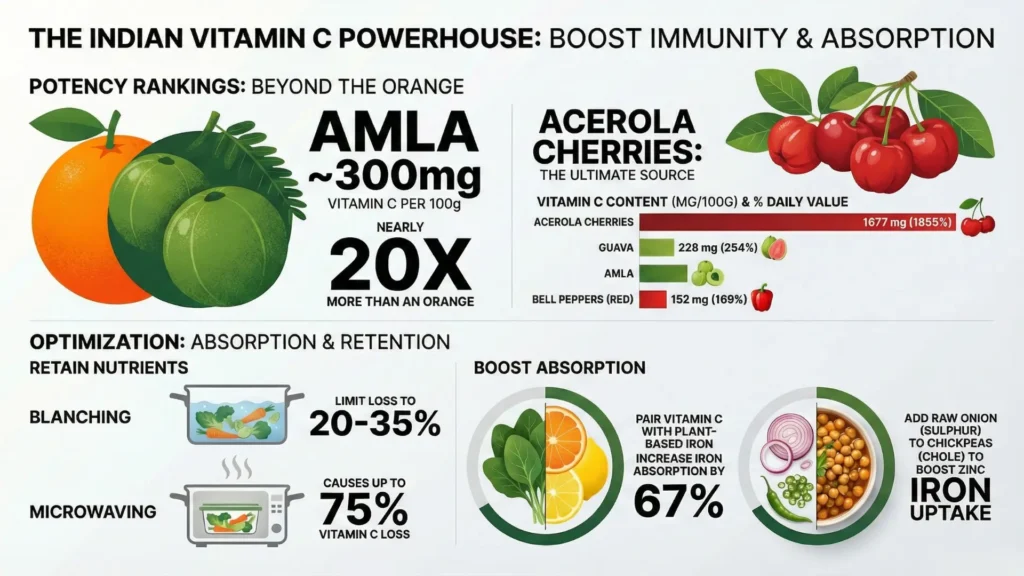
Amla is the ultimate superfood for Vitamin C. Providing 300mg to 900mg per 100g, it offers up to 20 times the amount found in oranges. Its unique polyphenols make the vitamin more heat-resistant than in other fruits.
2. Guava (Amrud)
Guava is a nutritional overachiever, providing approximately 125mg to 247mg per fruit. It is an exceptional snack for managing blood sugar levels while promoting skin glow.
3. Yellow Bell Peppers
These contain the highest concentration of Vitamin C among all sweet peppers, offering about 342mg in one large pepper . They are also rich in carotenoids for eye health.
4. Green Chilies
Beyond spice, the modest green chili is a dense source of ascorbic acid. The capsaicin content boosts metabolism and aids in fat burning for weight loss .
5. Moringa Leaves (Drumstick Leaves)
Moringa is a traditional Indian powerhouse. The leaves contain seven times more Vitamin C than oranges. Adding them to dals is a great way to increase immunity naturally.
6. Papaya
A single cup of diced papaya provides approximately 88mg of Vitamin C. It contains papain, an enzyme that aids digestion and reduces bloating in PCOD/PCOS .
7. Lemons (Nimbu)
One raw lemon provides about 45mg. Furthermore, lemon juice has been shown to counteract the glycemic rise caused by heavy Indian meals like rice .
8. Oranges (Santra)
The classic citrus source, oranges provide 53mg to 83mg per 100g. They are hydrating and high in fiber, making them ideal for heart health.
9. Broccoli
Broccoli delivers approximately 89mg of Vitamin C per 100g. It also supports bone health via Vitamin K and calcium.
10. Pineapple
Providing about 48mg per serving, pineapple contains bromelain, which reduces inflammation in joints .
11. Strawberries
These offer 59mg per 100g. They are rich in anthocyanins, which protect heart health by lowering LDL cholesterol .
12. Kiwi
Kiwi is a fascinating non-native fruit containing about 93mg per serving. It helps manage stress levels due to its high antioxidant concentration .
13. Cauliflower (Phool Gobi)
A winter staple, cauliflower contains 48mg per 100g. It is a low-calorie option that supports weight management.
14. Bitter Gourd (Karela)
Karela offers 84mg per 100g. It is therapeutic for diabetes, as it mimics the action of insulin .
15. Tomatoes
Tomatoes provide roughly 39mg per 100g. They are the richest source of lycopene, protecting the skin from UV damage.
16. Spinach (Palak)
Spinach provides significant Vitamin C that enhances the absorption of its iron, helping to prevent anemia.
17. Ber (Indian Jujube)
This modest fruit is a powerhouse of Vitamin C (approx. 19-70mg per 100g). It has been traditionally used to improve sleep and immunity.

18. Mango
The “King of Fruits” provides about 36mg per 100g. Its fiber supports gut health when consumed in moderation.
19. Mustard Spinach (Sarson)
Every 100g contains about 130mg of Vitamin C . This makes it one of the most potent greens for winter immunity.
20. Coriander Leaves (Cilantro)
Surprisingly, fresh coriander contains 135mg per 100g. Using it as a generous garnish is an easy way to add high Vitamin C Indian diet elements to every meal.
Traditional Cooking Secrets: How to Retain Vitamin C in Indian Meals
Vitamin C is fragile and easily destroyed by heat and water. In traditional Indian cooking, losses can be as high as 95%. However, simple changes can help.
- Pressure Cooking vs Boiling: Pressure cooking is better than open-pot boiling because the shorter duration reduces exposure to heat .
- Steaming: This is the best method for greens, retaining up to 90% of nutrients .
- Minimal Water: Use the “cooking liquid” in gravies so leached nutrients aren’t wasted.
Your Daily Immunity Plan: Simple Food Swaps to Meet Requirements
Meeting your requirements for foods for Vitamin C doesn’t have to be hard. Here are practical swaps:
- Morning: Swap Chai-Biscuit for Lemon-Ginger water (45mg Vitamin C).
- Snack: Swap chips for Guava slices (125mg Vitamin C).
- Lunch: Swap 50% rice for Cauliflower rice (48mg Vitamin C).
- Dinner: Use a Tomato-Yogurt base instead of cream for curries.
Common Mistakes: Why Supplements Aren’t Always Best
Many people turn to high-dose tablets, but the body absorbs foods for Vitamin C more efficiently. At doses above 1,000mg, absorption efficiency drops below 50%. Furthermore, long-term high-dose use can increase the risk of kidney stones.
Take the First Step: Get a Personalized Indian Nutrition Plan Today
Your health is unique. While these Vitamin C rich Indian foods are great, balancing them for PCOS, Diabetes, or weight loss requires expert guidance.

Frequently Asked Questions (FAQs)
Q: Which Indian food is highest in Vitamin C?
Amla (Indian Gooseberry) is the highest, providing up to 900mg per 100g, which is significantly more than oranges.
Q: Can I get enough Vitamin C from cooked vegetables?
Heat destroys some of the vitamin, so it’s best to include raw fruits or add lemon juice to your food after cooking.
Q: Is Amla safe for diabetes?
Yes, Amla helps regulate blood sugar and improves metabolism, making it excellent for managing diabetes and weight loss.
Q: How do I store Indian foods for Vitamin C to keep them fresh?
Store them in a cool, dark place and consume them quickly, as light and air can reduce the nutrient levels over time .
Contact Us
We understand how overwhelming nutrition and weight loss information can feel. With so many opinions and confusing advice online, it’s easy to feel stuck or unsure about what to do next.
At Diet Dekho, you never have to figure it out alone. You can contact us anytime with any questions or concerns. Our expert dietitians are available 24/7 to guide, support, and help you stay on track. Whether your goal is weight loss or building healthier habits, we’re here to make the journey simpler and more sustainable for you.
Disclaimer
This blog is intended to help readers make healthier food choices. Your health should always be the top priority. Before starting any restrictive or special diet, especially if you have a medical condition or health concern, please consult a doctor or a qualified dietitian. Each body responds differently to food and lifestyle changes. Always choose what is safe and suitable for you.

Dr. Ritika is a nutrition and lifestyle expert with 2+ years of experience, helping clients manage weight and health through practical, personalized diet plans.