Does the heart frequently feel as though it is racing after a standard workday, or has a recent medical consultation revealed that blood pressure levels are hovering in the “pre-hypertensive” range? For many, the immediate reaction is to eliminate the salt shaker, yet the true solution often lies not in what is removed, but in the vital nutrients that are missing from the plate. At DietDekho, the focus remains on the critical role of potassium rich foods as the primary natural defense against the rising tide of hypertension in the modern Indian lifestyle.
The short answer is that the highest potassium rich foods for controlling blood pressure include leafy greens like spinach, legumes such as rajma, and traditional Indian staples like ragi and coconut water. These foods work by helping the kidneys flush out excess sodium and relaxing blood vessel walls to lower cardiovascular strain naturally.
Why Your High Blood Pressure Might Be a Potassium Problem?
The prevalence of hypertension in India has reached a critical juncture, often described by medical professionals as a “silent epidemic.” Recent data from the Indian Council of Medical Research (ICMR) and the World Health Organization (WHO) suggest that approximately 31.5 crore Indians suffer from high blood pressure, yet only a small fraction have their condition effectively managed. While sodium intake is frequently blamed for this crisis, the systemic lack of potassium rich foods in the contemporary diet is an equally significant factor.
The dietary transition in India—moving from traditional, mineral-dense whole foods to processed, sodium-heavy convenience items—has created a profound nutritional imbalance. For the busy professional or the dedicated homemaker, the convenience of packaged snacks often comes at the cost of essential minerals. Clinical research indicates that the ratio of sodium to potassium is a more accurate predictor of heart disease risk than sodium intake alone. When the body lacks sufficient potassium, it loses its primary mechanism for counteracting the water-retentive effects of salt.
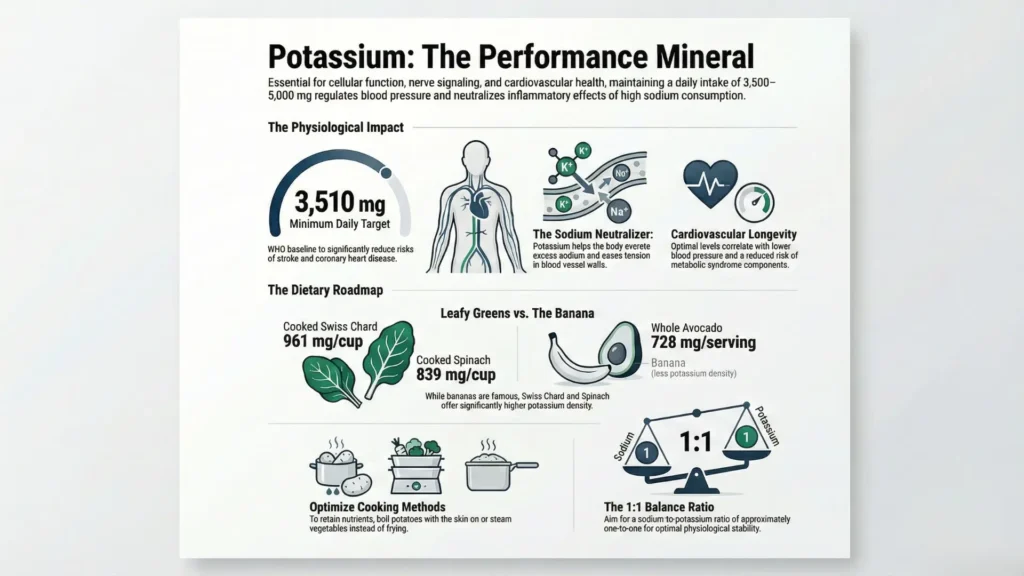
Most adults require between 3,500 mg and 4,700 mg of potassium daily to maintain optimal physiological function. Unfortunately, surveys indicate that the average Indian intake falls drastically short, often providing less than half of the recommended amount. This deficiency leads to a state where the blood vessels remain constricted and the kidneys are forced to hold onto excess fluid, creating a persistent “high pressure” environment within the circulatory system.
| Hypertension Statistics in India (2024-2026) | Data Point |
| Total Estimated Hypertensive Population | 31.5 Crore |
| Percentage of Adult Population Affected | ~35.5% |
| Percentage of Men with Uncontrolled BP | ~50% |
| Recommended Daily Potassium for Adults | 3,500 – 4,700 mg |
The Impact of Lifestyle on Mineral Balance
For NRIs (Non-Resident Indians) and urban professionals, the challenge of maintaining mineral balance is compounded by the “stress-sodium cycle.” High stress levels trigger the release of cortisol, which can influence how the kidneys process electrolytes. When combined with a diet high in restaurant meals—which are notoriously high in sodium and low in potassium rich foods—the result is a significant increase in arterial tension.
The problem is not merely the presence of salt, but the absence of its natural biological antagonist. In the ancestral Indian diet, which relied heavily on whole pulses, diverse millets, and fresh seasonal vegetables, the potassium intake was naturally high. Modern agricultural practices and food processing methods have stripped many of these staples of their mineral density. Consequently, the modern body is often “starving” for potassium even when caloric intake is high.
The Science of Balance: How Potassium Flushes Out Excess Sodium?
To appreciate why potassium rich foods are the cornerstone of blood pressure management, it is necessary to examine the complex biological interplay between sodium and potassium within the human body. These two minerals operate like a seesaw; when one is low, the other often exerts a disproportionate influence on health.
The Sodium-Potassium Pump Mechanism
At the cellular level, every tissue in the body relies on the sodium-potassium pump (scientifically known as $Na^+/K^+$-ATPase). This protein-based pump sits in the cell membrane and functions like a microscopic bouncer. For every two potassium ions ($K^+$) it pulls into the cell, it pumps three sodium ions ($Na^+$) out. This creates an electrical gradient that allows nerves to fire and muscles to contract. When an individual consumes high potassium food sources, they provide the “fuel” necessary for this pump to operate efficiently, ensuring that sodium does not accumulate inside cells and cause them to swell with excess water.
Renal Regulation and the NCC Cotransporter
The kidneys act as the body’s ultimate filtration system. When potassium levels in the blood rise following the consumption of potassium rich foods, a signal is sent to the distal tubules of the kidney. Specifically, it downregulates a mechanism called the sodium-chloride cotransporter (NCC). In simple terms, when the body detects enough potassium, it triggers a “flush” mode. The kidneys stop reabsorbing salt and instead allow it to be excreted through urine. This reduction in total body sodium directly translates to a decrease in blood volume, which lowers the pressure against the artery walls.
Promoting Arterial Flexibility
Potassium also interacts directly with the smooth muscle cells that line the blood vessels. High levels of this mineral promote vasodilation—the widening of the blood vessels. Chronic hypertension often leads to arterial stiffness, where the vessels become brittle and narrow. Potassium acts as a natural relaxant, easing the tension in the vessel walls. This flexibility is crucial for preventing the long-term damage that leads to strokes and heart attacks. Research from Harvard Health suggests that men may benefit even more significantly from this potassium-induced vascular relaxation than women, though the benefits are universal for all genders.
| Biological Action of Potassium | Cardiovascular Benefit |
| Activates $Na^+/K^+$ Pump | Reduces cellular fluid retention |
| Inhibits NCC Cotransporter | Increases sodium excretion in urine |
| Relaxes Smooth Muscle | Promotes vasodilation and lowers BP |
| Balances Aldosterone | Reduces inflammation and arterial tension |

Top 15 Indian Potassium-Rich Foods You Can Find in Your Kitchen?
The most effective way to manage blood pressure is to look toward the kitchen, not the pharmacy. Indian cuisine is naturally abundant in high potassium food sources, provided they are prepared using traditional, whole-food methods. Here is an exhaustive analysis of the top 15 sources that fit seamlessly into an Indian lifestyle.
1. Spinach (Palak) and Leafy Greens
Spinach is widely regarded as one of the most potent potassium rich foods available. In the Indian context, “Palak” is versatile, appearing in dals, parathas, and curries. Cooked spinach is particularly effective because the wilting process concentrates the minerals; one cup of cooked spinach can provide over 800 mg of potassium. For individuals managing diabetes or weight loss goals, spinach is an ideal choice due to its low calorie count and high fiber content.
2. Rajma (Kidney Beans)
While often associated with comfort food, Rajma is a heavy-hitter in the world of minerals. Cooked kidney beans contain approximately 1,324 mg of potassium per 100 grams. This makes them significantly more effective for BP control than the commonly cited banana. For the busy professional, a bowl of Rajma provides a slow-release source of energy and protein that supports both muscle health and cardiovascular stability.
3. Sweet Potatoes (Shakarkandi)
Shakarkandi is a seasonal favorite in India, often served as a roasted snack with lemon. A medium sweet potato provides roughly 541 mg of potassium. Unlike white potatoes, sweet potatoes have a lower glycemic index and are rich in beta-carotene, making them a superior choice for those managing thyroid conditions or looking to sustain energy throughout a long workday.
4. Coconut Water (Nariyal Pani)
For NRIs returning to India or those living in coastal regions, coconut water is the ultimate natural electrolyte. One cup typically provides 600 mg of potassium, along with magnesium and calcium. It is an excellent “home-based solution” for flushing out excess sodium after a heavy, salty meal.
5. Bananas (Kela)
The most portable of the potassium rich foods, a medium banana offers about 422 mg to 450 mg of the mineral. While they are convenient for a mid-morning snack, individuals with blood sugar concerns should be mindful of the ripeness, as riper bananas have a higher sugar content.
6. Yogurt and Curd (Dahi)
Dahi is a cornerstone of the Indian thali. Beyond its probiotic benefits for gut health, it is a surprisingly dense source of potassium, providing between 255 mg and 570 mg per cup. For a homemaker looking to improve the family’s heart health, substituting heavy creams with whisked yogurt in gravies is a smart, mineral-boosting strategy.
7. Pomegranates (Anar)
Pomegranates are prized in Ayurveda for their blood-purifying properties. Modern science confirms that they provide about 666 mg of potassium per fruit. Their potent antioxidants also help reduce the oxidative stress on the heart, making them one of the best natural potassium sources for older adults.
8. White Beans and Black-Eyed Peas (Lobia)
Black-eyed peas, or Lobia, are a hidden gem in Indian pantries. They offer approximately 561 mg of potassium per 100g. They are particularly beneficial for those on a vegetarian diet who need high-quality plant protein coupled with heart-healthy minerals.
9. Beetroot (Chukandar)
Beetroot supports the heart through a dual-action mechanism. It provides about 325 mg of potassium per 100g and is rich in nitrates. These nitrates convert to nitric oxide in the body, which helps widen blood vessels and improve stamina for non-gym audiences who prefer walking or yoga.

10. Finger Millet (Ragi)
Millets are making a significant comeback in the Indian diet. Ragi is particularly rich in minerals, containing 443 mg of potassium per 100g. For a homemaker, incorporating Ragi flour into the daily roti mix is an effortless way to increase the family’s daily mineral intake.
11. Mushrooms
Often utilized in urban Indian cooking, mushrooms are low in calories but high in potassium density. A cup of cooked mushrooms provides roughly 318 mg to 550 mg of potassium. They are an excellent addition to a hypertension-friendly diet because they add a “meaty” texture and savory (umami) flavor without the need for excessive salt.
12. Tomatoes
Whether consumed as a fresh kachumber salad or as a base for curries, tomatoes are a reliable source of potassium, offering about 237 mg per 100g. Homemade tomato purée is a significantly healthier alternative to store-bought ketchup, which is often loaded with hidden sodium.
13. Apricots and Dried Fruits
Dried apricots are one of the most concentrated potassium dense Indian foods, with a half-cup providing over 750 mg. For the busy professional traveling between meetings, carrying a few dried apricots can prevent the energy crashes that often lead to poor snacking choices.
14. Potatoes (Aloo)
Contrary to popular belief, the humble aloo is a potassium powerhouse if prepared correctly. A medium potato, especially when eaten with the skin, provides nearly 531 mg to 900 mg of potassium. The key is to avoid deep-frying; boiling or roasting the potato preserves its mineral content while keeping the calorie count manageable.
15. Lentils and Pulses (Dal)
The foundation of the Indian diet—including Moong, Masoor, and Chana dal—is naturally high in potassium. A typical bowl of cooked dal provides roughly 300 mg to 400 mg. Combining these with whole grains in a 3:1 ratio, as recommended by the ICMR, ensures optimal protein quality and mineral absorption.
| Potassium-Rich Food (per 100g portion) | Potassium Content (mg) | Best Way to Consume |
| Rajma (Kidney Beans) | 1,324 | Slow-cooked curry |
| Spinach (Cooked) | 636 – 800 | Dal Palak or Saag |
| Dried Apricots | 1,162 | Mid-day snack |
| Ragi (Finger Millet) | 443 | Porridge or Roti |
| Sweet Potato | 337 – 541 | Roasted with amchur |
| Banana | 358 – 422 | Whole fruit |
| Beetroot | 325 – 450 | Salad or juice |
| Yogurt (Plain) | 255 – 570 | Raita or Buttermilk |

Managing Medical Conditions with Potassium-Rich Foods?
For many individuals, hypertension does not exist in isolation. It is frequently accompanied by other metabolic challenges such as PCOS, diabetes, or thyroid disorders. Understanding how potassium rich foods interact with these conditions is essential for holistic health management.
The Role of Potassium in PCOS and Hormonal Balance
Polycystic Ovary Syndrome (PCOS) is often characterized by high levels of aldosterone, a hormone that regulates how the body holds onto salt. When aldosterone is high, it can lead to water retention, bloating, and elevated blood pressure. Increasing the intake of potassium rich foods helps to balance this hormonal influence, encouraging the body to release excess fluid. Furthermore, the DASH diet—which is centered around high-potassium foods—has been clinically shown to improve insulin sensitivity and reduce androgen levels in women with PCOS.
Diabetes and Insulin Resistance
There is significant scientific evidence linking low potassium levels to an increased risk of type 2 diabetes and metabolic syndrome. Potassium is a co-factor in the process of glycogenesis—the conversion of glucose into glycogen for energy storage. For a diabetic patient, a diet rich in potassium dense Indian foods like leafy greens, whole pulses, and millets helps maintain stable blood sugar levels while protecting the heart. Furthermore, for those already managing diabetes, adequate potassium is “indisputable” for preventing strokes, a common complication of the disease.
Supporting Thyroid Function
Thyroid disorders, whether hyperthyroidism or hypothyroidism, can place significant strain on the cardiovascular system. Both conditions are associated with an increased risk of hypertension. Potassium helps to ease the tension in the arterial walls, providing a natural “buffer” against the heart rate irregularities and blood pressure fluctuations often seen in thyroid patients. Integrating mineral-dense foods like sweet potatoes and coconut water can provide the necessary electrolytes to support the metabolic demands of the body during thyroid treatment.
Smart Swaps: Daily Meal Plan to Hit Your Potassium Goals Naturally?
Achieving the daily goal of 3,500 mg to 4,700 mg of potassium might seem daunting, but it becomes manageable when viewed as a series of small, intentional choices throughout the day. For the busy professional or the active homemaker, these smart swaps ensure that potassium rich foods are always on the menu.
Strategic Kitchen Swaps for Better Balance
The clinical team at DietDekho recommends the following transitions to maximize mineral intake while reducing harmful sodium:
- From Salt Shaker to Spice Box: Instead of reaching for salt to add flavor, utilize the rich palette of Indian spices. Amchur (dried mango powder), lemon zest, fresh ginger, and roasted cumin powder provide the necessary “bite” without the blood pressure-raising effects of sodium.
- From Refined Flour to Ancient Grains: Swap maida-based breads for rotis made from ragi, bajra, or jowar. These millets are naturally higher in potassium and fiber.
- From Packaged Snacks to Whole Staples: Replace store-bought biscuits or chips with roasted makhana (fox nuts), unsalted peanuts, or a handful of raisins.
- From Ketchup to Fresh Chutney: Commercial ketchups are high in sugar and sodium. A fresh mint-coriander or tomato-garlic chutney provides a massive potassium boost and potent antioxidants.

Sample 1-Day Indian Potassium-Boosting Meal Plan
This plan is carefully designed to be mobile-friendly and practical for the modern Indian routine, providing an optimal range of minerals for BP control naturally.
- Early Morning (7:00 AM): A glass of fresh coconut water with a pinch of cinnamon and five soaked almonds. This provides an immediate 600 mg of potassium to start the day.
- Breakfast (9:00 AM): Two Moong Dal Chillas stuffed with finely chopped spinach and paneer, served with a large bowl of homemade tomato chutney. This breakfast provides roughly 700-800 mg of potassium.
- Mid-Morning Snack (11:30 AM): One medium banana or a small bowl of pomegranate seeds. This adds another 450-600 mg to the daily tally.
- Lunch (1:30 PM): A bowl of thick Rajma or Masoor Dal cooked with tomatoes and spinach, served with one Ragi roti and a side of beetroot and cucumber raita. This traditional meal is a potassium powerhouse, offering approximately 1,200 mg.
- Evening Snack (4:30 PM): A cup of plain yogurt mixed with roasted pumpkin seeds or a small portion of boiled sweet potato chaat seasoned with lemon and black pepper.
- Dinner (7:30 PM): A bowl of Palak Bajra Khichdi or a mushroom and vegetable stir-fry served with a small bowl of curd. This lighter meal provides the remaining 800-900 mg of potassium required for the day.
| Meal | Potassium Rich Food Included | Estimated Potassium (mg) |
| Early Morning | Coconut Water & Almonds | ~650 |
| Breakfast | Moong Chilla & Spinach | ~750 |
| Snack 1 | Banana or Pomegranate | ~450 |
| Lunch | Rajma, Ragi & Beetroot | ~1,200 |
| Snack 2 | Yogurt & Seeds | ~400 |
| Dinner | Palak Khichdi or Mushrooms | ~850 |
| Total | ~4,300 mg |
Consistency Over Perfection: Taking the First Step Toward Better Heart Health?
The prospect of changing a lifelong dietary pattern can be intimidating for a busy person who already feels stretched thin. However, the path to better heart health is paved with small, consistent habits rather than drastic, unsustainable shifts. What this means for your daily routine is that every choice to include a potassium-rich vegetable or fruit acts as a vote for a healthier future.
The Psychology of Sustainable Change
Medical experts emphasize that blood pressure numbers do not change overnight. It typically takes between two weeks and a few months of consistent dietary modification to see a stable reduction in readings. Instead of attempting a total kitchen overhaul, one should focus on “crowding out” processed foods. By ensuring that at least half of the dinner plate consists of potassium rich foods like leafy greens or pulses, the body naturally feels more satiated, making it easier to ignore the cravings for salty, processed snacks.
Monitoring Progress and Validating Effort
For those managing hypertension, seeing is believing. Using a home blood pressure monitor can provide the necessary motivation to stay consistent. When an individual notices a lower systolic reading after a week of prioritizing high potassium food sources, it validates the effort and reinforces the new habit. It is important to record these readings and share them with a healthcare professional to adjust any ongoing treatments or medications.

Safety Considerations and Contraindications
While increasing potassium is a vital strategy for most, there are certain populations who must proceed with caution. Individuals with advanced chronic kidney disease (CKD) have a reduced ability to excrete excess minerals. For these patients, a high-potassium diet could lead to hyperkalemia—a dangerous buildup of potassium in the blood that can cause irregular heart rhythms or fainting.
Furthermore, those taking specific medications—including ACE inhibitors, Angiotensin II Receptor Blockers (ARBs), or potassium-sparing diuretics—should consult their physician before significantly increasing their intake of potassium rich foods. In simple terms, while these foods are generally life-saving, they must be integrated into a personalized medical plan for those with pre-existing kidney or heart conditions.
Frequently Asked Questions (FAQs)
Can I rely on potassium supplements instead of eating potassium rich foods?
Supplements are rarely a substitute for whole foods. Most over-the-counter potassium supplements are limited to 99 mg per serving, which is less than 3% of the daily requirement. Natural foods provide the fiber, vitamins, and complex minerals that supplements cannot replicate. It is always best to “eat your minerals” unless a doctor specifically prescribes a supplement.
Are there high-potassium options for those on a strict weight loss diet?
Absolutely. If weight loss is a goal, one should prioritize potassium rich foods that are low in calories and carbohydrates. Leafy greens like spinach and amaranth, mushrooms, broccoli, and tomatoes are excellent choices. These provide the necessary minerals without adding significant caloric load to the day.
Does cooking vegetables in water remove their potassium content?
Yes, potassium is water-soluble. Boiling vegetables and discarding the water can lead to significant nutrient loss. To retain the highest level of minerals, it is recommended to steam, sauté, or roast vegetables. If boiling is necessary (such as for making a dal), ensure that the cooking liquid is consumed as part of the dish.
How do I know if I am getting enough potassium?
Signs of a deficiency—known as hypokalemia—include frequent muscle cramps, fatigue, constipation, and heart palpitations. However, because high blood pressure is often asymptomatic, the best way to ensure adequacy is to track one’s daily intake of fruits, vegetables, and legumes.
Is coconut water safe for everyone with high blood pressure?
Coconut water is an excellent natural electrolyte, but it does contain natural sugars. For those with uncontrolled diabetes, it should be consumed in moderation. Additionally, those with kidney disease should avoid it due to its high potassium concentration.

Conclusion: A Reassuring Path to Holistic Wellness
Managing high blood pressure is not a battle of willpower; it is a journey of nourishment. By prioritizing potassium rich foods, the body is given the biological tools it needs to find its natural balance. The transition from a high-sodium, low-potassium diet to one rich in traditional Indian staples—like rajma, dahi, ragi, and palak—is one of the most powerful steps anyone can take for long-term cardiovascular health.
At DietDekho, the philosophy remains simple: health should be accessible, practical, and rooted in the wisdom of our own kitchens. The path to a stronger heart starts with the next meal. By making small, intentional swaps today, one can significantly reduce the risk of future complications and enjoy a life of vibrant, holistic health.
Contact Us
We understand how overwhelming nutrition and weight loss information can feel. With so many opinions and confusing advice online, it’s easy to feel stuck or unsure about what to do next.
At Diet Dekho, you never have to figure it out alone. You can contact us anytime with any questions or concerns. Our expert dietitians are available 24/7 to guide, support, and help you stay on track. Whether your goal is weight loss or building healthier habits, we’re here to make the journey simpler and more sustainable for you.
Disclaimer
This blog is intended to help readers make healthier food choices. Your health should always be the top priority. Before starting any restrictive or special diet, especially if you have a medical condition or health concern, please consult a doctor or a qualified dietitian. Each body responds differently to food and lifestyle changes. Always choose what is safe and suitable for you.

Dr. Ritika is a nutrition and lifestyle expert with 2+ years of experience, helping clients manage weight and health through practical, personalized diet plans.