
The hum of a pressure cooker in a Mumbai kitchen or the ping of a late-night email in a Bengaluru office often masks a silent rhythm. This is the rising blood pressure of millions who are simply trying to keep up with life.
Imagine a typical Tuesday morning where a busy professional reaches for a third cup of salty, milky tea. Nearby, a dedicated homemaker skips breakfast to finish chores, unaware that their headache isn’t just from the heat. This is the reality for one in three urban Indians today.
I know it’s hard to find time for yourself between deadlines and family duties, but managing your health shouldn’t feel like another chore. Let’s simplify this.
Start looking at your plate not as a restriction, but as a powerful tool for your heart. What this means for your daily routine is simple: a balanced BP-friendly diet becomes the most effective medicine you can take three times a day.
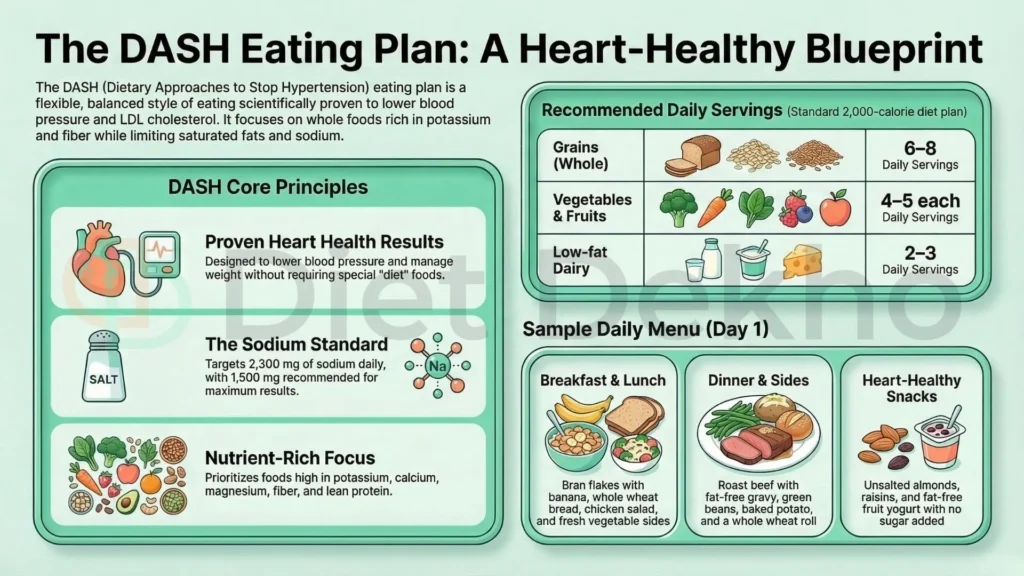
A balanced diet for BP focuses on the DASH (Dietary Approaches to Stop Hypertension) framework. This plan emphasizes consuming 4–5 servings of vegetables, 4–5 servings of fruits, and 6–8 servings of whole grains daily. By restricting sodium to 1,500–2,300 mg and increasing potassium, magnesium, and fiber, you can significantly lower blood pressure levels naturally.
The Clinical Landscape of Hypertension in India
Table of Contents
- 1 The Clinical Landscape of Hypertension in India
- 2 The Science of the DASH Eating Plan
- 3 Translating Global Standards to the Indian Pantry
- 4 Strategic Solutions for Busy Professionals
- 5 The Homemaker’s Guide to a Low-Sodium Kitchen
- 6 Movement and Stress Management for the Non-Gym Audience
- 7 A Sample 7-Day Balanced Diet Chart for BP
- 8 Practical Tips for Staying Consistent
- 9 Conclusion and Recommendations
- 10 Frequently Asked Questions
- 11 Contact Us
- 12 Disclaimer
In fact, the burden of high blood pressure in the Indian subcontinent is shifting from a geriatric concern to a widespread public health crisis. Specifically, recent initiatives by the Ministry of Health and Family Welfare aim to place 75 million people with hypertension or diabetes on standard care by 2025. This ambitious goal highlights the scale of the issue.
Moreover, we are seeing a significant nutrition transition where traditional, fiber-rich diets are being replaced by calorie-dense, sodium-heavy processed meals. What this means for your daily routine is that the simple act of choosing home-cooked meals over ordered food is now a survival strategy.

Regional Variations and the Awareness Gap
However, hypertension does not hit every part of India the same way. Research shows that urban areas face a higher prevalence at 33.8% compared to 27.6% in rural regions. But the most dangerous factor is the lack of awareness. Currently, only about 25% of rural and 42% of urban Indians are even aware they have high blood pressure. I know it’s hard to prioritize a condition you can’t feel, but regular monitoring is essential. This is because hypertension often creeps in silently.
| Region | Rural Prevalence (%) | Urban Prevalence (%) |
| North India | 14.5% | 28.8% |
| East India | 31.7% | 34.5% |
| West India | 18.1% | 35.8% |
| South India | 21.1% | 31.8% |
| National Average | 29.8% | 33.8% |
| – | – | – |
The Decline in Age of Onset
In addition, a concerning trend in recent years is the rise of hypertension among younger adults aged 15 to 49. This age group is often the most economically active and the most stressed. As a result, the increased reliance on carbohydrate-rich diets and processed snacks in this demographic is a primary driver of elevated blood pressure. Let’s simplify the response to this: it is never too early to start a balanced diet for BP. Specifically, early intervention can prevent the long-term damage that leads to heart disease or stroke.

The Science of the DASH Eating Plan
The Dietary Approaches to Stop Hypertension (DASH) is not just a diet; it is a medically proven protocol. Furthermore, landmark studies supported by the National Institutes of Health (NIH) found that following this plan could lower systolic pressure by about 10 mmHg. Consequently, your food can be as powerful as a first-line medication.
The Sodium-Potassium Balance
Your body works like a delicate pump. Sodium (salt) causes your body to hold onto water, which increases the volume of blood pushing against your artery walls. Therefore, potassium acts as the hero here. It helps your kidneys flush out excess sodium and eases the tension in your blood vessel walls.
Specifically, a balanced diet for BP requires you to tilt the scale in favor of potassium. While a medium banana provides about 422 mg of potassium, Indian staples like lentils and spinach often offer even higher concentrations.
The Synergy of Magnesium and Calcium
Similarly, magnesium is often called the magic mineral because it tells your blood vessels to relax. When vessels relax, blood flows more easily. Meanwhile, calcium, found in low-fat dairy and greens, supports the actual muscle contraction and relaxation of the heart. The DASH plan works because it doesn’t just look at one nutrient; it looks at how they work together.
| Nutrient | Daily Target (2,100 Calorie Diet) | Core Function |
| Sodium | 1,500 – 2,300 mg | Reduces fluid volume |
| Potassium | 4,700 mg | Relaxes vessel walls |
| Magnesium | 500 mg | Supports vessel relaxation |
| Calcium | 1,250 mg | Regulates heart rhythm |
| Fiber | 30 g | Improves arterial health |
| Saturated Fat | < 6% of calories | Prevents plaque buildup |
| – | – | – |

Translating Global Standards to the Indian Pantry
I know it’s hard to follow a diet that feels foreign. Fortunately, the good news is that traditional Indian ingredients are perfect for a balanced diet for BP. We just need to adjust how we prepare them. According to Harvard Health, the key is abundance-filling your plate with fruits, vegetables, and whole grains.
Whole Grains and Millets: The Foundation
Stop thinking of roti and rice as the enemy. Instead, understand that the problem is usually the refined nature of these grains. For instance, whole wheat flour (atta) contains about 140 mg of magnesium per 100g, whereas refined flour (maida) has almost none.
Additionally, Indian millets like Ragi (Finger Millet) and Bajra (Pearl Millet) are even better. Ragi is a boon for those looking to manage weight and BP due to its high fiber and potassium content.
The Power of Pulses and Legumes
Lentils (dal), chickpeas (chana), and kidney beans (rajma) are the backbone of Indian protein. Specifically, one cup of cooked lentils provides roughly 730 mg of potassium, which is far more than a banana. Moreover, these legumes deliver soluble fiber, which keeps you full longer and helps clear cholesterol from your blood vessels. I know it’s hard to change your entire diet, so let’s simplify this. First, start by making your dal a bit thicker and eating a larger portion of it compared to rice.
Vegetables: Choosing the Right Colors
Your mum was right to yell at you for not eating your greens. Specifically, leafy vegetables like Palak (spinach) and Methi (fenugreek) are high in nitrates. These nitrates convert to nitric oxide in your body, which acts like a natural dilator for your arteries. In addition, other Indian favorites like Lauki (bottle gourd) and Kaddu (pumpkin) are low in calories and high in potassium.
| Food Item | Key Nutrient | Benefit for BP |
| Ragi (Finger Millet) | Fiber & Magnesium | Weight loss & vessel relaxation |
| Bajra (Pearl Millet) | Potassium & Fiber | Sodium balance |
| Moong Dal | Plant Protein & Potassium | Regulates blood flow |
| Spinach (Palak) | Nitrates & Potassium | Widens arteries |
| Garlic (Lehsun) | Allicin | Natural blood thinner |
| Pumpkin Seeds | Magnesium | Eases vessel tension |
| – | – | – |

Strategic Solutions for Busy Professionals
I know it’s hard to find time for a balanced diet for BP when your calendar is full of meetings. Because of this, what this means for your daily routine is that you need one-pot or grab-and-go meals that don’t sacrifice your heart health. Specifically, leading cardiologists suggest that people who cook at home more often have better adherence to heart-healthy patterns.
The Office Lunchbox Strategy
For example, avoid the temptation of the office cafeteria or the sodium bombs found in food delivery apps. Most restaurant meals contain nearly three times the daily healthy limit of salt. Instead, try these quick Indian options:
- Vegetable Pulao with Brown Rice: Load it with peas, carrots, and beans. It’s a complete meal that can be prepared in 15 minutes.
- Besan or Moong Dal Chilla: You can make the batter in advance. These savory pancakes are high in protein and fiber.
- Sprouts Salad: Mix boiled moong sprouts with cucumber, tomato, and lemon juice. This is a no-cook option that is rich in magnesium.
Smarter Office Snacking
When that 4 PM hunger strike hits, stay away from the samosas and biscuits. Instead, keep a stash of these in your desk drawer:
- Roasted Makhana (Fox Nuts): Ensure they are unsalted. They are light and heart-friendly.
- Handful of Almonds or Walnuts: These contain healthy fats that reduce inflammation.
- Roasted Chana: A great source of protein and fiber that keeps your blood sugar stable.

The Homemaker’s Guide to a Low-Sodium Kitchen
As the person managing the kitchen, you are the primary health officer of your family. I know it’s hard to change recipes your family loves, but let’s simplify this. Specifically, most of the sodium we eat comes from hidden sources like pickles (achaar), papad, and store-bought chutneys.
Flavor Without the Salt Shaker
Additionally, you can reduce salt without making food bland. Use natural flavor enhancers:
- Tangy Boosters: Use lemon juice, amchur (dry mango powder), or tamarind to provide that zing that masks the need for salt.
- Fresh Aromatics: Garlic (lehsun) and ginger (adrak) are essential. Garlic contains allicin, which helps your blood vessels expand.
- The Right Spices: Turmeric, black pepper, and toasted cumin (jeera) add depth to curries. Avoid pre-mixed masalas which often have added salt.
Reading the Hidden Labels
Meanwhile, when you go grocery shopping, pay attention to the labels on bread and canned goods. Bread is an underappreciated source of salt. Therefore, look for words like low sodium or no salt added. If you must use canned beans, rinse them thoroughly under running water to remove up to 40% of the sodium.
Movement and Stress Management for the Non-Gym Audience
You don’t need a heavy gym membership to lower your blood pressure. In fact, for many, the stress of high-intensity workouts can be overwhelming. What this means for your daily routine is focusing on simple, consistent movement.
The Power of the Post-Meal Walk
Dr. Kunal Sood recommends a simple 10–15 minute walk after your meals. Specifically, this small habit helps manage your post-meal blood sugar and reduces the strain on your heart. For a homemaker, this could be as simple as walking around the house while on a phone call. Similarly, for a professional, it means stepping away from the desk after lunch.
Relaxation and Breathing
Furthermore, chronic stress keeps your blood pressure high by keeping your body in a fight or flight mode. Taking five minutes for deep breathing can shift your nervous system into rest and digest mode. Consequently, this naturally lowers your pressure. I know it’s hard to find a quiet moment, but even deep breathing while you’re stuck in traffic can help your heart.
A Sample 7-Day Balanced Diet Chart for BP
This plan is designed to be relatable and easy to follow using standard Indian kitchen staples.
| Day | Breakfast | Lunch | Evening Snack | Dinner |
| Day 1 | Oats Porridge with skim milk & 1 sliced banana | 2 Bajra Rotis + Palak Dal + Cucumber Salad | 1 cup Buttermilk (Chaas) with roasted jeera | 1 bowl Moong Dal Khichdi with lots of veggies |
| Day 2 | Poha with peas and peanuts (very little salt) | 1 cup Brown Rice + Rajma Curry + Steamed Cabbage | 1 medium Apple + 5 Almonds | 2 Whole Wheat Chapatis + Lauki (Bottle Gourd) Sabzi |
| Day 3 | 2 Idlis with Tomato Chutney (no added salt) | 1 cup Dalia (broken wheat) + Chickpea Salad | 1 cup Green Tea + 1 tbsp Roasted Flaxseeds | Grilled Chicken or Paneer + Sautéed Bell Peppers |
| Day 4 | Vegetable Upma with Suji or Ragi | 2 Jowar Rotis + Methi Sabzi + 1 cup Curd | 1 small bowl Papaya chunks | 1 bowl Vegetable Soup + 1 Multigrain Roti |
| Day 5 | 1 Whole Wheat Paneer Paratha (no oil/ghee) | 1 cup Brown Rice + Fish Curry or Dal Tadka | 1 small cup Yogurt with Berries | 2 Missi Rotis + Baingan Bharta (Roasted Eggplant) |
| Day 6 | Overnight Oats with Mango and Chia seeds | 2 Whole Wheat Rotis + Mixed Sprouts Curry + Salad | Roasted Makhana (Fox Nuts) | 1 bowl Lentil Soup + 1 slice Whole Grain Toast |
| Day 7 | 1 Boiled Egg + 1 slice Whole Wheat Bread + 1 Orange | 1 cup Brown Rice + Chana Masala + Sautéed Spinach | 1 medium Banana | 2 Jowar Rotis + Bhindi Fry (Okra) with minimal oil |
Practical Tips for Staying Consistent
I know it’s hard to change your life overnight. Therefore, what this means for your daily routine is that you should aim for progress, not perfection.
- The 4-Week Rule: It takes about 2 to 4 weeks for your taste buds to adjust to less salt. Eventually, you’ll find processed foods taste unpleasantly salty.
- Weight Matters: Every kilogram you lose can help bring down your blood pressure. In fact, a balanced diet for BP naturally helps with weight loss because it’s high in fiber.
- Sleep is Food for the Heart: Aim for 7 to 9 hours of sleep. Poor sleep for just a few nights can raise your insulin levels and stress your heart.

Conclusion and Recommendations
Taking control of your blood pressure is one of the most rewarding things you can do for your future self. By following a balanced diet for BP that emphasizes Indian whole grains and potassium-rich lentils, you are building a natural defense. I know it’s hard to change long-standing habits, but let’s simplify this. Specifically, start with one small change today. Whether it’s swapping your white rice for brown rice or walking for ten minutes after dinner, your heart will thank you. Our expert dietitians are here to help you create a plan that fits your busy life.
Take the first step toward a healthier heart. Connect with our experts for a personalized meal plan
Frequently Asked Questions
What is the best balanced diet for BP in an Indian context?
The most effective approach is an Indianized version of the DASH diet. Specifically, this includes 4–5 servings of vegetables, 4–5 servings of fruits, and 6–8 servings of whole grains while limiting salt to under one teaspoon daily.
Can I eat potatoes if I have high blood pressure?
Yes, potatoes are actually very good for a balanced diet for BP because they contain more potassium than bananas. However, you must avoid deep-frying them. Boiled or baked potatoes with the skin on are the best choice.
How much salt can I have in a balanced diet for BP?
The general goal is to stay under 2,300 mg of sodium. However, aiming for 1,500 mg daily is even more effective for lowering high blood pressure.
Which Indian grains are best for blood pressure?
Millets like Ragi (Finger Millet), Bajra (Pearl Millet), and Jowar (Sorghum) are excellent. This is because they are high in magnesium and fiber, which help relax blood vessels.
Is curd good for blood pressure patients?
Yes, low-fat curd or yogurt is highly recommended. It is a great source of calcium and potassium. Additionally, studies show that including 2–3 servings of low-fat dairy daily can help reduce systolic blood pressure.
Contact Us
We understand how overwhelming nutrition and weight loss information can feel. With so many opinions and confusing advice online, it’s easy to feel stuck or unsure about what to do next.
At Diet Dekho, you never have to figure it out alone. You can contact us anytime with any questions or concerns. Our expert dietitians are available 24/7 to guide, support, and help you stay on track. Whether your goal is weight loss or building healthier habits, we’re here to make the journey simpler and more sustainable for you.
Disclaimer
This blog is intended to help readers make healthier food choices. Your health should always be the top priority. Before starting any restrictive or special diet, especially if you have a medical condition or health concern, please consult a doctor or a qualified dietitian. Each body responds differently to food and lifestyle changes. Always choose what is safe and suitable for you.

Abhinav is the Founder of Diet Dekho, helping people manage weight and lifestyle health through simple, practical nutrition and personalized diet plans.