Struggling with stubborn weight and dull skin despite following a “healthy” Indian diet? Many people find that reducing calories isn’t enough because the problem often lies in the quality of fats being consumed. At DietDekho, we have seen how the benefits of avocado fruit can bridge this gap, offering a nutrient-dense solution that supports hormones, heart health, and metabolic stability in a way that traditional low-fat myths simply cannot.
The benefits of avocado fruit include significant improvements in heart health, sustainable weight management through enhanced satiety, and increased skin elasticity and firmness. As a nutrient-dense superfood, avocados provide nearly 20 essential vitamins and minerals, including high levels of potassium, fiber, and monounsaturated fats that help regulate blood sugar, lower LDL cholesterol, and support hormonal balance for conditions like PCOS and thyroid disorders.
Why is the Traditional Indian Diet Often Missing These Health Benefits of Avocados?
Table of Contents
- 1 Why is the Traditional Indian Diet Often Missing These Health Benefits of Avocados?
- 2 How Does Avocado Nutrition Support Your Hormones and Heart?
- 3 Why is Avocado for Weight Loss More Than Just a Fad?
- 4 Can Avocado for Skin Truly Reverse the Signs of Aging?
- 5 Practical Ways to Include “Butter Fruit” in Your Indian Meals
- 6 A Simple Daily Routine: When and How to Eat Avocado
- 7 Safety Considerations: Is the Avocado Medicinal Property for Everyone?
- 8 Scientific Insight: The Role of Fiber in Metabolic Health
- 9 Frequently Asked Questions (FAQs)
- 10 Conclusion: Start Your Journey to Holistic Health
- 11 Contact Us
- 12 Disclaimer
For decades, the prevailing nutritional advice in many Indian households has focused on the “low-fat” myth. We were told to avoid fats to lose weight, leading many to replace traditional cooking fats with refined oils or to cut out fats entirely in favor of more carbohydrates like white rice and refined flour (maida). However, research shows that this shift toward high-carbohydrate, low-quality diets has contributed to an alarming rise in metabolic diseases across India.
When we talk about the benefits of avocado fruit, we are looking at a unique food that challenges these old myths. Unlike most fruits that are primarily sugar and carbs, avocados are essentially a “healthy fat” fruit. This is a crucial distinction for the Indian context, where the National Institute of Nutrition (NIN) and the Indian Council of Medical Research (ICMR) have recently revised guidelines to emphasize the importance of healthy fats from nuts and seeds.
The short answer is that your body needs fat to function. Fats are necessary for maintaining healthy skin and hair, transporting fat-soluble vitamins (A, D, E, and K), and producing essential hormones. By avoiding all fats, you might actually be making it harder for your body to regulate itself. Let’s simplify this: understanding avocado nutrition facts shows that adding the right kind of fat—like monounsaturated fats—can actually help your body burn fat more efficiently and keep your hormones in a state of balance.
Understanding the Essential Avocado Nutrition Facts
| Nutrient Component | Value per 100g | Value per Half Fruit (68g) | Significance for Indian Health |
| Energy (kcal) | 167 | 114 | Sustained energy for busy professionals |
| Total Fat (g) | 15.4 | 10.5 | Supports hormone synthesis in PCOS |
| Monounsaturated Fat (g) | 9.80 | 6.65 | Heart-healthy “good” fats |
| Dietary Fiber (g) | 6.80 | 4.60 | Prevents constipation and blood sugar spikes |
| Total Sugar (g) | 0.30 | 0.21 | Extremely low GI for diabetes management |
| Potassium (mg) | 507 | 345 | Higher than bananas; vital for BP control |
| Folate (μg) | 89 | 60 | Essential for pregnancy and DNA repair |
| Vitamin E (mg) | 1.97 | 1.34 | Powerful antioxidant for skin health |
How Does Avocado Nutrition Support Your Hormones and Heart?
In simple terms, the fat in an avocado is its superpower. About 71% of the fat in an avocado is monounsaturated fatty acids (MUFA), specifically oleic acid—the same beneficial fat found in olive oil. This type of fat is highly stable and does not raise blood cholesterol; instead, it helps lower the “bad” LDL cholesterol while maintaining or increasing the “good” HDL cholesterol.
For someone managing hypertension (High BP), the benefits of avocado fruit offer a natural way to find balance. They are one of the few fruits that contain high levels of both potassium and magnesium while being naturally very low in sodium. Potassium is an electrolyte that sends electrical signals to the heart to maintain a steady heartbeat and helps the muscles contract. In the Indian diet, which is often high in sodium from pickles, papads, and processed snacks, the potassium in avocados helps flush out excess salt and reduces the pressure on blood vessel walls.
The Impact on Insulin and PCOS: Why Eat Avocados?
If you are dealing with PCOD or PCOS, you know that insulin resistance is often the root cause of symptoms like weight gain, acne, and irregular periods. What this means for your daily routine is that every meal needs to be a balancing act. High-fat, high-fiber foods like avocados are perfect because they slow down the digestion of carbohydrates.
When you eat an avocado, the healthy fats act as a “metabolic assistant,” slowing the absorption of glucose into your bloodstream. This prevents the sharp insulin spikes that trigger the ovaries to produce more male hormones (androgens). Furthermore, looking into avocado nutrition facts, we see they are a source of magnesium and selenium—two minerals that are often deficient in women with hormonal imbalances and are critical for proper thyroid function. Selenium is particularly important for converting the inactive thyroid hormone ($T_4$) into its active form ($T_3$), which regulates your metabolism.

Why is Avocado for Weight Loss More Than Just a Fad?
I know it’s hard to believe that eating a high-fat fruit can help you lose weight, but the science is quite clear. The benefits of avocado fruit for weight management come down to two main factors: satiety and metabolic signaling. Because avocados are rich in fiber and fat, they stay in your stomach longer than a sugary fruit or a simple carb snack.
The UCLA 12-Week Weight Loss Study on Avocados
A significant clinical trial conducted at UCLA investigated the effect of adding one Hass avocado daily to a calorie-restricted diet. The researchers found that both the avocado group and the control group lost weight, but the avocado group showed specific improvements in their gut health and inflammatory markers. Specifically, the study noted a significant decrease in serum Hepatic Growth Factor (HGF), a marker linked to obesity and insulin resistance.
| Parameter | Avocado Group (AVO) | Control Group (CTRL) | Insight |
| Weight Loss | -2.3 ± 2 kg | -2.6 ± 3.6 kg | Similar weight loss, better nutrient quality |
| Serum Triglycerides | Significant Decrease | No significant change | Improved heart health during dieting |
| Gut Microbiota | Increase in fiber-fermenting bacteria | Decrease in beneficial strains | Supports long-term metabolic health |
| Satiety Levels | High (reported 3-5 hours post-meal) | Lower | Reduces the urge for “impulse snacking” |
Breaking the Cycle of Cravings: Health Benefits of Avocados
For a busy professional or a homemaker who spends the whole day on their feet, the biggest enemy of weight loss is the “3 PM craving.” This is when blood sugar dips and we reach for a cup of sugary chai and fried pakoras. By including avocado in your breakfast or lunch, you provide your body with a steady release of energy. The fats in the avocado signal the release of satiety hormones in the gut, telling your brain that you are full and satisfied. In simple terms, you aren’t just eating less; you are wanting to eat less because your body feels nourished.
Can Avocado for Skin Truly Reverse the Signs of Aging?
The concept of “beauty from within” is well-documented in dermatological research. While many people use avocado as a topical face mask, eating it may be even more effective for your complexion. These health benefits of avocados come from the fruit being packed with Vitamin E, Vitamin C, and carotenoids like lutein and zeaxanthin. These nutrients work together to protect your skin from the oxidative stress caused by the sun and environmental pollution.
Improving Elasticity and Firmness: Avocado Medicinal Properties
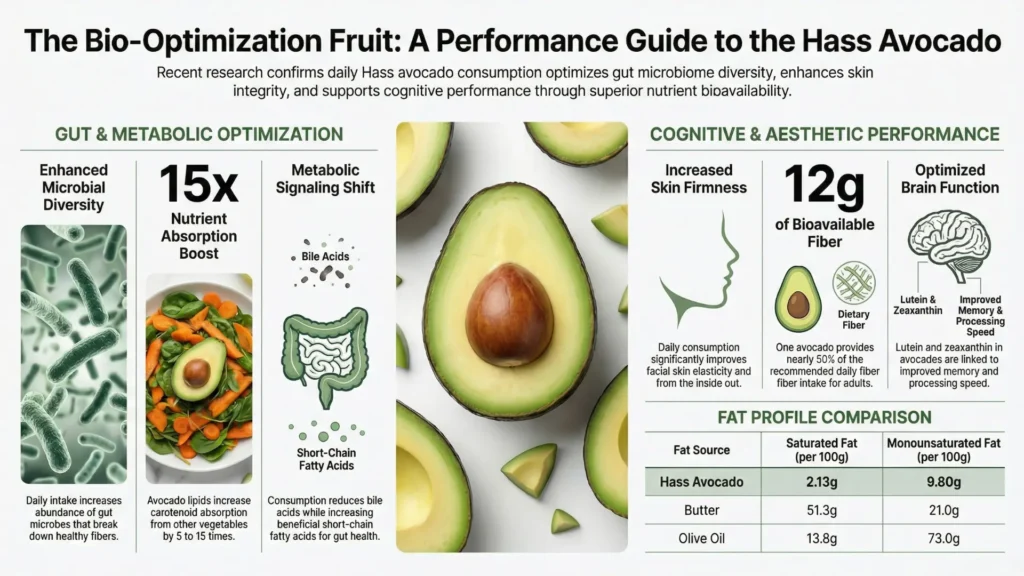
A pilot study involving 39 women found that consuming one avocado daily for eight weeks led to measurable increases in skin elasticity and firmness, particularly on the forehead. The mechanism behind this is fascinating: the carotenoids in avocados reach the skin and are believed to stimulate fibroblasts to produce more collagen and elastin. Collagen is the protein that keeps your skin “plump,” while elastin allows it to stretch and snap back into place.
For non-gym audiences who may not be doing intense resistance training to build muscle and skin tautness, dietary support becomes even more vital. The monounsaturated fats in avocados help maintain the skin’s “lipid barrier,” which is essentially the natural oil seal that keeps moisture in and irritants out. If you struggle with dry, flaky skin or adult acne, the benefits of avocado fruit can help soothe inflammation and repair the skin barrier from the inside.
!(image_placeholder_3.jpg)
Natural UV Protection and the Benefits of Avocado Fruit
It is important to note that while avocado is not a replacement for sunscreen, it contains nutrients that act as an “internal filter” for UV rays. Lutein and zeaxanthin are antioxidants that minimize damage from ultraviolet light, which is the primary cause of premature wrinkles and age spots (pigmentation). For people living in the sunny Indian climate, this added layer of nutritional protection is a significant benefit.

Practical Ways to Include “Butter Fruit” in Your Indian Meals
The biggest hurdle many of my clients at DietDekho face is how to make a non-native fruit like avocado fit into a traditional Indian palate. In South India, avocados have long been known as “Butter Fruit” or “Makkhanfal,” and they were often eaten as a simple sweet pulp. However, we can do so much more with them.
From Paratha Spreads to Morning Shakes: Why Eat Avocados?
Let’s simplify this: think of avocado as a healthy replacement for butter, cream, or mayonnaise.
- Avocado Paratha: This is a favorite for busy professionals and kids. Instead of using ghee or oil to make the dough soft, mash a ripe avocado and knead it directly into the whole wheat flour (atta). Add some jeera (cumin), green chilies, and coriander. The result is a soft, nutrient-packed paratha that doesn’t need extra oil on the tawa.
- Avocado Lassi: If you enjoy a morning smoothie but want something more traditional, try an Avocado Lassi. Blend half an avocado with thick curd (dahi), a pinch of cardamom (elaichi), and a few drops of rosewater. It is incredibly creamy and keeps you full until lunch.
- Avocado Chutney: For homemakers who want to add a healthy twist to snacks, blend avocado with mint, coriander, and lemon juice. Use this as a dip for dhoklas or a spread for whole-grain sandwiches.
- Avocado Dosa: Some modern Indian cafes are now serving “Avocado Dosa,” where mashed avocado is used as a spread inside the dosa instead of the traditional heavy potato masala. This is a great way to reduce the glycemic load of your breakfast.
Indian Meal Substitution Ideas for Health Benefits of Avocados
| Traditional Food | Healthy Avocado Swap | Benefit |
| Butter on Toast | Mashed Avocado with Black Salt | 75% less saturated fat |
| Mayonnaise in Sandwich | Sliced Avocado | No processed oils; high fiber |
| Sour Cream on Potato | Guacamole (Avocado + Onion + Tomato) | Added potassium and antioxidants |
| Cream in Curry | Pureed Avocado (added at the end) | Healthier fats; dairy-free option |
A Simple Daily Routine: When and How to Eat Avocado
To fully experience the benefits of avocado fruit, consistency is more important than quantity. I recommend aiming for one-fourth to one-half of a medium avocado per day.
Morning (7 AM – 9 AM): Include avocado in your breakfast to set your blood sugar levels for the day. This is especially helpful if you have a long commute or back-to-back meetings.
Lunch (12 PM – 2 PM): Add avocado to your salad or bowl of dal-rice. The healthy fats will help your body absorb the fat-soluble vitamins (like Vitamin A and K) from your vegetables.
The “Golden Rule” of Ripening: In the Indian climate, avocados can ripen very quickly due to the heat. When shopping, look for ones that are firm. Let them sit on your kitchen counter until the skin turns dark green or purple and yields slightly to gentle thumb pressure. Once ripe, you can store them in the fridge for another 2-3 days to stop them from over-ripening.
Safety Considerations: Is the Avocado Medicinal Property for Everyone?
While we love the benefits of avocado fruit, it is my duty as a dietitian to mention that “healthy” doesn’t mean “unlimited.”
Medical Conditions and Drug Interactions
- PCOS and Weight Gain: Because avocados are calorie-dense, eating too many (like 2 whole fruits a day) can lead to weight gain if you aren’t adjusting the rest of your diet. Stick to half a fruit.
- Thyroid and Hypertension Meds: If you are on blood thinners like Warfarin, be careful. Avocados are high in Vitamin K, which helps with blood clotting. A sudden, large increase in Vitamin K can interfere with how your medicine works.
- High Potassium (Hyperkalemia): If you take specific BP medications (like ACE inhibitors or ARBs) that cause your body to hold onto potassium, you should consult your doctor before eating avocados daily. Too much potassium in the blood can occasionally cause irregular heart rhythms.
- Ayurvedic “Pitta” Imbalance: In Ayurveda, avocados are considered heavy and grounding. While they are great for balancing “Vata” (dryness), eating too much in the peak of a hot Indian summer may aggravate “Pitta” (heat) in some people, leading to mild acidity if not paired with cooling herbs like mint or coriander.

Scientific Insight: The Role of Fiber in Metabolic Health
One expert-backed insight that often surprises people is that avocados are actually a fiber powerhouse. A single medium avocado contains about 10-13 grams of fiber. In India, where the average urban diet is increasingly reliant on “refined” grains, we are often severely fiber-deficient.
The fiber in avocados is roughly 75% insoluble (which adds bulk and prevents constipation) and 25% soluble (which feeds the good bacteria in your gut). This “prebiotic” effect is what helps shape a healthy gut microbiome, which is now being recognized as a critical factor in preventing type 2 diabetes and obesity. According to the World Health Organization (WHO), diets rich in healthy fats and fiber are essential to reducing the global burden of heart disease—and the benefits of avocado fruit deliver both in a single package.
Frequently Asked Questions (FAQs)
Q1. Is avocado good for a glowing skin? Yes, the Vitamin E, Vitamin C, and healthy monounsaturated fats in avocados help keep the skin hydrated, radiant, and elastic. They protect the skin from oxidative damage and support the production of collagen, which is essential for a youthful glow.
Q2. Can avocado help with weight loss if I don’t go to the gym? Absolutely. Weight loss is primarily driven by diet (about 70-80%). The high fiber and fat content in avocados keep you feeling “fuller for longer,” which naturally reduces your calorie intake by curbing hunger pangs and preventing sugar cravings between meals.
Q3. Is it safe for someone with high blood pressure to eat avocados? Yes. In fact, avocados have more potassium than bananas. Potassium helps the body balance out the negative effects of sodium (salt) and relaxes the blood vessel walls, which can naturally help in managing blood pressure levels.
Q4. How should I eat avocado if I find the taste too bland? Many Indians prefer a savory profile. You can add lemon juice, a pinch of black salt (kala namak), and roasted cumin powder (bhuna jeera) to mashed avocado. Using it as a spread in a spicy paratha or a mint-coriander chutney also makes it very palatable for the Indian taste.
Q5. Can I eat avocado if I have PCOS or Diabetes? Yes, the benefits of avocado fruit are highly recommended for PCOS and Diabetes. They have a very low Glycemic Index (GI), meaning they don’t cause sugar spikes. They also help improve insulin sensitivity, which is crucial for managing hormonal imbalances and blood glucose.

Conclusion: Start Your Journey to Holistic Health
Embracing the benefits of avocado fruit isn’t about following a global trend; it’s about choosing a nutrient-dense tool that fits into your existing Indian lifestyle. Whether you are a busy professional looking for sustained energy, a homemaker wanting to improve your family’s heart health, or someone managing a condition like PCOS, this “Butter Fruit” offers real, science-backed results.
I know making dietary changes can feel overwhelming, but you don’t have to do it alone. At DietDekho, we specialize in creating macro-balanced plans that respect your traditional habits while integrating modern superfoods. Start small—try an avocado paratha this weekend or swap your afternoon biscuit for a few slices of avocado with lemon. Your skin, your heart, and your waistline will thank you.
Get a Personalized Macro-Balanced Plan with a Diet Dekho Expert
Start Your Journey to Holistic Health with a Diet Dekho Consultant
Contact Us
We understand how overwhelming nutrition and weight loss information can feel. With so many opinions and confusing advice online, it’s easy to feel stuck or unsure about what to do next.
At Diet Dekho, you never have to figure it out alone. You can contact us anytime with any questions or concerns. Our expert dietitians are available 24/7 to guide, support, and help you stay on track. Whether your goal is weight loss or building healthier habits, we’re here to make the journey simpler and more sustainable for you.
Disclaimer
This blog is intended to help readers make healthier food choices. Your health should always be the top priority. Before starting any restrictive or special diet, especially if you have a medical condition or health concern, please consult a doctor or a qualified dietitian. Each body responds differently to food and lifestyle changes. Always choose what is safe and suitable for you.

Dr. Ritika is a nutrition and lifestyle expert with 2+ years of experience, helping clients manage weight and health through practical, personalized diet plans.