
Are you struggling to put on weight despite eating several chapatis a day? If so, you are certainly not alone. Indeed, for many people, finding the best aata for weight gain is the missing piece in their fitness puzzle. However, most people think eating more of the same food is the answer. In reality, the quality of your flour matters much more than the quantity of your rotis.
The best aata for weight gain is a nutrient-dense blend of whole wheat, roasted chana (sattu), and soybean flour, enriched with healthy fats from ground peanuts or seeds. This high-protein, calorie-rich combination provides roughly 380-420 kcal per 100g. Consequently, it supports healthy muscle growth rather than just increasing abdominal fat storage.
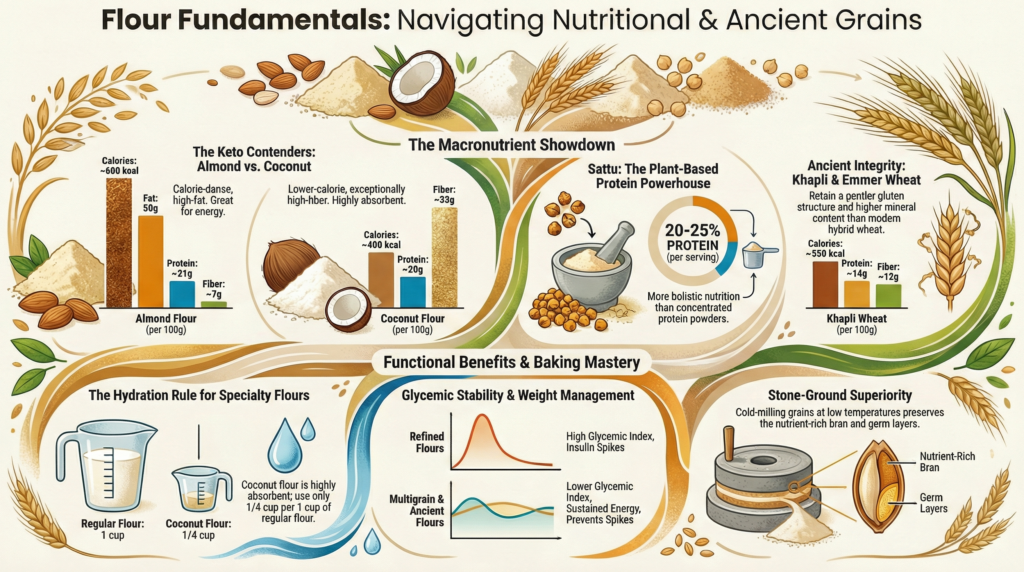
1. Why your regular wheat roti might be slowing down your weight gain?
Table of Contents
- 1 1. Why your regular wheat roti might be slowing down your weight gain?
- 2 2. What are the 3 pillars of a “Weight Gain Atta”?
- 3 3. Wheat vs. Millets: Which one actually helps you bulk?
- 4 4. The “Diet Dekho” Secret Recipe: Homemade Mass Gainer Atta Mix
- 5 5. Top Commercial Brands for Weight Gain Atta in India
- 6 6. How to supercharge your rotis (Beyond the flour)
- 7 7. Common Mistakes: Why “Weight Gain Atta” isn’t working for you
- 8 8. Managing weight gain with Medical Conditions
- 9 9. Tracking your progress: What to expect in 30 days
- 10 Conclusion: Start Your Journey with Diet Dekho
In India, the roti is a staple. For instance, most households use 100% whole wheat flour. While wheat is healthy, it can be a “hard gainer’s” biggest obstacle. Standard wheat flour provides about 340 calories per 100g. Furthermore, wheat is also very high in fiber.
Consequently, what this means for your daily routine is early fullness. Since high fiber slows down digestion, you feel “stuffed” after just two rotis. For someone needing a calorie surplus, this is a major problem. As a result, you stop eating before you reach your target energy levels. Moreover, this often leads to bloating instead of actual mass gain.
If you have a fast metabolism, you need more than just carbs. Specifically, you need “intensity” in every bite. Indeed, relying only on plain wheat often leads to a “skinny-fat” physique. Therefore, to avoid this, we must change the foundation of your meal: the flour itself.
2. What are the 3 pillars of a “Weight Gain Atta”?
To find or create the best aata for weight gain, you must look at three specific factors. These pillars ensure that the weight you put on is healthy muscle and not just water or fat.
Pillar 1: High Caloric Density
First, you need more energy in a smaller volume. By mixing calorie-dense grains like Bajra or adding ground oilseeds, you increase the “fuel” per roti. Therefore, this is essential for busy professionals who cannot eat large meals.
Pillar 2: High Protein Quality
Second, muscle synthesis requires amino acids. Because wheat is low in lysine, an essential amino acid, it needs a boost. By adding Sattu (roasted chana) or Soybean flour, you complete the protein profile. Consequently, this helps in repairing tissues after a long day of work.
Pillar 3: Healthy Fats
Third, fat is the most calorie-dense nutrient. It provides 9 calories per gram. Thus, adding ground peanuts or flaxseeds to your flour mix boosts the total energy count significantly. Furthermore, these fats also support hormone production, which is vital for both the genders.

3. Wheat vs. Millets: Which one actually helps you bulk?
Is wheat the enemy? Not at all. However, it definitely needs partners. Let’s look at the grains that make the best aata for weight gain combinations.
Bajra (Pearl Millet): The Calorie King
Bajra is exceptional for weight gain. Specifically, it offers approximately 361 kcal per 100g. Moreover, it has a higher fat content than Jowar or Ragi. In winter, for example, Bajra rotis provide the sustained energy needed to maintain body mass.
Sharbati Wheat: The Energy Base
Sharbati wheat from Madhya Pradesh is famous for its carb content. Since carbs are “protein-sparing,” they provide the energy your body needs so that the protein you eat can be used for muscle building. Additionally, it makes rotis soft and easy to digest.
Soyabean Atta: The Protein Powerhouse
If you want a high protein atta for weight gain, soy is your best friend. It contains 33g to 38g of protein per 100g. By mixing soy with wheat, you create a balanced amino acid profile. Nevertheless, always ensure the soy is well-cooked to avoid digestive issues.
4. The “Diet Dekho” Secret Recipe: Homemade Mass Gainer Atta Mix
I know it is hard to find time to research ratios. Therefore, let’s simplify this. Here is our expert-recommended formula for a 5kg batch. This is the best aata for weight gain for those who prefer home-cooked purity.
The 5kg Precision Ratio:
- 3kg Whole Wheat: First, use Sharbati or Khapli wheat for the best texture and energy.
- 1kg Roasted Black Chana (Sattu): Next, add sattu to provide 20-26g of protein per 100g.
- 500g Soyabean Flour: Then, add soy to boost the muscle-building potential of every roti.
- 500g Ground Peanuts or Flaxseeds: Finally, include these for healthy fats and extra calories.
How to prepare it:
- First, lightly roast the soybean flour and sattu separately.
- Then, grind the peanuts into a coarse powder.
- Next, mix all ingredients thoroughly in a large container.
- Finally, store the mix in a cool, dry place.
This homemade weight gain flour is cost-effective. Furthermore, it is much safer than synthetic supplements and provides a steady release of energy.

5. Top Commercial Brands for Weight Gain Atta in India
Not everyone has time to mill their own flour. Therefore, if you prefer store-bought options, look for these specific products that qualify as the best aata for weight gain in the market.
NutroActive Mass Gainer Atta
This is a highly specialized product. For instance, it contains 30% protein and 41% carbohydrates. In contrast, most flours are 75% carbs. By reducing the carb-to-protein ratio, this flour ensures you gain muscle mass. Moreover, it uses healthy fats like almonds and flaxseeds for energy.
Aashirvaad Multi-Millets Mix
While not strictly a “gainer,” this mix is very nutrient-dense. It contains Jowar, Bajra, Ragi, and Quinoa. Additionally, it provides about 363 calories per 100g. You can supercharge this by mixing it with 25% Sattu to make it the best aata for weight gain for daily use.
6. How to supercharge your rotis (Beyond the flour)
Finding the best aata for weight gain is only step one. Indeed, you can further increase the calorie count of your weight gain rotis Indian diet using these simple kitchen hacks.
- Knead with Full-Fat Milk: Instead of water, use warm milk to make the dough. For example, this adds protein and healthy fats.
- The Power of Desi Ghee: Always apply Desi Ghee on both sides of the roti. Since one teaspoon of ghee adds 45 calories, eating 4 rotis a day adds 180 calories effortlessly.
- Make Stuffed Parathas: Moreover, you should stuff your rotis with Paneer or Sattu. For instance, a plain roti has 120 calories, but a stuffed paneer paratha can have 300 calories.

7. Common Mistakes: Why “Weight Gain Atta” isn’t working for you
Sometimes, even the best aata for weight gain fails. Usually, this happens due to a few common errors.
The Fiber Trap
First, using too much Ragi or Oats can backfire. While healthy, they are very high in fiber and keep you full for hours. Therefore, if you are trying to bulk, you need to eat more frequently.
Skipping Strength Training
Second, if you eat a high-calorie diet but stay sedentary, you will only gain fat on your tummy. Consequently, you need to lift weights. This signals your body to use the protein from your best aata for weight gain to build muscle.
Not Being Consistent
Finally, weight gain is a slow process. You cannot eat well for just two days and expect results. Instead, you must hit your calorie surplus daily for at least 30 days to see change.
8. Managing weight gain with Medical Conditions
We must be careful if you have health issues. For example, the best aata for weight gain for a healthy person might not suit someone with Diabetes or PCOS.
- PCOS/PCOD: Specifically, focus on Low-GI grains like Bajra and Jowar. Moreover, healthy fats from flaxseeds help balance hormones.
- Diabetes: Underweight diabetics should use Sattu. Because it has a low glycemic index (28-35), it prevents blood sugar spikes.
- Thyroid (Hypothyroidism): However, be cautious with Soy. Since soy can interfere with thyroid medication, you should limit its intake.
9. Tracking your progress: What to expect in 30 days
If you use the best aata for weight gain consistently, here is what your journey will look like:
- Days 1-10: Initially, you will feel more energetic. Your strength during daily tasks will increase.
- Days 11-20: Next, you may notice improved digestion. Your sleep quality might even get better due to the healthy fats.
- Day 30: Finally, you can expect a weight gain of 2-3 kg. This is a healthy and sustainable rate.
To calculate your needs, use the ICMR-recommended energy requirements. For instance, a sedentary Indian male needs about 2110 kcal. To gain weight, therefore, aim for 2600-2700 kcal.

Frequently Asked Questions (FAQs)
Q1. Which is the best aata for weight gain for vegetarians? A blend of 60% wheat, 20% sattu, and 20% soy flour is the best. Specifically, soy and sattu provide the complete protein vegetarians often lack.
Q2. Does eating more rotis cause belly fat? Yes, but only if the rotis are pure carbs. However, using the best aata for weight gain with a high protein ratio ensures the weight is distributed properly.
Q3. Can I use Sattu for weight gain every day? Certainly. Sattu is a natural superfood. Because it is rich in iron and protein, it is safe for daily use in rotis.
Q4. Is Bajra better than Wheat for bulking? In some ways, yes. Bajra is more calorie-dense and has more healthy fats. Nevertheless, a mix of both is usually best for taste.
Conclusion: Start Your Journey with Diet Dekho
In conclusion, gaining weight is about making smart choices in the kitchen. Moving from plain flour to the best aata for weight gain is the most effective change you can make. Indeed, it is simple, sustainable, and fits into your Indian lifestyle.
I know it’s hard to find time, but your health is worth it. Therefore, start by making your first batch of “Mass Gainer Atta” this weekend.
Get your customized “Gainer Diet Chart” from Diet Dekho
Not sure which ratio is right for your body type? Our expert nutritionists at Diet Dekho are ready to help. For instance, we create personalized plans for PCOS and Diabetes.
Start Your Journey to Holistic Health with a Diet Dekho Consultant (https://dietdekho.com/form/)
Disclaimer: This blog post was written to help you make healthier food choices altogether. So, be aware and take care. The important thing to consider is your health before starting a restrictive diet. Always seek advice from a doctor or dietitian before starting if you have any concerns.
BOOK YOUR APPOINTMENT
Dr. Ritika is a nutrition and lifestyle expert with 2+ years of experience, helping clients manage weight and health through practical, personalized diet plans.