The morning light filters through a window in a quiet corner of Pune, where a mother balances a steaming cup of tea with the urgent needs of a school-bound child. Across the city, a corporate executive stares at a calendar filled with back-to-back meetings, feeling the dull thrum of a headache that has become a frequent companion. Both are living with a secret weight: a recent diagnosis of high blood pressure and type 2 diabetes. They often wonder if they can ever truly enjoy a meal again without worrying about a sudden spike in readings. Finding a practical BP diet for diabetes feels like searching for a needle in a haystack when your time is precious and your energy is low.
The most effective BP diet for diabetes combines low-sodium intake with high-fiber, low-glycemic foods to stabilize both blood pressure and blood sugar levels. This involves prioritizing whole grains like ragi and jowar, limiting daily salt to under 1,500 mg, and choosing lean proteins. By focusing on potassium-rich seasonal vegetables and magnesium-packed nuts, you can protect your heart and kidneys while maintaining steady energy throughout the day.
The Silent Convergence: Understanding Hypertension and Diabetes in India
Table of Contents
- 1 The Silent Convergence: Understanding Hypertension and Diabetes in India
- 2 The Foundation of Control: Sodium and Sugar Management
- 3 Introducing the DASH 4D Approach: A Modified Plan for Diabetics
- 4 Embracing Indian Superfoods: Millets and Pulses
- 5 Seasonal and Regional Eating in Maharashtra
- 6 Practical Kitchen Hacks: Reducing Salt Without Losing Taste
- 7 Meal Prep for the Time-Stretched Professional
- 8 Movement Without the Gym: A Practical Guide
- 9 Your 7-Day Indian Meal Guide
- 10 Frequently Asked Questions
- 11 Taking the First Step Toward a Healthier You
- 12 Contact Us
- 13 Disclaimer
The landscape of health in India has undergone a massive shift, moving away from old concerns about infections toward a modern struggle with lifestyle-related conditions. We are currently facing what experts call a dual epidemic. Recent data from the ICMR-INDIAB national study shows that the prevalence of type 2 diabetes has reached 11.4% across the country, while hypertension affects a staggering 35.5% of adults. What this means for your daily routine is that these two conditions are no longer rare; they are frequently found together. In fact, over 50% of people in India diagnosed with high blood pressure also struggle with type 2 diabetes.

This relationship is not a coincidence. When your body struggles with insulin resistance-the core of type 2 diabetes-it also starts to hold onto more sodium and experiences changes in how blood vessels function. High blood sugar can lead to arterial stiffness, where the walls of your blood vessels become less flexible, forcing the heart to work much harder to pump blood. This creates a cycle where one condition feeds the other, increasing the risk of heart trouble or kidney issues if left unmanaged.
| Metabolic Condition | National Prevalence (%) | Estimated Number of People (Millions) | State with Highest Prevalence (%) |
| Diabetes | 11.4 | 101 | Goa (26.4%) |
| Prediabetes | 15.3 | 136 | Sikkim (31.3%) |
| Hypertension | 35.5 | 315 | Punjab (51.8%) |
| Generalized Obesity | 28.6 | 254 | N/A |
| Abdominal Obesity | 39.5 | 351 | N/A |
I know it is hard to hear these numbers, but they show that you are not alone in this journey. Whether you live in a bustling city or a quieter rural area, the transition to more processed foods and less physical movement has made these health challenges common. The good news is that your kitchen holds the most powerful tools for change.

The Foundation of Control: Sodium and Sugar Management
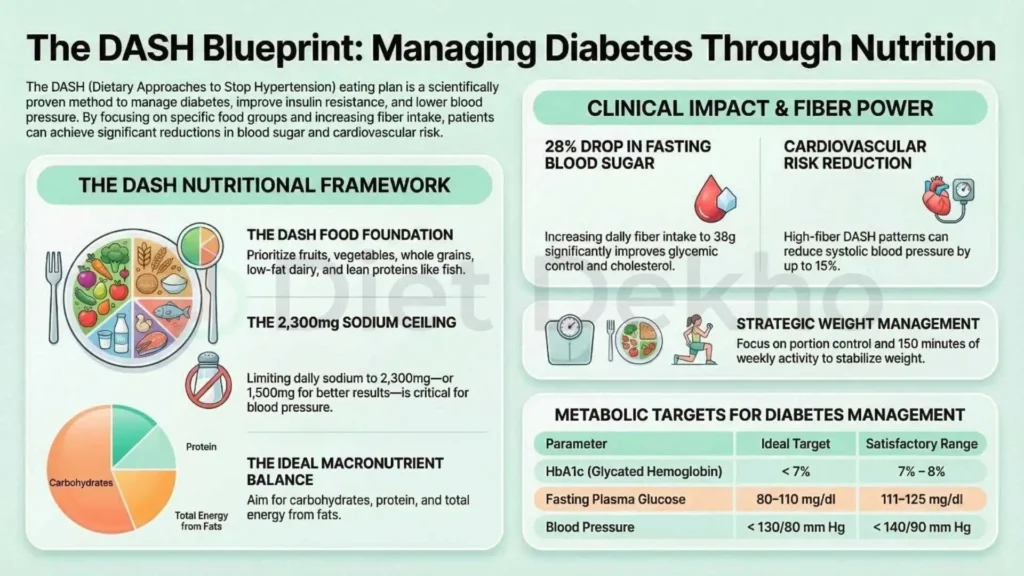
When we talk about a BP diet for diabetes, the two biggest levers we can pull are salt and sugar. In India, our love for flavor often leads us to consume much more salt than our bodies need. While the World Health Organization recommends less than 5 grams of salt per day-about one small teaspoon-the average urban Indian consumes nearly double that amount, at 9.2 grams. For a busy professional or a homemaker, this salt often hides in places we don’t expect, like store-bought pickles, papads, and even the bread we use for morning toast.
Excessive salt makes your body hold onto extra water, which increases the pressure on your blood vessel walls. For someone with diabetes, this is particularly risky because the blood vessels are already under stress from high glucose levels. What this means for your daily routine is that every small reduction in salt counts as a victory for your heart.
Why Sugar is More Than Just a Sweetener
Sugar management is the other side of the coin. It isn’t just about avoiding sweets; it’s about understanding how carbohydrates affect your system. When you eat refined carbs like white rice or maida, your blood sugar spikes quickly. These spikes can damage the delicate lining of your blood vessels, leading to inflammation and further raising your blood pressure.
There is no biological need for added sugar in our diets, as our bodies are very good at making the glucose they need from complex carbohydrates like whole grains and vegetables. By limiting added sugars to less than 10% of your total energy-and ideally even less-you give your pancreas and your heart a much-needed break.

Introducing the DASH 4D Approach: A Modified Plan for Diabetics
You might have heard of the DASH diet, which stands for Dietary Approaches to Stop Hypertension. It has been a gold standard for years because it focuses on foods rich in potassium, calcium, and magnesium-minerals that naturally help lower blood pressure. However, for those also managing diabetes, we often use a slightly modified version called DASH4D (DASH for Diabetes).
The original DASH diet can sometimes be a bit too high in carbohydrates for someone who needs to keep their blood sugar very stable. The DASH 4D plan tweaks this by reducing total carbohydrates to about 45% of your daily calories and replacing them with healthy, unsaturated fats from sources like walnuts, flaxseeds, and vegetable oils. This small shift can make a big difference, helping you stay in your target blood sugar range for an extra hour or more every day.
| Food Group | DASH4D Daily Servings (2000 Calories) | What Counts as a Serving? |
| Whole Grains | 3–4 | 1 slice of whole-grain bread or 1/2 cup cooked brown rice/millet |
| Vegetables | 5–6 | 1 cup raw leafy greens or 1/2 cup cooked vegetables |
| Fruits | 5–6 | 1 medium fruit or 1/4 cup dried fruit (unsweetened) |
| Lean Protein | 8–9 (ounces) | 1 oz cooked fish/poultry, 1 egg, or 2 tbsp nuts/seeds |
| Low-Fat Dairy | 2 | 1 cup low-fat milk/yogurt or 1.5 oz cheese |
| Healthy Fats | 5–6 | 1 tsp vegetable oil or 1 tbsp low-fat mayonnaise |
| Sweets | <3 per week | 1 tsp sugar or 1 tbsp jam/honey |
I know it’s hard to find time to count servings, so let’s simplify this. Imagine your plate at every meal. Half of it should be filled with vegetables, one quarter with a lean protein like dal or grilled chicken, and the final quarter with a whole grain like a jowar roti. This plate method naturally aligns you with the DASH 4D principles without needing a calculator.

Embracing Indian Superfoods: Millets and Pulses
One of the most beautiful things about living in India is that our traditional foods are often exactly what the doctor ordered. Millets like ragi (finger millet), jowar (sorghum), and bajra (pearl millet) are nutritional powerhouses that were once the staple of every household. These grains have a low glycemic index, which means they don’t cause those scary sugar spikes. Instead, they release energy slowly, keeping you full and focused during a long afternoon of work or household chores.
Millets are also rich in fiber and essential minerals. For example, ragi contains nearly four times the iron found in brown rice and is incredibly high in calcium, which is vital for bone health as we age. Jowar and bajra are packed with potassium, which acts as a natural balance to the sodium in your diet, helping your kidneys flush out the extra salt that keeps your blood pressure high.
The Strength of Pulses
Our dals and legumes are equally important. Whether it’s moong dal, masoor dal, or chickpeas (chole), these staples provide the protein and fiber needed to stabilize blood sugar. They contain something called resistant starch, which moves through your system slowly and nourishes your gut health, which we now know plays a huge role in how our bodies manage insulin.
For a busy professional, a bowl of sprouts bhel or a quick moong dal chilla is a lifesaver. It’s fast to make, easy to carry, and gives your body the nutrients it needs to fight the inflammation caused by high blood pressure.

Seasonal and Regional Eating in Maharashtra
If you are living in Pune or elsewhere in Maharashtra, you have access to some of the best seasonal produce for managing health. Eating with the seasons is not just a traditional wisdom; it ensures that the vegetables you eat are at their peak nutritional value. Let’s look at what you should be putting in your shopping basket depending on the time of year.
Winter: The Time for Leafy Greens
During the cooler months, our markets are full of fresh fenugreek (methi), spinach (palak), and carrots. Methi is particularly famous for its ability to help lower blood sugar, while the potassium in spinach is a blessing for your blood pressure. This is also the best time for fresh peas and radishes, which add crunch and fiber to your meals.
Summer: Hydration and Cooling
In the heat, your body needs to stay hydrated to manage blood pressure. Cooling vegetables like cucumber, bottle gourd (lauki), and ridge gourd (turai) are your best friends. Lauki is very low in calories and easy on the stomach, making it a perfect light dinner after a stressful day. You’ll also find jamun (Indian blackberry) in the summer, which is traditionally used to help regulate blood sugar.
Monsoon: The Gourd Family
The rainy season is the time for bitter gourd (karela), pointed gourd (parwal), and ivy gourd (tindora). While karela has a strong taste, it is one of the most effective vegetables for blood sugar control. I know it’s hard to love the bitterness, but when cooked with a little bit of amchur (dried mango powder) and onions, it can be a delicious part of your BP diet for diabetes.
| Season | Best Vegetables for BP & Diabetes | Key Health Benefit |
| Winter | Methi, Palak, Carrots, Radish | Rich in iron and potassium for vascular health. |
| Summer | Lauki, Cucumber, Turai, Jamun | High water content and cooling for BP management. |
| Monsoon | Karela, Tindora, Bhindi, Beans | High fiber and medicinal properties for glucose control. |

Practical Kitchen Hacks: Reducing Salt Without Losing Taste
One of the biggest fears people have when starting a BP diet for diabetes is that their food will become bland. I want to reassure you that Indian cuisine is built on spices, not just salt. You can unlock incredible flavors using things you already have in your spice box.
Let’s simplify this with some easy swaps:
- The Dough Trick: When you make your daily rotis or parathas, don’t add salt to the dough. Once you pair that roti with a flavorful dal or sabzi, you won’t even notice the difference.
- Spice Over Salt: Use roasted cumin (jeera) powder, black pepper, and amchur to add tang and depth to your food. Lemon juice is also a fantastic way to brighten a dish without reaching for the salt shaker.
- Handle Your Accompaniments: Pickles (achaar) and papads are often the biggest hidden sources of sodium. Try making fresh chutneys at home with mint, coriander, and minimal salt instead of using store-bought versions.
- The Potato Sponge: If you accidentally over-salt a curry, drop a few raw, peeled potato slices into the pot. They will soak up the excess salt in about 20 minutes-just remember to take them out before serving!
What this means for your daily routine is that you can still enjoy the homely taste of your favorite foods while significantly lowering the strain on your heart and kidneys.
Meal Prep for the Time-Stretched Professional
I know it’s hard to find time to cook fresh every single day. The secret to staying consistent with a BP diet for diabetes is batching.Spending just an hour on a Sunday can save your health during the week.
One-pot meals are your best friend. A pressure cooker or an Instant Pot can make a Quinoa Khichdi or a Vegetable Daliya in minutes. You can also boil a large batch of chickpeas or mung beans at the start of the week. These can be turned into a quick salad for lunch, a sprouts bhel for an evening snack, or added to a vegetable curry for dinner.
For the homemaker who is often the last to eat, remember that your health is the foundation of the family. Instead of just eating whatever is leftover, ensure your plate always has that portion of protein and vegetables. Small changes, like switching from white rice to brown rice or millets, can be done for the whole family, protecting everyone’s future health together.
Movement Without the Gym: A Practical Guide
Many of my clients feel guilty because they don’t have time for the gym. Let’s let go of that guilt. For managing blood pressure and blood sugar, consistent, moderate movement is often more effective than an occasional intense workout.
Brisk walking is one of the best things you can do. Aiming for 30 minutes a day can lower your blood pressure by as much as 5 to 8 points. If you can’t do 30 minutes at once, try three 10-minute walks-one after each meal. This post-meal stroll is particularly good for clearing glucose from your bloodstream.
For our older people or those with joint pain, yoga and chair-based exercises are wonderful. Even something as simple as gardening or dancing in your living room counts as physical activity. The goal is to keep your muscles moving so they can absorb blood sugar more efficiently and keep your heart strong.
Your 7-Day Indian Meal Guide
To get you started, here is a simple plan that uses familiar Indian flavors while following the BP diet for diabetes principles.
| Day | Early Morning | Breakfast | Lunch | Dinner |
| Mon | Soaked Methi seeds | Vegetable Oats Upma | 1 Jowar Roti, Moong Dal, Palak Sabzi | Vegetable Daliya Khichdi |
| Tue | Cinnamon Water | Besan Chilla with mint chutney | Brown Rice (small portion), Rajma, Salad | Grilled Paneer with stir-fried beans |
| Wed | Warm Lemon Water | Poha with peanuts and carrots | 1 Multigrain Roti, Chole, Steamed Lauki | Quinoa Khichdi with moong dal |
| Thu | Ginger & Tulsi Tea | 2 Idlis with Sambar | 1 Bajra Roti, Tur Dal, Cabbage Sabzi | Vegetable Soup with paneer cubes |
| Fri | Plain Warm Water | Vegetable Upma (Suji or Ragi) | Brown Rice, Masoor Dal, Bhindi Sabzi | Moong Dal Cheela with veggies |
| Sat | Jeera Water | Scrambled Egg whites or Tofu | 1 Multigrain Roti, Mixed Dal, Beans Poriyal | Vegetable Stew (no salt added) |
| Sun | Lemon Water | Ragi Dosa with tomato chutney | Dal & Veggie Khichdi with Curd | Grilled Veggies with grilled Chicken/Paneer |
For snacks, think of a handful of roasted chana, a medium apple or guava, or a glass of unsweetened buttermilk (chaas) seasoned with roasted jeera.
Frequently Asked Questions
What is the best BP diet for diabetes for vegetarians?
The best approach is the Indian version of the DASH diet. It focuses on whole grains (millets), plenty of lentils/dals for protein, and a high intake of seasonal vegetables. Restricting salt and replacing refined sugar with whole fruits are the most important steps for vegetarians.
Can I eat rice if I have both high blood pressure and diabetes?
Yes, but portion control is key. It is better to choose brown rice or red rice as they have more fiber. If you must have white rice, try to bulk it up by mixing it with an equal amount of vegetables or dal to lower the overall glycemic load.
How much salt should I actually be eating?
For the best results with a BP diet for diabetes, aim for about 1,500 mg of sodium per day, which is roughly 2/3 of a teaspoon of salt. This includes all the salt added during cooking and the salt hidden in packaged foods.
Is it safe to use salt substitutes (low sodium salt)?
Low sodium salts (LSS) replace some of the sodium with potassium. This can be very helpful for lowering blood pressure. However, if you have any existing kidney issues, you must check with your doctor before using them, as excess potassium can sometimes be harmful for people with kidney disease.
What are some heart-healthy Indian snacks?
Roasted makhana, unsalted peanuts, sprouts chaat, and roasted chickpeas are all excellent. They provide fiber and protein without the high sodium found in packaged namkeens and chips.
Taking the First Step Toward a Healthier You
I know it feels like a mountain to climb when you’re already tired from your daily responsibilities. But remember, managing your health isn’t about being perfect; it’s about making better choices more often than not. Every time you choose a fruit over a sugary biscuit, or a home-cooked meal over a salty takeout, you are giving your heart a second chance.
Your body is incredibly resilient. With the right fuel and a little bit of movement, you can start to see those numbers move in the right direction. If you’re feeling overwhelmed and want a plan tailored specifically to your lifestyle in Pune or anywhere in India, we are here to help. Let’s simplify this journey together.
Take the first step toward reclaiming your energy and peace of mind. Fill out our health assessment form here, and let’s build a sustainable path to your wellness.
Contact Us
We understand how overwhelming nutrition and weight loss information can feel. With so many opinions and confusing advice online, it’s easy to feel stuck or unsure about what to do next.
At Diet Dekho, you never have to figure it out alone. You can contact us anytime with any questions or concerns. Our expert dietitians are available 24/7 to guide, support, and help you stay on track. Whether your goal is weight loss or building healthier habits, we’re here to make the journey simpler and more sustainable for you.
Disclaimer
This blog is intended to help readers make healthier food choices. Your health should always be the top priority. Before starting any restrictive or special diet, especially if you have a medical condition or health concern, please consult a doctor or a qualified dietitian. Each body responds differently to food and lifestyle changes. Always choose what is safe and suitable for you.

Abhinav is the Founder of Diet Dekho, helping people manage weight and lifestyle health through simple, practical nutrition and personalized diet plans.