I remember a client, Rajesh, a 45-year-old software engineer who felt fine until a routine check-up revealed his blood pressure was through the roof. Like many of us, he was juggling a high-stress job and quick, salty snacks. He asked me, Is it too late to fix this with food? My answer was a firm no. Starting a BP diet for heart patients can change your life.
The most effective BP diet for heart patients is the DASH (Dietary Approaches to Stop Hypertension) plan adapted for the Indian kitchen. This approach focuses on eating potassium-rich vegetables, whole-grain millets like ragi, and lean proteins while strictly limiting sodium to under 1,500mg daily. By swapping refined oils for mustard oil and white rice for brown rice, you can significantly lower blood pressure and manage cholesterol levels .
Why Your Current Diet Might Be Straining Your Heart
Table of Contents
- 1 Why Your Current Diet Might Be Straining Your Heart
- 2 Mastering the Indian DASH Diet Adaptation
- 3 Smart Protein Choices for Cholesterol Control
- 4 Tackling the Hidden Salt in Your Kitchen
- 5 Why the Evening Snack Window is Your Critical Zone
- 6 Everyday Movement for the Non-Gym Audience
- 7 A 7-Day Heart-Healthy Sample Menu
- 8 Expert Advice: Rediscovering Traditional Logic
- 9 FAQs
- 10 Contact Us
- 11 Disclaimer
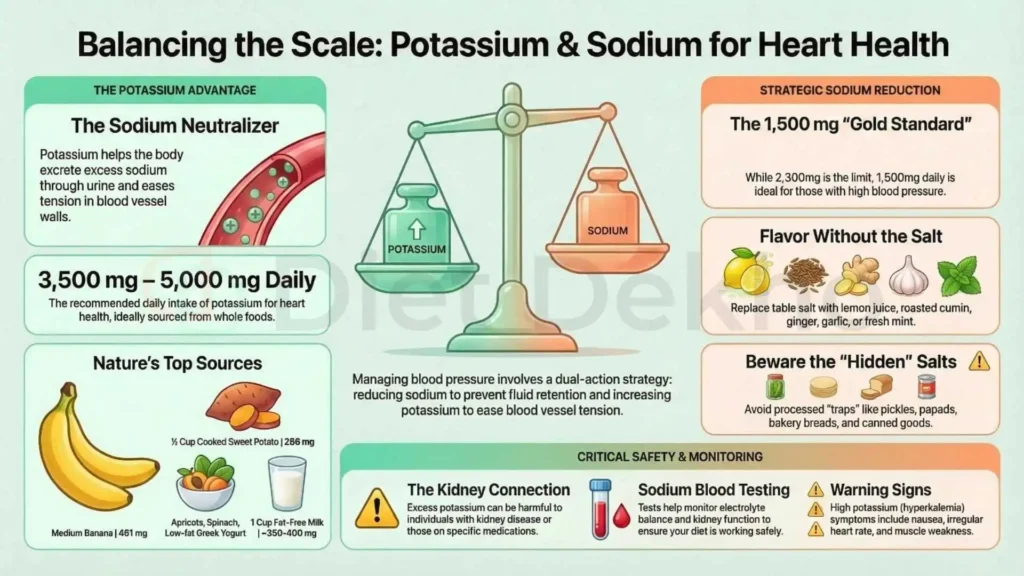
Most Indians consume nearly double the safe limit of salt without even realizing it . This excess sodium disrupts how your blood vessels behave and forces your body to retain water, which puts immense pressure on your heart . Because our traditional diets are often rich in hidden salts from pickles and papads, managing hypertension requires a conscious shift in our daily habits .
Furthermore, South Asians face a unique risk profile often called the South Asian Phenotype. This means we are prone to higher triglycerides and lower good cholesterol even if we look fit. Therefore, a targeted BP diet for heart patients is essential not just for weight, but for protecting your arterial walls from damage.

Mastering the Indian DASH Diet Adaptation
The NIH developed the DASH eating plan to lower blood pressure without medication, and it works wonders when we give it a local twist. Instead of looking for foreign ingredients, we can look into our own masala dabba and pantry for solutions.
The Magic of Ancient Millets
White rice and maida (refined flour) cause rapid spikes in blood sugar and pressure . In contrast, traditional grains like Ragi (finger millet), Jowar, and Bajra provide the fiber and magnesium needed for vascular relaxation.
- Ragi: This superstar is packed with calcium, supporting both bone health and blood vessel function.
- Jowar: It is an excellent source of magnesium, which helps your arteries relax.
- Bajra: Perfect for fiber, it helps you feel full and keeps your cholesterol in check.

Smart Protein Choices for Cholesterol Control
If you want to lower your LDL (bad) cholesterol, you must be picky about your protein . Red meats like mutton are high in saturated fats that clog arteries. Instead, I recommend focusing on plant proteins and lean options.
- Dals and Legumes: Moong dal, masoor dal, and chickpeas are cholesterol-free and high in soluble fiber .
- Fatty Fish: Varieties like Rohu, Mackerel (Bangda), and Surmai provide Omega-3 fatty acids that reduce inflammation.
- Plant-Based Alternatives: Swap paneer for tofu occasionally to reduce saturated fat while keeping your protein high .
Additionally, the Harverd edu notes that swapping 10% of your daily carbs for plant proteins can further lower blood pressure. This is a simple change you can make today by adding an extra bowl of dal and reducing one roti.

Tackling the Hidden Salt in Your Kitchen
I often tell my clients that the salt shaker isn’t the only villain. Sodium hides in places you wouldn’t expect. For example, a single slice of bread can contain up to 150mg of sodium, and some breakfast cereals are even worse.
To truly follow a BP diet for heart patients, you must be wary of these common items:
- Pickles and Papads: These are often cured with extreme amounts of salt .
- Ready-to-Eat Gravies: These rely on sodium-based preservatives for shelf life .
- Bakery Items: Biscuits and rusks often use baking soda (sodium bicarbonate) as a raising agent .
Let’s simplify this: if a food comes in a packet and has a long shelf life, it probably has too much sodium. Instead of salt, use natural flavor enhancers like lemon juice, tamarind (imli), and fresh coriander to give your food a zing.
Why the Evening Snack Window is Your Critical Zone
For most busy professionals, the time between 4 PM and 7 PM is when diets fail. This is when we reach for samosas or bhujia because we are tired and hungry. However, this window is actually your best opportunity to nourish your heart.
What this means for your daily routine is that you should keep healthy snacks ready. A simple bowl of roasted makhana or a handful of unsalted almonds can satisfy your crunch without the sodium hit . Similarly, a sprout chaat with lime and onions is a fantastic way to get fiber and protein while staying on your BP diet for heart patients .

Everyday Movement for the Non-Gym Audience
I know it is hard to find time for the gym, but you don’t need a treadmill to save your heart. Brisk walking for just 30 minutes a day can reduce systolic blood pressure by over 4 mmHg . You can even break this into three 10-minute walks after your meals .
Yoga is another powerful tool in your arsenal. Practices like Shavasana (corpse pose) and slow breathing exercises (Pranayama) activate your body’s relaxation response . This immediately helps lower your heart rate and pulse, making it an essential part of a holistic BP diet for heart patients approach .
A 7-Day Heart-Healthy Sample Menu
To help you get started, here is a simple plan using the small bowl logic. This ensures you get variety without overeating.
| Day | Breakfast | Lunch | Evening Snack | Dinner |
| Mon | Vegetable Oats Upma | Brown Rice + Moong Dal + Bhindi | Buttermilk (Chaas) | 2 Whole Wheat Rotis + Lauki |
| Tue | Moong Dal Chilla | 2 Rotis + Chana Masala + Salad | Roasted Makhana | 1 Bowl Vegetable Dalia Khichdi |
| Wed | 2 Steamed Idlis + Sambar | Brown Rice + Grilled Fish + Dal | Sprouted Moong Chaat | 2 Ragi Rotis + Turai Sabzi |
| Thu | Poha with Peas | 2 Rotis + Rajma + Raita | 5 Almonds + Green Tea | Mixed Vegetable Soup + 1 Roti |
| Fri | Vegetable Dalia | Brown Rice + Tur Dal + Beans | Roasted Chana | 2 Jowar Rotis + Methi Sabzi |
| Sat | Besan Toast | 2 Rotis + Chicken Curry (Skinless) | Coconut Water | 1 Bowl Millet Khichdi + Curd |
| Sun | Ragi Dosa + Chutney | Brown Rice + Dal + Pumpkin | Fruit Chaat (unsalted) | 2 Rotis + Tinda Sabzi + Salad |

Expert Advice: Rediscovering Traditional Logic
Nutritionist Rujuta Diwekar often mentions that we shouldn’t fear traditional fats like coconut or peanuts in moderation, as they don’t contain dietary cholesterol. The real issue in Indian kitchens is overcooking, using reheated oils, and poor portion control . When you reheat oil, it forms dangerous trans-fats that clog your arteries .
The National Institutes of Health (NIH) emphasizes that the combination of the DASH plan and reduced sodium gives the biggest benefit for blood pressure control. This means that while your medications are important, your kitchen is where the real healing happens.
FAQs
1. Is rock salt better than table salt for heart patients?
No, it isn’t. While Himalayan pink salt or rock salt may have tiny amounts of minerals, they contain the same amount of sodium as regular salt. For a BP diet for heart patients, the total amount of salt matters more than the type .
2. Can I eat eggs on a heart-healthy diet?
Yes, you can. You can have up to one egg a day. However, if your cholesterol is very high, I suggest sticking to egg whites and limiting the yolks to 2-3 times a week.
3. Which cooking oil should I use?
I recommend mustard oil, cold-pressed groundnut oil, or olive oil. These are rich in monounsaturated fats (MUFA), which help manage cholesterol levels. Avoid reusing oil for frying at all costs .
4. How long does it take to see results on this diet?
Many people notice a measurable drop in their blood pressure within just two weeks of strictly following the DASH principles. Consistency is the key to making these results permanent.
5. Can I eat out while on a BP diet for heart patients?
I know it’s hard to avoid restaurant food, but you can make better choices. Opt for tandoori or grilled dishes instead of fried ones, and always ask the chef to go easy on the salt.

Contact Us
We understand how overwhelming nutrition and weight loss information can feel. With so many opinions and confusing advice online, it’s easy to feel stuck or unsure about what to do next.
At Diet Dekho, you never have to figure it out alone. You can contact us anytime with any questions or concerns. Our expert dietitians are available 24/7 to guide, support, and help you stay on track. Whether your goal is weight loss or building healthier habits, we’re here to make the journey simpler and more sustainable for you.
Disclaimer
This blog is intended to help readers make healthier food choices. Your health should always be the top priority. Before starting any restrictive or special diet, especially if you have a medical condition or health concern, please consult a doctor or a qualified dietitian. Each body responds differently to food and lifestyle changes. Always choose what is safe and suitable for you.

Abhinav is the Founder of Diet Dekho, helping people manage weight and lifestyle health through simple, practical nutrition and personalized diet plans.