Struggling to manage high blood pressure while working a 9-to-5 desk job is something I see every day. I recently met Neha, a software engineer who felt constant morning headaches. She discovered she needed a sustainable BP meal plan for office hours to protect her heart without sacrificing her career performance. If you are feeling that same persistent throb at the back of your head or unexpected fatigue after a meeting, I want you to know that simple, kitchen-based changes can make all the difference.
A practical BP meal plan for office workers prioritizes the DASH diet, focusing on 1,500–2,300 mg of sodium daily. It emphasizes potassium-rich Indian foods like millets (jowar, bajra), leafy greens, and bananas. Combined with simple weekend meal prep, this approach helps busy professionals lower their blood pressure naturally and maintain steady energy levels throughout the workday.
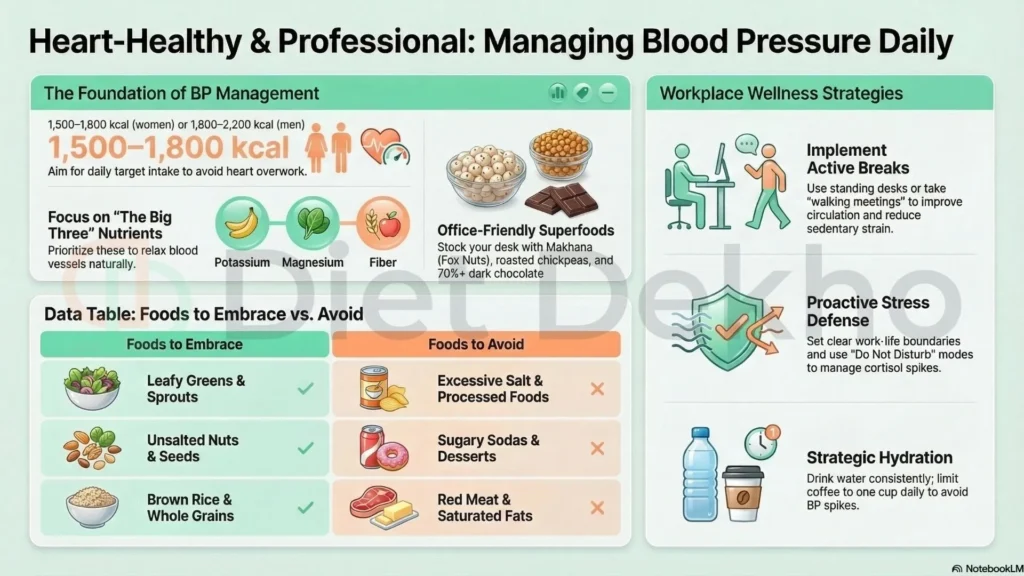
The Silent Surge: Why Your Desk Job Is a Risk Factor
Table of Contents
- 1 The Silent Surge: Why Your Desk Job Is a Risk Factor
- 2 Simplifying the Science: Potassium vs. Sodium
- 3 The Indian DASH Approach: Millets and Proteins
- 4 Navigating the Sodium Bombs at Work
- 5 Your 7-Day BP Meal Plan for Office: Days 1-7
- 6 Sunday Meal Prep Hacks for Busy Professionals
- 7 Office Beverages: Chai, Coffee, and Your Heart
- 8 Movement at the Desk: Simple Isometric Hacks
- 9 Conclusion: Taking the First Step Together
- 10 Frequently Asked Questions
- 11 Contact Us
- 12 Disclaimer
I know it is hard to find time for health when your calendar is a sea of back-to-back meetings. However, the sedentary nature of a corporate career in India has created a genuine health crisis. Statistics show that roughly one in four Indian adults now lives with hypertension. In high-pressure industrial and corporate sectors, prevalence rates can even skyrocket to a staggering 48.6%.
What this means for your daily routine is that your desk might be a silent risk factor. Dr. Ashish Kumar, a senior cardiologist, explains that while you are meeting deadlines, your arteries may be slowly hardening and your heart muscle thickening just to survive the pressure. Because high blood pressure often shows no symptoms until a crisis occurs, your tiffin box is effectively your best defense.
Identifying the Subtle Warning Signs
Actually, many professionals dismiss the early indicators of hypertension as general stress. You might feel a nagging headache upon waking up or experience a sense of heaviness in your chest after a long shift. Some of my clients even report blurred vision or seeing flashes of light when their numbers are high. Instead of ignoring these signals, we should treat them as a nudge from the body to rethink our daily nutrition.

Simplifying the Science: Potassium vs. Sodium
Let’s simplify this: imagine your blood vessels are like garden hoses. When you consume too much sodium, your body retains extra water to dilute it, which increases the volume of blood pumping through those hoses. Consequently, the pressure on your vessel walls goes up. We can look at this relationship through a simple formula:
Blood Pressure = Cardiac Output × Peripheral Resistance
Fortunately, nature provides a natural release valve in the form of potassium. This mineral helps your kidneys flush out excess sodium and relaxes the muscle walls of your arteries. In our BP meal plan for office, we aren’t just cutting things out; we are loading your plate with potassium to balance the scales.
The Role of Essential Minerals
In addition to potassium, your body needs magnesium and calcium to maintain vascular flexibility. Magnesium, found in leafy greens and seeds, acts as a natural calcium channel blocker to promote vasodilation. Calcium supports the reactivity of your blood vessels, ensuring they can respond effectively to changes in pressure. By choosing whole Indian foods, you get these minerals in a package that your body understands.
The Indian DASH Approach: Millets and Proteins
The DASH (Dietary Approaches to Stop Hypertension) diet is scientifically proven to lower systolic pressure by about 10 mmHg. This reduction is comparable to the effect of some blood pressure medications. For our Indian context, you don’t need to eat foreign salads; instead, we return to the superfoods our grandparents used to eat.
Heart-Healthy Whole Grains
Specifically, millets like Jowar (Sorghum), Bajra (Pearl Millet), and Ragi (Finger Millet) are your heart’s best friends. These grains are naturally rich in the potassium and magnesium that Harvard Health highlights as essential for vascular health. Swapping your white rice for a jowar roti provides a steady release of energy without the spikes associated with refined flours.
Plant-Based Protein Power
Pulses and legumes like moong dal, masoor, and rajma are equally vital for a BP meal plan for office consistency. These are low in sodium but packed with fiber and protein, which keep you full for hours. For instance, a dry sabzi made with sprouted pulses is easy to pack and won’t leak in your bag during your commute.
I know the office canteen is tempting when you are tired. However, many common Indian accompaniments are what I call sodium bombs. A single tablespoon of pickle (achar) or a single piece of papad can contain 200–300 mg of sodium. That is nearly 20% of your daily limit in just one bite!
| The Sodium Trap | Why It’s Risky | The Heart-Healthy Swap |
| Pickles & Papads | Salt used as a heavy preservative | Fresh lemon or ginger juliennes |
| Instant Noodles | Tastemakers are loaded with MSG | Whole wheat vermicelli (Sevai) |
| Salted Namkeen | High salt + hidden trans fats | Roasted makhana or unsalted nuts |
| Canteen Gravies | Chefs add salt at every cooking stage | Dry vegetable sabzis or grilled fish |
The Truth About Diet Snacks and Biscuits
Surprisingly, even foods that don’t taste salty can be high in sodium. Regular bakery bread and digestive biscuits often contain hidden baking soda and sodium-based preservatives. Furthermore, many diet chivda mixes are deep-fried before being spun, making them calorie bombs with hidden salt. Therefore, reading labels and choosing homemade snacks is the easiest way to reclaim control.

Your 7-Day BP Meal Plan for Office: Days 1-7
This 7-day chart focuses on practical, low-sodium Indian staples. I have designed this to be easy to follow, even if you are not a regular in the kitchen.
| Day | Breakfast | Mid-Morning | Lunch | Evening Snack | Dinner |
| Day 1 – Millet Foundation | Oats upma with carrots and peas | Medium banana (rich in potassium) | 2 jowar rotis with moong dal and cucumber salad | Roasted makhana (unsalted) with green tea | Bajra & whole moong khichdi with low-fat curd |
| Day 2 – Fiber & Energy | Moong dal chilla with mint chutney | Guava or papaya chunks | Brown rice with low-salt rajma and sautéed bhindi | Handful of unsalted almonds and walnuts | 2 whole wheat rotis with lauki sabzi |
| Day 3 – Probiotic Support | Ragi idli with vegetable sambar | Fresh apple | Vegetable pulao (brown rice) with soya chunks and raita | Sprouted moong salad with lemon | Stir-fried tofu or paneer with broccoli and bell peppers |
| Day 4 – Anti-Inflammatory Focus | Poha with turmeric, curry leaves and peanuts | Fresh coconut water | 2 bajra rotis with methi dal and beetroot salad | Orange or sweet lime | Vegetable dalia with mixed vegetables and curd |
| Day 5 – Friday Fiber Finish | Besan chilla stuffed with grated carrots | Roasted chana (unsalted) | Whole wheat rajma wrap with onions and lettuce | Low-fat yogurt with pomegranate seeds | 2 rotis with karela sabzi and salad |
| Day 6 – Weekend Protein Reset | Paneer bhurji with whole-grain toast | Guava or pear | Multigrain thalipeeth with homemade curd | Carrot & cucumber sticks with hummus | Grilled/baked fish with brown rice and stir-fried greens |
| Day 7 – Sunday Detox | Stuffed moong paratha (minimal oil) with dahi | Mixed fruit bowl (watermelon & papaya) | Chole with jeera rice and carrot-beet salad | Buttermilk (chaas) with roasted cumin | Mixed vegetable soup with 2 plain phulkas |
Sunday Meal Prep Hacks for Busy Professionals
I know it is hard to find time, but taking two hours on Sunday can save your entire week. Let’s simplify this into a 3-step ritual. First, chop your sturdy vegetables like cabbage, beans, and carrots and store them in airtight containers. Second, boil a big batch of chickpeas or rajma; these can be used for salads or wraps in minutes. Finally, prepare a base masala of onion, tomato, and ginger without salt and freeze it in individual portions. This allows you to cook a heart-healthy dinner in under 15 minutes.

Office Beverages: Chai, Coffee, and Your Heart
In Indian offices, the chai-break is non-negotiable. However, if you have high blood pressure, you should be cautious. Research shows that drinking two or more cups of caffeinated coffee daily could double the risk of cardiovascular issues for those with severe hypertension.
Fortunately, traditional masala chai is a gentler alternative. The black tea base provides a smaller dose of caffeine, while spices like cinnamon and ginger have mild blood-pressure-lowering effects. Just remember to ask for minimal sugar and toned milk. If you want the ultimate hydration, fresh coconut water is the best choice for flushing out sodium.
Movement at the Desk: Simple Isometric Hacks
You don’t need a gym membership to lower your numbers. Recent studies found that isometric exercises like holding a wall sit-can lower blood pressure even more effectively than running.
During your lunch break, try standing against a wall and sliding down into a chair position for 30 seconds. Repeat this four times with a two-minute break in between. This static contraction helps your blood vessels relax and improves circulation while you are stuck at the office.
Conclusion: Taking the First Step Together
Managing your blood pressure in a busy corporate environment is entirely possible with a bit of planning. By embracing a BP meal plan for office consistency, focusing on Indian millets, and keeping an eye on hidden sodium, you are giving your heart the support it deserves.
Are you ready to stop chasing numbers and start correcting the biology behind them? I am here to guide you. You can fill out our to get a personalized plan tailored to your professional life. Let’s start this health journey today!
Frequently Asked Questions
What is the best BP meal plan for office workers with no time for cooking?
The most effective approach is the DASH diet adapted for India. It relies on batch-prepping on Sundays-boiling lentils and pre-chopping vegetables. This ensures that a low-sodium tiffin is ready to grab every morning, preventing you from relying on salty canteen food.
How can I reduce hidden sodium in my office lunch?
You can lower your intake by avoiding sodium bombs like pickles, papads, and canteen gravies. Specifically, try seasoning your food with lemon juice, ginger, or garlic instead of extra salt. Always choose dry sabzis over heavy, restaurant-style curries.
Is it safe for office workers with hypertension to drink coffee?
Caffeine can cause a temporary spike in blood pressure. For those with severe hypertension, it is best to limit intake to one cup or switch to green tea or masala chai. These alternatives are gentler on the heart and contain beneficial antioxidants.
Which Indian snacks are best for managing high blood pressure at work?
Unsalted roasted makhana, roasted chana, and whole fruits like bananas are excellent choices. These snacks are naturally low in sodium and high in the potassium your body needs to neutralize salt.
How much sodium is allowed in a BP meal plan for office workers?
Most experts recommend a limit of 1,500 mg to 2,300 mg per day. What this means for your daily routine is that you should aim for about two-thirds to one full teaspoon of salt spread across all your meals.

Contact Us
We understand how overwhelming nutrition and weight loss information can feel. With so many opinions and confusing advice online, it’s easy to feel stuck or unsure about what to do next.
At Diet Dekho, you never have to figure it out alone. You can contact us anytime with any questions or concerns. Our expert dietitians are available 24/7 to guide, support, and help you stay on track. Whether your goal is weight loss or building healthier habits, we’re here to make the journey simpler and more sustainable for you.
Disclaimer
This blog is intended to help readers make healthier food choices. Your health should always be the top priority. Before starting any restrictive or special diet, especially if you have a medical condition or health concern, please consult a doctor or a qualified dietitian. Each body responds differently to food and lifestyle changes. Always choose what is safe and suitable for you.

Abhinav is the Founder of Diet Dekho, helping people manage weight and lifestyle health through simple, practical nutrition and personalized diet plans.