
Have you ever stepped on the weighing scale after a heavy wedding weekend and asked yourself, Can I gain 3 kg in a week? For many of my clients at Diet Dekho, this sudden spike causes panic, but the reality is much more complex than just “getting fat.”
While the scale might show a 3 kg increase in seven days, this is primarily driven by water retention, glycogen storage, and digestive bulk rather than actual muscle or fat tissue. True tissue gain requires a caloric surplus far exceeding the body’s daily metabolic capacity. For sustainable health, a gain of 0.25 to 0.5 kg per week is the recommended physiological limit.
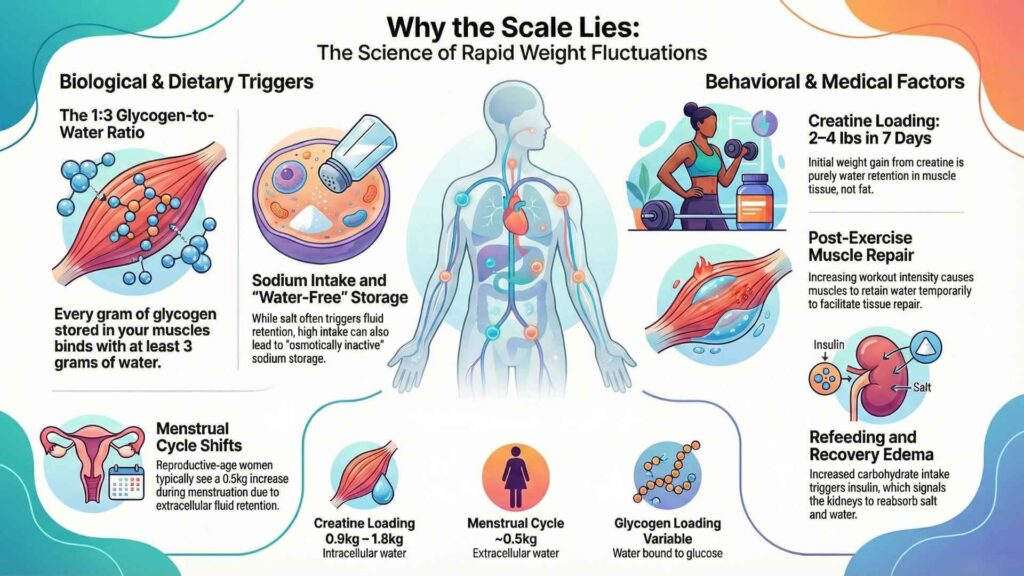
The Morning Scale Shock: Why Your Weight Fluctuates So Fast?
Table of Contents
- 1 The Morning Scale Shock: Why Your Weight Fluctuates So Fast?
- 2 Understanding the Difference: Muscle Gain, Fat Gain, and Water Weight
- 3 Why “Dirty Bulking” with Junk Food is a Dangerous Shortcut?
- 4 The Science of Healthy Weight Gain: How Many Calories Do You Really Need?
- 5 Top 5 High-Calorie Indian Superfoods to Include in Your Diet
- 6 A Balanced 3,500 Calorie Indian Weight Gain Diet Chart
- 7 Common Weight Gain Mistakes: From Overeating to Ignoring Sleep?
- 8 Progress Takes Patience: Why Sustainable Growth Beats a Quick Fix?
- 9 Frequently Asked Questions (FAQs)
It can be incredibly disheartening to see a massive jump on the scale overnight. However, I want to reassure you that your body is not a static machine. In other words, weight fluctuations are a normal part of human biology.
Specifically, if you are looking for fast weight gain for Indians, you must first understand the “Glycogen Factor.” Because Indian diets are rich in carbohydrates like rice and rotis, your body stores these as glycogen. Interestingly, every gram of glycogen is chemically bonded to approximately 3 to 4 grams of water. Consequently, a sudden increase in calorie intake from Indian high calorie foods can cause a temporary 2 kg spike that isn’t fat at all.
Furthermore, sodium is a major culprit in Indian kitchens. For instance, enjoying pickles, papads, or heavy restaurant gravies leads to significant water retention. Specifically, the salt pulls water into your cells, which makes you look and feel heavier by the next morning.
Understanding the Difference: Muscle Gain, Fat Gain, and Water Weight
To achieve a healthy transformation, we need to distinguish between high-quality mass and temporary fluid shifts. While you might wonder, “Can I gain 3 kg in a week?“, the biological reality of tissue growth is a much slower process.
Let’s look at the mathematical reality. To gain just 1 kg of actual body fat, you need an extra 7,700 calories. Therefore, to achieve the goal of how to increase weight quickly by 3 kg, you would need to eat an extra 23,100 calories in seven days. For a busy professional, consuming this much on top of regular meals is nearly impossible and physically taxing.
On the other hand, muscle gain is even slower. Even with the best healthy weight gain tips, a beginner might only build 0.5 to 1 kg of pure muscle in an entire month. What this means for your daily routine is that any “weight” gained in a single week is mostly water and food volume.
| Type of Mass | Weekly Potential | Caloric Requirement | Stability on Scale |
| Water Weight | 1–3 kg | 0 kcal (Sodium/Carbs) | Highly Volatile |
| Body Fat | 0.25–0.5 kg | ~3,500 extra kcal | Stable |
| Lean Muscle | 0.1–0.2 kg | High Protein + Stimulus | Very Stable |

Why “Dirty Bulking” with Junk Food is a Dangerous Shortcut?
In my experience, many people try to force the scale up by eating “dirty” foods. I know it is tempting to reach for samosas, jalebis, or extra-large pizzas, but this is a dangerous shortcut.
The latest ICMR-NIN guidelines state that 56.4% of the disease burden in India is due to unhealthy diets. Specifically, ultra-processed foods are loaded with trans fats and refined sugars. As a result, this leads to visceral fat—the dangerous fat around your organs—rather than healthy mass.
Additionally, for those managing PCOS, diabetes, or BP, this approach is disastrous. High-sugar foods trigger massive insulin spikes. Consequently, this can worsen hormonal imbalances and lead to increased facial hair or irregular cycles in women.
The Science of Healthy Weight Gain: How Many Calories Do You Really Need?
Let’s simplify this: the most effective way to grow is through a controlled caloric surplus. Instead of worrying, “Can I gain 3 kg in a week?“, a better goal is to aim for a steady 0.5 kg increase.
To calculate your target, you first need to find your maintenance calories. According to the National Health Service (NHS), adding 300 to 500 calories above maintenance is the standard for steady growth.
Daily Intake = Maintenance Calories + 500 kcal
By adding 500 calories daily, you create a total weekly surplus of 3,500 calories. Theoretically, this leads to half a kilo of gain. While this sounds slow, it ensures that the weight stays on and consists of healthy tissue rather than just bloat.
Top 5 High-Calorie Indian Superfoods to Include in Your Diet
If you are a busy professional or homemaker, you don’t need fancy supplements. In fact, your Indian kitchen is already full of Indian high calorie foods that support natural growth.
- Paneer: This is a vegetarian goldmine. 100 grams of paneer provides nearly 265 calories and 20g of protein.
- Desi Ghee: A single tablespoon adds 110-120 calories. I recommend adding it to your dals and rotis to boost energy without increasing meal volume.
- Soaked Almonds and Walnuts: These are compact sources of healthy fats. They provide minerals like magnesium, which helps manage blood sugar for those with diabetes.
- Bananas: These are the ultimate portable snacks for fast weight gain for Indians. One large banana offers 105-110 calories and potassium, which is essential for managing blood pressure.
- Whole Pulses (Rajma/Chole): These are packed with complex carbs and protein. They provide the “fuel” your muscles need without causing sharp sugar spikes.

A Balanced 3,500 Calorie Indian Weight Gain Diet Chart
To hit a high-calorie target, you must shift from three large meals to 5-6 smaller, frequent feedings. This prevents the “heavy” feeling that often stops small eaters from finishing their plates.
- Early Morning (7:00 AM): 1 glass full-fat milk + 10 soaked almonds + 2 dates.
- Breakfast (8:30 AM): 2 Stuffed Paneer Parathas with 1 tsp Ghee + 1 bowl thick curd.
- Mid-Morning Snack (11:00 AM): 1 large banana or a handful of roasted makhana with peanuts.
- Lunch (1:30 PM): 1.5 cups Brown Rice + 1 cup Rajma or Chicken Curry + 1 cup stir-fry vegetables + Ghee.
- Evening Snack (4:30 PM): 1 glass Mango/Banana Smoothie with honey or 2 slices of peanut butter toast.
- Dinner (8:00 PM): 2 Multigrain Rotis + 100g Paneer or Fish + 1 bowl Dal + Salad.
- Bedtime (10:00 PM): 1 glass warm milk with 1/2 tsp Ashwagandha and a pinch of turmeric.
Medical Adjustments:
- Thyroid: Switch to rock salt (Sendha Namak) and avoid raw cruciferous vegetables like cabbage.
- Hypertension (BP): Strictly avoid pickles, papads, and salted butter. Use lemon and herbs for flavor instead.
- PCOS/Diabetes: Focus on Ragi and Bajra to manage insulin resistance.
Common Weight Gain Mistakes: From Overeating to Ignoring Sleep?
I know it’s hard to find time, but skipping sleep is the fastest way to stall your progress. The body synthesizes new tissue primarily during rest. Research from Harvard suggests that poor sleep (less than 7 hours) is associated with metabolic dysfunction.
Additionally, drinking water immediately before a meal can fill the stomach, reducing your appetite for calorie-dense solid foods. Consequently, you should drink water at least 30 minutes before or after eating.
Finally, don’t ignore physical activity. Even if you don’t go to the gym, simple movements like Surya Namaskar or brisk walking help stimulate your appetite and ensure the calories build muscle rather than just belly fat.
Progress Takes Patience: Why Sustainable Growth Beats a Quick Fix?
The quest to gain 3 kg in a week is often born from a desire for quick results, but our bodies have limits. Attempting to force the scale upward through excessive eating of poor-quality foods leads to metabolic stress.
By following a research-backed weight gain diet chart and using healthy weight gain tips, you can build a stronger body that lasts. Furthermore, traditional Indian wisdom—like using Ashwagandha to lower stress and Ghee to improve digestion—helps you gain mass naturally.
In simple terms, you should focus on the quality of your gain. Remember, the answer to “Can I gain 3 kg in a week?” is that while the scale might move, real health takes consistency.

Frequently Asked Questions (FAQs)
Is it normal to see the scale jump by 3 kg in a few days?
Yes, it is common to see a spike after a few days of high salt or carb intake. This is almost entirely due to water retention and glycogen loading, not actual body fat.
Can I gain 3 kg in a week safely?
While the scale may show a 3 kg increase, only about 0.5 kg can be actual tissue. The rest is usually water. Trying to gain more through “dirty bulking” can harm your metabolic health.
How can I increase weight quickly at home without a gym?
Focus on nutrient-dense foods like ghee, paneer, and nuts. Incorporate home-based resistance exercises like squats and yoga to stimulate your appetite and build muscle.
What are the best Indian high calorie foods for vegetarians?
Top choices include paneer, full-fat milk, desi ghee, almonds, dates, and pulses like rajma and chole. These provide high calories along with essential proteins.
Does stress stop me from gaining weight?
Yes. High stress increases cortisol, which can suppress appetite or lead to unhealthy fat storage. Adaptogenic herbs like Ashwagandha can help manage this naturally.

Ready for a Healthy Transformation? Get Your Custom Plan from Diet Dekho
Gaining weight the right way requires a strategy that respects your body’s unique needs and medical history. A plan that works for a busy professional may not work for someone managing PCOS or diabetes.
Get a Personalized Macro-Balanced Plan with a Diet Dekho Expert
Our experts provide research-backed guidance to help you navigate your weight gain journey with confidence and clarity.
Start Your Journey to Holistic Health with a Diet Dekho Consultant
Visit https://dietdekho.com/form/ to fill out our consultation form and begin your personalized health transformation today.
Disclaimer:
This blog post was written to help you make healthier food choices altogether. So, be aware and take care. The important thing to consider is your health before starting a restrictive diet. Always seek advice from a doctor or dietitian before starting if you have any concerns.
BOOK YOUR APPOINTMENT
Dr. Ritika is a nutrition and lifestyle expert with 2+ years of experience, helping clients manage weight and health through practical, personalized diet plans.