
Imagine waking up to the loud whistle of a pressure cooker while simultaneously checking your phone for work emails that arrived at midnight. I know it’s hard to find time for yourself when everyone else’s needs come first, but that tightness in your chest or that dull morning headache is your body’s way of asking for a breather. If you’ve been told your numbers are high, don’t worry because we are going to fix this together. This isn’t about running marathons or eating bland food; it’s about finding a gentle, sustainable routine for BP that fits into your actual life as a busy professional or a dedicated homemaker.
A healthy daily routine for BP focuses on starting your day with hydration and deep breathing, like Bhramari Pranayama, to calm your nerves. It includes eating a DASH-inspired Indian diet rich in potassium and fiber while keeping salt low. Adding a 40-minute brisk walk and ensuring consistent sleep helps stabilize your blood pressure and protects your heart naturally.
Why Your Daily Routine for BP is Your Best Medicine
Table of Contents
- 1 Why Your Daily Routine for BP is Your Best Medicine
- 2 The First Hour: Setting a Soft Tone for Your Heart
- 3 The DASH Diet: An Indian Twist on Heart-Healthy Eating
- 4 A 7-Day Indian Meal Plan for a Better Routine for BP
- 5 The Busy Professional’s Guide to Staying Active
- 6 The Homemaker’s Heart: Making Chores Count
- 7 Move Your Body: The 40-Minute Daily Walk
- 8 Sleep: The Overlooked Pillar of Your Routine for BP
- 9 Monitoring and Maintenance: Staying on Track
- 10 FAQs
- 11 Contact Us
- 12 Disclaimer
What this means for your daily routine is that every small choice you make from the moment you wake up acts like a natural shield for your arteries. In India, we are facing a bit of a crisis where one in every four adults has high blood pressure, and sadly, over half of them don’t even know it. Hypertension is often called a silent killer because it doesn’t always show symptoms, but it silently puts pressure on your heart, kidneys, and even your eyes.

Let’s simplify this. Your blood vessels are like the pipes in your home. When the pressure is too high for too long, the pipes start to wear down. In our bodies, this leads to stiff arteries and an overworked heart. Recent studies from the ICMR and NFHS-5 show that about 28.1% of Indians are struggling with this, and the numbers are rising even in rural areas because our lifestyles have changed so much.
The good news is that about 20% of people can bring their levels down to normal just by changing their diet and movement. You don’t always need complex medical solutions; sometimes you just need consistency. Research published in The Lancet and BMJ confirms that simple things like cutting salt can lead to massive drops in heart disease across the board.
| Hypertension Statistics in India | Data Point | Source |
| Overall Prevalence (Adults) | 22.6% – 28.1% | |
| Men with Hypertension | 24.1% – 38.7% | |
| Women with Hypertension | 21.2% – 32.6% | |
| Control Rate (Successfully Managed) | ~12.6% | |
| Awareness Rate (Known Cases) | ~27.9% |

The First Hour: Setting a Soft Tone for Your Heart
I want you to think of your morning as a way of easing into the day rather than jumping into a fire. When you start your day in a rush, your body releases stress hormones like cortisol and adrenaline, which immediately tighten your blood vessels and make your heart beat faster.
The Magic of Morning Hydration
The very first thing you should do after waking up is sip a glass of water slowly. Your body wakes up slightly dehydrated, which makes your blood a bit thicker and harder to pump. Drinking water acts like a quiet reset button. Many of my clients find that keeping a copper jug or a simple glass of water by the bedside makes this habit easier to stick to. Some even prefer saunf (fennel) water or jeera water, which helps with digestion and keeps the system cool.
Breathing Away the Pressure
Before you reach for your phone to check the news or WhatsApp, sit quietly for five minutes. I highly recommend Bhramari Pranayama, or bee breath. It’s a simple trick where you close your ears with your thumbs, place your fingers on your eyes, and make a low humming sound like a bee as you exhale. This vibration actually tells your nervous system to relax. Regular practice can even lower your readings by 4 to 5 points because it activates the vagus nerve, which is your body’s natural brake for the heart.
Moving Gently Without the Gym
You don’t need a heavy workout at 6:00 AM. In fact, gentle movement works better for stabilizing your numbers. Try some shoulder rotations, gentle spine stretches, or a five-minute walk around your house. These movements release the tension that builds up overnight, making it easier for blood to flow through your muscles. It’s like warming up a car engine before a long drive; it just makes everything run smoother.

The DASH Diet: An Indian Twist on Heart-Healthy Eating
I know it’s hard to imagine a life without spicy pickles or salty papads, but your routine for BP needs a kitchen makeover. We use the DASH plan, which stands for Dietary Approaches to Stop Hypertension. It’s basically a sustainable roadmap for heart health that focuses on fruits, vegetables, and whole grains.
The main goal here is to balance two minerals: sodium and potassium. Sodium (salt) makes your body hold onto water, which increases blood volume and raises pressure. Potassium does the opposite; it helps your kidneys flush out that extra salt and relaxes your blood vessel walls.
| DASH Diet Serving Guide | Daily Goal | Examples of Indian Foods |
| Whole Grains | 6-8 servings | Whole wheat roti, brown rice, daliya, bajra |
| Vegetables | 4-5 servings | Bhindi, lauki, palak, methi, carrots |
| Fruits | 4-5 servings | Banana, guava, papaya, pomegranate |
| Low-Fat Dairy | 2-3 servings | Plain curd, skimmed milk, buttermilk |
| Lean Protein | 2-3 servings | Moong dal, rajma, eggs, grilled chicken |
| Nuts & Seeds | 4-5 per week | Soaked almonds, walnuts, flax seeds |
Potassium-Rich Powerhouses
Let’s simplify this. To get more potassium, you should aim for a banana every day. A medium banana has about 422 mg of potassium, which is like a natural antidote to the salt you ate the night before. Other great options are coconut water, sweet potatoes, and amla. Amla is particularly great because it’s packed with Vitamin C and antioxidants that strengthen your blood vessels.
The Salt Trap and How to Avoid It
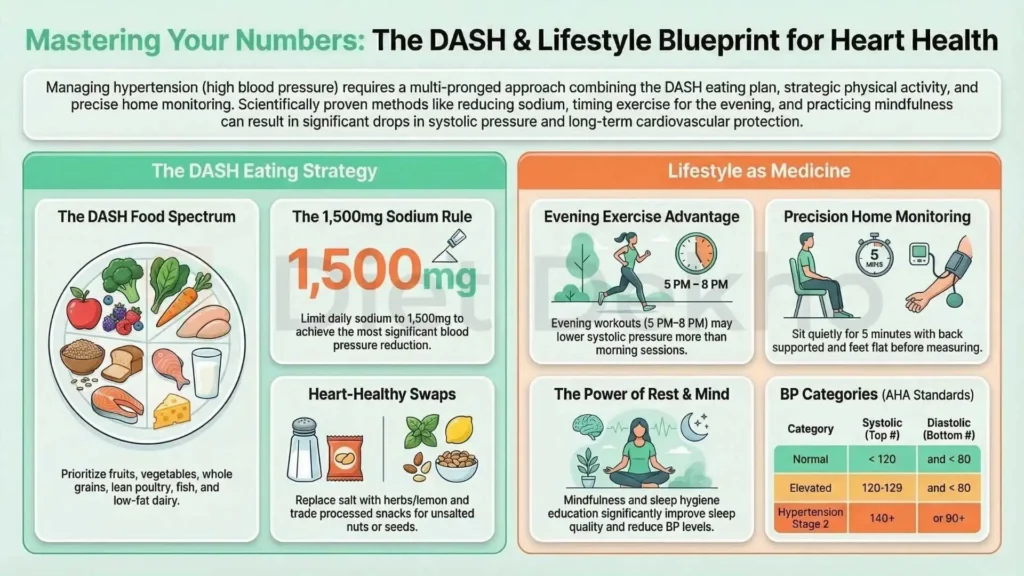
Most of the salt we eat isn’t what we add at the table; it’s hidden in things like bread, ketchups, and packaged snacks. Expert groups like the American Heart Association (AHA) suggest keeping your daily salt under 1,500 mg if you have high BP. You can find more details on sodium reduction at the National Institutes of Health (NIH).
Instead of salt, try using lemon, garlic, ginger, and herbs like mint or coriander. Garlic is especially magical because it has a compound called allicin that helps relax blood vessels, much like some BP medicines do.

A 7-Day Indian Meal Plan for a Better Routine for BP
I’ve put together a simple 7-day plan that uses common Indian ingredients. It’s designed to be low in salt but high in flavor, so you don’t feel like you’re on a restrictive diet.
| Day | Breakfast (Low Salt) | Lunch (Fiber Rich) | Evening Snack | Dinner (Light) |
| Mon | Oats Upma with veggies | Brown rice, arhar dal, bhindi | Roasted makhana | Phulka, lauki curry, salad |
| Tue | Moong dal chilla | Quinoa/Daliya, spinach dal | Sprouted moong bhel | Multigrain roti, pumpkin |
| Wed | Vegetable Poha | Millet khichdi with bottle gourd | Amla juice, roasted chana | Bajra roti, palak tofu |
| Thu | Besan toast (wheat bread) | Red rice, tur dal, cabbage | Coconut water | Ragi roti, mixed veg curry |
| Fri | Brown rice idli | Moong dal khichdi with palak | Mixed fruit salad | Soft phulka, ridge gourd |
| Sat | Rava Upma (no salt) | Barley pulao with methi | Unsalted almonds (4-5) | Whole wheat chapati, turnip |
| Sun | Ragi Dosa | Grilled tofu/chicken, pulao | Fresh fruit chaat | Veggie wrap (wheat) |
What this means for your daily routine is that you spend less time worrying about what to eat and more time enjoying fresh, home-cooked food. Cooking from scratch is the easiest way to control your salt intake because you are the boss of the salt shaker.

The Busy Professional’s Guide to Staying Active
I know it’s hard to find time for a 40-minute walk when you have back-to-back meetings. But sitting for too long is actually one of the reasons why our blood pressure stays high. When you sit, your blood flow slows down, and your body struggles to process sugar and fat.
The Five-Minute Office Hack
You don’t need a gym; you just need to move every hour. Research from Harvard Health suggests that even adding just five minutes of movement to your day can slightly lower your blood pressure. You can find more about these small lifestyle changes at Harvard Health.
- Standing Desk/Calls: Stand up whenever you take a phone call. It burns more calories and helps circulation.
- Seated Leg Raises: While sitting, straighten one leg under your desk and hold for 10 seconds. It works your thigh muscles and keeps the blood moving.
- Desk Push-Ups: Use your desk for support and do 10 slow push-ups. It’s a great way to wake up your body during a mid-afternoon slump.
Smart Snacking at Work
If you find yourself reaching for the office biscuits, try switching to walnuts or roasted chana. Walnuts are rich in omega-3 fats and magnesium, which are great for your arteries. I tell my clients to keep a small jar of unsalted nuts in their desk drawer so they aren’t tempted by the canteen’s fried snacks.

The Homemaker’s Heart: Making Chores Count
If you are a homemaker, your routine for BP is already full of physical activity. Whether it’s sweeping, gardening, or walking to the local market, these are all forms of low-impact exercise that strengthen your heart.
Household Chores as Cardio
Think of your daily tasks as a workout. When you sweep or mop, you are engaging your core and arms. Briskly walking through the house while tidying up can get your heart rate up just enough to count as aerobic activity. If you have stairs at home, climbing them is one of the best ways to improve your vascular health.
The Importance of a ‘Quiet Hour’
I know it’s hard when the kids or the in-laws need you, but your heart needs you to have some downtime. Stress is a major trigger for BP because it releases hormones that tighten your vessels. Make it a point to sit in a quiet corner for 10 minutes every afternoon. Close your eyes, practice some deep abdominal breathing, and just let your thoughts drift. This small break can lower your stress-driven pressure spikes significantly.
Move Your Body: The 40-Minute Daily Walk
Regular exercise is like a natural medicine for your heart. It makes your heart stronger, so it can pump more blood with less effort, which reduces the force on your arteries.
Why Walking is King
For most people, a brisk walk is the easiest and safest way to manage BP. I recommend a 40-minute walk every day, no exceptions. You don’t have to run; just walk at a pace where you can still talk but would find it hard to sing a full song. This intensity is perfect for improving your blood circulation and helping your arteries stay flexible.
Other Enjoyable Ways to Move
If walking isn’t your thing, there are plenty of other options that don’t feel like a chore:
- Cycling: A steady ride improves heart health without being overwhelming.
- Dancing: Turn on your favorite music in the living room and move. It’s a great stress-buster and a fun way to lower your numbers.
- Yoga: Poses like the Child’s Pose (Balasana) or the Cobra Pose (Bhujangasana) are gentle on the body but powerful for the heart.
| Exercise Type | Recommended Duration | Benefit for BP |
| Brisk Walking | 30-40 mins daily | Lowers SBP/DBP by 5-8 mm Hg |
| Yoga/Pranayama | 15-20 mins daily | Activates parasympathetic nervous system |
| Cycling/Swimming | 30 mins, 3x a week | Improves arterial flexibility |
| Desk Exercises | 5 mins every hour | Counteracts sedentary damage |
Sleep: The Overlooked Pillar of Your Routine for BP
I often find that my clients focus so much on diet and exercise that they forget about sleep. But a regular sleep schedule is vital for a healthy heart. When you don’t sleep enough, your body stays in a state of high alert, which keeps your blood pressure elevated throughout the night.
The Circadian Rhythm Connection
Every organ in your body, including your heart, follows a natural clock called the circadian rhythm. Going to bed and waking up at the same time every day helps this clock stay aligned, which reduces stress on your heart. Inconsistent sleep, like staying up late on weekends, can cause your BP to fluctuate unpredictably.
Creating a Sleep Sanctuary
To help your heart settle down for the night, try these simple tips:
- Turn off screens: Blue light from phones keeps your brain awake. Try to put them away at least an hour before bed.
- Cool and dark: Keep your bedroom cool and dark to signal to your body that it’s time to rest.
- Nighttime ritual: A few minutes of meditation or listening to soft music can help your heart rate slow down before you drift off.
Monitoring and Maintenance: Staying on Track
What this means for your daily routine is that you become the expert on your own body. Monitoring your numbers at home is a great way to see how your new habits are working.
How to Check Your BP at Home
Don’t panic if you see a single high reading; blood pressure naturally fluctuates throughout the day. To get an accurate reading:
- Sit quietly for five minutes before taking the measurement.
- Keep your feet flat on the floor and your arm supported at heart level.
- Take two readings, five minutes apart, and note them down in a diary.
Consistency Over Perfection
I know it’s hard to be perfect every day. If you have a salty meal or miss your walk, don’t beat yourself up. Just try your best to keep the average of several days close to your goal. Consistency is what matters most. Following a routine for BP for just ten weeks can lead to significant improvements in your overall well-being.
FAQs
What is the best morning routine for blood pressure?
The best morning routine for BP starts with slow hydration (a glass of water) and five to ten minutes of deep breathing or Bhramari Pranayama. Following this with a low-salt, high-fiber breakfast like oats or vegetable poha helps stabilize your heart rate and energy levels for the day.
Can I lower my BP without going to the gym?
Absolutely. Brisk walking for 40 minutes daily, practicing gentle yoga, and even doing household chores or desk exercises can effectively lower your numbers. The goal is 150 minutes of moderate movement per week, which can be broken down into small 10-minute sessions throughout the day.
How does the DASH diet help in a daily routine for BP?
The DASH diet lowers blood pressure by reducing sodium and increasing heart-friendly minerals like potassium, calcium, and magnesium. It encourages eating more fruits, vegetables, and whole grains while cutting back on fried snacks, pickles, and sugary drinks that cause fluid retention and arterial stress.
Why is salt so dangerous for my routine for BP?
Salt contains sodium, which makes your body hold onto extra water. This extra fluid increases the volume of blood your heart has to pump, putting more pressure on your artery walls. Reducing salt to less than 1,500 mg daily can lower your systolic pressure by several points within just two weeks.
What Indian spices are good for blood pressure?
Garlic is one of the best spices for BP as it helps dilate blood vessels. Turmeric (haldi) has anti-inflammatory properties, and ginger helps improve circulation. Using these spices along with lemon, cumin, and coriander allows you to flavor your food without needing extra salt.
Contact Us
We understand how overwhelming nutrition and weight loss information can feel. With so many opinions and confusing advice online, it’s easy to feel stuck or unsure about what to do next.
At Diet Dekho, you never have to figure it out alone. You can contact us anytime with any questions or concerns. Our expert dietitians are available 24/7 to guide, support, and help you stay on track. Whether your goal is weight loss or building healthier habits, we’re here to make the journey simpler and more sustainable for you.
Disclaimer
This blog is intended to help readers make healthier food choices. Your health should always be the top priority. Before starting any restrictive or special diet, especially if you have a medical condition or health concern, please consult a doctor or a qualified dietitian. Each body responds differently to food and lifestyle changes. Always choose what is safe and suitable for you.

Abhinav is the Founder of Diet Dekho, helping people manage weight and lifestyle health through simple, practical nutrition and personalized diet plans.