
I remember sitting with a mother of two last week who was nearly in tears because she felt she had to choose between her health and her heritage. She loved her family Sunday brunches but felt like every bite of paratha was a step toward a hospital bed. If you have ever felt that way, I want you to know that your diagnosis does not mean the end of delicious food. Finding a practical diabetic diet pdf is about learning how to keep the flavors you love while changing how they affect your body.
A diabetic diet pdf is a structured meal planning resource that focuses on low glycemic index foods, fiber rich Indian grains, and portion control to stabilize blood glucose. By following a plan that prioritizes 50% whole grains and 400g of daily vegetables, you can reduce HbA1c levels and manage insulin resistance effectively.
Understanding the Indian Diabetes Crisis through Data
Table of Contents
- 1 Understanding the Indian Diabetes Crisis through Data
- 2 The Physiology of the Thin-Fat Indian Phenotype
- 3 New ICMR 2024 Guidelines for a Healthier India
- 4 Decoding the Glycemic Index for Indian Staples
- 5 The Power of the Plate Method
- 6 Breakfast: Setting the Tone for the Day
- 7 Lunch: Tiffin Solutions for Busy Professionals
- 8 Snacking: Managing the 4 PM Hunger Trap
- 9 Dinner: Light Meals for Better Sleep
- 10 The 2-Year Reversal Window for Prediabetes
- 11 Managing the Hidden Salt and Sugar in Indian Foods
- 12 Physical Activity for the Non-Gym Audience
- 13 Hydration and its Role in Diabetes
- 14 Regional Indian Diet Variations
- 15 Cooking for the Whole Family Without Extra Work
- 16 The Role of Fiber in Gut Health and Metabolism
- 17 Managing Diabetes During Festivals and Weddings
- 18 A Final Word of Encouragement
- 19 Frequently Asked Questions
- 20 Contact Us
- 21 Disclaimer
I know it is hard to find time to look at statistics when you are busy with work and home, but the numbers tell a story we need to hear. India is currently home to over 101 million people living with diabetes and another 136 million in the prediabetic stage. What this means for your daily routine is that we are living in a landscape where nearly one in four people is dealing with blood sugar challenges. This is not just about genetics. It is about how our traditional high carbohydrate diets are interacting with modern, less active lifestyles.

The ICMR-INDIAB study revealed that the average Indian diet consists of 62.3% carbohydrates, which is among the highest in the world. Most of these are low quality carbs like white rice and refined wheat. In states like Puducherry and Odisha, the prevalence of high blood sugar is as high as 63% and 61% . These figures might feel overwhelming, but they also show that we are all in this together. Let’s simplify the science so you can start making changes that actually work for your specific situation.
| State or Region | Diabetes Prevalence Percentage | Prediabetes Prevalence Percentage |
| National Average | 11.4% | 15.3% |
| Puducherry | 63.0% | Data not specified |
| Odisha | 61.0% | Data not specified |
| Tamil Nadu | 56.0% | Data not specified |
| Himachal Pradesh | 41.0% | Data not specified |
These statistics are provided by the ICMR-INDIAB study and PharmEasy lab data.
The Physiology of the Thin-Fat Indian Phenotype
I often hear clients ask why they have diabetes even though they are not in higher body weight. This is a very common concern in our country. Many South Asians have what researchers call the thin-fat phenotype. This means you might have a normal weight or BMI but still carry a high percentage of internal body fat, especially around the liver and pancreas. This internal fat makes your cells resistant to insulin, the hormone that helps sugar enter your cells for energy.
When your cells stop responding to insulin, sugar stays in your blood. Over time, this causes inflammation and damage to your blood vessels. What this means for your daily routine is that we cannot just look at the scale to judge health. We have to look at how we nourish our internal organs. Young-onset diabetes is twice as common in India compared to Europe, often occurring in people with a lean frame. A well structured diabetic diet pdf focuses on reducing this internal fat by emphasizing fiber and plant based proteins.

New ICMR 2024 Guidelines for a Healthier India
The Indian Council of Medical Research recently updated its dietary guidelines to help us fight this epidemic. These are not just rules. They are a roadmap to a longer, healthier life. The 2024 guidelines represent a major shift from the 2011 versions. For example, the recommended daily vegetable intake has increased by 33%. They now suggest eating 400g of vegetables every day, with at least 100g being green leafy varieties.
The guidelines also set a clear target for grains. They recommend that 50% of your cereal intake should come from whole grains rather than refined flours like maida. This is because whole grains contain the bran and germ, which are packed with fiber that slows down sugar absorption. They also suggest limiting added sugar to less than 5% of your total daily calories. For a person eating 2000 calories, that is only about 25 grams of sugar a day.
| Dietary Aspect | 2011 Recommendation | 2024 Recommendation | Significance |
| Total Vegetables | 300g/day | 400g/day | Micronutrient density |
| Green Leafy Veg | 50g/day | 100g/day | Iron and folate intake |
| Whole Grain Ratio | General preference | 50% of cereal intake | Glycemic control |
| Added Sugar Limit | General restriction | <5% of total calories | Obesity prevention |
| Daily Salt Intake | <5g/day | <5g/day with processed food limits | Hypertension control |
| Daily Fiber Target | General | 25-30g/day | Digestive health |

Decoding the Glycemic Index for Indian Staples
I know it sounds like a medical term, but the Glycemic Index or GI is just a way to measure how fast a food turns into sugar in your blood. High GI foods like white rice or maida are like a sudden flood of sugar. Low GI foods like chana dal or ragi are like a slow, steady stream. For anyone looking at a sugar diet pdf, choosing low GI foods is the most important step.
| Food Item | Glycemic Index Category | Better Alternative |
| White Rice | High (70+) | Brown Rice or Millets |
| White Bread | High (70+) | Multigrain or Seeded Bread |
| Refined Flour (Maida) | High (70+) | Chickpea Flour (Besan) |
| Corn Flakes | High (70+) | Rolled Oats or Steel Cut Oats |
| Potatoes | High (70+) | Sweet Potatoes or Yams |
What this means for your daily routine is that you do not have to stop eating grains. You just have to choose the ones that your body can process slowly. For example, switching from a white rice idli to a ragi idli can make a massive difference in your post meal sugar readings.

The Power of the Plate Method
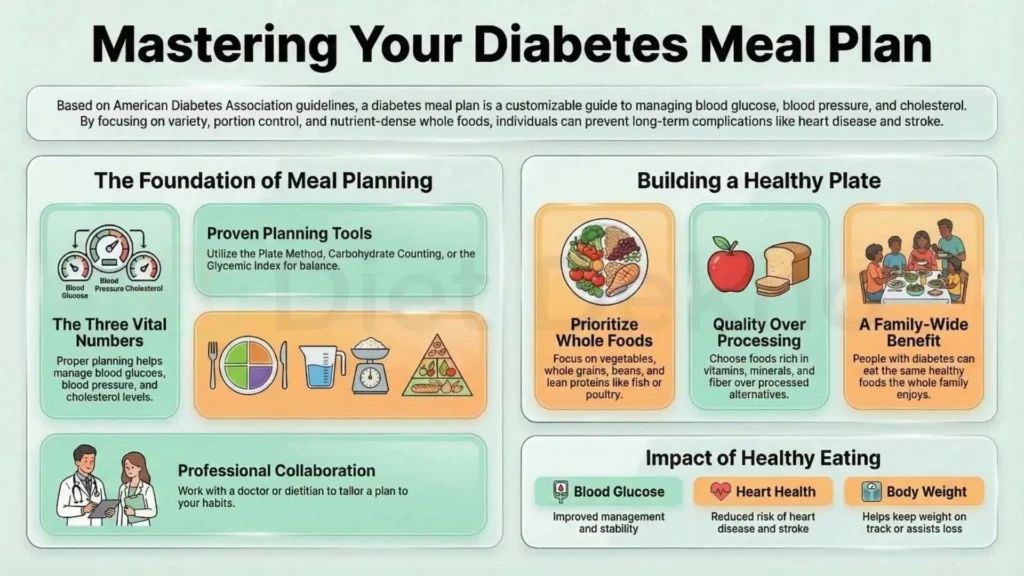
Let’s simplify this so you can use it at every meal without a calculator. The Plate Method is a visual guide recommended by the NIH and the American Diabetes Association. Take a standard 9-inch dinner plate and divide it into sections. This ensures you get the nutrients you need without overeating the things that spike your sugar.
- Half of the Plate: Fill this with non-starchy vegetables. This includes things like spinach, cauliflower, cabbage, beans, and cucumbers. These are high in volume but very low in calories and sugar.
- One-Quarter of the Plate: Fill this with a lean protein. For vegetarians, this could be dal, sprouts, paneer, or tofu. For non-vegetarians, this is where your fish or chicken goes.
- One-Quarter of the Plate: Fill this with a complex carbohydrate. This is your one small roti or a small portion of brown rice or millets.
By following this simple visual, you are automatically controlling your portions. I know it’s hard to change how you serve food, but using a smaller 8-inch or 9-inch plate instead of a large 12-inch thali can also trick your brain into feeling satisfied with less.
Breakfast: Setting the Tone for the Day
Your first meal determines how your sugar will behave for the next several hours. A high carb breakfast like white bread and jam will cause a spike and then a crash, leaving you tired and hungry by 11 AM. I recommend starting with a protein and fiber rich breakfast.
- Besan Chilla: Use gram flour mixed with plenty of chopped onions, tomatoes, and spinach. This is a high protein and low GI option that keeps you full.
- Vegetable Daliya: Broken wheat cooked with carrots, peas, and beans provides slow releasing energy.
- Moong Dal Sprouts: A refreshing bowl of sprouts with lemon and cucumber is a perfect light start.
- Eggs: Scrambled eggs or an omelet with vegetables are excellent because they have almost zero carbohydrates and won’t spike your sugar at all.
What this means for your daily routine is that a savory breakfast is almost always better for your blood sugar than a sweet one. Avoid sweetened cereals or packaged breakfast bars which are often full of hidden sugars.

Lunch: Tiffin Solutions for Busy Professionals
I know it is hard to find time to eat a healthy lunch when you are at the office or stuck in meetings. Many professionals rely on office canteens or delivery apps, which often use low quality oils and hidden salts. A homemade tiffin is your best defense.
- The Tiffin Structure: Pack one small box of dal or paneer, one large box of a dry vegetable like bhindi or lauki, and one or two small multigrain rotis.
- One-Pot Meals: If you are in a rush, a vegetable and millet khichdi is easy to pack and stays fresh for hours.
- The Salad Hack: Pack a small container of sliced cucumbers and carrots. Eat these five minutes before you eat your main lunch. The fiber will create a gel in your stomach that slows down the absorption of the carbs in your meal.
If you must eat out, try to order a clear soup or a green salad first. For the main course, choose grilled or roasted items rather than heavy gravies or fried foods. Avoid sugary drinks like sodas or sweet lassi during lunch, as these can cause massive glucose spikes.

Snacking: Managing the 4 PM Hunger Trap
This is the time when most people reach for biscuits, namkeen, or samosas. I call this the danger zone. These snacks are usually made of refined flour and fried in unhealthy oils, causing your sugar to skyrocket just before dinner.
- Roasted Makhana: These are low in calories and have a satisfying crunch. Roast them in a little ghee with salt and pepper.
- Handful of Nuts: Almonds and walnuts provide healthy fats and protein that stabilize your sugar levels.
- Roasted Chana: A classic Indian snack that is very high in fiber and protein.
- Sprouts Chaat: A small bowl of steamed sprouts with a dash of chaat masala can be very satisfying.
What this means for your daily routine is that you should always carry a small box of healthy snacks in your bag. When you have a planned snack, you are less likely to make impulsive, unhealthy choices when your energy dips in the afternoon.
Dinner: Light Meals for Better Sleep
Your body’s insulin sensitivity is usually lower in the evening. This means that if you eat a heavy, high carb dinner, your sugar will stay high all night, making it harder for your body to repair itself. I recommend keeping dinner the lightest meal of the day.
- Soup and Stir-fry: A bowl of lentil soup or moong dal with a large plate of sautéed vegetables is an excellent choice.
- Paneer or Tofu: These provide protein without many carbs. Sauté them with bell peppers and onions for a quick, filling meal.
- Avoid the Rice-Roti Combo: Many Indian households serve both rice and roti at dinner. This is a double hit of carbohydrates that your body does not need before sleep. Choose only one, and keep the portion small.
Try to eat your dinner at least two to three hours before you go to bed. This gives your body time to process the food and helps you wake up with better fasting sugar levels the next morning.

The 2-Year Reversal Window for Prediabetes
There is an incredible piece of research that every Indian should know. If you are in the prediabetic stage, you have a critical two-year window to reverse the condition. During this time, your body is still very responsive to lifestyle changes. If you take action within these first 24 months, you have nearly a 60% chance of returning to normal blood sugar levels.
This reversal is achieved by three main pillars: losing 5-10% of your body weight if you are in higher body weight, getting 150 minutes of physical activity a week, and following a structured diabetic diet pdf. What this means for your daily routine is that the effort you put in today can prevent a lifetime of medication later. It is about catching the problem before it becomes a permanent diagnosis.
Managing the Hidden Salt and Sugar in Indian Foods
I know we love our pickles and chutneys, but they can be a hidden source of trouble. Many traditional Indian pickles are very high in sodium, which can increase your blood pressure. Since diabetes already puts a strain on your heart and kidneys, managing salt is just as important as managing sugar.
- Pickle Alternatives: Instead of oily pickles, try a fresh chutney made of mint, coriander, and lemon. This provides flavor and antioxidants without the excess salt and oil.
- Hidden Sugars: Be careful with condiments like tomato ketchup or certain ready-to-eat sauces. They are often loaded with sugar to make them taste better. Always check the nutrition label for added sugars.
- Natural Sweeteners: If you have a sweet tooth, try using a little bit of stevia or small amounts of whole fruit. Avoid jaggery and honey in large amounts because they still cause significant sugar spikes.
Physical Activity for the Non-Gym Audience
I know it is hard to find time for a gym membership, and many of my clients feel intimidated by workout machines. Let’s simplify this. Your body does not know the difference between a treadmill and a brisk walk in the park or even vigorous house cleaning.
- Household Chores: Mopping the floor, sweeping, or hand-washing clothes are all forms of physical activity. If you do them with a bit more intensity, they can help lower your blood sugar.
- The 10-Minute Rule: If you cannot find 30 minutes for a walk, do 10 minutes after every main meal. This is actually more effective at controlling post-meal sugar spikes than one long walk in the morning.
- Strength Training at Home: You can use one-liter water bottles as weights for arm exercises or do squats while waiting for the pressure cooker to whistle. Building even a little muscle helps your body burn sugar more efficiently.
What this means for your daily routine is that every step counts. Whether you take the stairs instead of the elevator or walk while talking on the phone, you are helping your body manage its glucose levels.
Hydration and its Role in Diabetes
I often find that people forget how important water is for managing sugar. When you are dehydrated, the sugar in your blood becomes more concentrated, leading to higher readings. The 2024 ICMR guidelines recommend drinking 8 to 12 glasses of water daily.
- Avoid Sugary Beverages: Sodas, fruit juices, and energy drinks are the fastest way to spike your sugar. They have no fiber to slow down the absorption.
- Healthy Sips: If you find plain water boring, try buttermilk, coconut water, or water infused with slices of cucumber and mint. These are refreshing and have very few calories.
- The Hunger Trick: Sometimes when we feel hungry, we are actually just thirsty. Drink a glass of water and wait ten minutes before reaching for a snack. You might find the hunger passes.
Regional Indian Diet Variations
I know that India is a land of many cultures and flavors. A diabetic diet pdf should reflect what you eat at home. Whether you are in the North or South, there are healthy ways to enjoy your traditional foods.
North Indian Diet Adjustments
In the North, we love our rotis and parathas. Instead of plain wheat, try a mix of wheat, chana dal, and barley flours. This lowers the GI significantly. Instead of frying your parathas with lots of oil, use a non-stick pan and a tiny bit of ghee after the paratha is cooked. Pair your rajma or chole with brown rice or a small portion of multigrain roti.
South Indian Diet Adjustments
In the South, rice is the staple. To make your diet more diabetes friendly, try using red rice or brown rice instead of white polished rice. When making idli or dosa, increase the proportion of urad dal and add ground fenugreek (methi) seeds to the batter. You can also make adai which uses a variety of lentils and has a much lower GI than regular dosa.
West Indian Diet Adjustments
For my friends in Gujarat and Maharashtra, staples like thepla and pithla can be very healthy. Use plenty of methi leaves in your thepla and use multigrain flour. Avoid adding sugar or jaggery to your dals and vegetables, which is a common practice in many households. Instead, use spices like cinnamon or fennel to add a natural sweetness.
Cooking for the Whole Family Without Extra Work
I know it feels like a burden to cook separate meals for yourself. The good news is that the changes we are talking about are healthy for everyone, including children and healthy adults. A diabetic friendly diet is just a balanced diet.
- Add Extra Veggies: When making a family favorite like pav bhaji, add more cauliflower, carrots, and peas and reduce the amount of potato. Everyone will enjoy the flavor, but the glycemic load will be lower.
- The Brown Rice Shift: Start by mixing a little brown rice into the white rice for the whole family. Gradually increase the ratio. This way, the transition is easier for everyone to accept.
- Healthy Frying: If the family wants something fried, try an air fryer or use an appe pan. You get the same crispy texture with 90% less oil.
What this means for your daily routine is that you are not being deprived. You are leading your family toward a healthier future. By modeling these habits, you are helping your children avoid the same health challenges in the future.
The Role of Fiber in Gut Health and Metabolism
I cannot emphasize enough how important fiber is. The 2024 guidelines recommend 25-30g of fiber every day. Fiber is like a broom for your digestive system. It helps lower cholesterol, keeps you full, and most importantly, it prevents sugar from rushing into your blood.
| High Fiber Food | Fiber Content per Serving | Easy Way to Include it |
| Flax Seeds | 3g per tablespoon | Add to your roti dough or yogurt |
| Guava | 5g per medium fruit | Eat as a mid-morning snack |
| Chickpeas (Chana) | 8g per half cup | Use in salads or as a dry sabzi |
| Spinach | 4g per cooked cup | Add to dals, soups, or omelets |
| Oats | 4g per half cup | Use for breakfast or as an idli base |
If you are not used to eating much fiber, start slowly and drink plenty of water. Increasing fiber too quickly without enough water can cause bloating or constipation.
Managing Diabetes During Festivals and Weddings
I know it is hard to stay on track during Diwali, Eid, or family weddings. These events are often centered around high sugar sweets and fried foods. But you can still participate without derailing your progress.
- Choose the Best Sweets: If you must have a sweet, choose milk-based ones like chena podo or sandesh without extra syrup, or a small piece of dark chocolate. Avoid syrup-heavy sweets like gulab jamun or jalebi.
- The Half-Spoon Rule: If you want to taste something indulgent, take just one small bite or half a spoon. This allows you to enjoy the flavor without the massive glucose hit.
- Social Support: Let your friends and family know that you are managing your health. Most people will be supportive and won’t pressure you to eat things that are not good for you.
A Final Word of Encouragement
I know it feels like a lot to take in, but you don’t have to do everything at once. Start with just one change today. Maybe it’s swapping your white rice for a little more dal, or taking a ten-minute walk after your dinner. These small steps are the foundation of a much bigger transformation. You have the power to change your health story, and it starts with what you put on your plate today.
If you are looking for immediate, simple, and trustworthy dietary solutions tailored to your specific diabetes situation, we are here to help. You don’t have to navigate this alone. Let’s simplify your path to better health together.
Ready to start your journey?
Frequently Asked Questions
What is the best time to eat for a diabetic person?
Consistency is key. I recommend eating your meals at roughly the same time every day to help your body regulate insulin more effectively. Aim for a balanced lunch between 1 PM and 2 PM, and try to have a lighter dinner at least two hours before sleep.
Can I eat fruits if my sugar is high?
Yes, but you must be selective. Whole fruits are full of fiber which helps slow sugar absorption. Stick to fruits with a lower GI like apples, pears, guavas, and oranges. Avoid fruit juices as they have no fiber and spike sugar very quickly.
How much protein should I have daily?
The new guidelines suggest about 10-15% of your total calories should come from protein. For most people, this means including a protein source like dal, paneer, eggs, or lean meat at every single meal. Protein helps you feel full and stabilizes your blood sugar levels.
Are millets really better than wheat?
Yes, most millets like ragi, jowar, and bajra have more fiber and a lower GI than highly processed wheat or white rice. However, portion control is still important. Even healthy grains contain carbohydrates, so keep your portions to about one-quarter of your plate.
Can walking really replace the gym?
For managing blood sugar, regular walking is incredibly effective. A brisk 30-minute walk can lower your glucose for up to 24 hours. The goal is consistency. Moving your body every day is much better than a hard workout once a week.
Contact Us
We understand how overwhelming nutrition and weight loss information can feel. With so many opinions and confusing advice online, it’s easy to feel stuck or unsure about what to do next.
At Diet Dekho, you never have to figure it out alone. You can contact us anytime with any questions or concerns. Our expert dietitians are available 24/7 to guide, support, and help you stay on track. Whether your goal is weight loss or building healthier habits, we’re here to make the journey simpler and more sustainable for you.
Disclaimer
This blog is intended to help readers make healthier food choices. Your health should always be the top priority. Before starting any restrictive or special diet, especially if you have a medical condition or health concern, please consult a doctor or a qualified dietitian. Each body responds differently to food and lifestyle changes. Always choose what is safe and suitable for you.

Abhinav is the Founder of Diet Dekho, helping people manage weight and lifestyle health through simple, practical nutrition and personalized diet plans.