
What makes it challenging to lose weight even when adhering to a strict plan? A standard diet plan for weight loss doesn’t always take into account how Indian bodies store fat. Cultivating healthy eating habits is about more than just cutting calories. It is about matching our traditional food to our metabolic needs. This guide helps you navigate those challenges so you can reach your goals.
Losing 500 calories daily should be easy with the help of a good Indian diet plan. The recommended calorie breakdown is 45–55 percent complex carbohydrates, 15–25 percent lean protein, and 20–30 percent healthy fats. Lose belly fat and control PCOS, diabetes, hypertension, and niacin by eating 400 grams of vegetables every day and 400 grams of high-fiber food.
Why is losing weight so difficult despite following a strict diet?
Table of Contents
- 1 Why is losing weight so difficult despite following a strict diet?
- 2 What is the emotional struggle of weight plateaus in Indian households?
- 3 What are the common myths about Indian “superfoods” and crash dieting?
- 4 How does the science of a calorie deficit work in Indian meals?
- 5 What meal swaps can make Roti-Sabzi a meal that helps you lose weight?
- 6 What does a sample 24-hour Indian diet chart for weight loss look like?
- 7 How should one manage medical conditions in a diet chart for weight loss?
- 8 What are the three hidden mistakes that stall weight loss progress?
- 9 Why is consistency over perfection the biggest win for long-term health?
- 10 Frequently Asked Questions
- 11 Conclusion
The MONO phenotype is common among Indian people. The prevalence of this condition is 43.3%. It’s possible to look slim, but you may still have a lot of belly fat and a low mass. Being “thin-fat” or “thin-fat” means that your body doesn’t respond well to fat loss aids.
Our genetics often favor abdominal fat storage. Research shows that 44% of weight challenges come from high-calorie patterns. Many people rely on “low-quality” carbs like white rice and wheat. wheat. These grains cause insulin spikes. This signals your body to store fat instead of burning it. A generic diet chart for weight loss often fails if it doesn’t fix the choices.
What is the emotional struggle of weight plateaus in Indian households?
Weight loss in an Indian home is a family affair. For busy professionals and homemakers, food shows love and social connection. We often eat leftovers to avoid waste. We also snack during social visits. These habits undermine even the best diet plan for weight loss.
When the scale stops moving, it hurts to fail. Around 70% of Indian women have trouble keeping the weight off that they’ve lost. Hormonal changes that happen during menstruation or menopause. When you eat fewer calories, your body also changes how much energy it needs. This equation is how we figure out your Basal Metabolic Rate (BMR):
P=10×weight (kg)+6.25×height (cm)−5×age (y)−161
As you lose weight, your BMR drops. You must then adjust your routine to maintain progress. Understanding this science helps you stay motivated during a plateau. It shows that you aren’t failing; your body is just adapting.
What are the common myths about Indian “superfoods” and crash dieting?
Many people chase rapid results through “miracle” ingredients. One big debate involves Desi Ghee. Modern research shows that A2 ghee aids in fat metabolism. It contains uric acid, which improves gut health and helps you feel full.
People also think honey and lemon water “melts” fat. Lemon water helps with hydration and vitamin C. However, clinical data does not provide indirect evidence to support this claim. correctly. Honey is still a form of sugar. You must limit it to keep your diet chart for weight tracking.
| Common Diet Myth | Scientific Reality | Impact on Fat Loss |
| Skipping dinner burns fat | Skipping meals leads to late-night hunger and slow metabolism. | Increases cortisol and stalls progress. |
| Honey has zero calories | Honey contains 64 calories per tbsp and spikes insulin. | Excessive intake stops fat oxidation. |
| Ghee blocks heart health | Ghee provides energy and supports satiety. | Helps weight loss if you control portions. |
| Fruits are unlimited | Fruits contain fructose; too much can lead to fatty liver. | Can push you over your calorie limit. |
Crash diets, such as the GM diet, can be quite harmful. While you may lose 2–3 kg quickly, this weight loss is primarily muscle, which can slow down your metabolism. As a result, you are likely to regain the weight once you return to your normal eating habits. True healthy eating habits prioritize long-term health over quick fixes.
How does the science of a calorie deficit work in Indian meals?
Losing fat requires a consistent calorie deficit. You must burn more energy than you consume. we usually aim for a daily calorie deficit of 500 to lose 0.5 kg per week safely. But the most important thing for an Indian diet chart for weight loss is the quality of the food.
Refined carbs like maida and white rice can make your blood sugar levels go up. When insulin levels go up, the body tends to store extra sugar as fat, especially around the waist. We recommend switching to complex carbohydrates because they take longer to digest.These foods will give you energy all day and help keep your blood sugar levels steady.
| Macronutrient | Recommended % | Indian Source Examples |
| Complex Carbohydrates | 45% – 55% | Ragi, Jowar, Bajra, Oats |
| Lean Protein | 15% – 25% | Moong Dal, Paneer, Eggs, Fish |
| Healthy Fats | 20% – 30% | A2 Ghee, Walnuts, Mustard Oil |
You should try to get 25 to 30 grams of fiber every day. Fiber keeps you full and slows down how quickly sugar is absorbed.According to the 2024 ICMR-NIN guidelines, it is recommended to get 50% of your grains from whole sources. This procedure is the foundation of healthy habits.
What meal swaps can make Roti-Sabzi a meal that helps you lose weight?
Sustainable fat loss does not mean giving up your favorite flavors. Most Indian meals are heavy on carbs and low in protein. You can increase nutrition and lower calories with a few smart swaps.
Better Carb Choices for Insulin Control
Swap white foxtail for barnyard millet. Millets provide more fiber and minerals for metabolism. bolism. Use a multigrain flour with chana and jowar for your rotis. This technique reduces the glycemic load compared to wheat.
| Traditional Food | Weight Loss Alternative | Metabolic Advantage |
| White Rice | Brown or Red Rice | Higher fiber keeps you full longer. |
| Refined Wheat | Ragi or Bajra | Lowers insulin spikes effectively. |
| Potato (Aloo) | Bottle Gourd (Lauki) | Lauki is 90% water and very low-cal. |
| Heavy Cream | Low-fat Curd | Adds protein without the extra fat. |
| Samosa | Roasted Makhana | High-volume snack with more fiber. |
Let’s simplify this: steaming or grilling saves 100-200 calories compared to frying. I know it’s challenging to find time to cook differently. But reducing your daily oil from three spoons to one makes a huge difference. These are the healthy eating habits that lead to change.

What does a sample 24-hour Indian diet chart for weight loss look like?
Your diet chart for weight loss should prevent energy crashes. You need protein at every meal to preserve muscle and stay full. Here is a research-backed routine designed for an Indian lifestyle.
Daily Routine Example (15000–1500 Calories)
- Early Morning (7:00 AM): Warm lemon water with 5 soaked almonds. This gently wakes your system and provides fats.
- Breakfast (8:30 AM): 2 Moong dal chillas or vegetable oats upma. Starting with protein manages your hunger all day.
- Mid-Morning Snack (11:00 AM): 1 guava or apple. These fruits give you a fiber boost without sugar.
- Lunch (1:30 PM): 1 multigrain roti, 1 bowl of dal, and leafy green sabzi. Use the “half-plate” rule for vegetable calories.
- Evening Snack (4:30 PM): Buttermilk or green tea with makhana.
- Dinner (8:00 PM): 1 bowl of vegetable millet khichdi or grilled paneer with sautéed peppers. Light dinners support fat-burning sleep.
- Bedtime (10:00 PM): Warm ajwain water. This reduces bloating and improves your digestion overnight.
How should one manage medical conditions in a diet chart for weight loss?
Many people need a diet chart for weight loss while managing health issues. Standard advice may not always fit these specific needs.
Managing PCOD and PCOS
Insulin resistance and PCOS go hand in hand. You shouldn’t eat refined sugars or pre-made meals. Foods that lower inflammation, like cinnamon and turmeric, can help keep your hormones in check. These habits of eating well help you lose weight more often.
Hypothyroidism and Weight
In hypothyroidism, a slow metabolism makes the body hold on to water. That’s why you should eat foods that are high in fiber. Lentils are a beneficial way to get enough selenium. milk If you want to keep your function, you should always cook cruciferous vegetables like cabbage.
Hypertension and Diabetes
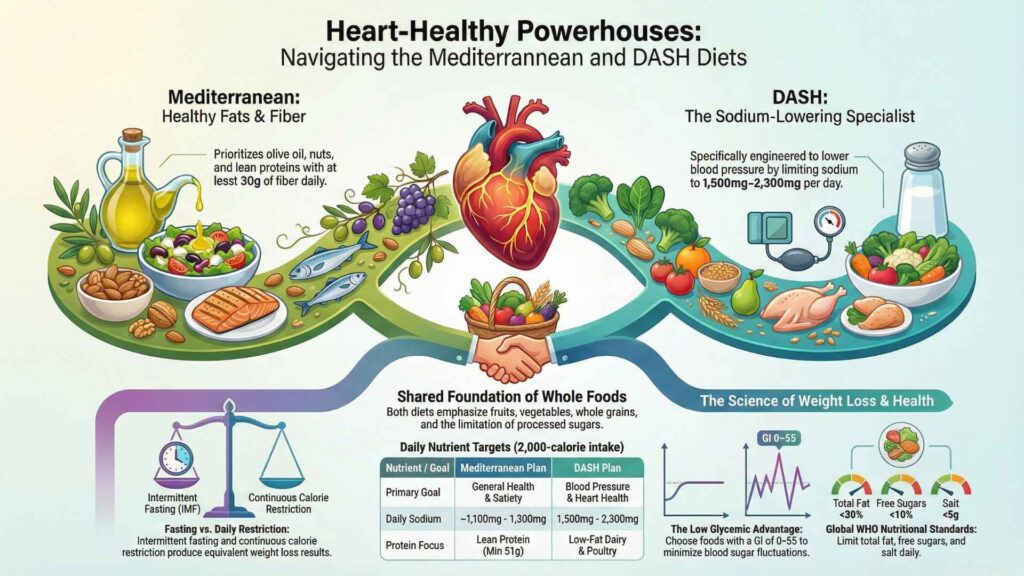
If you have high BP, limit your salt intake daily. The DASH diet is a good fit here. It focuses on potassium and magnesium from fruits and vegetables. greens. For diabetes, choose low-GI foods to keep your blood sugar stable throughout the day.

You might follow your diet chart for weight loss perfectly but still see no results. Watch out for these three common traps.
Liquid Calories: If you drink a lot of sweet chai, you could add 300 calories to your diet every day. Choose buttermilk or low-sugar options to save calories.
Stress and Lack of Sleep: High cortisol levels from stress make your body store fat around your organs. Not getting enough sleep also makes you hungrier because it changes the hormones that tell you when you’re full.
The “Healthy Food” Trap: Nuts and seeds are good for you, but they have many calories. If you eat too many almonds, you can quickly get back to where you were before hormones.
One important part of learning how to eat well is fixing these mistakes. Small changes can often lead to big changes on the scale.
Why is consistency over perfection the biggest win for long-term health?
Sustainability determines the success of your diet chart for weight loss. If you embark on abrupt diets, you may experience burnout. Research shows that losing just 5-10% of your body weight significantly lowers your health risks.
Slow progress means your body is finding a stable new weight. You should focus on the quality of your diet rather than just the number on the scale. Simple steps like walking for 30 minutes daily make a difference. These healthy eating habits create a foundation for a longer, healthier life.
The 2024 ICMR-NIN guidelines remind us to prioritize micronutrients. When you nourish your body correctly, fat loss becomes a natural byproduct. Aim for steady change, and the results will follow.

Frequently Asked Questions
Is it possible to lose weight without going to the gym?
Yes. Your nutritional choices drive most weight loss. A consistent diet chart for weight loss creates the necessary calorie deficit. Walking or doing chores around the house can also help you make progress.
Is it possible for Indians to lose weight while eating roti and rice?
Yes. You just need to watch how much you eat and pick better grains. Swapping white rice for brown rice or using multigrain flour helps you stay full on fewer calories. This is a core part of healthy eating habits.
How much protein does a vegetarian need daily?
Most adults need about 0.8 g to 1 g of protein per kg of body weight. You can achieve this by adding dal, paneer, or sprouts to every meal.
What is the best way to stop sugar cravings at night?
Cravings often happen if you miss out on protein or fiber during the day. Following a balanced diet chart for weight loss reduces these urges. A glass of buttermilk or a piece of fruit can help if you feel a craving.
Why do I feel tired when I’m on a diet?
Fatigue often comes from a very low calorie intake or missing nutrients like vitamin B12. Make sure your diet plan for weight loss includes whole grains and colorful vegetables to give you energy.
Conclusion
A successful diet chart for weight loss helps you reclaim your health. By understanding the Indian phenotype and choosing whole foods, you can achieve your goals. Remember, your journey is a marathon. Celebrate your small wins and focus on healthy eating habits that make you feel strong. Consistency is your best tool for long-term success.
Get a Personalized Macro-Balanced Plan with a Diet Dekho Expert Start Your Journey to Holistic Health with a Diet Dekho Consultant
Disclaimer: This blog post was written to help you make healthier food choices altogether. So, be aware and take care. The important thing to consider is your health before starting a restrictive diet. Always seek advice from a doctor or dietitian before starting if you have any concerns.

Dr. Ritika is a nutrition and lifestyle expert with 2+ years of experience, helping clients manage weight and health through practical, personalized diet plans.