Struggling to lose weight despite eating home-cooked meals? You aren’t alone. Many people unknowingly commit common diet mistakes India is currently facing, leading to metabolic issues like diabetes and PCOS. Understanding these errors is the first step toward reclaiming your health and achieving sustainable weight loss with DietDekho.
The most critical diet mistakes India faces involve a disproportionate reliance on refined carbohydrates (65–75% of calories), a systemic protein deficiency (accounting for only 6–8% of energy), and the excessive use of edible oils in home cooking. Furthermore, the “thin-fat phenotype” means Indians develop metabolic disorders at lower BMIs due to high visceral fat.
1. Why is “Ghar Ka Khana” one of the biggest diet mistakes India makes?
Table of Contents
- 1 1. Why is “Ghar Ka Khana” one of the biggest diet mistakes India makes?
- 2 2. How does the “carb-heavy” reality contribute to diet mistakes India struggles with?
- 3 3. What are the common myths that fuel diet mistakes India makes daily?
- 4 4. Which practical kitchen fixes can solve diet mistakes India is known for?
- 5 5. What is the 2026 roadmap for fixing diet mistakes India?
- 6 Contact Us
- 7 Disclaimer
The cultural sanctity of home-cooked food (Ghar Ka Khana) serves as both a psychological anchor and a metabolic barrier. While home cooking is fundamentally superior to ultra-processed meals, the traditional Indian kitchen often harbors hidden caloric traps. Consequently, the National Family Health Survey (NFHS-5) shows that obesity rates among adults have nearly doubled in the last decade, even among those who rarely eat out.
The Invisible Oil Crisis: A Major Indian Dietary Error
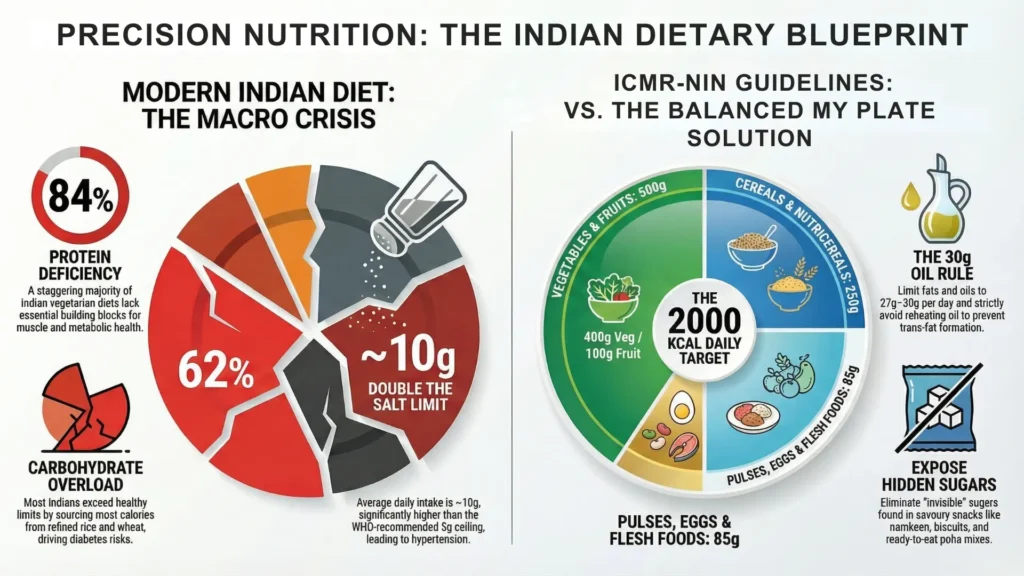
India’s edible oil consumption has undergone a radical transformation, tripling from 8.2 kg per capita in 2001 to approximately 23.5 kg today. Because of this, urban diets frequently exceed the 30-gram daily limit for fats. Most of this occurs through the “tadka” (tempering) process and deep-frying.
Specifically, the habit of using large quantities of visible fats for “bhuna” techniques increases caloric density. Therefore, even if you eat at home, you may be consuming excessive calories that lead to visceral fat storage.
The Nutrient Depletion Trap: Overcooking and Reheating
Indian culinary traditions often prioritize textures achieved through prolonged boiling. However, this preference results in the significant destruction of heat-sensitive micronutrients like Vitamin C and folate.
Furthermore, many busy professionals reheat leftovers multiple times. This practice depletes nutrients and can even foster harmful bacteria growth. For example, repeatedly heating leafy vegetables like spinach can raise nitrate toxicity, which negatively affects liver health.

2. How does the “carb-heavy” reality contribute to diet mistakes India struggles with?
The most pervasive dietary error in the subcontinent is the overwhelming dominance of carbohydrates. These account for up to 75% of total calorie intake, which is one of the highest ratios globally. Consequently, high carbohydrate consumption significantly increases the risk of newly diagnosed Type 2 Diabetes and prediabetes.
The Milling of Whole Grains: A Refinement Error
Many people believe they are eating healthy by choosing “whole wheat” (atta). However, commercial milling often reduces the grain to a fine powder that behaves metabolically like refined starch. This high-surface-area flour triggers rapid insulin spikes, contributing to the diet mistakes India must address for better metabolic health.
| Grain Type | Processing Method | Glycemic Index (Estimated) | Metabolic Impact |
| Whole Wheat Grain | Stone-ground (Chakki) | 55-60 | Moderate absorption |
| Commercial Atta | Fine Roller-milled | 70-75 | Rapid insulin spike |
| White Rice | Polished/Milled | 75-82 | High risk for T2D |
The Protein Gap: Why You Are Likely Deficient
While the global average for protein intake is higher, the share of calories from protein in India is a mere 6–8%. This is a critical error for those managing PCOD, thyroid disorders, or weight loss. Because protein provides satiety and supports muscle maintenance, a deficiency makes it much harder for a higher-weight person to lose fat.
In simple terms, if your plate consists mostly of rice or rotis with very little dal or paneer, you are feeding the “thin-fat phenotype” instead of building muscle.

3. What are the common myths that fuel diet mistakes India makes daily?
To correct diet mistakes India commonly makes, we must understand the unique South Asian body. The “Thin-Fat Phenotype” explains why Indians develop chronic diseases at lower BMI levels than other ethnicities.
The “Thin-Fat” Phenotype and Visceral Adiposity
A BMI of $25 kg/m^2$ might be considered “normal” globally, but for Indians, health risks skyrocket at a BMI as low as $23 kg/m^2$. This occurs because Indians have a genetically higher body fat percentage concentrated in the abdomen.
| Feature | South Asian Profile | Health Implication |
| Fat Distribution | High abdominal fat | High T2D & BP risk |
| Muscle Mass | Systemically lower | Lower metabolism |
| Adiponectin | Significantly lower | Reduced insulin sensitivity |
The Ghee Controversy: Superfood or Clogged Arteries?
Modern research offers a nuanced view of ghee. While A2 Bilona ghee contains beneficial fatty acids, the mistake lies in the “health halo” surrounding it. The ICMR-NIN 2024 guidelines state that saturated fats should be limited to under 5% of total calories. Therefore, consuming unlimited ghee under the guise of it being a “superfood” is a major error that can lead to arterial inflammation.

4. Which practical kitchen fixes can solve diet mistakes India is known for?
Transforming your diet doesn’t require Western “salads.” Instead, you can optimize traditional Indian practices for better metabolic control and weight management.
The Science of Soaking: Removing Anti-Nutrients
A major error in modern households is the use of pressure cookers without prior soaking. Legumes contain “anti-nutrients” like phytic acid that prevent mineral absorption.
- Soaking Dals: This process activates the enzyme phytase, which breaks down phytic acid and makes iron and zinc more bioavailable.
- Digestibility: Soaking helps break down complex sugars called oligosaccharides, which are responsible for gas and bloating.
- Cooking Efficiency: Soaked lentils cook up to 50% faster, preserving more heat-sensitive vitamins.
Fiber-Maxxing: The Seasonal Roadmap for Weight Loss
The 2024 ICMR guidelines increased the vegetable intake target to 400g per day. Fiber is your most effective tool for weight management because it increases fullness and reduces the glycemic load of your meals.
- Summer Fixes: Use high-water gourds (Lauki, Tinda, Torai) to stay hydrated and full.
- Winter Fixes: Prioritize Sarson (mustard greens) and Methi (fenugreek) to improve insulin sensitivity.
- The Plate Method: Fill half your plate with vegetables before adding any dal, rice, or roti.

5. What is the 2026 roadmap for fixing diet mistakes India?
As we enter 2026, personalized nutrition is key to managing chronic conditions. Below are tailored strategies for the Indian lifestyle context that prioritize long-term healthspan.
PCOD, PCOS, and Thyroid: The Protein Connection
PCOS affects 1 in 5 Indian women, and diet drives 80% of its management. The primary mistake is a high-carb diet that triggers androgen production. Consequently, including lean protein like paneer, tofu, or sprouts in every meal is essential to increase Sex Hormone Binding Globulin (SHBG) and stabilize hormones.
Diabetes and Hypertension: Targeted Clinical Fixes
For the millions of Indians with diabetes, the 2026 roadmap focuses on “ABC Control”:
- A (HbA1c): Aim for <7.0% by using the “Resistance Starch Hack”—cooling rice for 24 hours before eating to lower its GI.
- B (Blood Pressure): Target <130/80 mmHg by limiting hidden salts in pickles and papads.
- C (Cholesterol): Keep LDL <100 mg/dL by replacing saturated fats with MUFA-rich mustard or groundnut oil.
Protein-Forward Snack Swaps: The 4 PM Revolution
The “4 PM Chai Break” is often where health goals go to die. Swapping refined snacks for protein-rich options is a simple way to avoid common diet mistakes India makes.
| Traditional Snack | Protein-Forward Swap | Nutritional Advantage |
| Tea Biscuits/Namkeen | Roasted Chana | 15g protein per 100g |
| Samosa/Pakora | Moong Sprout Chaat | High fiber and B-vitamins |
| White Bread Toast | Paneer Tikka / Boiled Eggs | High satiety, zero sugar |
Conclusion: Reclaiming Your Metabolic Health
Fixing the diet mistakes India currently faces requires small, sustainable shifts rather than extreme deprivation. By prioritizing protein, increasing fiber, and cooking mindfully, you can break the “Ghar Ka Khana” paradox.
Ready to fix your plate? For a personalized Indian nutrition plan tailored to your lifestyle.

FAQs on Common Dietary Errors
1. Is it a mistake to drink water immediately after meals?
Yes. Drinking large amounts of water right after eating can dilute digestive enzymes and impair the digestion of proteins. It is better to wait 30 minutes.
2. Does skipping breakfast help with weight loss in an Indian context?
Generally, no. Skipping breakfast has been linked to higher risks of metabolic syndrome and abdominal obesity in the Indian population.
3. Are “Digestive Biscuits” a healthy alternative?
This is a common marketing mistake. Most digestive biscuits in India still contain refined flour (maida), sugar, and palm oil. Roasted makhana is a better choice.
4. Why is my weight stuck despite eating “Ghar Ka Khana”?
You are likely over-consuming hidden oils and high-GI carbs while under-consuming protein. Recalibrating your plate to the 1:1:2 ratio is the first step.
5. Can I eat rice if I have diabetes?
Yes, but portion control is vital. Pairing white rice with dal, fiber-rich vegetables, and a protein source like chicken or tofu significantly lowers its glycemic impact.
Contact Us
We understand how overwhelming nutrition and weight loss information can feel. With so many opinions and confusing advice online, it’s easy to feel stuck or unsure about what to do next.
At Diet Dekho, you never have to figure it out alone. You can contact us anytime with any questions or concerns. Our expert dietitians are available 24/7 to guide, support, and help you stay on track. Whether your goal is weight loss or building healthier habits, we’re here to make the journey simpler and more sustainable for you.
Disclaimer
This blog is intended to help readers make healthier food choices. Your health should always be the top priority. Before starting any restrictive or special diet, especially if you have a medical condition or health concern, please consult a doctor or a qualified dietitian. Each body responds differently to food and lifestyle changes. Always choose what is safe and suitable for you.

Dr. Ritika is a nutrition and lifestyle expert with 2+ years of experience, helping clients manage weight and health through practical, personalized diet plans.