Are you pushing yourself at the gym but seeing no change on the scale? It is a common struggle. Many people wonder about the priority of diet vs workout when starting their health journey. You might be running for miles only to find your weight remains exactly where it was. At DietDekho, we see this frustration every day. The truth is, while movement is vital, your kitchen habits have a much larger impact on your weight than your gym routine.
The short answer is that diet matters more for weight loss, typically following a 70/30 rule. Nutrition accounts for about 70% of your results, while exercise contributes 30%. While workouts improve fitness, a calorie deficit and hormonal balance are primarily achieved through a structured, nutrient-dense diet.
Why is your weight stuck? Understanding the diet vs workout balance.
Table of Contents
- 1 Why is your weight stuck? Understanding the diet vs workout balance.
- 2 Food vs gym for fitness: Why exercise alone often fails.
- 3 Myth Buster: Can you really eat anything if you exercise for two hours?
- 4 The 70/30 Rule: Nutrition vs exercise for weight loss.
- 5 Practical Indian Kitchen Swaps: Eating healthy vs working out.
- 6 A Sustainable Daily Routine: Prioritizing diet or exercise priority.
- 7 Common Mistakes: Relying on crash diets or over-exercising.
- 8 Small Wins Matter: Focus on consistency over perfection.
- 9 Managing PCOS, Diabetes, and Hypertension
- 10 Confused about your fitness journey? Get a personalized nutrition plan from Diet Dekho experts today.
- 11 Contact Us
- 12 Disclaimer
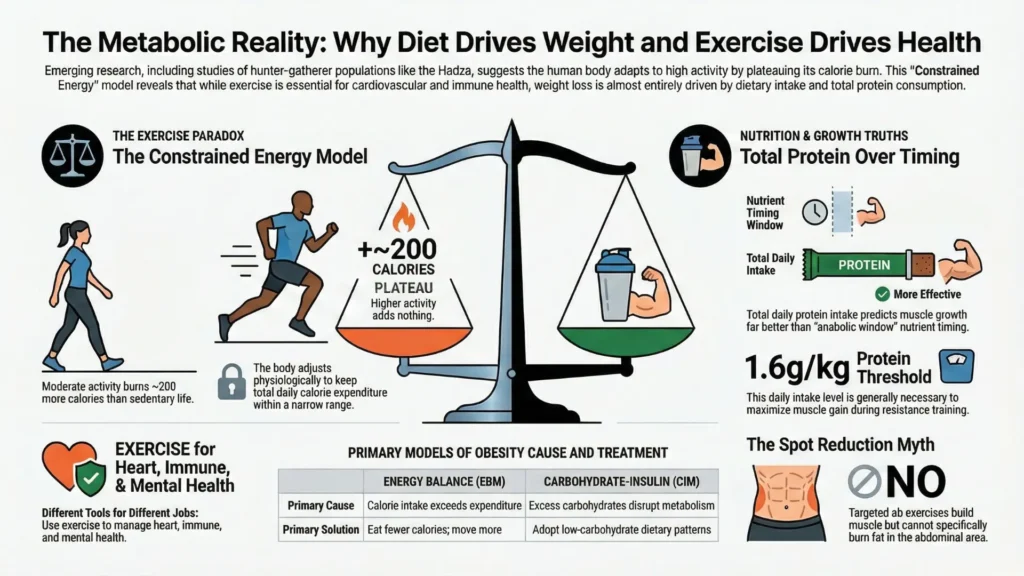
Many clients come to DietDekho feeling defeated because their daily exercise isn’t melting the fat away. This often happens because we overestimate how many calories we burn during a workout. A moderate 45-minute aerobic session might only burn 200 to 400 calories. In an Indian context, that is less than the energy in a single plate of poha or a couple of “healthy” biscuits.
The Hidden Reality of Caloric Burn
Your body is designed to save energy for survival. When you start a heavy workout, your body often compensates. You might find yourself feeling hungrier throughout the day. You might also move less during your non-exercise hours because you feel tired. This biological response can easily cancel out the calories you burned at the gym.
Additionally, if you have a condition like hypothyroidism, your resting metabolic rate is already lower. This means movement alone struggles to create the necessary deficit. Research shows that focusing on diet or exercise priority is crucial because the “exercise” part of your daily energy burn is actually the smallest piece of the puzzle.
| Component | Definition | Contribution to TDEE |
| Basal Metabolic Rate (BMR) | Calories burned at rest for vital functions. | 60%−75% |
| Thermic Effect of Food (TEF) | Energy used to digest and store nutrients. | 10% |
| Non-Exercise Activity (NEAT) | Energy used for daily tasks like walking. | 15%−30% |
| Exercise Activity (EAT) | Energy burned during intentional workouts. | 5%−10% |
As this data shows, your intentional workout is only about 5%−10% of what you burn. This is why you cannot ignore the role of nutrition.
Food vs gym for fitness: Why exercise alone often fails.
The idea of “working off” a heavy meal is a trap. I know it is hard to find time to cook, but relying on the gym to fix a poor diet rarely works. The professional consensus is that your body processes different foods in different ways. A 500-calorie sugary drink does not affect your metabolism the same way 500 calories of dal and vegetables do.
The Insulin Trap in the Indian Diet
High-carbohydrate meals are very common in Indian homes. Foods like white rice and maida rotis cause quick spikes in blood sugar. Your body releases insulin to handle this sugar. Insulin is also a storage hormone. When it is high, your body stops burning fat.
Even if you exercise for two hours, high insulin levels keep your body in “storage mode.” This is a major issue for those with PCOS or diabetes. For these conditions, eating healthy vs working out is more about hormonal control than just calories. Stabilizing sugar through fiber-rich foods helps lower the androgens that cause PCOS symptoms.
Caloric Cost of Indian Foods vs. Exercise Required
| Food Item | Approximate Calories | Equivalent Brisk Walking (Minutes) |
| 1 Plate Chole Bhature | 450 – 550 | 100 – 120 |
| 1 Large Sweet Lassi | 350 | 75 |
| 2 Pieces of Gulab Jamun | 300 | 65 |
| 1 Serving of Fried Namkeen | 500 | 110 |
As shown above, it takes nearly two hours of walking to burn off one plate of chole bhature. For a busy professional, finding that extra time every day is almost impossible.

Myth Buster: Can you really eat anything if you exercise for two hours?
A big myth is that lots of exercise gives you a “license to eat” whatever you want. This mindset often leads to a condition called “Thin-Outside-Fat-Inside” (TOFI). You might look fine in a mirror, but dangerous visceral fat could be building up around your organs. This fat increases the risk of heart disease and diabetes.
The ‘Thin-Outside-Fat-Inside’ (TOFI) Risk
Exercise cannot fully protect you from the inflammation caused by processed oils. Many store-bought snacks contain trans fats. These are linked to insulin resistance even if you are active. The latest ICMR-NIN 2024 guidelines suggest zero trans fats for heart health.
For women with PCOS, over-exercising can actually backfire. Too much high-intensity cardio increases cortisol, your stress hormone. High cortisol promotes belly fat storage. A balanced approach is better. Use diet to lower inflammation and use moderate movement to improve insulin sensitivity.
The 70/30 Rule: Nutrition vs exercise for weight loss.
The 70/30 rule is the metabolic reality of your body. While 70% of your effort should be in the kitchen, the 30% from the workout is still essential. Exercise helps you keep the weight off once you lose it.
When you lose weight through diet alone, you might lose muscle mass. Muscle is metabolically active. It burns more calories even when you are resting. Resistance training signals your body to keep its muscle while burning fat.
Why Protein is the Secret Weapon
Protein is the bridge between nutrition vs exercise for weight loss.
- Thermic Effect: Your body burns 20%−30% of protein calories just to digest them.
- Satiety: Protein triggers hormones that tell your brain you are full.
- Repair: It helps repair muscles after your workout.
DietDekho experts recommend including protein in every meal. Use sources like dal, paneer, eggs, or sprouts to stay full longer.

Practical Indian Kitchen Swaps: Eating healthy vs working out.
You don’t have to give up Indian flavors to lose weight. Modern Indian diets have become heavy in refined carbs. Returning to traditional ingredients can change your diet vs workout results significantly.
Smart Grains for Satiety
One powerful swap is replacing white rice with millets or brown rice. White rice has a high Glycemic Index (GI) of about 72. This causes quick sugar spikes. Millets like Ragi (Finger Millet) and Jowar (Sorghum) keep their fiber. This fiber slows down sugar absorption. Ragi also contains tryptophan. This amino acid helps suppress appetite and improves sleep.
| Instead of This… | Try This… | Benefit for Weight Loss |
| White Bread / Maida | Jowar or Bajra Roti | Higher fiber and stable sugar. |
| Fried Namkeen | Roasted Makhana | Lower fat, higher protein. |
| Fruit Juices | Masala Buttermilk | Probiotics and zero added sugar. |
| Refined Oil | Cold-Pressed Mustard Oil | Anti-inflammatory properties. |
What this means for your daily routine is simple. Choose ingredients that fill you up rather than those that cause a crash.
A Sustainable Daily Routine: Prioritizing diet or exercise priority.
Timing your meals can be as important as what you eat. Your body’s internal clock affects how you process fat and sugar. Eating during daylight hours aligns with your peak metabolism.
Timing Your Meals with Movement
Consuming a high-protein breakfast before 10:00 AM is a great strategy. It stabilizes your hunger hormones for the day. If you exercise in the morning, have a small snack like a banana first. Then, follow up with a protein-heavy breakfast to repair your muscles.
- 07:00 AM: Hydrate with warm lemon or cumin water.
- 07:30 AM: 30 minutes of brisk walking or home exercise.
- 09:00 AM: Breakfast – Moong dal chilla with paneer or vegetable oats upma.
- 01:00 PM: Lunch – Two multigrain rotis, one bowl of dal, and a large salad.
- 04:30 PM: Evening Snack – Roasted makhana and green tea (no sugar).
- 07:30 PM: Early Dinner – Vegetable millet khichdi or lentil soup.
- 10:30 PM: Sleep – Get 7-8 hours of quality rest.
Finish your dinner at least 2-3 hours before bed. This allows your body to burn fat during the night instead of digesting food.

Common Mistakes: Relying on crash diets or over-exercising.
The urge for fast results often leads to bad choices. Crash dieting—eating very few calories—triggers a “starvation response.” Your body slows down its metabolism to save energy. This makes it much easier to gain the weight back later.
The Trap of ‘Healthy’ Processed Snacks
Many people rely on “diet” products like digestive biscuits. These are often a “scam.” Analysis shows they can contain 80% refined flour (maida) and hidden sugars. Two biscuits can have 150 calories with no fiber. This leaves you hungry again very quickly.
Relying on juices is another mistake. Juices lack the fiber of whole fruits. They cause rapid sugar spikes. For those with thyroid or PCOS issues, these spikes can worsen hormonal imbalances.
Small Wins Matter: Focus on consistency over perfection.
Weight loss can feel overwhelming. Successful DietDekho clients focus on “small wins” instead of just the scale. Celebrating small victories helps you stay motivated.
Behavioral Success through Incremental Goals
A small win could be choosing water over soda. It could be using a smaller plate to control portions. For NRIs, it could be meal-prepping Indian food over the weekend to avoid takeout. These habits build a foundation for long-term health.
| Habit Change | Impact on Physiology | Impact on Psychology |
| Switching to millets 3x a week | Better insulin sensitivity. | Feeling of cultural connection. |
| Adding protein to breakfast | Reduced afternoon cravings. | Feeling in control and energized. |
| 10-minute post-meal walk | Lowered blood sugar spikes. | Mastery of an easy routine. |
Managing PCOS, Diabetes, and Hypertension
If you have a medical condition, the diet vs workout balance is even more vital.
- PCOS: Insulin resistance is the core issue. Weight loss of just 5% can help restore regular cycles. Focus on a low-GI diet and resistance training.
- Diabetes: Focus on portion control and fiber. Walking after meals is a powerful tool. It increases how well your muscles use insulin.
- Hypertension: Follow the DASH principles. Reduce sodium to less than 2,300 mg daily. Increase potassium from foods like bananas and spinach.
Confused about your fitness journey? Get a personalized nutrition plan from Diet Dekho experts today.
Weight loss is not a one-size-fits-all journey. What works for a student will not work for a busy manager. While the 70/30 rule is a guide, your specific plan needs to fit your lifestyle.
At DietDekho, we help you bridge the gap between science and your kitchen. We don’t believe in fad diets. We believe in sustainable corrections that work for the long term.

Frequently Asked Questions (FAQs)
Q1: Can I lose weight with just diet vs workout?
Yes. Since nutrition is 70% of the result, you can lose weight through diet alone. However, adding movement helps you maintain muscle and improves your mood.
Q2: Are digestive biscuits better than regular ones?
Not necessarily. Most “digestive” biscuits are highly processed and contain maida and sugar. It is better to snack on roasted makhana or nuts.
Q3: How much protein should I eat for weight loss?
The ICMR-NIN 2024 guidelines suggest about 0.83g to 1g of protein per kg of body weight. For active individuals or those with PCOS, this may go up to 1.2g-1.5g.
Q4: Should I skip breakfast to lose weight faster?
No. Skipping breakfast can lead to overeating later and may slow your metabolism. A high-protein breakfast before 10 AM is recommended.
Q5: What is the best time for a workout?
The best time is whenever you can be consistent. However, morning movement aligns well with your body’s natural rhythms.
Get a Personalized Macro-Balanced Plan with a Diet Dekho Expert Start Your Journey to Holistic Health with a Diet Dekho Consultant
Contact Us
We understand how overwhelming nutrition and weight loss information can feel. With so many opinions and confusing advice online, it’s easy to feel stuck or unsure about what to do next.
At Diet Dekho, you never have to figure it out alone. You can contact us anytime with any questions or concerns. Our expert dietitians are available 24/7 to guide, support, and help you stay on track. Whether your goal is weight loss or building healthier habits, we’re here to make the journey simpler and more sustainable for you.
Disclaimer
This blog is intended to help readers make healthier food choices. Your health should always be the top priority. Before starting any restrictive or special diet, especially if you have a medical condition or health concern, please consult a doctor or a qualified dietitian. Each body responds differently to food and lifestyle changes. Always choose what is safe and suitable for you.

Dr. Ritika is a nutrition and lifestyle expert with 2+ years of experience, helping clients manage weight and health through practical, personalized diet plans.