Have you ever wondered why pakoras feel so necessary after a long, stressful day at work? Emotional Eating and Its Effect on Weight describes eating for feelings rather than physical hunger. This habit triggers cortisol release. It also causes insulin resistance. This leads to stubborn belly fat and complications for PCOS, diabetes, and hypertension.
Emotional Eating and Its Effect on Weight is a physiological response. We use food to soothe negative emotions. This behavior increases calorie intake and triggers cortisol, which promotes fat storage. Managing it involves recognizing triggers. You should switch to high-protein Indian snacks. Practice mindful eating to stabilize your metabolic health.
Why do we turn to food when we are stressed?
Table of Contents
- 1 Why do we turn to food when we are stressed?
- 2 What does the research say about Emotional Eating and Its Effect on Weight?
- 3 How do hormones like cortisol and insulin drive weight gain?
- 4 Why are Indian diets so prone to metabolic disorders?
- 5 How does weight status become a shared habit in Indian families?
- 6 Can you distinguish between physical and emotional hunger?
- 7 How does emotional eating impact PCOS and thyroid health?
- 8 What challenges do NRIs and professionals face?
- 9 Which Indian herbs help manage stress eating?
- 10 What are the best healthy Indian snacks?
- 11 How to manage BP and sugar cravings at home?
- 12 How can you break the cycle for good?
- 13 How to handle triggers in your routine?
- 14 How is AI changing weight management in 2025?
- 15 FAQs: Understanding Emotional Eating
I know it’s hard to find time for yourself between office calls and chores. Many of us stand in front of the fridge without even being hungry. The short answer is simple. Our bodies are wired for survival. When you feel stressed, your brain thinks you are in danger.
In simple terms, your brain releases a hormone called cortisol. This hormone acts like an alarm system. It tells your body to find high-energy food for a “fight or flight” situation. Consequently, you crave sugary jalebis or salty chips when you are upset.
The problem is that modern stressors are not physical threats. We aren’t running away from tigers; we are just dealing with emails. What this means for your routine is that extra energy isn’t burned. Instead, it gets stored as fat around your waistline.
The biological link between mood and food
Let’s simplify how your brain handles these emotions. Your brain has a reward system that releases a chemical called dopamine. When you eat something tasty, your brain gives you a small “hit” of pleasure. This makes you feel better for a few minutes.
Over time, your brain begins to rely on this hit. It learns that food is the fastest way to feel better. This is how Emotional Eating and Its Effect on Weight becomes a hard habit to break. You don’t lack willpower. Your brain is just following a familiar path.
How chronic stress changes your appetite
If your stress lasts a long time, your cortisol levels stay high. This elevation can change how your body handles hunger. Short-term stress might lower your appetite. However, long-term stress makes you want to eat more often.
This creates a cycle where food causes weight gain. The gain then makes you feel more stressed about your health. Addressing the emotion is just as important as changing the food on your plate.

What does the research say about Emotional Eating and Its Effect on Weight?
When we look at scientific studies, the evidence is very clear. Research from the National Institutes of Health (NIH) shows that stress networks foster unhealthy eating behaviors. These networks can actually override your natural signals for being full.
In simple terms, your logic gets “hijacked” by your emotions. This means you might keep eating even when your stomach is full. For people managing PCOS or diabetes, this makes it much harder to follow a diet.
| Mechanism | Effect on the Body | Impact on Weight |
| Cortisol Release | Increases motivation for food | Promotes fat storage in the belly |
| Insulin Resistance | Cells stop responding to insulin | Leads to higher blood sugar |
| Dopamine Response | Creates a temporary good feeling | Reinforces the habit of overeating |
| BMR Reduction | Metabolism slows down under stress | Causes weight gain from normal meals |
The impact of cortisol on fat distribution
Stress often dictates where the weight goes. High cortisol levels are specifically linked to “visceral fat.” This fat sits deep inside your abdomen and surrounds your organs. In an Indian context, we see this as a stubborn belly.
Visceral fat is not just an appearance issue. It is metabolically active and releases chemicals that cause inflammation. This inflammation makes it harder for your body to lose weight. It also increases the risk of heart disease.
Why “comfort foods” are so addictive
Research explains why we don’t crave broccoli when we are sad. Foods high in fat and sugar help suppress the stress response. When you eat a sugary snack, your brain receives a “calm down” signal.
This creates a biological “reward” for eating junk food. Your brain thinks it is helping you relax. But the long-term cost is metabolic damage. Emotional Eating and Its Effect on Weight is a physical response that needs a mental solution.
How do hormones like cortisol and insulin drive weight gain?
Let’s look closer at the chemistry inside you. Your body uses hormones to decide when to eat. Cortisol is the primary leader of this group when stress is involved.
When cortisol levels spike, your liver starts “gluconeogenesis.” This means your body creates sugar from your protein stores. It does this because it thinks you need quick energy to fight.
The connection between stress and insulin resistance
Your blood sugar is now high from the cortisol. Therefore, your pancreas releases insulin. The job of insulin is to help cells absorb that sugar. But if you are sitting at a desk, that sugar isn’t used.
Instead, the insulin helps store that sugar as fat. If this happens every day, your cells get tired. Insulin resistance begins when cells lose the ability to respond effectively to insulin. Under chronic stress, the body releases cortisol, which can intensify hunger, increase cravings, and promote overeating. Over time, this pattern disrupts glucose regulation, contributing to weight gain and a higher risk of type 2 diabetes.
How ghrelin and leptin get out of balance
There are two other hormones you should know. Ghrelin tells you when to eat. Leptin tells you when to stop.
Studies show that stress can increase ghrelin. This makes you feel hungry when you don’t need food. At the same time, excess weight can lead to leptin resistance. Your brain stops hearing the “I’m full” signal. Emotional Eating and Its Effect on Weight then becomes very hard to control.

Why are Indian diets so prone to metabolic disorders?
The(https://main.icmr.nic.in/) has released important data for Indian families. Their survey found that over 62% of our daily calories come from low-quality carbohydrates.
These include white rice, maida, and added sugars. When Emotional Eating patterns overlap with excess intake of high–glycemic foods, metabolic stress increases sharply. The core issue is not just quantity, but the type of foods consumed, especially those that trigger frequent insulin spikes. In practical terms, the cycle becomes this: cravings drive choices, choices spike insulin, and repeated spikes accelerate fat storage while intensifying hunger.
| Dietary Component | Average Indian Intake | Recommended Intake |
| Carbohydrates | 62.3% | 45% – 55% |
| Protein | 12% | 15% – 20% |
| Fiber | Low (refined grains) | High (whole grains) |
| Healthy Fats | Imbalanced | Balanced (seeds, nuts) |
The hidden protein gap in our meals
ICMR also highlighted our low protein intake. On average, Indians get only 12% of their calories from protein. This is a big deal because protein makes you feel full.
If your meal is mostly rice or roti, you will feel hungry soon. This makes you more likely to snack on junk later. Rebalancing your plate with dal or paneer helps you fight emotional urges.
Why regional diets are seeing similar risks
The grain type doesn’t matter as much as the quality. ICMR found consistent metabolic risks across all Indian states. Most of us are eating polished rice and processed flour.
Switching to millets like ragi or bajra is a great start. Reducing overall carbohydrate intake is important. Even small dietary shifts can create measurable metabolic benefits. For example, replacing 5% of daily carbs with protein has been associated with a lower risk of developing diabetes. What this really means is that balanced macronutrient distribution, rather than extreme restriction, improves long-term glucose control and overall health outcomes.
Weight gain is often a family issue rather than just a personal one. An ICMR study observed that nearly 25% of married couples share similar weight patterns, a phenomenon known as spousal weight concordance. This often happens because partners influence each other’s food choices, activity levels, and daily routines. What this really means is that weight gain in a household is rarely an individual outcome, it’s a shared behavioral environment.
This happens because couples share habits. They eat the same meals and watch the same shows. In Indian homes, love often means serving extra food. This makes it hard to lose weight if your partner isn’t involved.
The rise of weight gain in young couples
This trend is rising fastest in couples under age 30. In Delhi and Kerala, nearly half of married couples carry excess weight. This is linked to urban stress and low physical activity.
Nuclear families often have higher weight management challenges. Work pressure often pushes people toward quick, processed meals because they require minimal effort and time. Spotting common food and lifestyle patterns in a household makes it easier to build a plan everyone can follow. When habits are shared, changes feel less like a restriction and more like a team decision, which improves consistency and long-term success.
Cultural emphasis on food as love
In many Indian families, food is deeply tied to emotions. When you are sad, you get a sweet. When you celebrate, there is a feast.
This makes it difficult to separate “feeling” from “eating.” In many homes, declining a second serving can be misread as impolite or even disrespectful. The truth is, changing patterns like emotional eating and managing its impact on weight works best when families talk openly about food, feelings, and support. Breaking this cycle doesn’t require rejection of tradition, just honest conversation and shared understanding.

Can you distinguish between physical and emotional hunger?
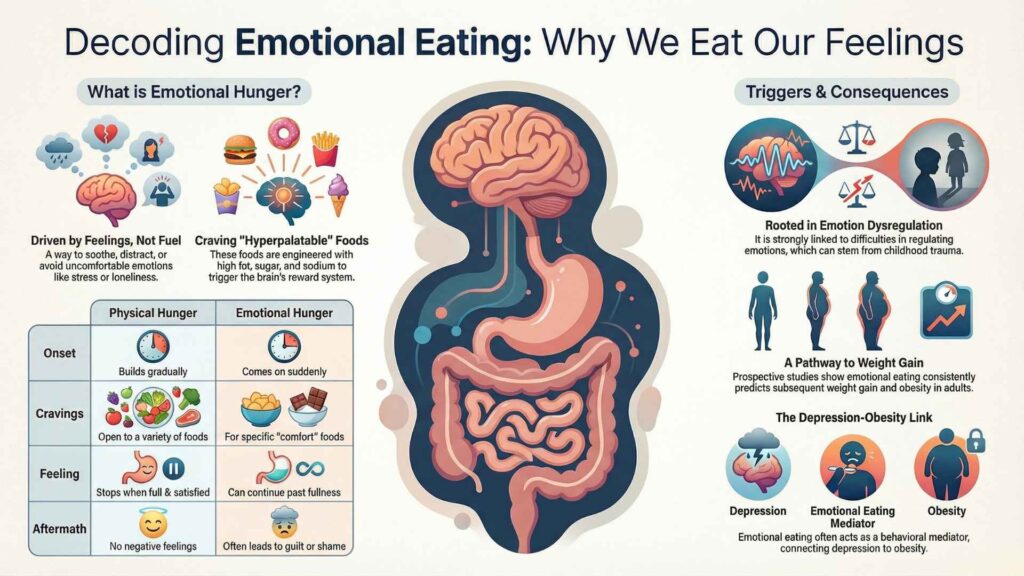
Understanding the difference is the first step toward freedom. Physical hunger is your body’s natural cue for fuel. It builds gradually over a few hours.
Emotional hunger is driven by feelings. It often comes on suddenly like an emergency. You might feel fine one minute and crave chocolate the next.
The signs of physical hunger
Physical hunger is felt in the stomach. You might hear a growl or feel “empty.” When you are physically hungry, almost any food sounds good. You would even be happy with simple dal and rice.
Usually, you feel satisfied once you are full. You don’t feel guilty afterward. You simply gave your body what it needed.
The “head hunger” of emotional eating
Emotional hunger is felt in the mind. You find yourself craving a specific texture or taste. You aren’t looking for a meal; you want a distraction.
The biggest clue is how you feel after eating. If you feel guilty or ashamed, that hunger was emotional. 26 Emotional hunger doesn’t go away even when you are full.
How does emotional eating impact PCOS and thyroid health?
For women with PCOS, Emotional Eating and Its Effect on Weight is a major obstacle. PCOS increases insulin resistance, making it harder for the body to regulate blood sugar effectively. Over time, this shifts metabolism toward fat storage, particularly in the abdominal region.
Staying optimistic can feel difficult when you’re managing acne, unpredictable cycles, or other visible symptoms. These challenges often trigger emotional stress, and for many women, that stress quietly reshapes confidence and self-image. In response, some turn to food for comfort, not hunger, using it as a coping mechanism for frustration, anxiety, or low self-esteem.
The vicious cycle of PCOS and insulin
PCOS causes insulin resistance. Your body produces more insulin to keep blood sugar stable. High insulin levels increase male hormones. This makes PCOS symptoms worse.
This creates a cycle. Stress leads to emotional eating, which causes insulin spikes. These worsen symptoms and cause more stress. Managing Emotional Eating and Its Effect on Weight is vital for PCOS care.
Why thyroid issues make weight loss feel impossible
Hypothyroidism slows down your basal metabolic rate (BMR). This means you burn fewer calories while resting. You might feel tired, cold, or low.
When you feel low, your brain seeks “quick energy” from sugar. Because your metabolism is slow, these calories become fat quickly. Understanding this helps you be more patient with yourself.

What challenges do NRIs and professionals face?
NRIs often struggle with weight because they miss home. Loneliness and nostalgia often drive emotional eating, especially when adapting to life in a new country. For many, traditional meals provide comfort because they carry familiarity, routine, and a sense of belonging. In unfamiliar environments, food can unintentionally become a coping mechanism rather than a source of nourishment.
Busy professionals in India also face unique stress. Long commutes and desk jobs leave little time for meal prep. Getting home late often leads to ordering out.
Dealing with the “nostalgia trap”
For NRIs, food is a way to stay connected to home. If you feel lonely, you might make a heavy batch of parathas. This isn’t about hunger; it’s about comfort.
Traditional foods were designed for an active lifestyle. When eaten at a desk job, they lead to weight gain. Finding ways to celebrate your culture without overeating is key.
Corporate stress and mindless munching
For professionals, “tea and biscuit” culture is a major issue. You might eat while answering emails without realizing it.
Mindless eating happens because your brain is coping with mental load. It seeks small sugar hits to keep going. 1 Preparing healthy snacks like makhana can prevent these spikes.
Which Indian herbs help manage stress eating?
Ayurveda offers the concept of “Mitaahara,” or the balanced diet. This isn’t about restriction. It’s about eating mindfully and choosing calming foods.
Several Indian herbs studied for health can lower cortisol. Using these is a great home solution for weight management.
The power of Ashwagandha and Tulsi
Ashwagandha is an “adaptogen.” It helps your body adapt to stress. Studies show it can lower cortisol by up to 30%. This helps reduce the drive for Emotional Eating and Its Effect on Weight.
Tulsi is also powerful for mental balance. It has been used for centuries to calm the nerves. Drinking warm Tulsi tea helps you relax and reduces snack urges.
Using kitchen spices to curb sugar cravings
Your spice box (masala dabba) has great weight-loss tools. Cinnamon (dalchini) is excellent for blood sugar. A pinch in your tea can prevent sugar crashes.
Fenugreek (methi dana) is another metabolic powerhouse. Methi is high in soluble fiber, which supports better blood sugar control and improves insulin sensitivity. Starting your morning with methi water can aid appetite regulation, encourage stable glucose levels, and support weight management over time. The benefit comes from consistency, not complexity—one small, smart habit can influence metabolism, digestion, and cravings in a meaningful way.
What are the best healthy Indian snacks?
It’s hard to ignore hunger between 4 PM and 6 PM. This is the “danger zone” for many. Instead of a samosa, choose a snack with protein.
The best snacks have a “low glycemic index” (GI). These release energy slowly into your blood.
| Healthy Indian Snack | Why it Works | Key Nutrients |
| Roasted Makhana | Low calorie | Fiber, Antioxidants |
| Bhuna Chana | High satiety | Protein, Fiber |
| Sprouted Moong | Aids digestion | Vitamin C |
| Besan Chilla | Plant protein | Iron |
| Roasted Peanuts | Sustained energy | Healthy Fats |

Why Makhana is the “superfood” for stress eaters
Makhana works brilliantly as a workday snack. It is low in fat, rich in fiber, and lighter in calories than most packaged options. In fact, a full bowl often contains fewer calories than just two biscuits.
Thanks to its fiber content, digestion slows down, helping you stay satisfied for longer hours. This steady release of energy supports better appetite control, especially during busy work sessions. Add to that its antioxidants, and you also get a natural boost in reducing inflammation.
The benefits of Bhuna Chana for busy people
If you are busy, keep a jar of bhuna chana at your desk. With close to 20 grams of protein in every 100 grams, it’s a strong option for supporting daily protein needs. Protein plays a key role in appetite regulation, sending signals to the brain that help increase satiety. The result? Better control over hunger, improved portion management, and a meaningful boost to metabolic health.
The roasting process makes nutrients easy to absorb. It’s an affordable and effective tool for health.
How to manage BP and sugar cravings at home?
High blood pressure and diabetes often go with weight gain. Emotional eaters often crave salty snacks like namkeen. This can spike your blood pressure quickly.
Be careful with hidden salts in processed foods. Using ginger and lemon to flavor food can help lower BP.
The DASH diet: An Indian adaptation
The DASH diet is highly recommended by experts. It focuses on whole grains and vegetables. For an Indian kitchen, this means:
- Replacing white rice with millets.
- Eating 4-5 servings of vegetables daily.
- Choosing low-fat yogurt or milk.
Breaking the addiction to sweets
Sugar cravings can feel overwhelming. When you want a sweet, try dark chocolate or dates.
In simple terms, you need a “bridge” to get through the craving. This avoids the massive insulin spike of traditional sweets.
How can you break the cycle for good?
I know it’s hard to change habits. But it is possible with small steps. You don’t need a perfect diet. You just need a better plan for emotions.
The first step is noticing when it happens. Ask yourself: “Am I hungry, or am I feeling something?” If it’s a feeling, food won’t fix it.
The “5 Ws” of mindful eating
Keep a “Food and Mood Journal” for a few days. Write down what you eat and the “5 Ws”:
- Who were you with?
- What did you eat?
- When did you eat?
- Where did you eat?
- Why did I eat? (Bored? Stressed?)
Over time, you will see a pattern. 3 Once you see it, you can plan a different activity.
The “Three-Bite Rule”
You don’t have to give up your favorite foods. Try the “Three-Bite Rule.” Most pleasure comes from the first three bites.
Take three small bites and savor them slowly. This allows you to enjoy the taste without the gain.

How to handle triggers in your routine?
Homemakers often find the afternoon gap hardest. The house is quiet and it’s easy to feel bored. Instead of the kitchen, call a friend.
For professionals, the stress peak happens mid-morning. If you want to eat, take a “breathing break.” Deep breathing helps lower your heart rate.
Replacement activities for different emotions
You need a “toolbox” of activities that don’t involve eating.
- Bored: Read a book or finish a task.
- Lonely: Call a loved one or pet.
- Anxious: Try a walk or light stretching.
- Tired: Take a power nap or go to bed early.
Creating a supportive environment
It is harder to stop if your kitchen has temptations. Avoid stocking high-temptation foods at home. When those options aren’t easily available, it becomes much simpler to make intentional eating choices. The real win comes from designing your environment so that willpower isn’t doing all the work.
Stock your pantry with healthy Indian staples. Having roasted nuts or cut veggies ready makes health easier.
How is AI changing weight management in 2025?
Technology can now help us understand our bodies better. New AI tools allow for personalized wellness.
Many Indians use voice search for health answers. You can ask assistant apps about calories in moong dal. This helps you make better choices.
Personalized nutrition for you
Wellness startups now offer AI-driven plans for metabolic health. This is helpful for those with diabetes or thyroid issues.
You don’t have to follow a “one size fits all” plan. Your nutrition can be tailored to your regional preferences.
The rise of gut health
New research focuses heavily on “gut health” for weight control. Gut bacteria can influence your cravings. Eating yogurt or traditional pickles can improve your gut flora.
Appetite regulation supplements are also becoming common. But the foundation remains a balanced diet and managing stress.

FAQs: Understanding Emotional Eating
Is emotional eating a real eating disorder?
The short answer is no. It is an eating behavior rather than a separate disorder. But if it feels out of control, seek professional help.
Can I lose weight while managing stress eating?
Yes, absolutely. Focus on “substitution” instead of “restriction.” Replace junk with healthy Indian snacks to lower cortisol.
How does sleep affect emotional eating?
Lack of sleep is a major trigger. It increases hunger hormones and decreases fullness signals. Getting 7-8 hours of sleep is foundational.
Why do I feel guilty after eating emotionally?
Guilt is a sign of emotional hunger. Your body didn’t actually need the calories. Forgive yourself and start fresh at the next meal.
Are there any “miracle” herbs?
No miracles exist, but supporters do. Ashwagandha and Tulsi are backed by science to help lower stress. These work best with a balanced lifestyle.
Managing Emotional Eating and Its Effect on Weight is a journey. Treat yourself with kindness as you learn your signals. I know it’s hard to find time, but you deserve to feel healthy. By choosing roasted makhana and mindful breathing, you take control. 3 Remember, every small victory brings you closer to your goals.
Ready to start your journey? Fill out our form: https://dietdekho.com/form/
Disclaimer: This blog post was written to help you make healthier food choices altogether. So, be aware and take care. The important thing to consider is your health before starting a restrictive diet. Always seek advice from a doctor or dietitian before starting if you have any concerns.
BOOK YOUR APPOINTMENT
Dr. Ritika is a nutrition and lifestyle expert with 2+ years of experience, helping clients manage weight and health through practical, personalized diet plans.