At DietDekho, we often see clients who feel stuck despite spending hours in the gym. If you are struggling with inconsistent results, it is likely because you are relying solely on exercise for weight loss without adjusting your nutritional habits. I know it is hard to find time for both, but understanding the science can help you work smarter.
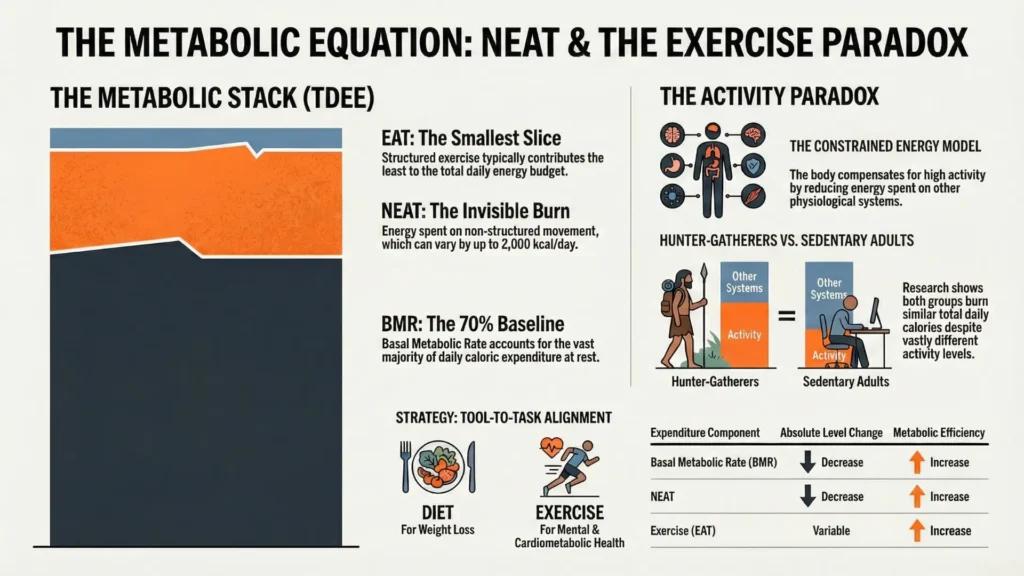
Exercise for weight loss often fails as a standalone strategy because your body uses “metabolic compensation.” When you increase physical activity significantly, your body adapts by reducing energy spent on other functions like immune health and cellular repair to save energy. This means you burn fewer calories at rest, which keeps the scale from moving despite your hard work.
Is Your Workout Effective for Fat Loss?
Table of Contents
- 1 Is Your Workout Effective for Fat Loss?
- 2 Top 3 Myths About Indian Fitness and Fat Burning Workouts
- 3 The “Diet Dekho” Balanced Routine: Nutrition First
- 4 Managing PCOS, Diabetes, and Thyroid Disorders
- 5 A Simple 30-Minute Daily Action Plan
- 6 Frequently Asked Questions (FAQs)
- 7 Conclusion: Start Your Journey to Holistic Health
- 8 Contact Us
- 9 Disclaimer
To understand fat loss, we must look beyond the simple “calories in vs. calories out” math. For years, people believed in the “Additive Model.” This theory suggests that every calorie you burn during a workout simply adds to your daily total. However, modern science from Harvard Health and other experts shows our bodies are much more efficient.
The Truth About Metabolic Compensation
Your body operates on a tight energy budget. When you ramp up exercise for weight loss, your metabolism actually fights back. It views heavy exertion as a threat to your energy reserves. Consequently, it dials down your basal metabolic rate (BMR). This explains why a person might train for a marathon but still struggle with a higher weight. In fact, research shows that exercise-only programs often result in 55-64% less weight loss than expected.
Top 3 Myths About Indian Fitness and Fat Burning Workouts
Cultural misconceptions often cloud our judgment. Let’s simplify these common fitness traps that many Indians face today.
1. Does Sweating More Mean More Fat Loss?
In many Indian gyms, people believe that “sweating it out” is the only way to lose fat. They might even wrap their stomachs in plastic or turn off the fans. Actually, sweating is just your body’s cooling system. It regulates your temperature when you get hot. Any weight you lose through sweat is just water. It returns the moment you drink a glass of water.
2. Can You Target Belly Fat with Specific Exercises?
Many people ask for effective weight reduction exercises specifically for their waistline. I have to be honest: spot reduction is a myth. Your genetics and hormones determine where your body stores fat. Doing a thousand crunches will build muscle, but it won’t melt the fat covering that muscle. To see your abs, you need a systemic calorie deficit through a balanced diet.
3. The “I Earned This Meal” Trap
Many busy professionals finish a 30-minute walk and then reward themselves with a sugar-laden tea or a heavy paratha. However, a single candy bar can take an hour of walking to burn off. This “moral licensing” is the reason many people find that exercise for weight loss does not work for them.

The “Diet Dekho” Balanced Routine: Nutrition First
At DietDekho, we follow the 2024 guidelines from the(https://www.nin.res.in/dietaryguidelines/pdfjs/locale/DGI07052024P.pdf). These experts state that 56.4% of the disease burden in India comes from unhealthy diets. Physical activity is a tool for health, but nutrition is your tool for weight management.
The 400-Gram Rule for a Heavier Person
The latest Indian guidelines recommend eating at least 400g of vegetables every day. This helps you stay full without adding too many calories. In addition, you should get 50% of your cereal intake from whole grains like ragi, jowar, or bajra. These foods provide fiber that slows down digestion and prevents insulin spikes.
| Food Group | Indian Guideline (2024) | Benefit for Weight Loss |
| Cereals/Millets | 250g per day | Provides sustained energy; prefer whole grains. |
| Vegetables | 400g per day | High fiber increases satiety and reduces hunger. |
| Pulses/Legumes | 85g per day | Essential for muscle maintenance and repair. |
| Nuts/Seeds | 35g per day | Healthy fats support hormonal balance. |
Managing PCOS, Diabetes, and Thyroid Disorders
If you have a medical condition, exercise for weight loss requires a more tailored approach. High-intensity workouts might actually cause more stress for some individuals.
- PCOS/PCOD: For women with PCOS, vigorous aerobic exercise is best for improving insulin sensitivity. However, the real change happens when you combine this with a low-glycemic diet.
- Hypothyroidism: A slow thyroid reduces your BMR. Instead of extreme cardio, focus on strength training to build muscle and specific yoga asanas like Sarvangasana to stimulate the thyroid gland.
- Diabetes and Hypertension: Exercise is medicine here. It helps stabilize blood sugar and lowers blood pressure. Experts recommend at least 150-300 minutes of moderate activity per week for these groups.
A Simple 30-Minute Daily Action Plan
You do not need a gym membership to start. These best Indian home workouts are effective and take very little time.
- Warm-up (5 mins): March on the spot or do light arm circles to get your blood flowing.
- Circuit Training (15 mins): Perform 12 repetitions of squats, incline push-ups against a table, and glute bridges.
- Core & Balance (5 mins): Hold a plank for 30 seconds to strengthen your midsection.
- Cool Down (5 mins): Practice deep breathing or simple yoga stretches like Bhujangasana to relax.

Why NEAT Matters More Than the Gym
Non-Exercise Activity Thermogenesis (NEAT) refers to the calories you burn while doing everyday tasks. Because most professionals sit for long hours, their NEAT is very low. You can boost your results by taking calls while standing or choosing the stairs over the lift.
Frequently Asked Questions (FAQs)
1. I walk for an hour every morning but haven’t lost weight. Why?
Walking is excellent for your heart, but you may be experiencing “metabolic compensation.” This is where your body slows down its basal metabolic rate or you move less during the rest of the day. Additionally, if your diet includes refined carbohydrates, the calories you burn are easily negated by a single meal.
2. Can I achieve weight loss with PCOS through diet alone?
While diet is the primary driver of weight loss in PCOS, exercise is crucial for improving insulin sensitivity. A combination of a low-GI diet and regular activity is the “first-line treatment” for managing the condition.
3. Are millets better than rice for weight loss?
Yes. Millets like Ragi, Jowar, and Bajra are whole grains with a lower glycemic index and higher fiber content than polished white rice. They provide sustained energy and keep you full longer, which is essential for maintaining a calorie deficit.
4. Why does the ICMR suggest avoiding protein supplements?
The ICMR-NIN 2024 guidelines emphasize that a balanced diet of cereals, pulses, and dairy provides all essential amino acids for muscle maintenance. Many protein supplements are ultra-processed and unnecessary if your diet is properly planned using whole-food sources.
5. How much weight loss is considered safe per week?
The ICMR recommends a gradual approach, aiming for a safe reduction of 0.5 kilograms (about 1 pound) per week. This slower pace protects against muscle loss and is more sustainable for long-term health.

Conclusion: Start Your Journey to Holistic Health
Exercise for weight loss is an essential part of a healthy life, but it cannot fix a poor diet. Your body is a complex system that prioritizes survival over calorie burning. By focusing on nutrient-dense Indian foods and consistent, moderate movement, you can finally see the results you deserve.
Get a Personalized Macro-Balanced Plan with a Diet Dekho Expert
Stop guessing and start your transformation with a plan built for your body type and lifestyle.
Fill out our assessment form here: dietdekho.com/form/
Contact Us
We understand how overwhelming nutrition and weight loss information can feel. With so many opinions and confusing advice online, it’s easy to feel stuck or unsure about what to do next.
At Diet Dekho, you never have to figure it out alone. You can contact us anytime with any questions or concerns. Our expert dietitians are available 24/7 to guide, support, and help you stay on track. Whether your goal is weight loss or building healthier habits, we’re here to make the journey simpler and more sustainable for you.
Disclaimer
This blog is intended to help readers make healthier food choices. Your health should always be the top priority. Before starting any restrictive or special diet, especially if you have a medical condition or health concern, please consult a doctor or a qualified dietitian. Each body responds differently to food and lifestyle changes. Always choose what is safe and suitable for you.

Dr. Ritika is a nutrition and lifestyle expert with 2+ years of experience, helping clients manage weight and health through practical, personalized diet plans.