
You are sitting in a quiet consultation room. The doctor wraps the cuff around your arm. You hear the Velcro rip. Then comes the silence as the pressure gauge drops. When the numbers appear -145/95- your heart sinks a little. I know it is hard to find time for health when life feels like a constant race. You wonder if you did something wrong. Maybe it was the extra salt in the office lunch. Perhaps it is just the stress of managing a home. But here is a comforting truth I want to share with you. Your body has an incredible ability to heal when given the right tools. One of the most powerful, yet overlooked tools in our Indian kitchen is the use of fiber rich foods for BP to naturally bring those numbers back into a safe zone.
Consuming fiber rich foods for BP-specifically soluble fiber from oats and pulses and insoluble fiber from whole grains and leafy greens-is a clinically proven strategy to lower hypertension. Aim for 25-35 grams of daily fiber to help relax blood vessels and flush out excess sodium. This dietary shift can reduce systolic pressure by nearly 3 to 6 mmHg.
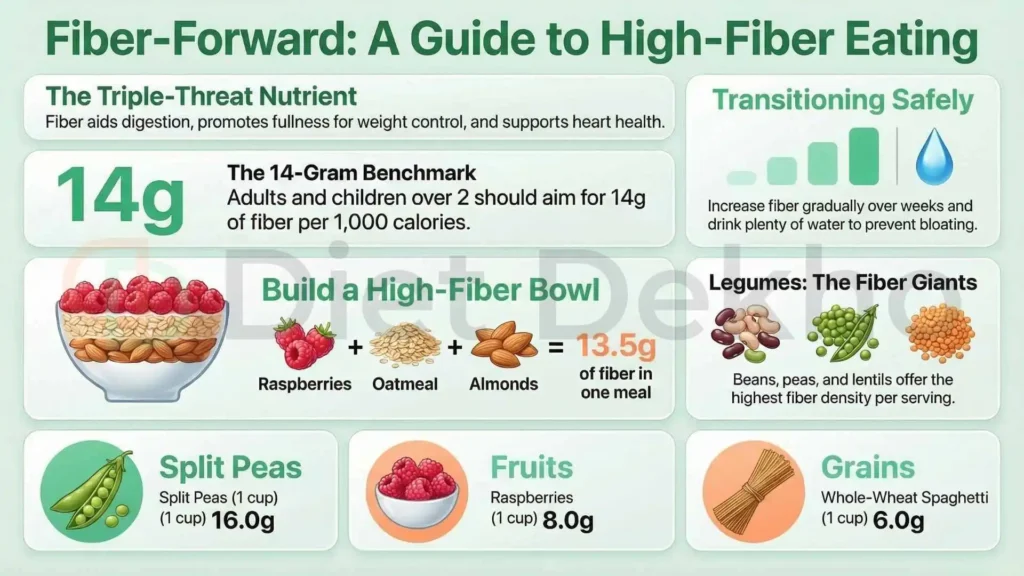
1. The Hypertension Crisis and the Fiber Gap in Modern India
Table of Contents
- 1 1. The Hypertension Crisis and the Fiber Gap in Modern India
- 2 2. The Science of Silence: How Fiber Communicates with Your Arteries
- 3 3. The Whole Grain Foundation: Beyond White Rice and Maida
- 4 4. The Vegetable Powerhouse: Potassium and Nitrate Synergy
- 5 5. Legumes and Pulses: The Heart-Healthy Protein Standard
- 6 6. Adapting the DASH Diet to the Indian Kitchen
- 7 7. Practical Meal Planning for Busy Lives
- 8 8. Common Mistakes and How to Avoid Them
- 9 9. Holistic Integration: Moving for Your Heart
- 10 Frequently Asked Questions
- 11 Contact Us
- 12 Disclaimer
The reality of high blood pressure in India is quite sobering. Recent data indicates that nearly 30% of Indian adults struggle with hypertension. This is not just a medical statistic. It represents millions of busy professionals and homemakers. Many feel exhausted by the silent nature of this condition. In urban centers like Mumbai and Delhi, the prevalence often exceeds 33%. We are seeing a dietary quality crisis. Our plates are heavily skewed toward refined oils and white rice. We are critically lacking in nutrient-dense staples.
Research from the Ministry of Statistics and Programme Implementation (MoSPI) highlights a worrying trend. Average fat consumption has surged to 2.5 times the recommended amount. Meanwhile, 42% of households fail to meet even 90% of their daily fiber needs. We consume about 11 grams of salt daily. This is more than double the WHO limit of 5 grams. What this means for your daily routine is a constant strain on your heart. But the solution starts with the very next meal you plate.
| Region of India | Hypertension Prevalence (Urban %) | Hypertension Prevalence (Rural %) |
| North | 28.8 | 14.5 |
| East | 34.5 | 31.7 |
| West | 35.8 | 18.1 |
| South | 31.8 | 21.1 |
| National Average | 33.8 | 27.6 |
| Source: Systematic review of BP burden among Indian adults. |
2. The Science of Silence: How Fiber Communicates with Your Arteries
Let’s simplify how fiber rich foods for BP actually work inside your body. Fiber is a carbohydrate your body cannot digest. It passes through your system, but it is far from useless. It acts like an internal communication system. As fiber reaches your gut, your good bacteria begin to feast on it. This process is called fermentation.
This fermentation produces short-chain fatty acids (SCFAs) like acetate and butyrate. These SCFAs are like tiny keys. They fit into specific receptors called GPR41 and GPR43 located on your blood vessel walls. When these receptors are activated, they signal your blood vessels to relax. This is known as vasodilation. When vessels relax, blood flows more easily. This reduces the force against your artery walls. Think of it like opening a wider lane on a congested highway. The pressure naturally drops without the need for aggressive force.
| Fiber Component | Interaction Type | Cardiovascular Outcome |
| Soluble Fiber | Viscous gel formation | Lowers LDL cholesterol and slows sugar absorption |
| Insoluble Fiber | Mechanical bulking | Improves gut motility and reduces systemic inflammation |
| Fermentable Fiber | SCFA Production | Directly signals blood vessel relaxation via GPR receptors |
Expert cardiologist Dr. Adedapo Iluyomade calls fiber the traffic cop for carbs. It slows down the speed at which sugar enters your blood. This prevents spikes that can damage your heart over time. By choosing fiber rich foods for BP, you are essentially hiring a professional management team for your circulatory system.
3. The Whole Grain Foundation: Beyond White Rice and Maida
I know white rice and soft maida rotis are comforting. However, they are often naked grains. They have been stripped of their protective fiber layers. To manage your BP, we need to dress our grains back up. Whole grains are the most accessible fiber rich foods for BP in an Indian household.
The 2024 Dietary Guidelines for Indians recommend that at least 50% of your cereal intake should come from whole grains. Traditional Indian nutri-cereals or millets are perfect for this. Grains like Ragi, Jowar, and Bajra are not just old-fashioned. They are high-fiber powerhouses. Ragi is exceptionally rich in calcium and potassium. Jowar has a low Glycemic Index. This keeps your blood sugar and pressure stable for hours.
| Indian Whole Grain | Common Name | Fiber per 100g | Key BP Mineral |
| Finger Millet | Ragi | 11.5g | Calcium/Potassium |
| Sorghum | Jowar | 10.2g | Magnesium |
| Pearl Millet | Bajra | 1.3g (Raw) | Iron/Zinc |
| Broken Wheat | Dalia | 1.5g (Cooked) | Complex Carbs |
| Brown Rice | Unpolished Rice | 3.5g | Magnesium |
Let’s make this practical. Switching to brown rice or adding 20% Jowar flour to your regular wheat atta makes a massive difference. You don’t have to give up your favorite foods. You just need to make them a bit more robust. This simple swap provides the magnesium needed to keep your blood flowing smoothly.
4. The Vegetable Powerhouse: Potassium and Nitrate Synergy
Vegetables are much more than side dishes. They are the primary source of potassium in the Indian diet. Potassium is the natural enemy of excess sodium. The more potassium you eat, the more sodium your body flushes out through urine. It also eases the tension in your blood vessel walls.
Green leafy vegetables like Palak (spinach) and Methi (fenugreek) should be your daily companions. A clinical trial showed that daily spinach juice dramatically lowered blood pressure readings. Beets are another secret weapon. They are rich in natural nitrates. These nitrates convert into nitric oxide in your body. Nitric oxide is a gas that tells your arteries to widen. This can lower your systolic pressure by 4-5 mmHg.
| High-Fiber Vegetable | Best Way to Eat | Fiber Content | Bonus BP Nutrient |
| Spinach (Palak) | Lightly sautéed | 4.3g per cup | Potassium |
| Beetroot | Raw in salad or juice | 3.4g per cup | Nitrates |
| Sweet Potato | Roasted with cumin | 6.6g per cup | Magnesium |
| Broccoli | Steamed | 5.0g per cup | Vitamin C |
| Bottle Gourd (Lauki) | Stuffed paratha | 4-5g per piece | High water content |
I know it is hard to find time for elaborate cooking. But what if we just crowd out the unhealthy stuff? Fill half your lunch plate with a fresh salad or a large portion of sabzi. This is the foundational treatment that doctors now recommend alongside medication.
5. Legumes and Pulses: The Heart-Healthy Protein Standard
For many of us, protein means dal. This is excellent news for your blood pressure. Legumes like Moong dal, Masoor dal, and Rajma are incredible fiber rich foods for BP. They are low in fat but extremely high in fiber and minerals.
One cup of cooked lentils provides over 15 grams of fiber. This is half of your daily requirement in just one bowl! The American Heart Association suggests swapping animal proteins for these plant-based options. It helps reduce systemic inflammation. It also helps with weight management. Even a 5-10% weight loss can significantly impact your BP levels.
| Pulse/Legume | Fiber per Cup (Cooked) | Protein per Cup |
| Lentils (Dals) | 15.5g | 18g |
| Chickpeas (Chana) | 12.5g | 15g |
| Kidney Beans (Rajma) | 13.1g | 15g |
| Split Peas | 16.3g | 16g |
Try a Moong Dal Chilla for breakfast instead of a white bread sandwich. It is a protein and fiber powerhouse. It keeps you full until lunch. This prevents the mid-morning snack cravings that usually lead to salty biscuits or chips.
6. Adapting the DASH Diet to the Indian Kitchen
You might have heard of the DASH diet. It stands for Dietary Approaches to Stop Hypertension. It is a gold standard in heart health. But you don’t need to eat Western salads to follow it. We can easily adapt it to our local flavors. The 2024 Dietary Guidelines for Indians mirror many of these principles.
The secret is balance. Imagine your plate as a circle. Half of it should be fruits and vegetables. One quarter should be whole grains. The final quarter should be healthy protein like lentils or lean curd. This combination ensures you get a synergistic blend of potassium, magnesium, calcium, and fiber.
| DASH Food Group | Daily Serving Goal | Indian Menu Example |
| Whole Grains | 6-8 servings | Ragi dosa, Brown rice, Jowar roti |
| Vegetables | 4-5 servings | Lauki sabzi, Methi paratha, Mixed salad |
| Fruits | 4-5 servings | Guava, Papaya, Oranges, Apples |
| Low-fat Dairy | 2-3 servings | Low-fat dahi, Buttermilk (Chaas), Skimmed milk |
| Nuts/Seeds | 4-5 per week | Soaked almonds, Walnuts, Flaxseeds |
Let’s simplify this for your busy life. Use herbs like ginger, garlic, and turmeric to add flavor. They are natural blood thinners. This allows you to cut down on salt without making the food taste bland. Avoid the Big Three of Indian salt: pickles (achar), papads, and namkeens. One single papad can contain as much sodium as you should have in an entire meal!
7. Practical Meal Planning for Busy Lives
I know you are juggling a lot. Whether you are a corporate professional or a dedicated homemaker, time is your most precious resource. Let’s look at how to sneak fiber rich foods for BP into your schedule effortlessly.
High-Fiber Breakfast Options (No-Gym Needed):
- Overnight Masala Oats: Soak oats in low-fat curd overnight. In the morning, add chopped carrots and a dash of pepper. It is ready before you are.
- Vegetable Poha: Use thick poha and add double the usual amount of peas and peanuts. A squeeze of lemon helps you absorb the iron.
- Ragi Malt: A quick drink made with ragi flour and buttermilk. It is perfect for those no time to sit mornings.
Lunch and Dinner Swaps:
- The 50/50 Roti: Mix half whole wheat flour with half Jowar or Bajra flour. It stays soft and provides double the fiber.
- Amaranth Dal: Add amaranth leaves (chaulai) to your regular dal. It boosts the potassium and fiber without changing the cook time.
- Lauki Khichdi: Use brown rice or broken wheat (dalia) instead of white rice. Grate a whole bottle gourd into the pot. It is the ultimate comforting, heart-healthy meal.
The Evening Snack Rescue: When the 4 PM hunger hits, avoid the canteen samosa. Keep roasted makhana (fox nuts) or roasted chana in your desk drawer. They are low in sodium and high in fiber. A handful of walnuts or soaked almonds also provides the healthy fats your arteries need to stay flexible.
8. Common Mistakes and How to Avoid Them
Adding fiber rich foods for BP is a journey, not a sprint. One common mistake is adding too much fiber too fast. If you go from 10 grams to 30 grams in one day, your stomach will complain. You might feel bloated or gassy. Add fiber slowly over two to three weeks. This gives your gut bacteria time to adjust.
Hydration is your second best friend. Fiber needs water to work. Without it, fiber can actually cause constipation. Aim for 8-12 glasses of water a day. For an extra BP boost, try coconut water or hibiscus tea. They are both naturally rich in potassium and help dilate blood vessels.
| The Mistake | The Risk | The Supportive Fix |
| Rapid fiber increase | Bloating and cramps | Increase by 5g every few days |
| Dehydration | Constipation | Drink 2-3 liters of water daily |
| Relying on juice | Losing essential pulp | Eat the whole fruit with skin |
| Hidden Salt in Health snacks | Spiking BP despite fiber | Read labels for sodium content |
What this means for your daily routine is simple. Carry a water bottle. Eat your fruit instead of drinking it. And be patient with your body. It took time for the pressure to go up; it will take a little time for it to come down safely.
9. Holistic Integration: Moving for Your Heart
While fiber rich foods for BP are a primary defense, your lifestyle completes the circle. You don’t need a gym membership to be active. For a non-gym audience, simple movements are often more sustainable.
The 2024 guidelines recommend 30-60 minutes of moderate activity daily. This can be a brisk walk after dinner, taking the stairs at work, or doing household chores. Even a 10-minute walk after each meal can help your body process sugar better and keep your blood vessels elastic.
Stress management is the final piece. High stress keeps your body in a fight or flight mode. This makes your blood vessels tight and narrow. Try three minutes of deep breathing before you start your workday. Sip on some chamomile or jasmine tea in the evening to help your nervous system wind down.
Frequently Asked Questions
Can fiber rich foods for BP really lower my readings?
Yes, they can. Clinical studies show that increasing fiber by just 5 grams can drop systolic pressure by 2.8 mmHg. Over time, a high-fiber diet can lead to a 5-10 mmHg reduction, which is similar to the effect of some mild medications.
Which Indian vegetable has the most fiber for BP?
Sweet potatoes and cooked spinach are top choices. Sweet potatoes provide about 6.6g of fiber, while a cup of cooked spinach offers 4.3g along with a massive dose of potassium to balance sodium.
Is it okay to eat potatoes if I have high blood pressure?
Absolutely! In fact, a potato (with the skin) has more potassium than a banana. The key is to bake or boil them instead of deep-frying. Avoid adding heavy butter or excessive salt.
How much fiber should I aim for every day?
The National Institute of Nutrition (NIN) recommends 25-30 grams per day for the general population. However, for those with hypertension, aiming for >28g (women) or >38g (men) can provide the most significant cardiovascular benefits.
What is the best fiber rich Indian breakfast for busy people?
Overnight oats with flaxseeds or a moong dal chilla with lots of vegetables are the best grab-and-go options. They combine soluble and insoluble fiber to keep your heart protected and your energy steady.
Contact Us
We understand how overwhelming nutrition and weight loss information can feel. With so many opinions and confusing advice online, it’s easy to feel stuck or unsure about what to do next.
At Diet Dekho, you never have to figure it out alone. You can contact us anytime with any questions or concerns. Our expert dietitians are available 24/7 to guide, support, and help you stay on track. Whether your goal is weight loss or building healthier habits, we’re here to make the journey simpler and more sustainable for you.
Disclaimer
This blog is intended to help readers make healthier food choices. Your health should always be the top priority. Before starting any restrictive or special diet, especially if you have a medical condition or health concern, please consult a doctor or a qualified dietitian. Each body responds differently to food and lifestyle changes. Always choose what is safe and suitable for you.

Abhinav is the Founder of Diet Dekho, helping people manage weight and lifestyle health through simple, practical nutrition and personalized diet plans.