Imagine it is 4:00 PM on a Tuesday. You are at your desk, the emails are piling up, and that familiar, dull ache starts thrumming at the back of your head. Or perhaps you are at home, finally sitting down after the morning rush of school tiffins and house chores, only to feel your heart racing for no apparent reason. You might reach for a packet of bhujia or a quick cup of salted chai to keep you going, but deep down, you know something is off. Many of my clients come to me feeling this exact same way tired, stressed, and worried about their latest medical report. If you have been told to watch your numbers, the first thing we need to look at together are the foods to avoid in high BP so we can give your heart the breathing room it deserves.
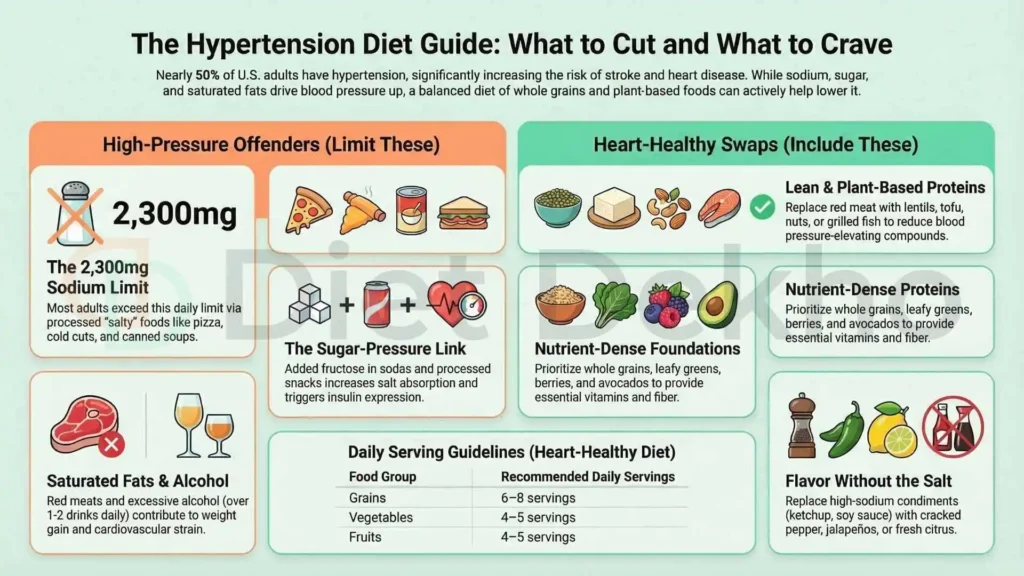
To manage your blood pressure effectively, you must primarily avoid high-sodium items like pickles (achar), papads, salted namkeens, and instant noodles, as excess salt forces your body to retain fluid and strains your arteries. Additionally, it is vital to limit processed meats, bakery products, and sugary drinks, as these contribute to weight gain and inflammation, further elevating your readings.
I know it’s hard to find time to overhaul your entire life, especially when you are juggling a career or a household. But managing your health does not have to feel like a second job. What this means for your daily routine is making small, intentional swaps that add up over time. We are not just talking about “dieting” in the restrictive sense. We are talking about understanding how certain ingredients, especially salt, act like a hidden weight on your blood vessels. When we identify the foods to avoid in high BP, we are essentially taking that weight off so your body can function the way it was meant to.
The Reality of High Blood Pressure in Our Busy Lives
Table of Contents
- 1 The Reality of High Blood Pressure in Our Busy Lives
- 2 Why Salt is the Primary Focus in Our Journey
- 3 The Hidden Salt in Our Traditional Indian Plate
- 4 Navigating the Convenience Trap: Namkeen and Biscuits
- 5 The Bread and Grain Mystery
- 6 Why “Healthy” Frozen Meals Can Be Deceptive
- 7 The Salty Truth About Sauces and Condiments
- 8 Sweets, Sugars, and Your Blood Pressure
- 9 The Danger of Processed Meats and Deli Items
- 10 Red Meat and High Blood Pressure: A Synergistic Risk
- 11 Alcohol and Caffeine: The Invisible Spikes
- 12 The Secret Power of Potassium and Magnesium
- 13 Real-World Kitchen Hacks for the Busy Cook
- 14 Navigating the Workplace and Social Events
- 15 The Non-Gym Movement Guide for the Super Busy
- 16 Palate Training: How to Stop Craving Salt
- 17 Frequently Asked Questions
- 18 Taking the Next Step Toward a Healthier You
- 19 Contact Us
- 20 Disclaimer
Before we dive into the kitchen cabinet, let’s talk about why this is such a big deal for us in India right now. High blood pressure is not just something that happens to our grandparents anymore. I see people in their late 20s and early 30s struggling with this, often because our modern lifestyle has moved faster than our bodies can adapt. According to recent data, nearly one-third of people living in our cities are hypertensive. That is a staggering number, but what is even more concerning is that many people do not even know they have it because it is so silent.
You might feel perfectly fine most of the day, but inside, that extra pressure is quietly working against your heart and kidneys. I often tell my friends that high blood pressure is like having a pipe with too much water pressure; eventually, something has to give. In India, hypertension is responsible for over half of all stroke deaths and nearly a quarter of all heart disease deaths. This is why being mindful of the foods to avoid in high BP is the kindest thing you can do for your future self. It is about prevention, yes, but it is also about feeling better right now less bloating, more energy, and fewer of those mystery headaches.
| Demographic Category | Hypertension Prevalence (%) | Awareness Rate (%) |
| Urban Men | 33.8% | 42.0% |
| Rural Men | 27.6% | 25.0% |
| Urban Women | 21.3% | 42.0% |
| Rural Women | 21.2% | 25.0% |
| Overall India | 29.8% | 25.3% |
As you can see from these numbers, the gap between having the condition and being aware of it is quite large. This is especially true for busy professionals and homemakers who tend to put everyone else’s needs before their own. I know you are busy, but taking five minutes to read a label or choose a different snack is a small investment with a massive payoff. Let’s look at how salt, our main culprit, actually affects your system.
Why Salt is the Primary Focus in Our Journey
I often hear the question, “Is salt really that bad?” The truth is, our bodies do need a little bit of sodium to keep our muscles moving and our nerves firing. But the amount we actually need is tiny about 500 mg, or a quarter of a teaspoon. Most of us, however, are consuming ten or twenty times that amount without even realizing it. When you have too much salt in your system, your body holds onto extra water to dilute that salt. This extra water increases the volume of your blood, which means your heart has to pump harder to move it all around.
Over time, this constant “over-pumping” causes your blood vessels to become stiff and narrow. It’s like a rubber band that has been stretched too many times; it loses its snap. This is why when we talk about foods to avoid in high BP, we focus so heavily on salt-heavy items. By reducing the salt, we reduce the fluid, and your heart finally gets a chance to relax. Harvard experts have noted that cutting our salt intake by just 30% could save millions of lives globally. Imagine the impact that simple change could have on your own life and your family’s health.
I know it’s hard to cut back when everything tastes so good with a bit of salt. Our Indian palate is conditioned from childhood to love those tangy, salty flavors. But here is some good news: your taste buds are actually very adaptable. If you stay away from high-salt foods for just a few weeks, you will find that your palate becomes more sensitive. Suddenly, that packet of chips you used to love will taste unpleasantly salty. You aren’t losing flavor; you are rediscovering it.
The Hidden Salt in Our Traditional Indian Plate
Let’s get practical and look at your kitchen. In many Indian homes, we have what I call the “Sodium Triple Threat”: Pickles, Papads, and Chutneys. These are the classic foods to avoid in high BP if you want to see a real change in your numbers. We often think of them as just “side dishes,” but they are actually concentrated salt bombs. A single tablespoon of mango pickle or a piece of roasted papad can have 200 mg to 300 mg of sodium. If you have two papads with lunch and a spoon of pickle with dinner, you have already hit a significant chunk of your daily limit before even counting your main meals.
| Food Item (100g) | Typical Sodium Content (mg) |
| Commercial Papad | 1,219 mg – 4,000 mg |
| Instant Pickles (Achar) | 1,500 mg – 2,500 mg |
| Store-bought Chutney | 500 mg – 800 mg |
| Table Salt (1 tsp) | 2,300 mg |
I know it’s hard to imagine a meal without that crunch or tang, but what this means for your daily routine is finding better ways to get that satisfaction. Papads, in particular, are tricky because even the “healthy” ones are often loaded with sodium bicarbonate and salt to give them that airy texture when fried or roasted. If you are struggling with your BP, I would suggest keeping these as very occasional treats rather than daily staples. Instead, try a fresh kachumber salad with lemon and black pepper for that same refreshing crunch without the sodium spike.
If you are a busy professional, I know the 4:00 PM hunger pangs are real. You are in the middle of a meeting, or you’ve just finished a long commute, and the easiest thing to grab is a packet of bhujia, some salted peanuts, or those “healthy” digestive biscuits. Unfortunately, these are some of the most common foods to avoid in high BP. Processed snacks like sev, murukku, and mixture are designed to be addictive, and salt is the key ingredient that keeps you reaching for more.
What is even more surprising is the hidden salt in sweet treats. Have you ever wondered why even sweet biscuits or cornflakes have sodium on the label? It’s because salt balances the sweetness and acts as a preservative. A small packet of namkeen can easily exceed 1,000 mg of sodium, which is nearly half of your entire day’s allowance in just five minutes of snacking. And because these snacks are often high in saturated fats too, they are a double-hit for your heart health.
Let’s simplify this: if a snack comes in a crinkly plastic bag and lasts for six months on a shelf, it is likely high in sodium. I know it takes a bit more planning, but carrying a small container of unroasted, unsalted makhana (fox nuts) or a handful of plain roasted chana can satisfy that need for a crunch without sending your blood pressure soaring. Your body will thank you for the steady energy instead of the salt-induced bloat.

The Bread and Grain Mystery
One of the biggest “Aha!” moments my clients have is when we talk about bread. Most people don’t think of bread as salty. After all, it doesn’t taste like a pickle! But bread is actually one of the biggest sources of hidden sodium in our modern diet. To get bread to rise and have that soft texture, bakeries use a lot of salt and yeast. This includes everything from your morning white bread toast to the sandwich you grab for lunch, and even those fancy artisanal loaves.
| Cereal/Grain Product | Sodium Content per Serving (Approx) |
| White Bread (2 slices) | 300 mg – 450 mg |
| Cornflakes (1 cup) | 200 mg – 300 mg |
| Instant Noodles (1 pack) | 1,200 mg – 2,000 mg |
| Veggie Burger Bun | 400 mg – 600 mg |
When you combine bread with other items like a slice of cheese, some processed butter, or a smear of ketchup you are looking at a “salt sandwich.” This is why bread and bakery items are high on the list of foods to avoid in high BP. If you can, try to stick to homemade rotis or parathas where you can control the amount of salt in the dough. If you must buy bread, look for “whole grain” and check the label for the lowest sodium count per slice. Even better, try traditional breakfasts like poha or upma made with plenty of vegetables and just a tiny pinch of salt.
Why “Healthy” Frozen Meals Can Be Deceptive
For many of us who are balancing a demanding job and a family, frozen meals or “ready-to-eat” packets seem like a lifesaver. You just heat them up, and dinner is served. But there is a hidden cost to that convenience. To keep those meals tasting “fresh” after weeks in a freezer, manufacturers load them with salt. Even the ones marketed as “low calorie” or “loaded with veggies” can pack 600 mg to 1,000 mg of sodium per serving.
I know it’s hard to find time to cook every single night, but what this means for your daily routine is that we need to find a middle ground. Instead of a fully prepared frozen meal, maybe you can use frozen plain vegetables and toss them with some fresh ginger, garlic, and a little dal. That way, you get the convenience without the sodium overload. When you are looking at the label, try to find items with less than 140 mg of sodium per serving that is the gold standard for a low-sodium food.
Another thing to watch out for is frozen meats. Did you know that even plain frozen chicken is sometimes “plumped” with a saltwater solution to keep it moist? This can turn a naturally low-sodium food into something that’s quite high. It is always safer to go with fresh cuts from a local butcher whenever possible. It’s a small extra step, but it keeps those hidden salts out of your kitchen.
The Salty Truth About Sauces and Condiments
We often forget that what we pour on our food is just as important as the food itself. Ketchup, soy sauce, salad dressings, and even that “healthy” hot sauce are major contributors to high blood pressure. Soy sauce is perhaps the biggest offender; even the “low sodium” version can still have 500 mg to 1,000 mg per tablespoon.
I once had a client who was doing everything right eating salads, avoiding fried food but her blood pressure wouldn’t budge. When we looked closer, she was using two tablespoons of store-bought dressing every day. That was adding nearly 600 mg of salt to her “healthy” lunch! These are the sneaky foods to avoid in high BP because we use them so casually.
Instead of reaching for the bottle, try making your own flavor boosters. A squeeze of fresh lemon, a dollop of plain curd, or a homemade mint chutney can give you all the zing you want without the salt. I promise, once you get used to the taste of fresh herbs and citrus, the bottled stuff will start to taste artificial and overly salty. It’s all about retraining those taste buds to enjoy real, vibrant flavors.

Sweets, Sugars, and Your Blood Pressure
You might be thinking, “Wait, I thought the problem was salt! Why are we talking about sugar?” It’s a great question. While salt is the primary driver, sugar plays a sneaky supporting role in raising your blood pressure. When we eat too much sugar especially the kind found in sodas, energy drinks, and processed sweets our bodies produce more insulin. High insulin levels can actually cause your kidneys to hold onto more sodium.
Additionally, sugar contributes to weight gain, and we know that carrying extra weight, especially around the middle, puts more pressure on your heart. Studies have shown that even a small reduction in added sugar can lead to a significant drop in blood pressure numbers. This is why sugary drinks and desserts are also foods to avoid in high BP.
I’m not saying you can never have a treat again. But for your daily routine, try to satisfy that sweet tooth with whole fruits like a ripe mango or a bowl of berries. These give you the sweetness along with fiber and potassium, which actually helps lower your blood pressure. It’s a win-win for your palate and your heart.
The Danger of Processed Meats and Deli Items
In urban India, we are seeing a rise in the consumption of processed meats like sausages, salami, and bacon. These are particularly dangerous for anyone with hypertension. These meats are not just “meat”; they are preserved using massive amounts of salt and nitrates to keep them pink and prevent spoilage. Just two thin strips of bacon or a single hot dog can have over 500 mg of sodium.
When you consider that these are also high in saturated fats, you can see why they are top of the list for foods to avoid in high BP. Saturated fats increase your “bad” cholesterol, which leads to plaque buildup in your arteries. When your arteries are narrowed by plaque, your blood pressure has to go up just to get the blood through those tighter spaces.
If you love your meat, try to stick to fresh, lean options. Grilled chicken, fish, or even a lean cut of mutton prepared at home with minimal salt and oil is a much safer choice. It might take ten extra minutes to cook, but the long-term benefit for your arteries is worth every second.

Red Meat and High Blood Pressure: A Synergistic Risk
Red meats like beef, lamb, and goat are often centerpieces of festive Indian meals. While they provide protein and iron, they also come with a high load of saturated fat. For someone already struggling with their BP, regular consumption of red meat can make management much harder. The high fat content contributes to inflammation and vascular stiffness.
What this means for your daily routine is that we should treat red meat as a “special occasion” food rather than a daily or even weekly staple. When you do have it, choose the leanest cuts possible and avoid adding heavy, salty gravies. I often suggest my clients try plant-based proteins like lentils (dal), chickpeas (chana), or paneer a few times a week. These are naturally low in sodium and high in fiber, which helps sweep out excess cholesterol from your system.
| Protein Source | Saturated Fat (Approx) | Sodium Content (Fresh) |
| Lean Chicken Breast | Low | Low |
| Fish (Salmon/Mackerel) | Healthy Fats (Omega-3) | Low |
| Lamb/Mutton | High | Moderate |
| Lentils/Pulses | Very Low | Very Low |
By shifting the balance of your plate toward these lighter proteins, you are reducing the overall stress on your cardiovascular system. It’s not about giving up flavor; it’s about choosing ingredients that love your heart back.
Alcohol and Caffeine: The Invisible Spikes
We often think about what we eat, but what we drink is just as crucial. Alcohol is a major trigger for high blood pressure. Not only does it raise your BP directly, but it also adds “empty” calories that lead to weight gain. Furthermore, alcohol can interfere with the effectiveness of blood pressure medications. The general guideline is no more than two drinks a day for men and one for women, but even less is better if you are trying to bring your numbers down.
Then there is caffeine. I know, I know that morning cup of chai or coffee is what gets you through the day. And while a moderate amount is usually fine, too much caffeine can cause a temporary but sharp spike in your blood pressure. If you already have high BP, your heart is already working hard; we don’t want to over-stimulate it.
Try to limit yourself to one or two cups a day, and avoid those high-caffeine energy drinks altogether. If you find yourself reaching for a third cup, try switching to a soothing herbal tea or just a glass of water with a slice of lemon. Often, we are just looking for something to sip on while we work, and a salt-free, caffeine-free option can be just as satisfying.
The Secret Power of Potassium and Magnesium
While we’ve spent a lot of time talking about foods to avoid in high BP, I want to share a little secret about what you should add. Potassium is like the natural “antidote” to sodium. It helps your kidneys flush out excess salt through your urine and actually relaxes the walls of your blood vessels.
If you’ve had a salty meal, eating something rich in potassium can help mitigate some of the damage. Magnesium works in a similar way, helping your arteries stay flexible and “snappy”.
| Potassium-Rich Foods | Magnesium-Rich Foods |
| Bananas (Kela) | Spinach (Palak) |
| Sweet Potatoes (Shakarkandi) | Almonds and Walnuts |
| Curd (Dahi) | Flax seeds and Chia seeds |
| Watermelon (Tarbooz) | Whole grains (Oats/Millets) |
| Coconut Water | Dark chocolate (in moderation) |
Incorporating these into your day is a great way to actively fight back against high BP. I love suggesting a bowl of curd with some sliced banana for a mid-morning snack. It’s filling, cooling, and gives you a double dose of heart-healthy minerals. It’s a simple, delicious way to tell your body you are on its side.
Real-World Kitchen Hacks for the Busy Cook
I know that when you get home at 7:00 PM, the last thing you want to do is an elaborate cooking session. But you don’t need a three-course meal to stay healthy. Let’s look at some simple hacks to keep the salt out of your home cooking.
First, stop adding salt to your rice or your chapati dough. Most of us do this out of habit, but you won’t even miss it once you have a flavorful dal or sabzi to go with it. Second, use ginger, garlic, and green chilies generously. These add so much “heat” and flavor that you naturally need less salt to make the dish taste “complete”.
Third, if you are using canned vegetables or beans, always rinse them under cold water for a minute. This simple step can wash away up to 40% of the sodium they were sitting in. And finally, experiment with amchur (dry mango powder) or kokum. These souring agents provide a “zing” that mimics the sharp taste of salt, making your curries taste much more vibrant. These small changes don’t add any extra time to your cooking, but they make a massive difference to your health.
Being the “healthy one” at an office party or a wedding can feel awkward. I’ve been there! You don’t want to be the person only eating a piece of cucumber while everyone else enjoys the samosas. But here is how you can manage: eat a small, healthy snack at home before you go. If you aren’t starving when you arrive, you’ll find it much easier to say no to the deep-fried, salt-heavy appetizers.
When you are at a restaurant, don’t be afraid to ask the waiter for “less salt” or “no added MSG.” Most kitchens are happy to accommodate this if you ask. Avoid the heavy gravies and instead look for grilled or tandoori options that aren’t swimming in salty sauces.
And remember, hydration is your best friend. Sometimes our bodies confuse thirst with salt cravings. If you feel like you need a salty snack, try drinking a glass of water first. It might just be the fluid balance your body was actually asking for.
The Non-Gym Movement Guide for the Super Busy
I know you might not have an hour to spend at the gym, and that’s okay. You can still lower your blood pressure by moving in the cracks of your day. A 10-minute brisk walk after lunch can do wonders for your circulation. If you are a homemaker, try putting on some music and dancing while you fold the laundry. It sounds silly, but it gets your heart rate up and lowers stress.
If you spend all day at a desk, try “desk yoga” or just standing up every hour to stretch your calves. This keeps the blood from pooling in your legs and helps your heart work more efficiently. The goal is consistency over intensity. Moving for 30 minutes throughout the day in small chunks is just as effective as one long session at the gym.
| Activity | Time/Frequency | Benefit for BP |
| Brisk Walking | 30 mins, 5 days/week | Lowers SBP by 5-8 mmHg |
| House Chores (Intense) | Daily | Improves vessel elasticity |
| Desk Stretching | Every hour | Reduces vascular stiffness |
| Climbing Stairs | 2-3 times/day | Strengthens cardiac muscle |
Think of movement as a natural medicine for your arteries. Every step you take helps them stay flexible and clear. It’s not about being an athlete; it’s about being an active human being.

Palate Training: How to Stop Craving Salt
The hardest part of identifying foods to avoid in high BP is the fear that food will never taste good again. I want to reassure you that this is a myth. Our taste buds are constantly renewing themselves. If you commit to a low-salt lifestyle for just 21 days, your brain will actually reset its “salt threshold”.
Start by reducing the salt you add at the table. Then, slowly reduce the salt in your cooking by 10% each week. Your family probably won’t even notice! Use plenty of black pepper, which has a sharp “bite” that can satisfy the need for seasoning. Before you know it, you will be the person complaining that restaurant food is too salty.
This journey is not about deprivation; it’s about liberation. You are freeing yourself from the cycle of salt-induced thirst and bloat. You are taking control of your health, one bite at a time. And I promise, once you start seeing those blood pressure numbers drop, that feeling of achievement will taste better than any packet of chips ever could.
Frequently Asked Questions
Q1: Can I use Sendha Namak (Rock Salt) instead of regular salt for high BP?
While Sendha Namak contains some trace minerals, it is still primarily sodium chloride. For your heart, it has the same effect as regular table salt. It is better to focus on reducing the total amount of any salt you use rather than just switching types.
Q2: Are all “low-fat” foods safe for my blood pressure?
Not necessarily. Often, when manufacturers remove fat, they add extra salt or sugar to keep the food tasting good. Always check the nutrition label for sodium content, regardless of whether it says “low-fat” or “diet” on the front.
Q3: How quickly will my blood pressure drop if I avoid these foods?
Many people see a measurable difference in their readings within just two to four weeks of consistent dietary changes. However, it is important to keep these habits long-term to maintain those healthy numbers.
Q4: Is it okay to eat pickles if I make them at home?
Even homemade pickles require a significant amount of salt for the fermentation process and to prevent spoilage. While they might have fewer preservatives than store-bought ones, they are still very high in sodium and should be eaten in very small amounts.
Taking the Next Step Toward a Healthier You
I know that changing the way you eat can feel overwhelming, especially when you are already juggling so much. But remember, you don’t have to be perfect. You just have to be better than you were yesterday. Start by picking one of the foods to avoid in high BP and replacing it this week. Maybe it’s the papad at lunch, or the salted biscuits with your evening chai.
These small victories matter. They are the building blocks of a longer, more vibrant life where you have the energy to play with your kids, excel at your job, and enjoy your home without the shadow of health worries. You have the power to change your numbers, and it starts with what you put on your plate today.
If you are feeling stuck or need a personalized plan that fits your busy schedule, we are here to help you simplify this process. Let’s work together to create a lifestyle that feels like a joy, not a chore.
Take control of your heart health today!
Contact Us
We understand how overwhelming nutrition and weight loss information can feel. With so many opinions and confusing advice online, it’s easy to feel stuck or unsure about what to do next.
At Diet Dekho, you never have to figure it out alone. You can contact us anytime with any questions or concerns. Our expert dietitians are available 24/7 to guide, support, and help you stay on track. Whether your goal is weight loss or building healthier habits, we’re here to make the journey simpler and more sustainable for you.
Disclaimer
This blog is intended to help readers make healthier food choices. Your health should always be the top priority. Before starting any restrictive or special diet, especially if you have a medical condition or health concern, please consult a doctor or a qualified dietitian. Each body responds differently to food and lifestyle changes. Always choose what is safe and suitable for you.

Abhinav is the Founder of Diet Dekho, helping people manage weight and lifestyle health through simple, practical nutrition and personalized diet plans.