
I know it’s hard to find time to overhaul your kitchen when your schedule is already packed. Many of my clients feel overwhelmed when they first hear the word diabetes because they fear losing their favorite home-cooked comforts. However, finding a healthy diet for diabetic patient success doesn’t mean eating bland food. Instead, it is about making smarter choices that fit your busy life.
A healthy diet for diabetic patient goals focuses on stabilizing blood sugar using low-glycemic index (GI) foods like millets, pulses, and green vegetables. Specifically, you should follow the 1:2:1 plate method: fill half your plate with greens, one-quarter with lean protein, and one-quarter with complex carbohydrates to manage insulin levels effectively while keeping your energy high.
The Realities of Diabetes in India Today
Table of Contents
- 1 The Realities of Diabetes in India Today
- 2 How Your Body Manages Blood Sugar
- 3 Navigating the New ICMR 2024 Dietary Guidelines
- 4 Regional Swaps: Making Indian Staples Diabetes-Friendly
- 5 The 1:2:1 Plate Method for Busy People
- 6 Mindful Eating and Managing Cravings
- 7 The Healing Power of Indian Spices
- 8 Conclusion
- 9 Contact Us
- 10 Disclaimer
We are currently facing a significant health shift in our country. Recent data from the ICMR-INDIAB study shows that nearly 101 million people in India live with diabetes, while another 136 million are in the prediabetic stage. This means over half of the people screened show some form of blood sugar imbalance. Consequently, we must move toward better dietary literacy to protect our long-term health.
Interestingly, the condition is no longer just an urban issue. While cities report higher cases due to sedentary desk jobs and processed foods, rural areas are seeing a faster rise than we previously thought. Furthermore, almost one in two people with high blood sugar do not even realize they have the condition. This silent burden can eventually impact your heart, kidneys, and thyroid if left unmanaged.
| Region or State | Estimated Prevalence (%) | Key Contributing Factors |
| Puducherry | 63% | High urban stress and processed food |
| Odisha | 61% | Rapidly changing dietary patterns |
| Tamil Nadu | 56% | High reliance on polished white rice |
| Himachal Pradesh | 41% | More active lifestyles and traditional diets |
How Your Body Manages Blood Sugar
Let’s simplify how a healthy diet for diabetic patient needs actually works. When you eat carbohydrates, your body breaks them down into glucose for energy. In a healthy system, the pancreas produces insulin to move this sugar into your cells. However, in type 2 diabetes, your cells either resist this insulin or your body doesn’t make enough of it.
The type of carbohydrate you choose determines how fast your blood sugar rises. For instance, simple carbs like white bread, sugary drinks, and polished rice cause rapid spikes because they have a high glycemic index (GI). On the other hand, complex carbs found in whole grains and legumes contain fiber. This fiber acts like a natural brake, slowing down sugar absorption so your blood glucose stays steady.
Why Fiber and Protein are Your Best Friends
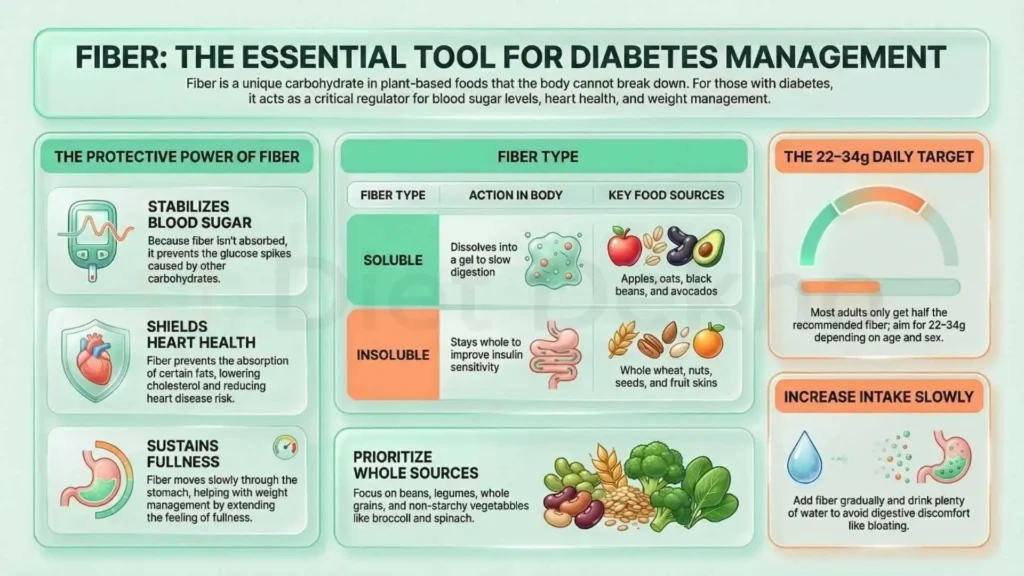
Dietary fiber is an essential tool for managing your appetite. Since your body cannot digest it, fiber fills you up and prevents the sugar crashes that make you reach for unhealthy snacks. For the best results, always choose whole fruits over juices. Juicing removes the fiber you need to keep your glucose levels in check.
In addition to fiber, protein acts as a metabolic anchor for your meals. Including sources like lentils (dal), paneer, eggs, or lean chicken at every meal helps stabilize your blood sugar even further. Moreover, protein supports your muscles, which are the main places where your body burns off excess sugar.

The Indian Council of Medical Research (ICMR) updated its guidelines in 2024 to help us combat the rise of type 2 diabetes. Their main message is a shift away from diets that rely too heavily on grains. Specifically, the report recommends that cereals and millets should provide no more than 45% of your total daily calories. Currently, many Indian households get 70% to 80% of their energy from grains alone.
Instead of just eating more rice or roti, you should aim to get 15% of your calories from pulses, beans, or meat. The rest of your energy should come from nuts, vegetables, fruits, and milk. This balanced approach prevents the metabolic stress that comes from eating too many carbs at once.
Practical Pillars of Healthy Eating
The ICMR guidelines provide a simple roadmap for your daily routine:
- Variety is Key: Eat a diverse range of food groups to ensure you get all your vitamins and minerals.
- Moderate Your Fats: While healthy fats are necessary, use oils sparingly. Focus on nuts and seeds rather than heavy amounts of butter or ghee.
- Watch the Salt and Sugar: Limit your salt to less than 5g per day and avoid ultra-processed foods that hide extra sugar.
- Cut the Trans Fats: Stay away from packaged snacks and bakery items, as these can make insulin resistance worse.
| Guideline Focus | Actionable Step for Your Kitchen |
| Balanced Diet | Include at least 5 different food groups daily |
| Healthy Fats | Use mustard, peanut, or sunflower oil in moderation |
| Salt Intake | Restrict added salt to one teaspoon per day |
| Processed Foods | Avoid ready-to-eat snacks high in sugar and salt |

Regional Swaps: Making Indian Staples Diabetes-Friendly
Our country has beautiful, diverse cuisines, but many of our staples are high in starch. Fortunately, you can easily adapt these dishes to support a healthy diet for diabetic patient requirements without losing the flavor you love.
South India: Mastering the Rice Culture
In Southern states, white rice is the hero of the plate. However, polished white rice has a high GI ( >70 ), which can lead to sugar spikes. To fix this, you can swap rice for millets like Ragi (finger millet) or Jowar (sorghum) when making idli and dosa batters.
Furthermore, you can adjust the ratio of your batter by adding more Urad dal or Moong dal. These protein-rich pulses lower the overall glycemic impact of your breakfast. Always try to add finely chopped carrots, beans, or spinach directly into your uttapams or idlis to increase the fiber content.
North India: Revamping the Wheat Basket
Whole wheat (gehun) is a staple in the North, and while it is better than refined flour (maida), it still affects blood sugar. I recommend mixing your wheat flour with chana dal flour (besan) or barley (jau) to create a missi roti style dough.
Additionally, you can make your curries healthier by avoiding heavy cream and excessive oil. For example, a tomato-based gravy or a pureed spinach base for Palak Paneer provides excellent nutrition without the extra calories. Tandoori or grilled proteins are also much better than deep-fried snacks because they use very little oil.

Western and Eastern Indian Delights
In states like Maharashtra and Gujarat, the Thalipeeth is a fantastic multi-grain option. It uses a mix of roasted legumes and grains (bhajanee) that naturally releases energy slowly. To improve it further, grate some bottle gourd (lauki) into the dough for extra hydration and fiber.
In Eastern India, steaming is a common cooking method, which is perfect for glycemic control. For instance, whole wheat momos filled with sprouts and vegetables are much healthier than fried samosas. Moreover, the region’s love for fish is a great advantage. A light fish stew (Maacher Jhol) made with papaya or ridge gourd provides healthy omega-3 fats that protect your heart.
| Region | Traditional High-GI Food | Healthy Diabetes Swap |
| South | White Rice Idli | Oats or Ragi Idli with extra Sambar |
| North | Maida Naan | Multigrain or Besan Roti |
| West | Deep-fried snacks | Baked Thalipeeth or Roasted Chana |
| East | Large Rice portions | Small Brown Rice portion + Fish Curry |

The 1:2:1 Plate Method for Busy People
I know you’re busy, and counting every calorie is frustrating. Let’s simplify this with a visual tool called the 1:2:1 Balanced Plate. Instead of guessing, you just look at your plate and divide it into three sections:
- 50% (Two parts): Fill this with non-starchy vegetables like cauliflower, bhindi, or a fresh salad.
- 25% (One part): Add a serving of lean protein such as moong dal, paneer, eggs, or sprouts.
- 25% (One part): This is for your complex carbs, like one multigrain roti or a small bowl of brown rice.
This structure works because the large volume of vegetables slows down your digestion. Consequently, you get a much flatter sugar curve after eating, which prevents that afternoon brain fog at the office.
Kitchen Hacks for Professionals
If you find it hard to cook every day, try these time-saving tips:
- Weekend Batch Cooking: Boil your dals and legumes (chana, rajma) in large batches and store them in the fridge for up to 4 days.
- Prep Your Aromatics: Make ginger-garlic paste and chop your onions and tomatoes on Sunday so you can start cooking immediately when you get home.
- Freeze Your Gravies: You can cook a base onion-tomato masala and freeze it in portions. Later, just add your veggies or protein for a 10-minute meal.
- Smart Snacking: Keep roasted makhana or chana in your desk drawer to avoid the office vending machine.

Mindful Eating and Managing Cravings
What this means for your daily routine is that how you eat is just as important as what you eat. Many of us inhale our food while watching TV or scrolling through our phones. However, it takes about 20 minutes for your stomach to tell your brain that you’re full. If you eat too fast, you will likely overeat before those signals arrive.
Dr. Amit Bhushan Sharma emphasizes that mindful eating, chewing slowly and noticing textures is a powerful companion to blood sugar control. It helps you recognize true hunger and reduces the stress hormones that can actually spike your sugar levels.
Managing the Sweet Tooth
Cravings often happen when your blood sugar is imbalanced or when you’re dehydrated. Before reaching for a sweet, try drinking a glass of water or having a protein snack like a handful of almonds. For festivals, you can make smarter swaps:
- Natural Sweeteners: Use dates or a small amount of stevia in your kheer instead of white sugar.
- Healthy Laddoos: Try making laddoos with ragi or almond flour and nuts for a slow-release energy treat.
- Baked over Fried: Bake your karanji or shakkar para instead of deep-frying them to save on unhealthy fats.

The Healing Power of Indian Spices
Our traditional kitchen is like a natural pharmacy. Many spices we use daily offer significant metabolic benefits:
- Fenugreek (Methi): The seeds are packed with fiber. Starting your day with water-soaked methi seeds is a clinically proven way to improve sugar levels.
- Cinnamon (Dalchini): Adding a pinch to your morning tea or oats can help improve how your body uses insulin.
- Turmeric (Haldi): Curcumin in turmeric helps reduce the inflammation often seen in chronic conditions.
- Ginger and Garlic: These aromatics support healthy digestion and keep your metabolic markers stable.

Conclusion
Managing your health doesn’t have to be a struggle against your heritage. By following the new ICMR 2024 guidelines and adopting the 1:2:1 plate method, you can enjoy flavorful Indian meals while keeping your blood sugar stable. Ultimately, success comes from small, consistent steps rather than drastic, unsustainable changes. Start by swapping your white rice for millets or adding more fiber to your rotis today.
FAQs: Common Questions About Diabetic Eating
1. Is it safe to eat white rice at all?
Yes, you can occasionally enjoy white rice, but portion size is vital. Limit it to one-quarter of your plate and always pair it with a double portion of high-fiber vegetables and a protein source like dal or curd.
2. Which fruits are the best for my sugar levels?
Choose low-GI fruits like guava, apples, pears, and berries. These are high in fiber and release sugar slowly. However, you should limit high-sugar fruits like mangoes and grapes to small, occasional portions.
3. Can I control diabetes with just my diet?
In the early stages of type 2 diabetes or prediabetes, lifestyle changes can make a massive difference. Nevertheless, you must work closely with your doctor, as many people still require medication to prevent long-term issues.
4. How many rotis can I eat per meal?
Most people find that 1 or 2 medium-sized multigrain or millet rotis are sufficient. The key is ensuring your plate is mostly filled with vegetables and protein so the grains don’t cause a spike.
5. What are the best drinks to have at home?
Stick to water, unsweetened buttermilk (chaas), or lemon water without sugar. Avoid packaged fruit juices and sodas, as these contain high amounts of simple sugars that spike your levels instantly.

Take the first step toward a healthier future. Click here to get your personalized, diabetes-friendly meal plan today.
Contact Us
We understand how overwhelming nutrition and weight loss information can feel. With so many opinions and confusing advice online, it’s easy to feel stuck or unsure about what to do next.
At Diet Dekho, you never have to figure it out alone. You can contact us anytime with any questions or concerns. Our expert dietitians are available 24/7 to guide, support, and help you stay on track. Whether your goal is weight loss or building healthier habits, we’re here to make the journey simpler and more sustainable for you.
Disclaimer
This blog is intended to help readers make healthier food choices. Your health should always be the top priority. Before starting any restrictive or special diet, especially if you have a medical condition or health concern, please consult a doctor or a qualified dietitian. Each body responds differently to food and lifestyle changes. Always choose what is safe and suitable for you.

Abhinav is the Founder of Diet Dekho, helping people manage weight and lifestyle health through simple, practical nutrition and personalized diet plans.