Imagine coming home after a long, exhausting day at the office, or finally sitting down after finishing the household chores, only to feel that nagging hunger strike. You reach for a packet of salted bhujia or a couple of biscuits, thinking a small bite won’t hurt, but for your heart, these choices matter. Finding the right snacks for BP doesn’t have to be a struggle between taste and health. I know it is hard to find time to cook elaborate meals when you are busy, so let’s simplify how you can snack smartly while keeping your numbers in check.
Healthy snacks for BP patients focus on low-sodium, high-potassium ingredients like roasted makhana, sprouts chaat, and fresh fruits. These options help regulate fluid balance and relax blood vessels. Prioritizing whole grains, nuts, and seeds over processed namkeens can significantly lower blood pressure levels while providing sustained energy for busy professionals and homemakers.
The Silent Crisis of Hypertension in the Indian Household
Table of Contents
- 1 The Silent Crisis of Hypertension in the Indian Household
- 2 The DASH Diet Adaptation for the Indian Palate
- 3 Why the Evening Snack Window is Your Critical Zone
- 4 The Power of Millets: Traditional Grains for Modern Hearts
- 5 Makhana: The Ultimate Low-Sodium Crunch
- 6 The Role of Legumes and Sprouts in Vascular Health
- 7 Why You Should Be Wary of the “Salty Six”
- 8 Smart Swaps for the Indian Kitchen
- 9 The Beverage Factor: Chai, Coffee, and Hydration
- 10 Practical Meal Prep for Busy Professionals and Homemakers
- 11 Summary of Heart-Healthy Indian Snacks
- 12 Frequently Asked Questions
- 13 Conclusion: Your Journey to a Healthier Heart
- 14 Contact Us
- 15 Disclaimer
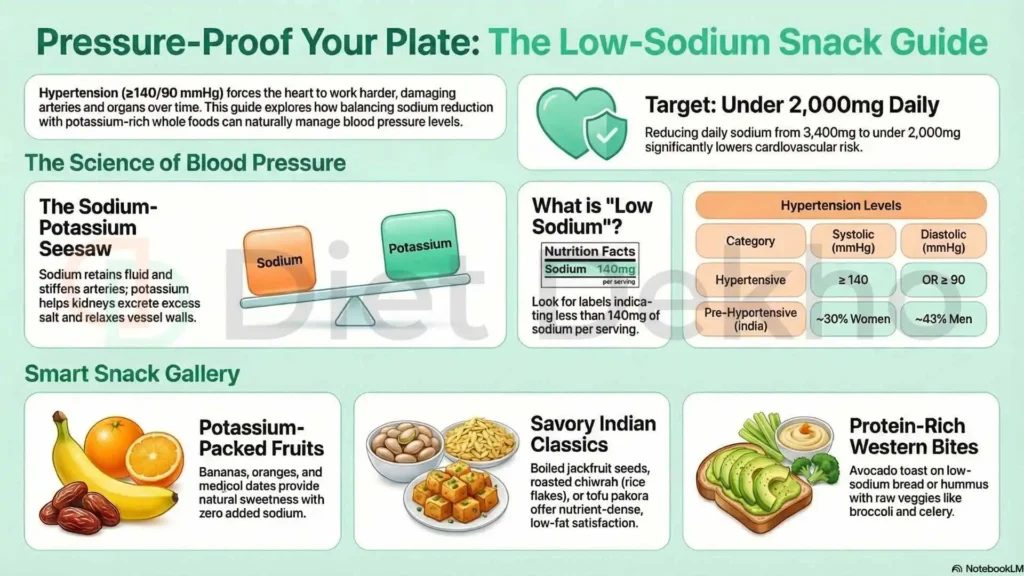
The scale of high blood pressure in India is truly staggering, often described by health experts as a silent killer because it rarely shows obvious symptoms until significant damage is done. Recent data from the ICMR-INDIAB study indicates that nearly 315 million people in India live with hypertension. This means roughly one in every three adults is managing this condition, yet many remain unaware of their status until a routine checkup or a health scare occurs. What this means for your daily routine is that monitoring your intake isn’t just a clinical suggestion; it is a fundamental necessity for long-term heart health.

I know it feels overwhelming to look at these national numbers, but the India Hypertension Control Initiative (IHCI) has shown that even small interventions can lead to massive improvements. For example, in some districts, control rates reached as high as 55% at local Health and Wellness Centres. This proves that with the right guidance and simple dietary shifts, you can effectively manage your numbers without needing a complete life overhaul.
Understanding the National Burden of Metabolic Disease
The prevalence of hypertension in India has reached an alarming 35.5%, creating a dual burden alongside rising diabetes rates. In states like Punjab, the prevalence has soared above 50%, while even in historically lower-prevalence states, the numbers are climbing. This shift is largely attributed to the transition from traditional, fiber-rich homemade thalis to a diet dominated by ultra-processed foods, instant noodles, and salty takeout.
| Hypertension Statistics in India (2024 Estimates) | Value and Impact |
| Estimated Number of Hypertensive Individuals | 315 Million |
| National Prevalence Rate | 35.5% |
| Individuals with Controlled Blood Pressure | ~12% to 21% |
| Percentage of Deaths Attributed to CVD in India | 33% |
| Target Reduction by 2025 (WHO/IHCI) | 25% relative reduction |
The economic cost of treating these complications is significant, yet the IHCI has demonstrated that standard treatment protocols in the public sector can cost as little as Rs 200 per patient per year. This highlight emphasizes that prevention through dietary management, particularly through choosing the right snacks for BP, is the most cost-effective strategy for the average Indian family.
The Physiological Tug of War Between Sodium and Potassium
To understand why your evening snack choices matter so much, we have to look at how minerals interact within your blood vessels. Sodium acts like a magnet for water, pulling fluid into your bloodstream, which increases the volume and pressure against your artery walls. In contrast, potassium helps your kidneys flush out excess sodium and eases the tension in your blood vessel walls.
The average Indian currently consumes about 9.2 grams of salt per day in urban areas, which is nearly double the World Health Organization’s recommendation of less than 5 grams. When you choose snacks for BP, you are essentially trying to tip the scales back in favor of potassium and magnesium. These minerals act as natural relaxants for your cardiovascular system, ensuring that your heart doesn’t have to work overtime to circulate blood.

The DASH Diet Adaptation for the Indian Palate
The Dietary Approaches to Stop Hypertension (DASH) diet is globally recognized as the gold standard for blood pressure management. While it was originally developed in a Western context, its principles are perfectly suited for the Indian kitchen. The DASH plan isn’t about rigid rules or starving yourself; it is about emphasizing fruits, vegetables, whole grains, and low-fat dairy while limiting red meat and sweets.
For a busy professional or a homemaker, this means swapping white rice for brown rice or millets and ensuring that your snack bowl contains nuts and seeds rather than fried savories. This eating plan is naturally rich in potassium, calcium, and magnesium, all of which play a vital role in regulating your heart’s rhythm and pressure.
Recommended Daily Servings for Effective Control
| Food Group | Daily Servings (2,000 Calorie Plan) | Indian Serving Examples |
| Grains (Whole) | 6–8 Servings | 1 Chapati, 1/2 cup brown rice, 1 slice whole-wheat bread |
| Vegetables | 4–5 Servings | 1 cup raw leafy greens, 1/2 cup cooked subzi |
| Fruits | 4–5 Servings | 1 medium banana, 1/2 cup seasonal fruit chaat |
| Low-fat Dairy | 2–3 Servings | 1 cup curd (dahi), 1 glass buttermilk |
| Lean Protein | 6 or fewer Servings | 1 egg, 1 oz cooked dal or grilled paneer |
| Nuts, Seeds, Legumes | 4–5 per Week | 1/3 cup almonds, 2 tbsp flax seeds |
| Fats and Oils | 2–3 Servings | 1 tsp vegetable oil or olive oil |
| Sweets | 5 or fewer per Week | 1 tbsp jaggery or honey |
I know it feels like a lot of servings to track, but let’s simplify this. If you use your evening snack time to eat a bowl of sprouts or a piece of fruit, you are already meeting two of your daily requirements. This approach turns snacking from a health hazard into a health opportunity.
The Mediterranean Influence on Local Habits
Another powerful dietary pattern is the Mediterranean diet, which focuses on healthy fats from nuts, seeds, and olive oil. In India, we can mirror this by using oils like mustard or peanut oil in moderation and increasing our intake of legumes like chickpeas and lentils. These foods are high in fiber, which helps manage weight and blood sugar, both of which are closely linked to blood pressure levels.
What this means for your daily routine is that you don’t need to look for foreign ingredients. A simple bowl of boiled peanuts with onions and lime juice is essentially a Mediterranean-style snack adapted for an Indian home. By focusing on whole, minimally processed foods, you provide your body with the nutrients it needs to keep your arteries flexible and healthy.

Why the Evening Snack Window is Your Critical Zone
For many busy professionals and homemakers, the evening is the most vulnerable time for dietary slips. Research shows that late-night snacking, especially after 9 PM, is linked to increased belly fat and higher inflammation levels. When you eat heavy or high-sodium meals close to bedtime, your blood pressure doesn’t get the natural “dip” it needs overnight to let your heart rest.
This lack of a nighttime dip results in fluid retention and an increased workload for the heart throughout the night. Over time, this constant strain can lead to arterial stiffness and a higher risk of cardiovascular events. I know it’s hard to find time to eat early, but finishing your last snack at least two hours before sleep is one of the kindest things you can do for your heart.
The Cortisol and Metabolism Connection
Skipping breakfast and then overcompensating with heavy evening snacks disrupts your metabolic rhythm. Prolonged fasting hours during the day can increase cortisol levels, a stress hormone that is directly linked to elevated blood pressure. When you finally eat a large, salty meal in the evening, your body is primed to store those calories as fat rather than burning them for energy.
To combat this, try to maintain regular meal timings. Small, frequent snacks for BP during the day can prevent the extreme hunger that leads to poor choices in the evening. Let’s simplify this by looking at specific food categories that can fill that evening gap without ruining your health.

The Power of Millets: Traditional Grains for Modern Hearts
One of the most exciting trends in Indian nutrition is the return to ancient grains like Ragi, Jowar, and Bajra. These millets are naturally rich in potassium, magnesium, and fiber, making them ideal for blood pressure management. Unlike refined flour (maida), which causes rapid spikes in blood sugar and pressure, millets provide sustained energy.
Jowar (white millet), for example, is an excellent source of magnesium, which helps in the relaxation of blood vessels. You can easily incorporate this into your evening routine by choosing jowar puffs instead of fried chips. These puffs provide the same satisfying crunch but with a fraction of the sodium and much higher mineral content.
Ragi: The Calcium and Fiber Powerhouse
Ragi (finger millet) is another superstar that busy families can trust. It is packed with calcium, which supports blood vessel contraction and relaxation. A quick evening dish of ragi semiya with plenty of vegetables or even a savory ragi malt can be both filling and heart-protective.
For those who enjoy a sweet treat, homemade ragi cookies using jaggery instead of white sugar can be a healthy alternative to store-bought biscuits. I know it takes a bit of extra effort to bake at home, but the impact on your long-term heart health is well worth those few extra minutes in the kitchen.
Bajra and the Soluble Fiber Benefit
Bajra (pearl millet) is particularly beneficial during the cooler months. It is high in fiber, which helps reduce cholesterol and prevents the rapid absorption of sugar into the bloodstream. Making a simple bajra roti or a savory bajra khichdi for an early evening meal can keep you full until the next morning, eliminating the need for late-night snacking.
By rotating these millets in your diet, you ensure that your body receives a diverse range of micronutrients. What this means for your daily routine is that you can enjoy traditional Indian flavors while actively working to lower your blood pressure.

Makhana: The Ultimate Low-Sodium Crunch
If you are a fan of crunchy snacks, roasted makhana (fox nuts) is your new best friend. Makhana is naturally low in sodium and high in potassium, a combination that is rare in the world of snack foods. It also contains magnesium, which helps improve blood flow and reduces the strain on your heart.
I know it’s tempting to buy the pre-flavored makhana packets at the grocery store, but please be careful. Many of these are loaded with hidden salts and preservatives that can negate the health benefits. The best way to enjoy makhana is to dry-roast them at home.
How to Prepare Heart-Healthy Masala Makhana
Roasting makhana takes less than ten minutes and can be done in large batches for the entire week. Simply heat a teaspoon of ghee or olive oil in a pan, add the makhana, and roast on a low flame until they are crisp. For flavor, skip the table salt and use a mix of turmeric, black pepper, and roasted cumin powder.
You can also experiment with “umami” flavors by adding a tiny pinch of rock salt or black salt, which have a stronger taste profile, allowing you to use less overall. This snack is so light and filling that it has become a staple in many healthy Indian households, especially for those managing hypertension.
Makhana as a Versatile Base
Beyond just roasting, makhana can be used in a “makhana bhel” by mixing it with chopped onions, tomatoes, and cucumber. This adds volume and hydration to your snack, making it even more satisfying for a busy professional returning home after work.
The beauty of makhana is its neutral taste, which means it can be adapted to suit whatever flavor you are craving be it spicy, tangy, or even slightly sweet with a dusting of cinnamon. It is a perfect example of how choosing the right snacks for BP can be both simple and delicious.
The Role of Legumes and Sprouts in Vascular Health
Legumes like moong dal, chickpeas, and lentils are the backbone of the Indian diet, and they are incredible for your heart. They are high in plant-based protein and soluble fiber, which helps regulate both blood pressure and cholesterol. For an evening snack, sprouts are particularly effective because the germination process increases the availability of nutrients.
A simple moong sprout chaat with a squeeze of lemon and some pomegranate seeds provides a massive dose of potassium and vitamin C. Vitamin C acts as an antioxidant that protects the lining of your blood vessels from damage, while the potassium works to keep the pressure low.
Roasted Chana: The Desk-Side Lifesaver
For busy professionals who don’t have time to prepare fresh chaat, roasted chana (Bengal gram) is a fantastic portable option. It is incredibly shelf-stable and can be kept in your office drawer or car. It is rich in fiber and protein, which keeps you feeling full and prevents you from overeating at dinner.
Just make sure to buy the unsalted or “lightly salted” variety. If you find them too dry, you can pair them with a small piece of fruit or a few nuts to add some healthy fats and moisture to your snack. This simple combination provides a balanced mix of macronutrients that sustains your energy levels without affecting your BP.
Hummus and Vegetable Sticks: A Modern Twist
If you are looking for something a bit more modern, hummus made from chickpeas is an excellent choice. Pairing hummus with crunchy vegetable sticks like carrots, cucumbers, and bell peppers adds hydration and fiber. This snack is particularly good for homemakers who have a few minutes to chop vegetables in the afternoon.
Hummus provides healthy fats and protein, while the vegetables provide the potassium needed to flush out excess sodium. It is a refreshing alternative to the typical deep-fried pakoras that are so common in Indian households during tea time.
Why You Should Be Wary of the “Salty Six”
I know it’s hard to believe, but most of the salt we consume isn’t what we add at the table. It is hidden inside foods we think are harmless. Harvard Health identifies the “Salty Six” as the top sources of hidden sodium in the modern diet. In the Indian context, these translate to some of our most common daily staples.
| The “Salty Six” (Global Context) | Indian Equivalents to Watch | The Hidden Danger |
| Breads and Rolls | White bread, Pav, Naan | Sodium is used as a preservative and to improve texture |
| Cold Cuts and Cured Meats | Packaged sausages, Kababs | Extremely high salt levels for curing and shelf life |
| Pizza | Street-side pizzas, Frozen varieties | Cumulative sodium from crust, sauce, and processed cheese |
| Processed Poultry | Fried chicken, Store-bought nuggets | Brines and coatings are heavily salted |
| Canned/Instant Soups | Instant noodles, Packaged tomato soup | Often contains 50-80% of your daily sodium limit |
| Sandwiches/Burgers | Vada Pav, Samosa Pav, Burgers | Multiple layers of processed ingredients add up quickly |
What this means for your daily routine is that reading labels is your most powerful tool. Look for “low-sodium” or “no added salt” on the packaging. I know it takes a few extra seconds at the grocery store, but those seconds can add years to your life.
The Danger of Traditional Condiments
In many Indian homes, a meal isn’t complete without pickles (achaar), papad, and spicy chutneys. Unfortunately, these are traditional salt traps. Pickles are preserved using massive amounts of salt, and a single papad can contain as much sodium as a small bag of chips.
I’m not saying you have to give them up forever, but let’s simplify this by making small swaps. Try fresh mint-coriander chutney made at home with minimal salt, or choose roasted papad over fried ones (and only occasionally). These small changes significantly reduce your daily sodium load without making your meals feel empty.
The Impact of Street Food and Takeout
Busy professionals often rely on street food or quick takeout for their evening snacks. Samosas, kachoris, and street-side chow mein are not just high in calories; they are saturated with salt and low-quality oils. These fats can cause inflammation in your arteries, making it harder for your blood to flow smoothly.
If you are eating out, don’t be afraid to ask the chef for less salt. Most restaurants are happy to accommodate this request. Opt for grilled or tandoori items instead of deep-fried ones, and always try to balance a salty meal with a high-potassium side like a fresh salad.
Smart Swaps for the Indian Kitchen
I know that changing your diet feels like a huge mountain to climb, but the best way to manage blood pressure is not to stop eating everything you enjoy. It’s about making simple, heart-friendly swaps in your daily routine. Let’s look at how we can transform your favorite evening munchies into snacks for BP.
- Instead of Salted Peanuts: Try unsalted roasted peanuts or boiled peanuts with onions and chili.
- Instead of Potato Chips: Try air-fryer sweet potato chips or roasted makhana.
- Instead of Biscuits/Cookies: Try a handful of almonds and walnuts or a piece of fresh fruit.
- Instead of Fried Namkeen: Try jowar puffs or home-made puffed rice (murmura) bhel.
- Instead of Instant Noodles: Try vegetable upma made with oats or millets.
These swaps aren’t just about reducing salt; they are about increasing your intake of fiber, minerals, and healthy fats. This creates a “win-win” situation where you feel more satisfied and your heart stays healthier.
Flavor Without the Sodium: The Spices Solution
One of the biggest fears people have about a low-salt diet is that the food will taste like cardboard. But as an expert in Indian cuisine, I can tell you that we have the best tools in the world to make food taste amazing without a salt shaker: our spices.
Spices like cumin (jeera), coriander (dhania), and turmeric (haldi) don’t just add flavor; they have their own health benefits. Cumin supports digestion, while turmeric is a powerful anti-inflammatory that helps your blood vessels stay flexible. Fresh herbs like mint, coriander, and curry leaves can brighten up any snack naturally.
Using Acid to Trick the Palate
Another great trick is using acidity to replace the “tang” of salt. Lemon juice, amchur (dried mango powder), and even a dash of vinegar can make your tongue think a dish is more flavorful than it actually is.
Try this: the next time you make a bowl of chana chaat or sprouts, double the amount of lime juice and fresh coriander, and halve the amount of salt you usually add. You might find that you actually prefer the fresher, more vibrant taste. This is a practical, home-based solution that fits perfectly into any busy person’s daily routine.
The Beverage Factor: Chai, Coffee, and Hydration
For most Indians, an evening snack is incomplete without a cup of hot chai or coffee. But if you are watching your blood pressure, you might be wondering if you need to give them up. The short answer is: probably not, but you should be mindful of how you brew them.
Caffeine can cause a temporary spike in blood pressure, especially if you don’t drink it often. However, for regular drinkers, the body develops a tolerance, and the long-term effect is usually minimal. In fact, moderate tea consumption has been linked to a slight reduction in blood pressure over time due to the presence of antioxidants called flavonoids.
Making Your Chai Heart-Healthy
Traditional Indian chai, when brewed with spices like ginger, cardamom, and cinnamon, can actually be a beneficial beverage. Ginger has been shown to block calcium channels, much like some blood pressure medications, while cinnamon and cardamom can help regulate pressure with regular use.
To keep your chai healthy:
- Use Low-Fat Milk: Swap full-cream milk for skim or 1% milk to reduce saturated fat intake.
- Limit the Sugar: Try to enjoy the natural sweetness of the spices, or use a tiny bit of jaggery instead of white sugar.
- Watch the Portions: Limit yourself to 2-3 cups a day to avoid over-stimulating your system.
The Importance of Water and Coconut Water
Often, we mistake thirst for hunger. If you find yourself reaching for a salty snack in the evening, try drinking a glass of water first. Dehydration can actually make your blood pressure fluctuate and increase fatigue.
Coconut water is a particularly great choice for BP patients because it is exceptionally high in potassium. It is a refreshing, natural drink that helps your kidneys flush out excess sodium and keeps you hydrated without any added sugars or artificial flavors. It is nature’s own sports drink, perfectly suited for the Indian climate and heart.
Practical Meal Prep for Busy Professionals and Homemakers
I know you are busy, and the last thing you want to do after a long day is spend an hour preparing a healthy snack. The secret to success is in the preparation. Spending just 30 minutes on a Sunday to prep your snacks can save your heart all week long.
- Boil the Grains: Boil a batch of chickpeas or moong sprouts and keep them in the fridge.
- Chop the Veggies: Pre-chop carrots, cucumbers, and onions so they are ready to be tossed into a chaat or bhel.
- Roast in Bulk: Roast a large container of makhana or chana so you have a “grab-and-go” crunchy snack.
- Make Healthy Dips: Whip up a batch of hummus or a yogurt-based dip using low-fat curd.
These small steps make it much easier to choose healthy snacks for BP when you are tired or stressed. It removes the “friction” of healthy eating, making the right choice the easiest choice.
Designing Your Snack Kit
For office workers, I recommend keeping a “heart-healthy drawer” at your desk. Fill it with unsalted nuts, roasted chana, and even some dark chocolate (at least 70% cocoa) for those occasional sweet cravings. This prevents you from being tempted by the office samosas or the vending machine chips.
For homemakers, keep a visible “snack station” on your counter with a bowl of fresh fruit and a jar of roasted makhana. When the healthy choice is the first thing you see, you are much more likely to pick it. This is a simple psychological trick that can lead to long-term success.
The Power of Mindful Eating
Finally, remember that how you eat is just as important as what you eat. Avoid eating while watching the news or scrolling through your phone. This “mindless eating” makes it impossible for your brain to register that you are full, leading to overconsumption of even healthy snacks.
Take five minutes to sit down, look at your food, and truly taste the flavors of the spices and herbs. This connection between your mind and your stomach is essential for maintaining a healthy weight and keeping your blood pressure under control. It is a simple, calming practice that fits perfectly into any busy day.
Summary of Heart-Healthy Indian Snacks
| Snack Category | Recommended Options | Why It Works |
| Crunchy | Roasted Makhana, Jowar Puffs, Roasted Chana | High potassium, low sodium, satisfying texture |
| Fresh/Chaat | Moong Sprout Chaat, Poha Bhel, Chickpea Salad | Rich in fiber, Vitamin C, and hydration |
| Dairy-Based | Low-fat Curd with Fruit, Buttermilk, Paneer Tikka | Provides calcium and protein for vascular health |
| Sweet | Bananas, Pomegranate, Ragi Cookies (Jaggery) | Natural sugars with potassium and magnesium |
| Modern | Hummus with Carrot Sticks, Avocado Toast | Healthy fats and high fiber content |
By choosing from these categories, you can ensure that your evening snack is not just a treat, but a functional part of your blood pressure management plan. Let’s simplify this: the goal is to eat closer to nature and further from the factory.
Frequently Asked Questions
What are the best snacks for BP patients to eat in the evening?
The best snacks for BP patients include roasted makhana, unsalted roasted chana, sprouts chaat, and fresh fruits like bananas or apples. These options are naturally low in sodium and high in potassium, which helps relax blood vessels and manage hypertension effectively.
Can I eat biscuits if I have high blood pressure?
Most commercial biscuits are high in refined flour (maida), sugar, and hidden sodium, which can spike your blood pressure. If you must have a biscuit, look for “low-sodium” whole-grain versions, but it is always better to opt for home-roasted seeds or nuts for a healthier crunch.
Is tea or coffee bad for hypertension?
While caffeine causes a short-term rise in blood pressure, moderate consumption (2-3 cups) is generally safe for regular drinkers. Choosing masala chai with ginger and cardamom can even provide heart-protective benefits, as long as you use low-fat milk and minimal sugar.
Why is potassium so important in snacks for BP?
Potassium helps your body balance the negative effects of salt. It encourages the kidneys to excrete excess sodium through urine and helps ease the tension in your blood vessel walls, making it a critical nutrient for anyone managing high blood pressure.
How can I reduce salt without making snacks taste bland?
You can use natural flavor boosters like lemon juice, amchur (dried mango powder), fresh garlic, ginger, and roasted spices like cumin and black pepper. These add depth and “zing” to your food, reducing the need for added salt while keeping your snacks delicious.
Conclusion: Your Journey to a Healthier Heart
Managing your blood pressure doesn’t mean you have to stop enjoying the vibrant flavors of Indian cuisine. It’s about making smarter, more conscious choices that support your heart’s health every single day. I know it’s hard to break old habits, but every time you choose a bowl of sprouts over a packet of chips, you are making a powerful investment in your future.
What this means for your daily routine is that you are no longer a passive observer of your health. You have the tools, the recipes, and the knowledge to make a difference. Start small change just one snack this week. Your heart will thank you for it, and you’ll find that you have more energy to enjoy life with your family and friends.
If you need more personalized guidance or a structured plan tailored to your busy lifestyle, we are here to help. Take the first step toward a healthier heart today.
Contact Us
We understand how overwhelming nutrition and weight loss information can feel. With so many opinions and confusing advice online, it’s easy to feel stuck or unsure about what to do next.
At Diet Dekho, you never have to figure it out alone. You can contact us anytime with any questions or concerns. Our expert dietitians are available 24/7 to guide, support, and help you stay on track. Whether your goal is weight loss or building healthier habits, we’re here to make the journey simpler and more sustainable for you.
Disclaimer
This blog is intended to help readers make healthier food choices. Your health should always be the top priority. Before starting any restrictive or special diet, especially if you have a medical condition or health concern, please consult a doctor or a qualified dietitian. Each body responds differently to food and lifestyle changes. Always choose what is safe and suitable for you.

Abhinav is the Founder of Diet Dekho, helping people manage weight and lifestyle health through simple, practical nutrition and personalized diet plans.