Have you ever wondered why, despite our rich culinary heritage and love for home-cooked meals, a staggering 73% of Indians remain protein deficient? Imagine Rohan, a 35-year-old software engineer in Bangalore. He starts his day with a big plate of poha, has a substantial rice-and-dal lunch, and finishes with rotis and a vegetable sabzi for dinner. He feels he is eating healthy, yet he is constantly tired, finds it impossible to shed his “belly fat,” and notices his muscle tone fading year after year. Rohan’s story is the story of modern India. We are a nation overfed on carbohydrates but starving for protein. The high protein Indian diet is not just a trend for those hitting the gym; it is a fundamental metabolic necessity that we have overlooked for far too long.
The National Protein Paradox: Understanding the Crisis
Table of Contents
- 1 The National Protein Paradox: Understanding the Crisis
- 2 The Biological Blueprint: Why Your Body Craves Protein
- 3 Decoding the Optimal Daily Intake
- 4 Soya Chunks: The Unsung Hero of Vegetarian Protein
- 5 Paneer: The Creamy Powerhouse of the North
- 6 The Science of Complementarity: Rajma Chawal and Beyond
- 7 Sattu: The Indigenous Protein Shake
- 8 Besan Chilla: The Quickest High Protein Breakfast
- 9 Non-Veg Excellence: Poultry, Eggs, and Seafood
- 10 The Weight Loss Mechanism: How Protein Burns Fat
- 11 Meal Prep for the Busy Professional
- 12 Debunking the Myths: Protein and the Kidneys
- 13 The Financial Side: Cheap Protein Sources in India
- 14 Planning Your Week: A 7-Day High Protein Blueprint
- 15 Conclusion: Take the First Step Towards a Stronger You
- 16 FAQs: High Protein Indian Diet Optimized for Snippets
Here is the thing about our current nutritional landscape: we are facing a silent crisis. While India is the world’s leading producer of milk and pulses, the quality of our daily protein intake has plummeted. Data from the Indian Market Research Bureau (IMRB) suggests that over 70% of the population fails to meet even the baseline requirement for protein. What is even more concerning is that nine out of ten Indians are completely unaware of how much protein they actually need, often confusing starch-heavy lentils for pure protein sources.
The problem is deeply rooted in our cereal-dominant food systems. For decades, our agricultural and public distribution policies focused on solving hunger through rice and wheat. While this solved the calorie deficit, it created a massive protein gap. Today, the average Indian derives nearly 60% of their protein from cereals, which have poor digestibility and an incomplete amino acid profile. What this really means is that even if you feel full, your muscles and organs might be starving for the building blocks they need to function.
| Protein Deficiency Statistics in India | Value / Percentage |
| Population with Protein Deficiency | 73% |
| Awareness of Daily Protein Requirements | <10% |
| Average Protein Intake from Cereals | 46% – 60% |
| Muscle Health Issues (Ages 30-55) | 71% |
The Biological Blueprint: Why Your Body Craves Protein
Let’s break it down to the molecular level. Protein is often called the building block of life because every single cell in your body—from your hair follicles to the enzymes in your gut—is constructed from amino acids. There are twenty amino acids in total, but nine of them are “essential,” meaning your body cannot make them on its own. You must get them from your food.
In a typical high protein Indian diet, the goal is to ensure a steady supply of these essential amino acids throughout the day. When you consume protein, your body breaks it down into individual amino acids and then reassembles them to repair muscle tissue, create hormones like insulin, and support your immune system. If you are not eating enough, your body begins to scavenge these amino acids from your own muscle mass. This leads to sarcopenia—a fancy term for muscle loss—which is becoming alarmingly common among middle-aged Indians.
Decoding the Optimal Daily Intake
How much protein do we actually need? The baseline recommendation from the National Institutes of Health (NIH) and the ICMR is roughly 0.8 grams per kilogram of body weight for a sedentary adult. For a person weighing 70 kg, that is about 56 grams a day. But here is the catch: that number is just for survival. It is the minimum amount required to keep you from falling sick, not the amount you need to thrive or lose weight.
If your goal is an Indian high protein diet plan for weight loss or muscle gain, your requirements shift significantly. Fitness experts and researchers at(https://nutriscan.app/calories-nutrition/sattu) suggest that active individuals should aim for 1.2 to 2.2 grams per kilogram. For someone trying to get toned, this means moving beyond a simple bowl of dal and incorporating more concentrated sources like soya, eggs, or paneer.
| Activity Level | Recommended Protein (g/kg) | Goal |
| Sedentary | 0.8 | Maintenance |
| Moderate Activity | 1.2 – 1.5 | Muscle Tone |
| Intense Training | 1.6 – 2.2 | Muscle Growth |
| Weight Loss | 1.8 – 2.7 | Muscle Preservation |

Soya Chunks: The Unsung Hero of Vegetarian Protein
If we are talking about high protein vegetarian foods India, we have to start with soya chunks. Often called “vegetarian meat,” soya chunks are a game-changer for anyone on a budget. The soya chunks protein content is staggering: about 52 grams of protein per 100 grams of dry chunks. To put that in perspective, that is nearly double the protein found in chicken breast for the same weight.
Beyond the sheer numbers, soya is a “complete protein,” containing all nine essential amino acids. This is rare in the plant world. Because they are defatted, they are incredibly low in fat and calories, making them perfect for weight management. A common mistake people make is worrying about hormonal imbalances. However, eating 25-30 grams of soya daily is perfectly safe for most people and provides a massive nutritional boost for a very low cost.
Paneer: The Creamy Powerhouse of the North
For most Indian households, paneer is the primary source of luxury protein. The paneer protein per 100g typically sits between 18 and 20 grams. What makes paneer special is its casein content. Casein is a slow-digesting protein, meaning it releases amino acids into your bloodstream over several hours. This makes it a fantastic option for dinner, as it provides your muscles with a steady supply of nutrients while you sleep.
However, you have to be mindful of the fat. Standard paneer can be high in saturated fats and calories. If you are following an Indian high protein diet plan for weight loss, switching to low-fat paneer is a smart move. It allows you to hit your protein targets without consuming an accidental surplus of calories. Whether it is in a bhurji, a tikka, or a palak gravy, paneer remains a versatile staple that beginners can easily incorporate into their routine.
The Science of Complementarity: Rajma Chawal and Beyond
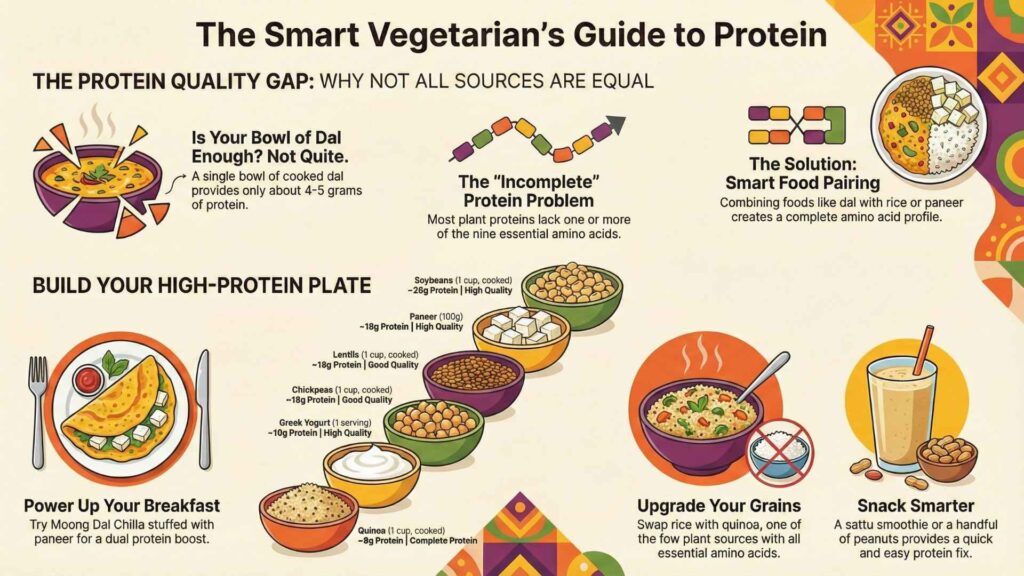
Many people believe that vegetarians cannot get high-quality protein because plant sources are “incomplete.” This is a myth that needs to be buried. The secret lies in a concept called amino acid complementarity. Grains like rice are low in an amino acid called lysine but high in methionine. Legumes like rajma or dals are the exact opposite.
When you eat rajma rice complete protein is formed because the two sources fill each other’s gaps. This is why traditional Indian pairings are so powerful. It isn’t just about comfort; it’s about chemistry. By combining cereals with pulses, you create a protein profile that rivals animal products. This is why a simple dal-chawal or idli-sambar meal has sustained our population for generations.
| Food Pairing | Missing Amino Acid in A | Supplied by B | Result |
| Rice + Dal | Lysine | Methionine | Complete Protein |
| Roti + Rajma | Lysine | Methionine | Complete Protein |
| Corn + Beans | Tryptophan | Lysine | Complete Protein |
| Dosa + Sambar | Lysine | Methionine | Complete Protein |

Sattu: The Indigenous Protein Shake
Long before expensive whey protein tubs arrived in fancy black jars, we had sattu. Made from roasted Bengal gram (chana), sattu is often called the “poor man’s protein,” but its benefits are anything but poor. The sattu drink benefits for muscle gain are significant: it offers about 20-26 grams of protein per 100 grams, along with a massive hit of fibre and iron.
What makes sattu a winner for beginners is its cooling property. In the scorching Indian summer, a sattu drink with lemon, cumin, and black salt acts as a natural electrolyte and energy booster. It has a low glycemic index, which means it won’t spike your blood sugar, making it ideal for those managing weight or diabetes. Whether you have it as a morning drink or a post-workout shake, sattu is a sustainable, local, and incredibly cheap protein source in India.
Besan Chilla: The Quickest High Protein Breakfast
If you are looking for a high protein Indian breakfast that doesn’t involve eggs, look no further than the besan chilla. Made from gram flour, the besan chilla protein content is about 6-7 grams per standard chilla. While that might seem modest, the magic happens in the variations. By adding grated paneer or chopped spinach to the batter, you can easily push that number to 15-20 grams per serving.
Besan is naturally rich in complex carbohydrates and fibre, which keep you full until lunch. For a health-conscious beginner, this is a much better option than bread or sugary cereals. It takes less than ten minutes to prepare, making it a perfect solution for the morning rush. It’s practical, nutritious, and fits perfectly into any Indian high protein diet.
Non-Veg Excellence: Poultry, Eggs, and Seafood
For those who include animal products, the non veg high protein Indian diet offers some of the most bioavailable proteins on the planet. Chicken breast is the king here. With about 25-30 grams of protein per 100 grams and very little fat, it is the most calorie-efficient way to hit your daily targets.
Eggs are another essential tool. One whole egg contains about 6 grams of complete protein. For a beginner, starting the day with three boiled eggs or an egg bhurji provides 18 grams of high-quality protein immediately. Fish like Rohu or Salmon not only provide protein but also essential Omega-3 fatty acids, which are crucial for brain health and reducing inflammation. The key with non-veg sources is the preparation; opting for tandoori, grilled, or boiled versions over heavy, oily curries ensures that the health benefits aren’t cancelled out by excess fat.
| Non-Veg Source (100g) | Protein | Calories | Benefit |
| Chicken Breast | 25 – 31 g | 165 kcal | Lean & Muscle Building |
| Whole Egg | 6 – 7 g | 70 – 80 kcal | Complete & Affordable |
| Rohu Fish | 20 – 22 g | 100 – 120 kcal | Omega-3 Rich |
| Mutton | 20 – 25 g | 250 – 300 kcal | High Iron & B12 |

The Weight Loss Mechanism: How Protein Burns Fat
Let’s talk about the “why” behind an Indian high protein diet plan for weight loss. Protein helps you lose weight through several metabolic pathways. First, there is the Thermic Effect of Food (TEF). Your body uses about 20-30% of the calories from protein just to digest it. In contrast, it only uses about 5-10% for carbs and 0-3% for fats. Essentially, eating protein gives your metabolism a natural boost.
Second, protein regulates your hunger hormones. It increases levels of GLP-1 and PYY, which tell your brain you are full, while decreasing levels of ghrelin, the hunger hormone. When you have a high protein lunch for office Indian style—like soya granules or a chicken salad—you are far less likely to reach for a sugary snack at 4 PM. This metabolic “dam” helps control your calorie intake effortlessly.
Meal Prep for the Busy Professional
One of the biggest hurdles for health-conscious individuals is the lack of time. This is where the high protein lunch for office Indian professionals comes into play. You don’t need to cook fresh every single morning. The secret is “batch prepping” your proteins.
- The 3-Day Rule: You can pressure-cook rajma or chole in bulk on Sunday and store them in the fridge. They stay perfectly fresh for three days and can be quickly tossed into a salad or a quick curry.
- The Soya Shortcut: Soya chunks can be boiled and kept ready. On a busy morning, just sauté them with onions, tomatoes, and some spices for a high-protein bhurji.
- The Cold Option: For those without access to a microwave at work, a chickpea salad or boiled eggs are fantastic no-reheat options that keep you satiated.
Debunking the Myths: Protein and the Kidneys
There is a common fear in many Indian households that a high protein diet will “heat up the body” or damage the kidneys. Let’s be clear: for individuals with healthy kidneys, there is no evidence that a high protein diet causes harm. This myth usually stems from dietary restrictions meant for people who already have chronic kidney disease.
The bigger risk for the average Indian is actually protein deficiency. Sarcopenia, frailty, and a sluggish metabolism are the real threats we face as we age. As long as you stay hydrated and balance your protein with plenty of fibre-rich vegetables and whole grains, your body will thrive on a higher protein intake. It’s about balance, not excess.

The Financial Side: Cheap Protein Sources in India
Being fit shouldn’t be a privilege reserved for the wealthy. If you look closely, some of the most effective protein sources are also the most affordable. Roasted chana, soya chunks, sattu, and eggs are incredibly budget-friendly.
A 100g pack of soya chunks costs very little but provides more protein than a massive portion of expensive meat. Similarly, local dals and seasonal eggs provide high biological value protein without breaking the bank. If you focus on “local and seasonal” as suggested by experts like Rujuta Diwekar, you’ll find that a high protein diet is both sustainable and economical.
| Cheap Protein Source | Approx. Protein per ₹10 | Form |
| Soya Chunks | ~50 – 60 g | Dry / Cooked |
| Roasted Chana | ~15 – 20 g | Snack |
| Eggs | ~12 – 14 g | Boiled / Bhurji |
| Sattu | ~15 – 18 g | Drink / Paratha |
Planning Your Week: A 7-Day High Protein Blueprint
Transitioning to a new lifestyle is easier when you have a map. Here is how a balanced high protein Indian diet looks in practice over a week.
The Vegetarian Path
- Monday: Moong dal chilla with paneer stuffing for breakfast; Rajma with brown rice and curd for lunch; Soya chunk stir-fry for dinner.
- Wednesday: Sattu shake and a handful of almonds for breakfast; Chole with millet roti and salad for lunch; Palak paneer (low oil) for dinner.
- Friday: Besan chilla for breakfast; Sprouts salad with peanuts and lemon for lunch; Tofu and vegetable skewers for dinner.
The Non-Vegetarian Path
- Tuesday: 3 egg whites and 1 whole egg bhurji with toast; Chicken breast curry with 1 roti and salad for lunch; Grilled fish with sautéed vegetables for dinner.
- Thursday: Oats porridge with milk and nuts; Chicken tikka wrap with whole-wheat roti; Egg curry with a small bowl of rice for dinner.
- Saturday: Boiled eggs and fruit for breakfast; Fish curry with quinoa; Tandoori chicken (lean pieces) for dinner.
Conclusion: Take the First Step Towards a Stronger You
We’ve spent enough time living with the fatigue and health risks of a protein-deficient diet. Whether you are a beginner in fitness or simply want to manage your weight more effectively, the high protein Indian diet is your most powerful tool. It’s about more than just looking good; it’s about having the energy to live your life to the fullest. By making small, intentional swaps—like choosing soya over extra rice or having a sattu drink instead of chai—you can transform your health.
If you are ready to stop guessing and start seeing results, we are here to help. At(https://dietdekho.com/form/), our experts specialize in crafting personalized nutrition plans that fit your lifestyle, budget, and cultural preferences. Don’t let another day pass in a state of metabolic starvation. Your body deserves the building blocks of strength. Fill out our consultation form today and let’s build a stronger version of you together.

FAQs: High Protein Indian Diet Optimized for Snippets
What are the best high protein vegetarian foods in India?
The best high protein vegetarian foods in India include soya chunks (52g protein/100g), paneer (18-20g/100g), sattu (20g/100g), and various lentils (8-9g per cooked cup). Combining legumes with grains, like in rajma-chawal, creates a complete protein profile.
How can I get enough protein for weight loss in an Indian diet?
To lose weight, focus on a high protein Indian diet plan for weight loss that prioritizes low-calorie, high-satiety foods. Increase your intake of soya chunks, boiled eggs, and sprouts while reducing refined carbohydrates like white rice and sugar. Aim for at least 1.2g to 1.6g of protein per kg of body weight.
Is sattu drink beneficial for muscle gain?
Yes, sattu drink benefits for muscle gain are significant as it provides about 20 grams of plant-based protein per 100 grams. It is also rich in iron and magnesium, which support muscle function and energy levels. It can be consumed as a pre-workout or post-workout beverage.
Which Indian breakfast is high in protein?
A high protein Indian breakfast includes options like paneer-stuffed moong dal chilla, egg bhurji with whole-wheat toast, sattu paratha, or sprouts salad. These options provide 15-20 grams of protein, helping you stay full and energized throughout the morning.
Is a non veg high protein Indian diet better than a vegetarian one?
While a non veg high protein Indian diet offers complete proteins with higher bioavailability (like chicken breast and eggs), vegetarians can easily meet their goals by combining different plant sources and dairy. The key is variety and consistency in protein intake across all meals.
BOOK YOUR APPOINTMENT
Abhinav is the Founder of Diet Dekho, helping people manage weight and lifestyle health through simple, practical nutrition and personalized diet plans.