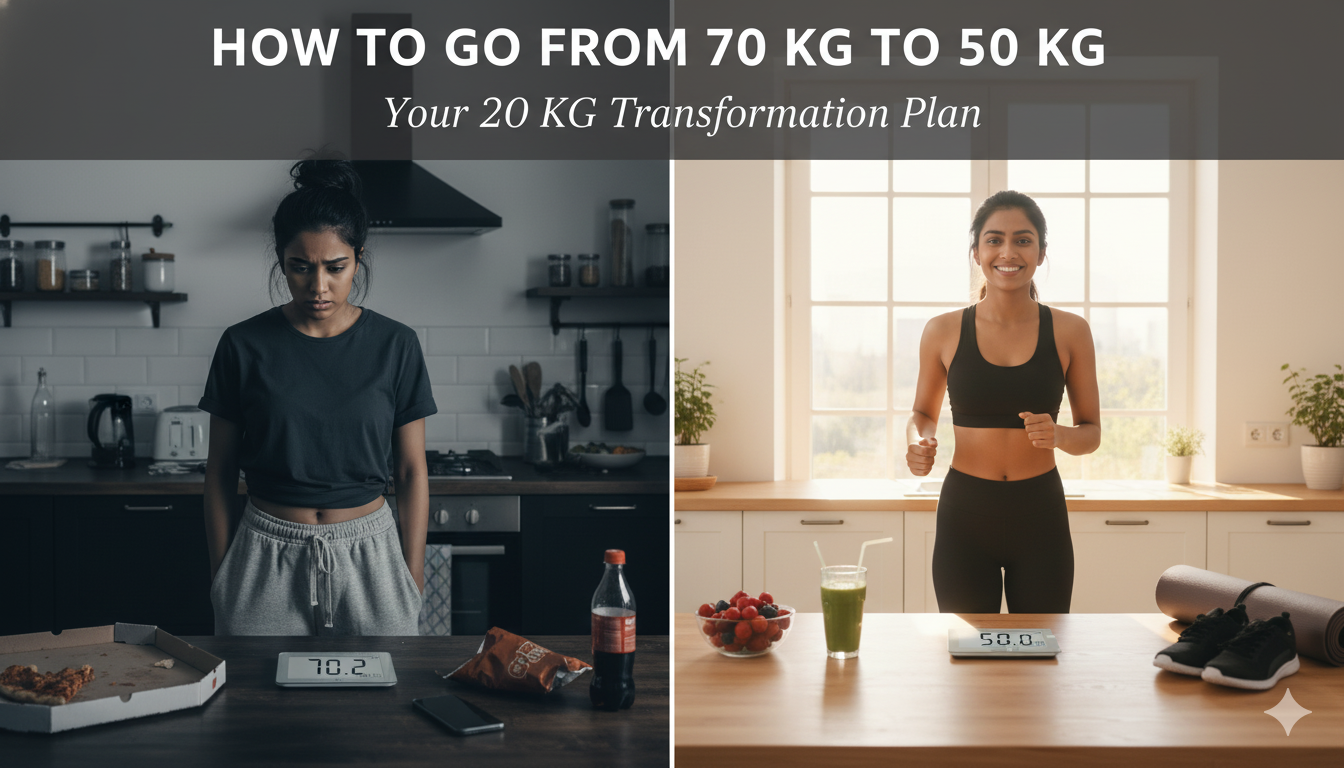
Have you ever looked at the scale, stuck around 70 kg, and felt like the goal of reaching 50 kg was an impossible dream? That 20 kg gap feels huge, doesn’t it? Many people start this journey feeling overwhelmed, trying crash diets that fail quickly. They are left feeling defeated, convinced that achieving a successful 70kg to 50kg transformation is beyond their reach.
Here’s the thing: losing 20 kilograms is a monumental goal. It demands a realistic strategy built on sustainable habits, not quick, punishing fixes. This transformation journey requires patience, knowledge, and kindness toward your body. We are here to show you exactly how to lose 20 kg safely and permanently. We will cover the best diet plan for 20kg weight loss, the right workouts, and the mindset shift necessary for lasting success. This is your definitive roadmap for a healthy, practical, and effective weight loss transformation journey.

Why Patience is Your Superpower: Setting a Realistic Timeline
Table of Contents
- 1 Why Patience is Your Superpower: Setting a Realistic Timeline
- 2 Mastering Nutrition: Creating a Sustainable Calorie Deficit
- 3 The Art of Portion Control and Mindful Eating
- 4 Moving Towards 50 Kg: Your Balanced Activity Strategy
- 5 Breaking the Plateau and Building Long-Term Habits
- 6 Frequently Asked Questions (FAQs)
- 7 Conclusion: Making the 20 Kg Goal a Reality
The single biggest mistake beginners make when trying to achieve significant weight loss is rushing the process. When the goal is dropping 20 kilograms, speed becomes the enemy of sustainability. Focusing on a safe rate of loss is essential for long-term health and maintenance of the new weight.
Medically, the recommended weight loss rate is a gradual, steady pace of about 0.5 to 1 kilogram (1 to 2 pounds) per week. Losing weight faster than this makes you significantly more likely to regain the weight later on. This slow pace is not a limitation; it is a built-in safety measure designed to protect your health and muscle mass.
What this really means is that going from 70 kg to 50 kg will take anywhere from four to six months, potentially longer, depending on individual body factors and inevitable plateaus. This timeline is achievable because it allows for the development of permanent habits, rather than temporary, restrictive behaviors. If you focus on simply ticking off the weeks, the time will pass anyway, and you will find yourself celebrating your progress.
The CDC-Backed Proof for Long-Term Success
Long-term success relies heavily on setting realistic expectations and celebrating the small wins along the way. People who lose weight gradually and steadily—about 1 to 2 pounds per week—are consistently shown to be more successful at keeping the weight off. This is because the slow pace gives your body and mind time to adjust to the new caloric intake and activity levels, which lowers the risk of developing strong cravings and feelings of deprivation that typically accompany more rapid dieting.
Furthermore, you don’t need to reach 50 kg immediately to start seeing major health benefits. Even modest weight loss yields critical, measurable health results. The Centers for Disease Control and Prevention (CDC) notes that a modest 5% weight reduction—which is only 3.5 kg if you start at 70 kg—can significantly improve key health markers. This small change can improve blood pressure, cholesterol, and blood sugar levels, helping to lower the risk for chronic diseases like type 2 diabetes and heart disease.
This realization allows for an important psychological reframing. Instead of focusing solely on the intimidating final number (50 kg), you can celebrate immediate, measurable health victories starting with the first 3.5 kilograms lost. This immediate confirmation provides crucial motivation and proves that the habits you are building are already having a powerful, positive effect on your body.

Understanding the Weight Loss Roller Coaster
When you embark on this weight loss transformation journey, especially as a beginner, the initial 4–6 weeks are often the most encouraging, with rapid, noticeable drops on the scale. This fast start feels great, but let’s break down what is happening. Most of this initial drop is not pure body fat. It is primarily the shedding of water weight and glycogen stores.
After this initial phase, the rate of loss slows down significantly as your body starts targeting fat tissue. This is completely normal. In fact, it shows that your true, sustainable fat loss journey is now beginning. This slowdown is why focusing on non-scale measures is so crucial for staying motivated. Pay attention to how your clothes fit, notice your improved energy levels throughout the day, and track your waist circumference. These are often much better indicators of true success than the fluctuating number on the scale.
Mastering Nutrition: Creating a Sustainable Calorie Deficit
Successful weight management is fundamentally a balancing act. The equation is simple: if you want to lose weight, you must consistently eat fewer calories than your body uses. This caloric difference is known as a calorie deficit. This is the cornerstone of every healthy weight reduction tips strategy.
For your goal of safely targeting 0.5–1 kg of loss per week, aim to create a consistent and sustainable calorie deficit. This usually means cutting approximately 500 calories per day from your usual diet. This figure is significant enough to promote steady loss without causing starvation or severe deprivation. You’ll likely be more successful over the long haul with this significant but sustainable approach.
Do not attempt extreme calorie restriction, such as dropping below 1,200 calories without explicit medical supervision. Extreme deficits are unsustainable, put your health at risk, and can slow your metabolism, making future weight loss harder.

The Double Power of Protein and Fiber
When crafting the best diet plan for 20kg weight loss, focusing on the quality of calories is just as important as the quantity. Protein and fiber are essential macro-nutrients that actively support the deficit. They increase fullness and satisfaction, naturally curbing the desire to snack and reducing overall caloric consumption.10
Protein is vital because it is essential for muscle preservation. When you are losing weight, you want to maximize the loss of fat while minimizing the loss of lean muscle mass. This is critically important since muscle tissue is metabolically active and helps to keep your basal metabolic rate (BMR) higher. Aiming for a high protein intake, with some research suggesting up to 90 grams daily, while in a deficit helps protect your hard-earned muscle.
Fiber, found abundantly in fruits, vegetables, legumes, and whole grains, promotes excellent gut health and plays a key role in satiety. Fiber also helps manage blood sugar levels, preventing the energy crashes that often lead to poor food choices. Aim for at least 30 grams of fiber per day.

Simple Swaps That Cut Hundreds of Calories
One of the most effective healthy weight reduction tips is to focus on smart substitutions, rather than feeling deprived of food. These simple, tasty swaps can cut hundreds of calories while boosting your essential protein and fiber content. Telling a beginner to “eat less” often leads to failure, but finding satisfying, nutrient-dense replacements minimizes the feeling of deprivation, which prevents relapse.
Consider integrating these practical changes immediately:
- Swap Soda/Juice: Replace all sugar-sweetened beverages, including sodas and sports drinks, with plain or sparkling water. Water has zero calories, while sugary drinks are often liquid calories that offer no feeling of fullness.
- Swap Cereal: Trade high-sugar breakfast cereal for strained (Greek-style) yogurt topped with fresh fruit. Greek yogurt provides significantly more protein, sustaining you until lunch.
- Swap Bagels: Choose whole-grain toast with cottage cheese or avocado instead of a large, dense bagel with cream cheese.
- Swap Chips: Snack on roasted chickpeas, plain popcorn, or unsalted mixed nuts instead of high-fat chips.
Let’s look at what a sample day adhering to these principles might look like, targeting a high protein and high fiber intake within a 1500-calorie range, which is appropriate for many individuals seeking this level of weight loss.
Sample High-Protein, High-Fiber 1500-Calorie Day
| Meal Time | Focus | Example |
| Breakfast | High Protein, Complex Carb | Wholemeal spinach and cheddar pancakes, or two wheat pillows with semi-skimmed milk |
| Lunch | Lean Protein, Fiber-Rich Veggies | Can of tuna or salmon (canned in water) mixed with light mayonnaise on two slices of whole-grain bread, served with a large mixed green salad |
| Dinner | Lean Protein, Non-Starchy Vegetables | Grilled lemon and chili chicken or fish (6 oz) with 1/2 cup brown rice or quinoa and two cups of cooked green beans or broccoli |
| Snack (x2) | Fiber, Healthy Fats | One pear and 30g almonds, or spicy roasted chickpeas |
The Art of Portion Control and Mindful Eating
The success of your calorie deficit relies heavily on accurate portion control. This practice is less about relying on willpower and more about manipulating your environment and increasing your awareness of food. When you focus on how you eat, maintaining the necessary deficit becomes much easier.
The brain registers fullness based on plate density, volume, and, crucially, the time spent eating. We can gently “hack” these processes to feel completely satisfied with smaller servings.
Using Your Tools: Plates and Scales
One psychological trick for reducing portion size involves the size of your dishware. Use smaller plates and bowls for meals. This simple optical illusion makes a reasonable portion look larger relative to the plate, helping the brain register satiety sooner.
For the first few weeks of your weight loss transformation journey, measuring what you are eating is highly recommended. Use measuring cups or a food scale for high-calorie, calorie-dense items like grains, oils, and nuts. You do not have to do this forever, but it helps you accurately learn what a truly healthy portion looks like and prevents “portion creep” from sabotaging your efforts.
You can also control portions using environmental strategies. Pre-plate high-calorie foods in the kitchen and leave the serving dishes off the table and out of sight. Conversely, serve low-calorie, high-nutrient foods—such as a large garden salad or roasted vegetables—family style, placed centrally on the table. This encourages second helpings of the healthy, lower-calorie components.
Slowing Down to Feel Full
A critical factor often overlooked in healthy weight reduction tips is the speed at which we eat. Slow down your pace while you consume your meals. It takes time, approximately 20 minutes, for your stomach to signal your brain that you are full. Rushing through your meal means you often eat far more than necessary before the satiety signal arrives.
Make eating an undistracted event. Turn off the television, put away your phone, and enjoy your food. This practice of presence improves digestion and increases your awareness of natural hunger and fullness cues. Keeping a food diary or journal can also help provide detailed accountability and insight into eating behaviors, revealing patterns you may not realize are occurring.
To really cement these habits, tracking your intake and setting daily behavioral goals is crucial. Ready to formalize your portion control and meal planning strategies? Set your personalized weight loss goals with our Diet Dekho assessment form today. https://dietdekho.com/form/
Moving Towards 50 Kg: Your Balanced Activity Strategy
While it is true that you can achieve weight loss through diet alone, physical activity is essential for keeping the weight off, improving your cardiovascular health, and shaping your body composition. Exercise is the key ingredient in a successful 70 kg to 50 kg diet and workout plan.
For the best and most sustainable results, combining cardiovascular exercise (Cardio) and strength training is superior to relying on either one alone. Consistency, especially incorporating daily walking for general activity, is often more important initially than high-intensity efforts.
Why Strength Training Is Your Metabolism Insurance
When embarking on a 20-kilogram weight reduction, you must confront the challenge of metabolic adaptation. Here’s the thing about major weight loss: as you shed kilograms, your body requires less energy to function, and your metabolism naturally slows down. This is called metabolic adaptation, a process where your Basal Metabolic Rate (BMR) decreases more than what would be expected based solely on the reduction in body size.
This reduction in BMR is a major cause of the dreaded weight loss plateau. When the calories you burn equal the calories you eat, weight loss stops. The single best way to mitigate this metabolic slowdown and preserve your capacity to burn calories is through strength training. Muscle tissue (fat-free mass) is highly involved in energy expenditure by physical activity. By maintaining or building muscle, you keep your BMR higher, ensuring the safe way to drop 20 kilos is sustained fat loss.
Strength training does not require joining a gym immediately. As a beginner, start with simple bodyweight exercises like squats, push-ups, and planks three times a week. This routine helps you maximize fat loss while preserving muscle, ensuring the number 50 kg on the scale reflects a healthier body composition.
Low-Impact Movement for High-Impact Results
Since you are starting your fitness journey, choosing low-impact activities protects your joints while still providing excellent cardiovascular benefits necessary for burning calories. This allows you to stay consistent without risking injury. This is a practical starting point for an exercise routine for 50 kg goal.
Essential low-impact activities include:
- Walking: Aim for daily steps. This is the most reliable, accessible, and enjoyable form of activity.
- Planks: This is an outstanding, low-impact, full-body exercise that develops your abdominal and back muscles without stressing the joints. Beginners can start with low planks supported by their forearms.
- Swimming: An exceptional aerobic option and full-body workout. Swimming provides muscle training and aerobic benefits similar to jogging, but without the high impact.
- Yoga and Modified HIIT: Yoga improves strength, balance, and flexibility. You can also find low-impact progressive High-Intensity Interval Training (HIIT) workouts that use standing and seated options, which safely boost your heart rate and maximize calorie burn.
A structured, balanced approach combining these elements ensures you are burning calories efficiently while building strength for long-term health.
Beginner Weekly 20 Kg Weight Loss Movement Plan
| Day | Activity Type | Duration / Focus |
| Monday | Strength Training (Bodyweight) | 30 minutes, focus on major muscle groups (squats, planks, push-ups) |
| Tuesday | Low-Impact Cardio | 45–60 minutes Brisk Walking, Cycling, or Swimming |
| Wednesday | Active Recovery | 30 minutes Yoga or gentle stretching/mobility work |
| Thursday | Strength Training (Bodyweight) | 30 minutes, focusing on compound movements and gradually increasing reps |
| Friday | Moderate Cardio | 30–45 minutes light jogging or high-cadence walking |
| Saturday | Long Activity | 60+ minutes outdoor activity (hiking, exploring a park) |
| Sunday | Rest & Lifestyle Management | Focus on preparing meals and achieving 7-9 hours of quality sleep |

Breaking the Plateau and Building Long-Term Habits
It is important to understand that no matter how dedicated you are, the scale will eventually stall. This is known as a weight loss plateau. It is a completely normal biological event, often happening when your calorie intake and expenditure balance out due to the metabolic adaptation discussed earlier. When this happens, recognize it as a sign your body has successfully adapted, not a sign of personal failure.
When the Scale Stops Moving: Plateau Strategies
When a plateau hits, the first step is always accountability. Look back at your food and activity records—consistent tracking is mandatory here. Have you unconsciously increased your portions, or have small snacks crept back into your routine? Reassessing your actual habits is often the simplest fix.
If your habits are sound, the next step is often to increase your activity level. Get at least 150 minutes of moderate aerobic activity per week, and consider switching up your workout routine. If you have been doing steady-state cardio (e.g., walking at the same pace), try interval training, which mixes high-intensity bursts with rest periods. This shocks your system and boosts calorie burn. Changing your strength routine by using different weights or altering the exercise order can also stimulate new muscle growth and metabolic activity.
Regarding diet, if you are already consuming a calorie-controlled plan (e.g., around 1,500 calories), you may need to reduce your overall intake by another 100–200 calories, but you must never go below 1,200 calories per day. Interestingly, sometimes eating slightly more on certain high-activity days helps prevent the body from entering a starvation mode, preventing a further dip in BMR.
The Unseen Pillars: Sleep and Stress Management
Achieving a healthy, sustained transformation is not just about what you eat and how much you sweat. A holistic, healthy lifestyle also incorporates good nutrition, regular physical activity, enough sleep, and crucial stress management.
Mental stress directly contributes to weight management challenges. Stress enhances appetite, increases cravings for high-calorie comfort foods, and decreases the motivation necessary for physical activity. This is often linked to the stress hormone cortisol, which promotes fat storage, particularly visceral fat. For detailed strategies on mitigating stress and its impact on hormonal balance and appetite, the National Institutes of Health (NIH) emphasizes the need for behavioral counseling and stress management.
Equally important is sleep. Your body requires 6 to 8 hours of quality sleep daily for effective weight loss. Research shows that participants sleeping six hours or less, or more than eight hours, are less likely to succeed in structured weight loss programs. Consistent, quality sleep allows your appetite hormones (ghrelin and leptin) to regulate properly.
Understanding that long-term commitment requires a complete mindset change is key. Harvard’s experts note that sustained weight loss involves not just temporary diet and exercise, but changing underlying eating behaviors, developing healthy lifestyle choices, and finding continuous support. This journey requires permanent changes to how you handle food, movement, and life stressors.

Frequently Asked Questions (FAQs)
How long does a 70 kg to 50 kg transformation actually take?
A safe, healthy 70 kg to 50 kg transformation requires losing 20 kilograms at a gradual rate of 0.5 to 1 kg per week. Based on this medically sound rate, the total journey will take a minimum of four to six months. Attempting to do it faster is often unsustainable and can lead to muscle loss and future weight regain, which defeats the purpose of the transformation.
What is the best diet plan for 20kg weight loss?
The best diet plan for 20kg weight loss focuses on achieving a consistent, moderate calorie deficit (around 500 kcal daily). This deficit must be supported by high protein and high fiber intake to promote satiety and preserve muscle mass. Prioritize whole foods, lean proteins (chicken, fish, tofu, beans), and non-starchy vegetables to maximize nutritional density.
Will my metabolism slow down when I lose 20 kg?
Yes, your metabolism, specifically your Basal Metabolic Rate (BMR), will naturally decrease as you lose a significant amount of weight. This is a normal physiological process called metabolic adaptation. To fight this reduction and keep burning calories efficiently, you must consistently engage in strength training and maintain a high protein intake to preserve fat-free muscle mass.
Is it a safe way to drop 20 kilos quickly?
No, experts strongly recommend against trying to drop 20 kilos quickly, such as in two or three months. Rapid weight loss typically involves losing muscle and water, which dramatically slows your metabolism and significantly increases the risk of regaining all the weight shortly after the diet ends. Sustainable habits are the only path to long-term success.
What kind of exercise routine for 50 kg goal is best for beginners?
A balanced exercise routine for 50 kg goal should integrate both strength training (using bodyweight exercises, 2–3 times a week) and low-impact cardiovascular activity (daily walking, swimming, or yoga). Aim for consistency over high intensity initially, ensuring at least 150 minutes of moderate activity weekly to improve overall health and support the calorie deficit.
Conclusion: Making the 20 Kg Goal a Reality
We have covered the comprehensive roadmap for your 20-kilogram weight loss transformation. Remember, this journey is a marathon requiring persistence, not perfection. The true secret to successfully moving from 70 kg to 50 kg lies in consistency, prioritizing protein and fiber for satiety and muscle maintenance, balancing strength with cardio, and mastering the crucial unseen pillars of sleep and stress.
Every small, healthy habit you build today—choosing sparkling water over soda, spending 30 minutes walking, or getting quality sleep—is a victory. These focused, incremental healthy steps accumulate into the incredible, lasting change you are looking for. You have the knowledge to begin your safe way to drop 20 kilos now.
Ready to take the next step and define a 70 kg to 50 kg diet and workout plan tailored specifically to your body and lifestyle needs?
Start your healthy weight reduction tips journey today! Click here to fill out our personalized Diet Dekho assessment and connect with our expert team.
Disclaimer
This blog post was written to help you make healthier food choices altogether. So, be aware and take care. The important thing to consider is your health before starting a restrictive diet. Always seek advice from a doctor/dietitian before starting if you have any concerns.
Eat Healthy, Live Healthy as well, and Enjoy a long, happy life!

Abhinav is the Founder of Diet Dekho, helping people manage weight and lifestyle health through simple, practical nutrition and personalized diet plans.