
Imagine waking up six months from today and stepping on the scale. To your amazement, the numbers reveal a total loss of 35 kilograms. To begin with, consider the story of Ayushi, a 21-year-old student who once felt this was a distant dream. Specifically, she weighed 93 kilograms and struggled with low self-esteem and body dysmorphia. She feared she would never reach her best version. However, she chose a structured path and, after six months of dedicated diet and exercise, she successfully reached her goal. What this really means is that her journey proves a massive transformation is possible for anyone. Here’s the thing: you do not even need to cut out every tasty dish. In fact, Ayushi still enjoyed pizzas and burgers with modified ingredients. Consequently, this guide will provide you with the exact roadmap to replicate such success, from the science of fat loss to practical meal planning.
The Magnitude of the Challenge
Table of Contents
- 1 The Magnitude of the Challenge
- 2 Understanding the Law of Energy Balance
- 3 Strategic Dietary Frameworks for Success
- 4 Metabolism Boosting Foods and Nutrition
- 5 Designing an Indian Weight Loss Meal Plan
- 6 The Role of Physical Activity in Fat Loss
- 7 Clinical Safety and Managing Health Risks
- 8 The Psychology of a 35kg Transformation
- 9 Breaking Through Weight Loss Plateaus
- 10 Global Obesity Trends and the Future
- 11 Expert Tips for Sustainable Habits
- 12 Frequently Asked Questions (FAQs)
- 13 Conclusion: Starting Your 35kg Weight Loss Journey
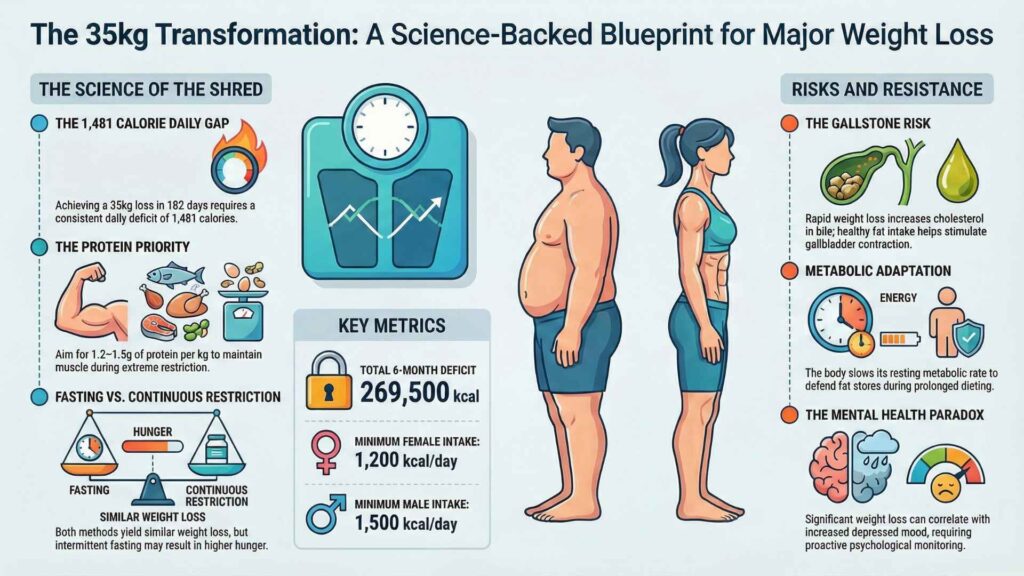
Losing 35 kilograms in six months is an ambitious physiological goal that requires a deep commitment to lifestyle changes. To put it into perspective, this weight loss represents nearly 1.35 kilograms per week. Most health organizations, however, suggest a much slower pace. For example, the National Institutes of Health (NIH) generally recommends losing 5% to 10% of your weight over six months. For someone weighing 120 kilograms, 35 kilograms is a 29% reduction, which qualifies as a “large” weight loss in clinical terms.
Furthermore, such a rapid pace requires precision in your calorie deficit and a high level of physical activity. It is essential to balance speed with safety. Specifically, rapid loss can increase risks like gallstones or electrolyte imbalances. This report details how to manage these risks while hitting your target. Ultimately, success depends on understanding the biological math behind the scale.
Understanding the Law of Energy Balance
Let’s break it down: the foundation of weight loss is the calorie deficit. You must burn more energy than you consume, which forces your body to use stored fat for fuel. One kilogram of body fat contains approximately 7,700 calories. Therefore, a 35-kilogram loss requires a total deficit of 269,500 calories.
The Daily Caloric Deficit Requirement
To achieve this goal within 182 days, a consistent daily calorie gap is required. The total caloric deficit is calculated as follows:
Total Deficit = 35 kg × 7,700 kcal per kg = 269,500 kcal
When this total deficit is distributed across six months, it gives the required daily target:
Daily Deficit = 269,500 kcal ÷ 182 days = 1,481 kcal per day
Initially, this deficit may seem high for most beginners. However, you can achieve it through a combination of diet and exercise. For instance, cutting 1,000 calories from food and burning 500 through activity is one viable strategy. This approach ensures you do not starve while maintaining high energy levels throughout the day.
Calculating Your Metabolic Baseline
In addition to knowing your deficit, you must find your Total Daily Energy Expenditure (TDEE). This is the total energy you burn in 24 hours and includes your Basal Metabolic Rate (BMR) and your activity level. Your BMR is what you burn at rest, and factors like age, sex, and height influence this number.
Notably, men typically have a higher BMR due to higher muscle mass. You can use a TDEE calculator to find your maintenance calories. Subtracting 1,481 from this number gives your daily intake goal. However, women should rarely go below 1,200 calories, and men should stay above 1,500 calories to avoid metabolic damage.
Strategic Dietary Frameworks for Success
As we have seen, a standard low-calorie diet is often insufficient for rapid loss. Consequently, you need a strategy that manages hunger hormones like ghrelin and leptin. Two high-potential strategies include the keto diet and intermittent fasting.
The Mechanism of the Keto Diet
The ketogenic diet involves dramatic carbohydrate restriction. Typically, you consume fewer than 50 grams of net carbs daily. This forces the body into ketosis, a state where the liver produces ketones from fat for energy. Because ketosis can significantly reduce hunger, a large calorie deficit becomes much easier to sustain.
| Macronutrient | Percentage of Total Calories | Role in Weight Loss |
| Fats | 70% – 80% | Provides satiety and primary fuel source |
| Proteins | 10% – 20% | Preserves lean muscle mass |
| Carbohydrates | 5% – 10% | Keeps insulin levels low to promote fat burning |
Specifically, a ketogenic diet is useful for losing excess body fat quickly. It can also improve type 2 diabetes and metabolic syndrome. However, you must prioritize healthy fats like olive oil and avocado. Moreover, you should avoid highly processed keto snacks that can stall your progress.
The Power of Intermittent Fasting
Similarly, intermittent fasting (IF) is a pattern of time-restricted eating. It does not dictate what you eat, but rather when you eat. During fasting, insulin levels drop significantly. This prompts fat cells to release stored energy. For beginners, the 16/8 method is the most popular, where you fast for 16 hours and eat during an 8-hour window.
Furthermore, research suggests that short-term fasting can increase metabolic rate by 3.6% to 14%. Combining IF with keto can accelerate fat loss even further. Ultimately, this helps train your body to use fat for fuel more efficiently.

Metabolism Boosting Foods and Nutrition
Beyond timing, specific foods can enhance your fat loss efforts. These foods increase the thermic effect of food (TEF), which is the energy required to digest what you eat.
The Importance of Lean Protein
Protein is the most critical macronutrient for your 35kg transformation. Because digesting protein burns more calories than digesting fats or carbs, it naturally boosts your metabolism. Protein also helps you feel full for longer periods, which prevents overeating later in the day. Moreover, high-protein diets help hold onto muscle mass during calorie restriction. Aim for at least 1.2 to 1.5 grams of protein per kilogram of body weight.
Science-Backed Fat Burning Foods
In addition to protein, certain ingredients possess thermogenic properties. For instance, capsaicin in chili peppers can increase calorie burn and act as a natural appetite suppressant.
| Metabolism Booster | Key Compound | Effect on Body |
| Chili Peppers | Capsaicin | Increases internal temperature and fat oxidation |
| Green Tea | Catechins | Enhances fat burning during exercise |
| Coffee | Caffeine | Increases resting metabolic rate by up to 4% |
| Greek Yogurt | Probiotics & Protein | Supports muscle health and improves digestion |
| Fatty Fish | Omega-3s | Reduces inflammation and boosts metabolism |
Specifically, green tea and oolong tea contain catechins that work with caffeine to boost metabolic rate. Similarly, the omega-3s in fatty fish reduce inflammation and support fat oxidation.
Designing an Indian Weight Loss Meal Plan
For many beginners, cultural food preferences are vital. Consequently, you do not need to abandon Indian cuisine to lose weight. Traditional meals can be optimized for a (https://dietdekho.com/form/) that supports rapid fat loss.
Low-Calorie Indian Recipe Swaps
Success involves simple ingredient modifications. For example, replace white rice with brown rice, quinoa, or millets like ragi. These options are higher in fiber and have a lower glycemic index. As a result, they prevent blood sugar spikes that lead to intense cravings.
Breakfast Ideas:
Start your day with a Moong Dal Chilla, which is a protein-packed pancake made with yellow lentils. You can add spinach or carrots for extra fiber. Another great option is Vegetable Poha. If you use plenty of peas and onions, you can increase volume without adding many calories.
Lunch and Dinner Ideas:
Focus on lean proteins and vegetable-based curries. Grilled Tandoori Chicken is an excellent choice because it is high in protein and uses healthy spices. For a vegetarian option, try Palak Paneer with low-fat cottage cheese. However, ensure you use minimal oil and avoid heavy creams. Lauki (bottle gourd) soup is also a secret weapon for volume filling because it is extremely low in calories and aids digestion.

The Role of Physical Activity in Fat Loss
While diet is the primary driver of weight loss, exercise is the key to maintaining it. For a 35kg loss, you need a high volume of movement. Physical activity increases your TDEE and prevents muscle wasting.
The Power of Daily Walking
Walking is the most accessible exercise for beginners. A 120 kg person burns about 500 calories per hour at a brisk pace. To lose weight fast, aim for 10,000 to 12,000 steps daily. Initially, walking for 30 to 45 minutes daily is a great starting point. Furthermore, you can spread this throughout the day to make it manageable. Even using the stairs instead of the lift contributes to your total burn.
Incorporating Strength Training
Cardio burns calories during the session, but strength training burns calories even while you sleep. Building muscle mass increases your resting metabolic rate, which is crucial for long-term weight maintenance.
| Exercise Type | Recommended Duration | Benefit for 35kg Goal |
| Brisk Walking | 45-60 minutes daily | Steady calorie burn and low impact |
| Strength Training | 30 minutes, 2-3x weekly | Increases metabolism and tones body |
| HIIT | 20 minutes, 1-2x weekly | Maximizes fat loss in short periods |
| Yoga | 30-45 minutes weekly | Reduces stress and improves flexibility |
Beginners should start with bodyweight exercises such as squats, lunges, and push-ups. Specifically, aim for at least two days of strength training per week.
Clinical Safety and Managing Health Risks
Because rapid weight loss is a major physiological event, you must monitor your health to avoid complications. Health professionals at Harvard and the NIH warn that obesity is a disease and requires careful management.
Potential Side Effects of Rapid Loss
When you lose weight quickly, your body undergoes significant changes. Consequently, this can lead to nutritional deficiencies. For instance, common issues include hair loss or fatigue if protein intake is too low. Moreover, rapid loss increases the risk of gallstones. This happens because the liver secretes more cholesterol into bile during fat breakdown. Therefore, staying hydrated and losing weight steadily can mitigate this risk.
The Importance of Micronutrients
Restrictive diets can lead to a lack of vitamins and minerals. Specifically, the keto diet can cause deficiencies in magnesium and potassium. These minerals are essential for heart and muscle function. Consequently, you should include various vegetables like broccoli and spinach to provide these nutrients. Furthermore, consider a high-quality multivitamin if you are on a very low-calorie plan.
The Psychology of a 35kg Transformation
Ultimately, your mindset determines your long-term success. Most people fail because they cannot sustain extreme changes. Therefore, you must transition from a “diet” mindset to a permanent lifestyle change.
Vitality and Well-Being
Weight loss is linked to improved psychological health. Studies show it reduces symptoms of depression and anxiety. A key predictor of success is “vitality,” or the feeling of being alive and energetic. As you lose weight, your vitality typically increases, creating a positive feedback loop that keeps you motivated.
Overcoming Internal Barriers
Common barriers include stress and a lack of time. Stress increases cortisol, which promotes belly fat storage. Emotional eating is a frequent response to distress. To counter this, find non-food ways to cope with stress, such as meditation or walking. Social eating is another challenge. However, using the 80/20 rule can help. Specifically, eat clean 80% of the time and allow for minor indulgences 20% of the time to prevent the feeling of deprivation.

Breaking Through Weight Loss Plateaus
Almost everyone hits a plateau during a six-month journey. This is a period where weight loss stops despite your consistent efforts.
Why Plateaus Happen
As you lose weight, your body needs fewer calories to function. Moreover, your metabolism slows down to conserve energy. This is called metabolic adaptation. Consequently, if you continue eating the same amount as the start, you will eventually stop losing weight.
Strategies to Restart Progress
To break a plateau, you must change your routine. Here’s the thing:
- Re-calculate your needs: Your TDEE at 100 kg is different than at 120 kg.
- Increase intensity: If you walk, try adding short periods of jogging.
- Audit your intake: Use a food diary for a few days because you might be eating more than you realize.
- Prioritize sleep: Lack of sleep can stall fat loss by affecting hormones.
Global Obesity Trends and the Future
Indeed, obesity rates continue to rise globally. In the United States, almost three out of four adults carry more weight than is considered healthy. The World Obesity Atlas 2025 predicts a 115% increase in adult obesity by 2030. Consequently, this crisis has led to the growth of medical interventions.
The Rise of Weight Loss Medications
New medications like GLP-1 agonists (e.g., Wegovy) are becoming common. These drugs can help people lose 15-20% of their body weight in a year. However, they are not a “magic pill.” Users must still make healthy diet and exercise choices for long-term results. For many, these medications are used alongside lifestyle programs to achieve large goals like 35 kg.
Expert Tips for Sustainable Habits
Lifelong weight management requires planning. Therefore, expert dietitians recommend simplifying your approach.
Meal Prepping and Grocery Shopping
To begin with, avoid grocery shopping on an empty stomach. If you do, you are more likely to buy unhealthy items. Instead, stick to the perimeter of the store where fresh produce and lean meats are located. Furthermore, spend a few minutes each weekend planning your weekly menu. This saves time and prevents you from ordering high-calorie takeout during a busy week.
Tracking Beyond the Scale
The scale does not always show the full picture. Because muscle is denser than fat, you might lose inches without the scale moving. Therefore, take progress photos and body measurements. Notice how your clothes fit. Ultimately, these non-scale victories are essential for keeping your motivation high during the six-month period.

Frequently Asked Questions (FAQs)
How can I lose 35 kg in 6 months as a beginner?
Start by calculating your TDEE and creating a daily deficit of about 1,400 calories. Combine a high-protein, low-carb diet with daily brisk walking for 45 minutes. Consistency and meal prepping are your best tools for success.
Is it possible to lose 35 kg without hitting the gym?
Yes, weight loss is primarily driven by diet. However, walking 10,000 steps daily and doing bodyweight exercises at home is highly recommended to maintain muscle and boost your metabolic rate.
What is the best diet for rapid fat loss?
The ketogenic diet combined with intermittent fasting is often cited as the most effective for rapid loss. It reduces hunger and optimizes the body to use fat for fuel.
How do I stop gaining weight back after losing it?
The key is to transition to a maintenance calorie level and keep up your activity. Continuing to track your weight once a week helps you spot upward trends early.
Conclusion: Starting Your 35kg Weight Loss Journey
In summary, achieving a 35 kg weight loss in six months is more than a physical change; it is a total health restoration. By following the science of the calorie deficit and choosing effective dietary frameworks like keto or IF, you can reach your goal. Remember the story of Ayushi. She transformed her life by embracing a structured plan and focusing on portion control.
The path to success involves high-protein meals, daily movement, and psychological resilience. Consequently, do not let plateaus or social pressures derail you. Your health is your most valuable asset. If you are ready to start your own transformation, consider booking a consultation for a (https://dietdekho.com/form/) today. Six months from now, you will be glad you began this journey.
BOOK YOUR APPOINTMENT
Abhinav is the Founder of Diet Dekho, helping people manage weight and lifestyle health through simple, practical nutrition and personalized diet plans.