
The Narrative of Transformation: Moving Beyond the Treadmill
Table of Contents
- 1 The Narrative of Transformation: Moving Beyond the Treadmill
- 2 The Thermodynamic Reality: Why You Cannot Outrun a Bad Diet
- 3 The Comparative Efficacy of Diet and Exercise
- 4 The Calorie Deficit: Engineering Your Internal Burn
- 5 Precision Portions and the “MyPlate” Method
- 6 The Protein Leverage: Why Protein is the King of Nutrients
- 7 NEAT: The Secret of Spontaneous Movement
- 8 Intermittent Fasting: Flipping the Metabolic Switch
- 9 The Sugar-Free Blueprint: Breaking the Cycle of Cravings
- 10 Metabolism Boosting Foods: The Natural Catalysts
- 11 Behavioral Psychology: Mastering the Art of Mindful Eating
- 12 The Influence of Sleep and Stress on Fat Accumulation
- 13 Looking Forward: 2025 Weight Loss Innovations
- 14 Strategic Conclusions for Long-Term Success
- 15 Frequently Asked Questions
Leslie faced a reality that millions of modern professionals and parents find intimately familiar. As a single mother balancing multiple jobs and a daily commute that stretched for hours, the traditional fitness mantra of “hitting the gym” felt like a cruel joke. She was playing the game of life on “nightmare difficulty”. For years, she attempted every fad diet, alternating between starving and consuming excessively with no lasting success. She avoided exercise not out of laziness, but because intense exertion triggered debilitating asthma attacks. Her story represents the silent majority who believe weight loss is a locked door without a gym membership key.
However, the science of metabolic regulation tells a different story. Weight loss is not a penalty for physical inactivity, but a biological response to systemic changes in energy intake and lifestyle habits. By shifting her focus from the treadmill to the dinner table and the subtle movements of her daily life, Leslie eventually lost over 100 pounds. She discovered that the human body is a complex thermodynamic system where the quality of fuel and the frequency of intake carry more weight than the duration of a structured workout.
Here is the thing: weight loss is entirely achievable at home. This guide provides a blueprint for beginners to navigate the complexities of fat loss through nutritional mastery, biological optimization, and behavioral shifts. We move beyond the superficial “move more” advice to understand why the body reacts more favorably to a well-timed protein snack than an hour of cardio. For those like Leslie, this is the path to sustainable health.
The Thermodynamic Reality: Why You Cannot Outrun a Bad Diet
The cornerstone of modern weight research is a radical discovery regarding human energy expenditure. For decades, the public was led to believe that the primary difference between lean populations and those in higher-weight bodies was physical activity levels. However, a major international study published in the journal PNAS analyzed over 4,200 adults across 34 countries, including hunter-gatherers and sedentary office workers. The findings were staggering: the total number of calories burned per day was remarkably similar across all these populations, regardless of their lifestyle or activity levels.
This suggests that the human body possesses a “fixed” energy budget. When we increase physical activity through intense exercise, the body eventually compensates by reducing the energy spent on basic biological functions like cellular repair and immune response. This “metabolic compensation” effectively neutralizes much of the caloric burn we expect from the gym. Consequently, the rise in global weight gain is not driven by a lack of exercise, but by the abundance of calorie-dense, ultra-processed foods.
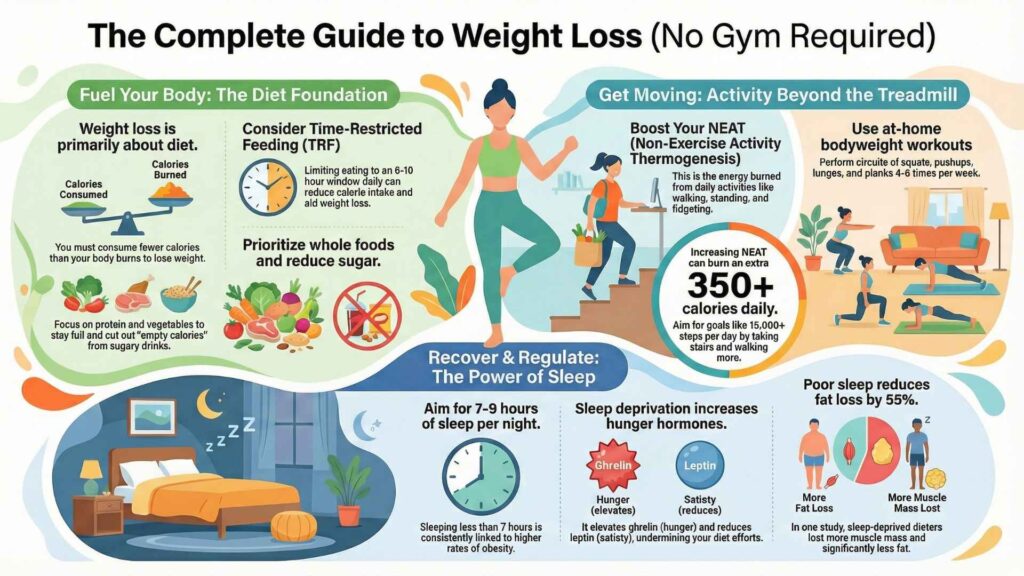
As Deirdre Tobias, an epidemiologist at the(https://hsph.harvard.edu/news/diet-not-a-lack-of-exercise-is-main-driver-of-obesity-study-finds/), notes, this research “flies in the face” of traditional assumptions. It proves that while exercise is vital for heart health and longevity, it is a poor tool for weight loss when compared to dietary intervention. This leads to the fundamental truth for any beginner: weight loss is approximately 70% to 80% nutrition and 20% to 30% activity.
The Comparative Efficacy of Diet and Exercise
To understand the specific impact of these variables, we must look at the Nutrition and Exercise in Women (NEW) study. This 12-month randomized controlled trial observed 439 postmenopausal women, dividing them into four distinct intervention groups. The results provide a clear hierarchy of weight loss effectiveness.
| Intervention Group | Average Weight Loss (%) | Average Weight Loss (kg) | Waist Circumference Change |
| Diet + Exercise | -10.8% | -10.9 kg | -7.0 cm |
| Diet Alone | -8.5% | -8.5 kg | -4.5 cm |
| Exercise Alone | -2.4% | -2.4 kg | -2.0 cm |
| Control | -0.8% | -0.8 kg | +0.9 cm |
The data confirms that dietary restriction is significantly more powerful than exercise alone. The group that focused solely on diet lost nearly four times as much weight as the group that focused solely on exercise. Furthermore, those who adhered strictly to the dietary protocol lost up to 13.5% of their body weight, demonstrating that discipline in the kitchen outweighs effort in the gym. For the beginner, this means that even without a single workout, significant fat loss is entirely achievable through targeted nutritional shifts.
The Calorie Deficit: Engineering Your Internal Burn
The biological prerequisite for weight loss is the creation of a calorie deficit. This occurs when the energy you consume is less than the energy your body requires to maintain its current state. When this gap is established, the body is forced to tap into its stored energy—primarily adipose tissue—to fuel essential functions. However, for beginners, the term “calorie deficit” can feel intimidating. It is helpful to view it as a form of “smart fueling” rather than deprivation.
To calculate a safe deficit, one must understand Resting Energy Expenditure (REE) and Total Daily Energy Expenditure (TDEE). REE is the number of calories your body burns while at rest, such as breathing and maintaining heart function. TDEE accounts for your movement throughout the day. Clinical dietitians generally recommend consuming 300 to 500 calories below your TDEE for sustainable weight loss. This gradual approach prevents the fatigue and muscle aches often associated with “crash dieting”.
What this really means is that consistency is the most critical factor. It is much easier to avoid 500 calories at dinner than it is to burn 500 calories on a treadmill. For example, swapping a large sweetened latte for black coffee can immediately remove 250 calories from your daily intake without requiring an extra minute of movement.

Precision Portions and the “MyPlate” Method
If counting every calorie feels overwhelming, portion control offers a more intuitive path. Clinical experts often suggest following the “MyPlate” method promoted by the USDA. This visual guide helps ensure you are getting the right balance of nutrients while naturally restricting calories.
| Food Group | Portion Allocation | Visual Cue |
| Non-Starchy Vegetables | 50% of the plate | Two open hands |
| Lean Protein | 25% of the plate | Deck of cards / Palm |
| Whole Grains / Starches | 25% of the plate | Closed fist |
| Healthy Fats | Minimal amount | Top of thumb |
By prioritizing high-volume, low-calorie foods like leafy greens, broccoli, and carrots, you can eat a large amount of food while maintaining a deficit. This “volume eating” strategy is essential for beginners because it provides the psychological satisfaction of a full stomach while the body continues to burn fat. Additionally, using smaller plates can trick the brain into feeling more satisfied with slightly smaller servings.
The Protein Leverage: Why Protein is the King of Nutrients
In the world of non-exercise weight loss, protein is the most significant macronutrient. It supports fat loss through three primary mechanisms: satiety, thermogenesis, and muscle preservation. Unlike fats and carbohydrates, protein triggers the release of hormones like peptide YY and glucagon-like peptide-1 (GLP-1), which send powerful fullness signals to the brain. This is why a high-protein breakfast of eggs can lead to eating significantly fewer calories at lunch compared to a high-carb breakfast of cereal.
Furthermore, protein has a higher Thermic Effect of Food (TEF) than other nutrients. This means your body literally burns more calories to digest a steak than it does to digest a piece of bread. Research indicates that protein-induced thermogenesis can increase your metabolic rate by up to 20% to 30% for several hours after eating.
Protecting Metabolic Engines: Lean Mass Preservation
One of the dangers of losing weight without exercise is the loss of lean muscle mass. Muscle tissue is metabolically expensive; it burns calories even when you are sleeping. If you lose muscle while dieting, your basal metabolic rate (BMR) drops, making it harder to maintain your results long-term. High protein intake serves as a biological shield for your muscles.
| High-Protein Food | Protein Content (approx.) | Additional Metabolic Benefit |
| Large Hard-Boiled Egg | 6.29 grams | High satiety, easy prep |
| Greek Yogurt (1 cup) | 15–20 grams | Contains probiotics for gut health |
| Lentils (1 cup) | 18 grams | High fiber content for digestion |
| Salmon (3 oz) | 22 grams | Rich in Omega-3 fatty acids |
| Paneer (100g) | 18–20 grams | Excellent vegetarian calcium source |
For those who feel “weight loss resistant,” increasing protein to 25%–30% of total calories can provide the metabolic spark needed to restart progress. This is especially true for women and older adults, who may have slower natural metabolisms. By focusing on “whole, single-ingredient foods,” you eliminate the hidden sugars and fats that sabotage these metabolic benefits.

NEAT: The Secret of Spontaneous Movement
While we often think of “exercise” as something that happens in a gym, the majority of our daily movement-related calorie burn comes from Non-Exercise Activity Thermogenesis (NEAT). NEAT includes everything from walking to the mailbox and cleaning the house to fidgeting and standing. The cumulative impact of these seemingly minor movements is substantial. In fact, differences in NEAT can account for a variation of up to 2,000 calories per day between individuals of similar size.
This concept is a breakthrough for beginners who feel they don’t have time for the gym. It reframes movement not as a scheduled task, but as a continuous part of life. Research has shown that reducing inactivity by increasing time spent walking or standing is more effective for insulin levels and fat lipids than one hour of physical exercise followed by hours of sitting.
The 10,000 Step Benchmark and Beyond
Walking is the most accessible form of NEAT. A study in the Journal of Obesity revealed that people who walked over 10,000 steps a day had lower body fat ratios and smaller waistlines than those who were sedentary. For a 150-pound person, every 1,000 steps burn approximately 40 to 50 calories. By consistently hitting 10,000 steps, an individual can create a weekly deficit of 3,500 calories—roughly the amount required to lose one pound of fat—without ever stepping foot on a treadmill.
| Activity Level | Daily Step Count | Metabolic Impact |
| Sedentary | < 5,000 steps | Higher risk of metabolic syndrome |
| Low Active | 5,000–7,499 steps | Baseline maintenance; minimal fat loss |
| Active | 10,000 steps | Significant fat loss and mood improvement |
| Highly Active | > 12,000 steps | Accelerated fat loss and high caloric burn |
However, 10,000 is not a “magic number.” For older adults, significant health benefits and lower mortality risks begin at just 4,400 steps daily. The key is consistency and gradual progression. Simple hacks like taking the stairs, parking further away, and conducting “walking meetings” can easily bridge the gap.
Intermittent Fasting: Flipping the Metabolic Switch
Intermittent Fasting (IF) has become a pillar of modern weight loss because it addresses the hormonal root of fat storage: insulin. When we eat throughout our waking hours, our insulin levels remain elevated, signaling the body to store energy and preventing it from accessing fat stores. Intermittent fasting works by prolonging the period after we’ve burned through the calories from our last meal, allowing the body to begin burning fat.
This process is often called “metabolic switching”. After 10 to 16 hours of fasting, the body depletes its glycogen stores and begins converting fatty acids into ketones, which are used as a primary energy source. This transition not only facilitates fat loss but has also been shown to protect brain health and improve verbal memory in adults.
Common Fasting Protocols for Beginners
There is no “right” way to fast; the best method is the one that fits your lifestyle. For many beginners, the 16:8 method is the most sustainable. This involves eating all daily calories within an 8-hour window (e.g., 10 am to 6 pm) and fasting for the remaining 16 hours.
Other popular methods include:
- The 5:2 Plan: Eating normally for five days and consuming only 500–600 calories on two non-consecutive days each week.
- 12:12 Fasting: A simple 12-hour overnight fast, which is an excellent starting point for those new to the concept.
Research from the National Institutes of Health (NIH) indicates that intermittent fasting is as effective as daily calorie restriction for weight loss, but some people find it easier to adhere to because it eliminates the need to count calories at every meal. During the fast, zero-calorie beverages like water, black coffee, and herbal tea are permitted and help manage hunger.

The Sugar-Free Blueprint: Breaking the Cycle of Cravings
One of the most powerful at-home strategies for weight loss is the elimination of added sugars. High sugar intake, particularly from sodas and processed snacks, leads to rapid spikes in blood glucose and insulin.3 When the body cannot immediately burn this excess sugar, the liver converts it into fat, which is typically stored around the waistline—a process known as lipogenesis.
By following a “no-sugar diet,” beginners can reset their metabolism and reduce their cravings. This doesn’t mean eliminating all carbohydrates, but rather focusing on whole foods like fruits, vegetables, and whole grains that contain natural sugars and fiber. These “slow-burn” carbs provide stable energy and prevent the blood sugar crashes that trigger overeating.
Navigating the Added Sugar Limit
The American Heart Association (AHA) recommends strict limits on added sugar to maintain metabolic health. Men should consume no more than 9 teaspoons (36 grams) per day, while women should aim for 6 teaspoons (25 grams). For perspective, a single can of soda can contain more than 10 teaspoons of sugar, immediately exceeding the daily limit.
| Actionable Sugar-Free Swap | Calories Saved (approx.) | Long-Term Metabolic Benefit |
| Soda to Sparkling Water | 150 calories | Prevents insulin spikes and fat storage |
| Flavored Yogurt to Plain Greek Yogurt | 100 calories | Improves gut health and satiety |
| Fruit Juice to Whole Fruit | 80 calories | Adds fiber to slow sugar absorption |
| Sweetened Latte to Black Coffee | 250 calories | Boosts metabolism through caffeine |
When starting a sugar-free journey, reading labels is essential. Manufacturers use over 50 different names for sugar, including high-fructose corn syrup, agave nectar, and maltodextrin. A common rule of thumb for beginners is to stick to the “perimeter” of the grocery store, where fresh produce, meats, and dairy are located.
Metabolism Boosting Foods: The Natural Catalysts
While no food can replace a calorie deficit, certain items contain bioactive compounds that modestly increase the number of calories your body burns. These “metabolism boosters” often work by increasing thermogenesis—the process of creating body heat—or by improving the efficiency of fat oxidation.
The Power of Spice and Plants
Chili peppers and jalapeños contain capsaicin, a compound that has been shown to boost metabolic rate and increase feelings of fullness. Research suggests capsaicin can help the body burn an extra 50 calories per day, which adds up significantly over time. Similarly, ginger has been evaluated for its ability to increase body temperature and metabolic rate while reducing fasting glucose levels.
Other notable boosters include:
- Green Tea: Contains catechins and EGCG, which block enzymes that break down norepinephrine, increasing fat oxidation.
- Cinnamon: Contains cinnamaldehyde, which may increase daily calorie burn and improve insulin sensitivity.
- Turmeric: The active component, curcumin, stimulates fat oxidation and may help reduce waist circumference in heavier individuals.
Including these ingredients in your meals is an easy way to “work smarter, not harder”. For example, adding a sprinkle of cinnamon to your morning oatmeal or a squeeze of ginger into your herbal tea can provide a small but cumulative metabolic edge.

Behavioral Psychology: Mastering the Art of Mindful Eating
Losing weight without a gym requires a psychological shift in how we relate to food. Mindful eating is the practice of paying full attention to the experience of eating, which helps us recognize true hunger and fullness cues. In a society that often eats while distracted by television or smartphones, we frequently override our biological satiety signals, leading to over-consumption.
The 20-Minute Rule and Hunger Scales
It takes approximately 20 minutes for the stomach to communicate to the brain that it is full. If we eat a meal in five minutes, we are likely to consume more than we need before the “I’m full” signal arrives. Slowing down—by chewing each bite 20 to 30 times—is one of the most effective ways to naturally reduce calorie intake.
A helpful tool for beginners is the Hunger-Satiety Scale:
- 1–2: Starving, feeling weak or irritable. (Avoid letting yourself get here)
- 3–4: Slightly hungry, stomach is growling. (Ideal time to eat)
- 5–6: Satisfied, but not full. (Ideal time to stop)
- 7–8: Full, feeling a bit heavy.
- 9–10: Stuffed, feeling uncomfortable. (Sign of over-consumption)
By aiming to stop at a 5 or 6, you prevent the discomfort and weight gain associated with eating until you are stuffed. Additionally, drinking a glass of water before meals can help take the edge off hunger.
The Influence of Sleep and Stress on Fat Accumulation
Weight loss is not just about what you eat; it is also about how your body manages its hormones. Sleep and stress are two of the most significant environmental factors that impact your weight. Chronic stress keeps cortisol levels elevated, which signals the body to store fat—particularly visceral fat around the abdomen—to protect against perceived threats.
The Sleep-Hunger Connection
Inadequate sleep disrupts the delicate balance between ghrelin (the hunger hormone) and leptin (the satiety hormone). Just one night of short sleep can increase ghrelin and decrease leptin, leading to intense cravings for high-sugar “comfort foods” the next day. Research suggests that individuals who get 7 to 9 hours of quality sleep are much more successful at maintaining a healthy weight.
To improve sleep and support weight loss:
- Maintain a consistent sleep-wake schedule, even on weekends.
- Power down electronic devices an hour before bed to avoid blue light, which disrupts melatonin.
- Keep the bedroom cool (below 68°F) to support the body’s natural drop in temperature.
By addressing stress through deep breathing or meditation and prioritizing rest, you create a hormonal environment that is conducive to fat loss rather than fat storage.

Looking Forward: 2025 Weight Loss Innovations
As we move through 2025, the landscape of weight management continues to evolve with technological and medical advancements. These innovations offer new levels of personalization for those who cannot or do not wish to use a gym.
AI, Genetics, and Gut Health
Artificial Intelligence is now being used to design highly customized nutrition plans that adapt to an individual’s specific progress and habits. Furthermore, genetic testing has become more accessible, allowing individuals to identify how their specific DNA influences their metabolism of fats and carbs. This “precision nutrition” eliminates the trial-and-error of traditional dieting.
Another major trend is gut microbiome optimization. Emerging research highlights the role of gut bacteria in weight regulation. Diets rich in probiotics (like kefir and sauerkraut) and prebiotics (like fiber-rich vegetables) are being used to improve digestion, reduce inflammation, and enhance metabolic health.
The Rise of Medical Weight Loss
For those who have struggled with traditional methods, non-surgical medical options are expanding. Medications like semaglutide and tirzepatide (GLP-1 agonists) are gaining popularity for their ability to regulate appetite and support significant weight loss under medical supervision. These treatments often serve as a “jumpstart” for individuals with chronic health conditions like prediabetes or PCOS, helping them achieve the initial success needed to build long-term healthy habits.
Strategic Conclusions for Long-Term Success
The journey to weight loss without a gym is a marathon that requires patience, consistency, and a scientific approach to self-care. The evidence is clear: while exercise provides invaluable health benefits, the primary levers for weight reduction are dietary control, protein optimization, and spontaneous daily movement.
By understanding the thermodynamics of energy expenditure and the hormonal impact of sugar, sleep, and stress, beginners can take control of their health from the comfort of their homes. The success stories of Leslie, Becky, and countless others prove that transformation is not about “perfection,” but about making small, sustainable choices every day.
As you begin your journey, remember that your weight does not define your worth. Focus on progress over perfection, and prioritize the fundamental habits of good nutrition and consistent movement. For those seeking personalized guidance and a structured plan tailored to their unique needs, expert support is available to bridge the gap between science and daily living.
Take the first step toward a healthier version of yourself today. You don’t need a gym membership to rewrite your story; you only need the willingness to start.
Ready to transform your lifestyle? Connect with our experts at Diet Dekho to receive your personalized weight loss strategy: https://dietdekho.com/form/

Frequently Asked Questions
Can I really lose belly fat without exercise?
Yes. Spot reduction is not biologically possible, but systemic fat loss—which includes the abdominal area—is driven by a calorie deficit. By focusing on high-fiber, high-protein foods and managing stress levels, you can effectively reduce visceral fat without targeted abdominal exercises.
How much protein do I need daily if I don’t go to the gym?
For general health and muscle preservation during weight loss, aim for 0.8 to 1.0 grams of protein per pound of body weight. This level of intake supports satiety and keeps your metabolism active through the thermic effect of food.
Is 10,000 steps the only way to lose weight through walking?
No. While 10,000 steps is a great target, research from Harvard indicates that as few as 4,400 steps can significantly improve health and longevity. The most important factor is increasing your current activity level gradually and consistently.
What can I drink while intermittent fasting?
During your fasting window, you should stick to zero-calorie beverages. Water is essential, but you can also enjoy black coffee, plain tea, and herbal infusions. These help manage hunger without breaking the metabolic state of fasting.
How do I handle cravings for sugar at home?
Cravings often stem from blood sugar fluctuations. To manage them, ensure you are eating enough protein and fiber during your meals. If you need a snack, opt for low-sugar fruits like berries or a handful of almonds, which provide healthy fats and satiety.
BOOK YOUR APPOINTMENT
Abhinav is the Founder of Diet Dekho, helping people manage weight and lifestyle health through simple, practical nutrition and personalized diet plans.