Wondering how to quit sugar effectively? You must adopt a three-phased approach: detoxification, stabilization, and substitution. For the Indian population, this means replacing high-glycemic staples like refined sugar and jaggery with zero-glycemic alternatives such as Stevia or Monk Fruit. Success relies on stabilizing blood glucose with protein-rich Indian breakfasts (e.g., Moong Dal Chilla), managing withdrawal with hydration, and identifying hidden sugars in “healthy” products like biscuits. Consistency over 21 days is vital to learning how to quit sugar and reversing metabolic damage.
1. Introduction: The Sweet Trap of the Modern Indian Diet
Table of Contents
- 1 1. Introduction: The Sweet Trap of the Modern Indian Diet
- 2 2. Understanding the Neurobiology: Why Learning How to Quit Sugar is Hard
- 3 3. The Indian Health Crisis: Reasons to Learn How to Quit Sugar
- 4 4. Hidden Sugars: A Major Hurdle in How to Quit Sugar
- 5 5. Analyzing Alternatives: How to Quit Sugar Safely
- 6 6. The Benefits: What Happens When You Quit?
- 7 7. The Withdrawal Phase: Sugar Withdrawal Symptoms Timeline
- 8 8. Strategic Diet Plans: How to Quit Sugar in 7 Days
- 9 9. Ayurvedic Perspectives: How to Quit Sugar Naturally
- 10 10. Practical Substitutes: Healthy Sugar Alternatives for Tea in India
- 11 11. Lifestyle and Behavioral Change
- 12 12. Conclusion: Mastering How to Quit Sugar for Life
- 13 13. Frequently Asked Questions (FAQs)
In the contemporary landscape of global health, India finds itself in a precarious position. Although the nation is historically rooted in Ayurvedic wisdom, it now bears the unenviable title of the “Diabetes Capital of the World.” Consequently, learning how to quit sugar has become a critical skill for survival. The modern Indian diet has shifted seismically over the last three decades, transitioning from complex carbohydrates to a regimen heavily reliant on processed snacks and pervasive added sugars.
Whether you are a weight loss seeker, a busy professional, or a homemaker managing family nutrition, sugar is not merely a source of empty calories; it acts as a potent metabolic disruptor. Culturally, we often equate “muh meetha karna” (sweetening the mouth) with celebration. However, this cultural integration complicates the physiological battle when you try to figure out how to quit sugar.
Furthermore, we often underestimate the ubiquity of sugar in the Indian diet. It extends beyond the overt consumption of mithai or masala chai. It hides insidiously in savory snacks, “health” drinks for children, and staples like bread. This omnipresence drives a cycle of glucose spikes and insulin resistance that underpins the rising prevalence of Non-Communicable Diseases (NCDs) such as Type 2 Diabetes, Polycystic Ovary Syndrome (PCOS), and hypertension.
This report provides an exhaustive roadmap on how to quit sugar addiction. We will move beyond superficial advice to explore the neurochemistry of dependence and provide actionable, culturally relevant strategies.

2. Understanding the Neurobiology: Why Learning How to Quit Sugar is Hard
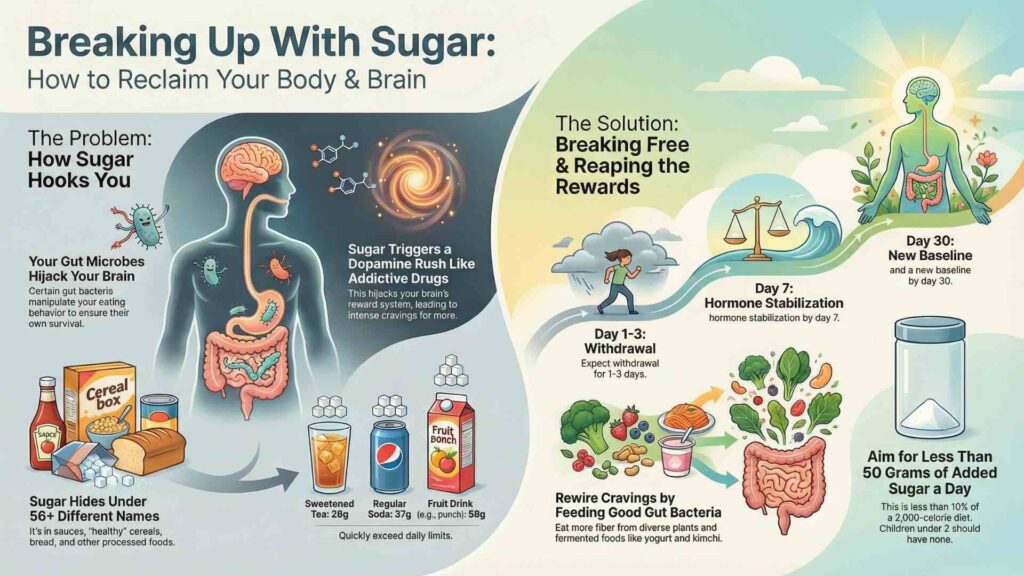
To effectively master how to quit sugar, you must first comprehend the biological mechanisms that make it addictive. Consuming sugar is not merely a caloric event; it is a neurochemical event that mimics substance dependency.
2.1 The Dopamine Reward Loop
Scientific literature consistently identifies sugar as a substance that activates the brain’s reward system. When you consume sucrose, it triggers the release of dopamine in the nucleus accumbens, a region associated with pleasure and motivation. Therefore, figuring out how to quit sugar requires breaking this powerful neural circuitry.
Research indicates that sugar provides a rapid energy source, which the evolutionary brain interprets as a survival advantage. However, this surge is transient. Following high-glycemic foods, blood glucose spikes and then crashes. Consequently, the brain craves more sugar to regain that dopamine high. Over time, chronic overconsumption leads to tolerance, meaning you require increasing amounts of sugar to achieve the same satisfaction.
2.2 Comparative Studies and Cross-Addiction
The comparison between sugar and narcotics is well-documented. Research cited by health authorities demonstrates that when laboratory rats choose between sweetened water and cocaine, they frequently prefer the sugar.
For people with a history of substance use disorders, sugar often becomes a “cross-addiction.” For instance, people with alcohol use disorder often develop intense sugar cravings during early recovery. This occurs because sugar acts as a substitute, stimulating the same reward pathways previously activated by alcohol. Understanding this link is crucial when planning how to quit sugar safely.
2.3 The Stress-Sugar Cycle in India
In the high-stress environment of modern Indian life, sugar acts as a temporary anxiety-reducing agent. Cortisol, the stress hormone, triggers physiological cravings for hyper-palatable foods. Consuming these foods temporarily dampens the stress response, creating a reliance on sweets to manage anxiety.
This cycle is particularly vicious for professionals who use “chai-biscuit” breaks as a coping mechanism. Therefore, learning how to quit sugar involves managing stress without relying on that quick glucose spike.

3. The Indian Health Crisis: Reasons to Learn How to Quit Sugar
The consumption of sugar drives a significant portion of India’s disease burden. The physiological impact is systemic, exacerbating conditions prevalent in the Indian population.
3.1 Diabetes Mellitus: The Silent Epidemic
India currently faces a staggering diabetes crisis. According to the ICMR-INDIAB study, diabetes affects 101 million people, with another 136 million classified as prediabetic. The ingestion of excess sucrose leads directly to hepatic insulin resistance. The liver converts fructose into fat, contributing to Non-Alcoholic Fatty Liver Disease (NAFLD).
For the Indian diabetic, the danger lies in “healthy” alternatives and staple foods. The ICMR guidelines explicitly recommend restricting sugar intake to less than 5-10% of total energy. PharmEasy Labs data reveals that nearly 1 in 2 people tested across India show high blood sugar levels. Thus, understanding how to quit sugar is vital for preventing “young-onset” diabetes.
3.2 PCOD/PCOS: The Insulin-Androgen Connection
Polycystic Ovary Syndrome (PCOS) is the most common endocrine disorder among Indian women. There is a strict interplay between PCOS and sugar.
- Mechanism: Insulin resistance drives PCOS. High circulating insulin stimulates the ovaries to produce excess androgens (male hormones).
- The Solution: For women with PCOS, learning how to quit sugar is often more therapeutically effective than medication. Quitting sugar lowers insulin, which lowers testosterone, thereby reducing acne and restoring ovulation.
3.3 Hypertension: Sugar vs. Salt
While we traditionally blame sodium for high blood pressure, recent evidence suggests sugar may be a more significant culprit. High sugar intake increases insulin, which causes the kidneys to retain sodium. A review in Open Heart journal concluded that sugar’s impact on blood pressure might be more pronounced than that of sodium. Therefore, a key strategy for managing BP is learning how to quit sugar.

4. Hidden Sugars: A Major Hurdle in How to Quit Sugar
One of the most significant hurdles in your Indian diet plan to quit sugar is identifying where it hides. Manufacturers frequently mislead consumers with packaging claims like “healthy” or “natural.”
4.1 The “Health Drink” Controversy
Generations of Indians have grown up on malt-based additives like Bournvita and Horlicks. However, nutritional analysis reveals a concerning reality.
- Sugar Content: Popular malt drinks can contain 37g to 50g of sugar per 100g.
- Impact: A single serving delivers 1-2 teaspoons of added sugar before breakfast. This primes you for glucose spikes, making it harder to figure out how to quit sugar later in the day.
- Awareness: Social media influencers and the NCPCR have highlighted these discrepancies, urging consumers to look beyond the label.
4.2 The Biscuit Trap
The ritual of “Chai-Biscuit” is a staple. However, digestive biscuits and snacks like Marie Gold are not diet-friendly.
- Nutritional Reality: A 100g serving of Marie Gold biscuits contains approximately 21-22g of sugar.
- Parle-G: Offers a high glycemic impact with minimal satiety.
- Strategy: To successfully master how to quit sugar, you must replace these biscuits with protein-rich nuts or roasted seeds.
4.3 Tomato Ketchup
Ketchup is essentially a sugar syrup. One tablespoon can contain roughly 4 grams (1 teaspoon) of sugar. Manufacturers often mask this by listing sugar aliases like liquid glucose or corn syrup.
Table 1: Hidden Sugar Content in Common Indian Foods
| Food Item (100g/Serving) | Estimated Sugar Content | Healthier Alternative |
| Bournvita/Malt Drinks | ~37g – 50g per 100g | Homemade Turmeric Milk (Haldi Doodh) |
| Marie Gold Biscuits | ~21g per 100g | Roasted Makhana (Fox Nuts) |
| Tomato Ketchup (1 tbsp) | ~4g (1 tsp) | Homemade Mint/Coriander Chutney |
| Flavored Yogurt | ~10g – 15g per cup | Plain Curd + Fresh Fruit |
| Parle-G | ~25g per 100g | Homemade Oats/Ragi Cookies (Stevia) |

5. Analyzing Alternatives: How to Quit Sugar Safely
When attempting to answer the question “is jaggery better than sugar,” we need a nuanced understanding of Glycemic Index (GI).
5.1 Is Jaggery Better Than Sugar?
In general health terms, jaggery (Gur) contains trace minerals. However, is jaggery better than sugar for weight loss? NO. Jaggery is chemically mostly sucrose with a high Glycemic Index (approx 84.4). It spikes blood sugar rapidly. Therefore, if you are learning how to quit sugar, you must also quit jaggery.
5.2 Honey and Artificial Sweeteners
- Honey: While it has antioxidants, it is still a dense source of fructose. It should be avoided during a strict 7 day sugar detox plan for beginners.
- Artificial Sweeteners: The WHO has flagged sweeteners like aspartame as potentially ineffective for weight control.
5.3 The Winners: Stevia and Monk Fruit
If you want to know how to quit sugar without losing sweetness, Stevia (Meethi Tulsi) is your best ally. It is natural, has zero calories, and does not spike insulin. Monk Fruit is another excellent, though more expensive, option.

6. The Benefits: What Happens When You Quit?
The physiological changes that occur when you successfully figure out how to quit sugar are profound.
6.1 The “Sugar Glow” (Skin Health)
Sugar causes Glycation, where sugar binds to collagen, leading to premature wrinkles.
- Acne Reduction: High sugar spikes insulin, which increases oil production.
- Result: Within 14 to 21 days of learning how to quit sugar, inflammation decreases. This leads to the “Sugar Glow,” characterized by clearer, more elastic skin.
6.2 Weight Loss and Mental Clarity
When you stop eating sugar, insulin levels drop, allowing the body to access stored fat (lipolysis). This effectively reduces visceral belly fat. Furthermore, stabilizing blood sugar eliminates “brain fog” and mid-afternoon lethargy.

7. The Withdrawal Phase: Sugar Withdrawal Symptoms Timeline
Quitting “cold turkey” can shock the system. Knowing the sugar withdrawal symptoms timeline prepares you for success.
- Days 1-3 (The Peak): This is the hardest part of learning how to quit sugar. You may experience headaches, nausea, and irritability as the brain demands dopamine.
- Days 4-7 (The Fog): Physical cravings lessen, but mood swings may persist.
- Days 8-14 (The Turn): Energy stabilizes. Natural foods begin to taste sweeter.
- Day 21+ (Freedom): You have established a new metabolic baseline.
7.1 Managing Side Effects
To manage side effects of quitting sugar suddenly:
- Headaches: Stay hydrated with lemon water and rock salt (Sendha Namak).
- Cravings: Chew on Fennel Seeds (Saunf) or drink Cinnamon water to stabilize blood sugar.
- Satiety: Eat protein-rich snacks to prevent the urge to consume excessively.
8. Strategic Diet Plans: How to Quit Sugar in 7 Days
Here are specific plans to help you implement how to quit sugar in your daily life.
8.1 7-Day Indian Vegetarian Sugar Detox Plan
This plan uses complex carbs and protein to keep insulin stable.
| Day | Breakfast | Lunch | Snack | Dinner |
| 1 | Moong Dal Chilla | Brown Rice + Palak Dal | Roasted Makhana | Paneer Bhurji + Roti |
| 2 | Oats Upma | Quinoa Khichdi + Curd | Buttermilk | Lauki Sabzi + Jowar Roti |
| 3 | Besan Dhokla | Rajma Masala + Salad | Almonds | Veg Soup + Tofu |
| 4 | Ragi Porridge | Chole + Cucumber Raita | Hummus + Veggies | Baingan Bharta + Roti |
| 5 | Paneer Paratha | Sambhar + Idli | Walnuts | Stir-fry Veggies |
| 6 | Sprouts Salad | Veg Pulao + Curd | Roasted Chana | Methi Thepla |
| 7 | Methi Muthia | Soy Chunk Curry | Tomato Juice | Pumpkin Soup + Paneer |
8.2 7-Day Non-Vegetarian/Diabetic-Friendly Plan
Protein is the key to crushing cravings when figuring out how to quit sugar.
| Day | Breakfast | Lunch | Snack | Dinner |
| 1 | 2 Boiled Eggs | Chicken Curry + Roti | Chicken Soup | Grilled Fish |
| 2 | Chicken Keema | Egg Bhurji + Dal | Roasted Seeds | Palak Chicken |
| 3 | Omelette | Fish Curry + Brown Rice | Buttermilk | Chicken Stir-fry |
| 4 | Egg Bhurji | Mutton Curry + Salad | Egg Whites | Grilled Chicken |
| 5 | Chicken Sandwich | Egg Curry + Roti | Walnuts | Tandoori Fish |
| 6 | Scrambled Eggs | Chicken Saagwala | Veg Soup | Lemon Chicken |
| 7 | Masala Omelette | Prawn Curry | Guava | Chicken Soup |
9. Ayurvedic Perspectives: How to Quit Sugar Naturally
Ayurveda offers unique insights on how to reduce sugar cravings Ayurveda style. It views addiction as an imbalance in the Kapha dosha.
9.1 Ayurvedic Remedies
- Bitter Taste (Tikta): Introduce bitter foods like Karela (Bitter Gourd) to counteract the sweet craving.
- Triphala: Taken at night, it cleanses the digestive tract and regulates metabolic fire (Agni).
- Gymnema Sylvestre (Gudmar): Chewing these leaves blocks sugar receptors on the tongue. This is a powerful tool when learning how to quit sugar as it makes sweets unappealing.
10. Practical Substitutes: Healthy Sugar Alternatives for Tea in India
10.1 The Ultimate “Sugar-Free” Masala Chai
For many, the morning tea is the hardest part of how to quit sugar.
- The Swap: Use Stevia drops or Monk Fruit instead of sugar.
- Natural Sweetness: Increase cinnamon and cardamom. These spices provide warmth and perceived sweetness without the glucose spike.
- Tip: If you are diabetic, use plant-based milk to lower the carb count further.
10.2 Healthy Swaps for Cravings
- Ice Cream: Blend frozen bananas with cocoa powder.
- Soda: Drink sparkling water with fresh lime and mint.
- Mithai: Make energy balls with nuts and Stevia.
11. Lifestyle and Behavioral Change
Diet alone isn’t enough; lifestyle changes solidify how to quit sugar for good.
11.1 Sleep and Stress
Lack of sleep disrupts hunger hormones, leading you to crave quick energy. Therefore, prioritize 7-8 hours of sleep. Additionally, stress management is crucial. Since stress triggers cortisol, which drives sugar cravings, practices like Pranayama can help you manage the urge to overindulge in sweets.

12. Conclusion: Mastering How to Quit Sugar for Life
Quitting sugar in a culture obsessed with sweets is an act of rebellion. However, once you learn how to quit sugar, you are not depriving yourself; you are recalibrating your body. The journey begins with withdrawal but ends with a body that is less inflamed and a metabolic system that is robust.
Whether you are fighting diabetes, managing PCOD, or simply wanting to lose weight, understanding how to quit sugar is the single most effective intervention you can make.
Ready to transform your health? Take the first step today. For personalized diet plans and consultation with nutrition experts, visit https://dietdekho.com/form/.
BOOK YOUR APPOINTMENT13. Frequently Asked Questions (FAQs)
Q1: Is jaggery better than sugar for weight loss?
Answer: No. If you are learning how to quit sugar, you must avoid jaggery too. It has a high glycemic index and spikes insulin just like refined sugar.
Q2: How to stop eating sweets naturally without headaches?
Answer: Headaches are usually due to caffeine or sugar withdrawal. Stay hydrated with electrolytes. Use Stevia as a transition tool. The symptoms typically subside within 3-4 days.
Q3: What happens when you stop eating sugar for a month?
Answer: After a month of successfully applying how to quit sugar, you will notice reduced inflammation, clearer skin (“Sugar Glow”), weight loss, and stable energy levels without afternoon crashes.
Q4: How to control sugar cravings at night?
Answer: Late-night cravings often indicate poor dinner satiety. Ensure your dinner has enough protein and fiber. Ayurvedic tips suggest drinking warm turmeric milk or cinnamon tea to curb these cravings.
Q5: Are “Sugar-Free” biscuits healthy?
Answer: Rarely. They often contain refined flour (Maida) and artificial sweeteners. When figuring out how to quit sugar, stick to whole foods like roasted chana or nuts instead.
BOOK YOUR APPOINTMENTDisclaimer: This blog post was written to help you make healthier food choices altogether. So, be aware and take care. The important thing to consider is your health before starting a restrictive diet. Always seek advice from a doctor or dietitian before starting if you have any concerns.

Abhinav is the Founder of Diet Dekho, helping people manage weight and lifestyle health through simple, practical nutrition and personalized diet plans.