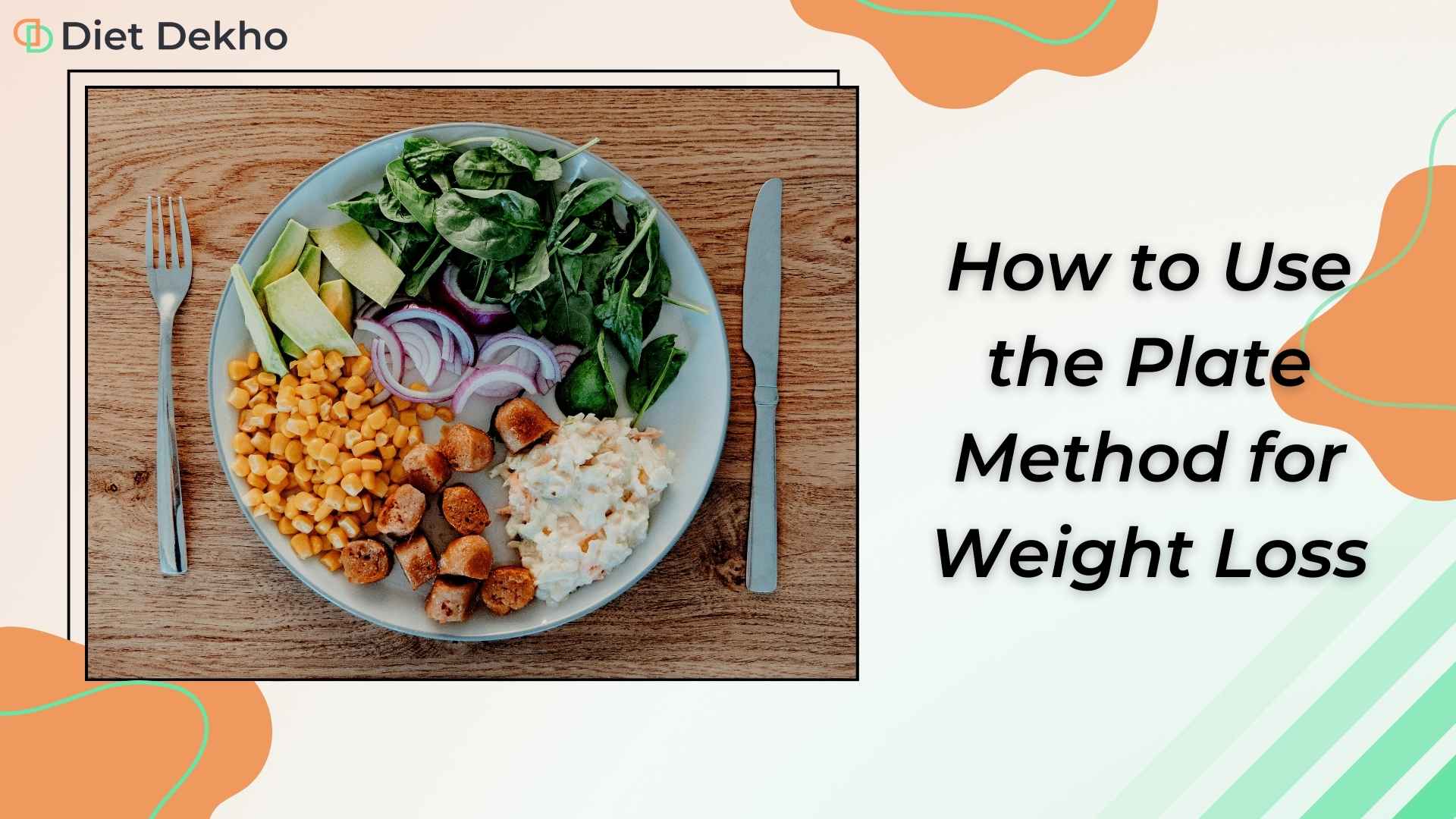
Are you tired of feeling like every meal is a math exam? If you are looking for a simple way to manage your thali without a kitchen scale, learning How to Use the Plate Method for Weight Loss is the best step you can take today. I know it’s hard to find time for calorie tracking when you are balancing a career or a busy household, but this visual tool makes healthy eating feel natural again.
To understand How to Use the Plate Method for Weight Loss, simply divide your 9-inch dinner plate into three sections: fill 50% with non-starchy vegetables (like bhindi or lauki), 25% with protein (like dal, eggs, or paneer), and 25% with whole grains or millets. This visual guide creates a natural calorie deficit, stabilizes blood sugar, and ensures high fiber intake without the need for complex food tracking.
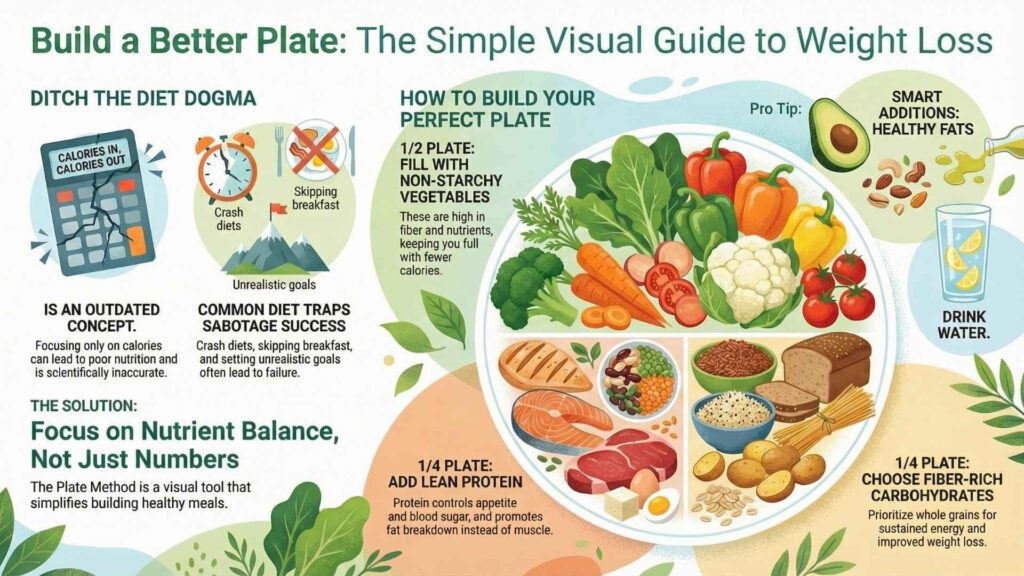
Table of Contents
- 1 The Frustration of Feeling Hungry Even After a “Healthy” Meal?
- 2 3 Myths About Portion Control That Are Keeping You Higherweight?
- 3 What is the Plate Method? A Simple Science-Backed Approach?
- 4 How to Build the Perfect Balanced Indian Thali for Weight Loss?
- 5 Practical Swaps: Making Your Favorite Desi Meals Plate-Method Friendly?
- 6 A Typical Day: Applying the Plate Method from Breakfast to Dinner?
- 7 Common Mistakes: Why “Healthy” Foods Can Still Sabotage Your Plate?
- 8 How to Adapt the Plate Method for PCOS and Thyroid?
- 9 You Don’t Have to Be Perfect to See Real Progress?
- 10 Frequently Asked Questions (FAQs)
- 11 Get a Personalized Macro-Balanced Plan with a Diet Dekho Expert
- 12 Start Your Journey to Holistic Health with a Diet Dekho Consultant
The Frustration of Feeling Hungry Even After a “Healthy” Meal?
I often hear from clients at Diet Dekho who say they eat “clean” but still feel unsatisfied. What this means for your daily routine is that you might be choosing the right ingredients but in the wrong proportions. In a typical Indian household, we often see a large heap of rice or a tall stack of rotis with just a tiny bowl of vegetables.
While these foods are nutritious, this heavy carbohydrate load can spike your insulin—the hormone that facilitates fat storage—leaving you feeling tired and hungry just an hour later. I know it’s hard to stay motivated when your body is constantly signaling for more fuel. Let’s simplify this by looking at the science of visual portion control.
3 Myths About Portion Control That Are Keeping You Higherweight?
Before we master How to Use the Plate Method for Weight Loss, we must unlearn some common myths. Many people in heavier bodies feel they have failed because they couldn’t stick to a rigid diet. However, usually, it’s the plan that was flawed, not the effort of the person.
Myth 1: You Must Starve to See Progress
The most common mistake is thinking that smaller portions mean eating “less” of everything. In reality, you can actually eat a higher volume of food if you choose high-fiber, water-rich vegetables. By filling half your plate with greens, you trigger “gastric distension,” which tells your brain you are full before you overconsume calories.
Myth 2: Indian Food is Too “Carb-Heavy” for Fat Loss
I know it’s hard to imagine weight loss without roti or rice, but you don’t have to eliminate them. The issue isn’t the grain itself; it’s the ratio. When you learn How to Use the Plate Method for Weight Loss, you realize that grains should be a supporting actor, not the main protagonist of your thali.
Myth 3: You Need Expensive Gadgets
You don’t need a digital scale or a premium app to see results. Consequently, the plate method is far more sustainable than other diets because it relies on your eyes and hands. Whether you are at a family wedding or a local restaurant, you can always visualize your portions to stay on track.
What is the Plate Method? A Simple Science-Backed Approach?
In simple terms, the plate method is a visual strategy designed by nutrition experts at Harvard and the ICMR to help you balance your macronutrients effortlessly. According to the ICMR-NIN guidelines, approximately 56.4% of the total disease burden in India is due to unhealthy diets. This makes portion control a critical health priority.
By using a standard 9-inch plate, you force a balance between fiber, protein, and carbohydrates. This balance is essential for addressing the “Asian Indian Phenotype,” where individuals tend to store more visceral fat even at a lower Body Mass Index. Therefore, restructuring your plate is not just about aesthetics; it is about metabolic safety.
How to Build the Perfect Balanced Indian Thali for Weight Loss?
Let’s walk through the exact steps of How to Use the Plate Method for Weight Loss when sitting down for a traditional Indian meal. Imagine your plate is divided into three distinct zones:
1. The Fiber Half: Non-Starchy Vegetables (50%)
Fill this entire half with a variety of colorful vegetables. Think of sabzis like palak, bhindi, tinda, cauliflower, or a large bowl of kachumber salad. These foods provide volume and micronutrients with very few calories. Specifically, the ICMR-NIN guidelines recommend a 33% increase in vegetable intake—moving from 300g to 400g per day—to ensure you get enough antioxidants and minerals.
2. The Protein Quarter: Building Muscle (25%)
This section is for your tissue-repairing foods. For vegetarians, this means thick dals, rajma, chole, or low-fat paneer. For non-vegetarians, it includes eggs, grilled chicken, or steamed fish. Protein is vital because it has a high thermic effect, meaning your body burns more energy just to digest it compared to fats or carbs.
3. The Grain Quarter: Sustained Energy (25%)
This is the space for your roti, rice, or millets. Instead of refined white rice or maida, I suggest choosing unrefined options like bajra, jowar, or brown rice. These “slow-release” carbs provide lasting energy and prevent the sudden insulin spikes that lead to excessive consumption of snacks later in the day.
Practical Swaps: Making Your Favorite Desi Meals Plate-Method Friendly?
Making these changes doesn’t mean giving up your culture. What this means for your daily routine is making “surgical swaps” that keep the flavor but reduce the density.
- The Roti Strategy: If you usually eat four rotis, try eating one or two multigrain rotis and doubling your portion of dal and sabzi.
- The Rice Rule: If you love rice, serve it in a small 1-cup bowl to ensure it only takes up 25% of your plate real estate.
- The Fiber-First Sequence: Research suggests that eating your vegetable half first, followed by the protein, and leaving the grain for the end can significantly blunt your post-meal blood sugar spike.

A Typical Day: Applying the Plate Method from Breakfast to Dinner?
To help you visualize How to Use the Plate Method for Weight Loss, let’s look at a realistic Indian meal plan. This structure provides roughly 1500 calories, which is a safe target for most people.
| Meal | Plate Method Allocation | Sample Indian Menu |
| Breakfast | 25% Grain + 25% Protein + 50% Veggies | 2 Moong dal chillas stuffed with grated carrots and beans. |
| Lunch | 25% Roti + 25% Dal/Rajma + 50% Sabzi | 1 Bajra roti + 1 bowl Lauki sabzi + 1 bowl Rajma + Kachumber. |
| Snack | Focus on Fiber & Protein | A handful of roasted makhana or 5 soaked almonds. |
| Dinner | 25% Protein + 75% Veggies & Soup | Grilled paneer or fish + Large bowl of sautéed spinach + Clear soup. |
Common Mistakes: Why “Healthy” Foods Can Still Sabotage Your Plate?
Even when you know how to use the plate method for weight loss, small habits can quietly stall your progress.
- Ignoring the “Liquid” Plate: Many of us drink our calories in the form of sugary lassi, fruit juices, or sweetened tea. These drinks lack fiber and hit your bloodstream like a sugar bomb.
- The Tadka Trap: Using 4 tablespoons of oil for a simple sabzi can triple its calorie count. Try to use heart-healthy oils like mustard or peanut oil in moderation—about 25-30g per day is plenty.
- The Salad Dressing Myth: Adding creamy dressings or heavy chutneys to your vegetable half can cancel out the benefits. Use lemon, ginger, or thin mint chutney instead.
- Overeating Healthy Fats: While nuts and ghee are healthy, they are very dense. A “thumb-sized” portion of fat per meal is usually the maximum for fat loss.
How to Adapt the Plate Method for PCOS and Thyroid?
If you are managing a medical condition, learning how to use the plate method for weight loss is more than just a diet—it’s a therapeutic tool.
- For PCOS and Diabetes: Focus on low-GI grains like ragi or jowar. Ensure you follow the “fiber-first” eating order to manage insulin resistance. Additionally, include anti-inflammatory spices like turmeric and cinnamon to support your metabolism.
- For Thyroid (Hypothyroidism): Since your metabolism may be sluggish, focus on high-volume vegetables to stay full. However, ensure cruciferous vegetables (like cabbage and broccoli) are well-cooked to neutralize goitrogens that can interfere with thyroid function.
- For Hypertension (BP): Use the vegetable half to load up on potassium-rich foods like spinach, bananas, and tomatoes, which help your body excrete excess sodium.

You Don’t Have to Be Perfect to See Real Progress?
I want to reassure you that you don’t need to follow this 100% of the time to see results. If you have a meal that is heavy on rice at a family gathering, don’t worry—just make your next meal “vegetable-heavy” to bring your day back into balance.
The most important goal is consistency, not perfection. Aim for a slow, sustainable fat loss of 0.5 to 1 kg per week. This prevents metabolic adaptation—the slowing of the metabolism that occurs when you follow a crash diet—and ensures the weight stays off for good.
Frequently Asked Questions (FAQs)
1. Can I eat white rice when learning how to use the plate method for weight loss?
Yes, you can eat white rice, but it must be limited to 25% of your plate. To make it more weight-loss-friendly, I recommend mixing it with fiber-rich vegetables (like peas and carrots) or swapping it for red or brown rice once in a while.
2. Is the plate method safe for people with high blood pressure?
Absolutely. By filling 50% of your plate with vegetables and fruits, you increase your potassium intake, which is the core principle of the DASH diet for lowering blood pressure. It naturally reduces your sodium-to-potassium ratio.
3. What if I feel hungry after my balanced plate?
If you are still hungry, you can always go back for a second helping of the 50% vegetable section. Foods like cucumber salad, steamed cabbage, or clear vegetable soup are very low in calories and can be eaten until you feel fully satisfied.
4. Can I follow the plate method as a strict vegetarian?
Yes. In the protein quarter, you should focus on thick dals, rajma, chole, sprouted moong, or paneer. The key is ensuring your dal is undiluted and not just a thin “watery” version, so you get enough amino acids.
5. Does the plate method work for busy professionals?
It is actually the best method for busy people. Since it relies on visual cues like the “Hand Measure Guide” (a fist for carbs, a palm for protein), you can use it in a corporate cafeteria or during business travel without any equipment.

Get a Personalized Macro-Balanced Plan with a Diet Dekho Expert
I know it’s hard to figure this out alone, especially when you have a medical condition or a demanding schedule. Our experts at Diet Dekho specialize in creating personalized Indian meal plans that fit your lifestyle while driving real fat loss results.
Start Your Journey to Holistic Health with a Diet Dekho Consultant
Ready to stop counting and start living? Let us help you build a sustainable roadmap to your health goals.
Click here to fill out our consultation form
Disclaimer: This blog post was written to help you make healthier food choices altogether. So, be aware and take care. The important thing to consider is your health before starting a restrictive diet. Always seek advice from a doctor or dietitian before starting if you have any concerns.
BOOK YOUR APPOINTMENT
Dr. Ritika is a nutrition and lifestyle expert with 2+ years of experience, helping clients manage weight and health through practical, personalized diet plans.