If you have spent any time in an Indian kitchen, you have likely heard conflicting advice about that golden jar of clarified butter. You might find yourself asking: Is Ghee Good or Bad for Weight Loss? While our grandparents swore by its healing powers, many modern fitness trends have pushed it aside in favor of refined oils or expensive imported fats.
Is Ghee Good or Bad for Weight Loss? The short answer is that ghee is highly beneficial for weight loss when consumed in moderation (1–2 teaspoons daily). Its medium-chain fatty acids (MCTs) and conjugated linoleic acid (CLA) stimulate metabolism and promote fat burning, provided it replaces processed fats rather than being added to an already high-calorie diet.
Why do we struggle with the question: Is Ghee Good or Bad for Weight Loss?
Table of Contents
- 1 Why do we struggle with the question: Is Ghee Good or Bad for Weight Loss?
- 2 How does the type of ghee affect fat loss?
- 3 Can ghee help reduce stubborn belly fat?
- 4 Is ghee good for PCOD and PCOS weight loss?
- 5 What about ghee for thyroid and metabolism?
- 6 Can diabetics include ghee in an Indian diet plan?
- 7 When is the best time to eat ghee for weight loss?
- 8 How much ghee per day for weight loss is safe?
- 9 Ghee vs. other Indian cooking oils: Which is best?
- 10 Practical Indian diet plan with ghee for weight loss
- 11 Myths vs. Facts about ghee and fat loss
- 12 Safety considerations for medical conditions
- 13 FAQs on Ghee and Weight Loss
- 14 Final Thoughts
I know it’s hard to find time to research every ingredient in your pantry, but understanding the history of ghee helps us see why we are so confused today. For generations, ghee was the primary cooking fat in India, used for everything from tempering dal to medicinal preparations in Ayurveda. However, in the late 20th century, a wave of nutritional advice began demonizing saturated fats, leading many families to switch to “heart-healthy” refined vegetable oils.
What this means for your daily routine is that you might be missing out on a powerful metabolic ally. Modern science is now catching up with traditional wisdom, showing that the fats in ghee are not the same as the trans fats found in processed snacks or vanaspati. In simple terms, your body processes ghee differently than it does industrial oils, making it a “functional fat” rather than just a source of calories.
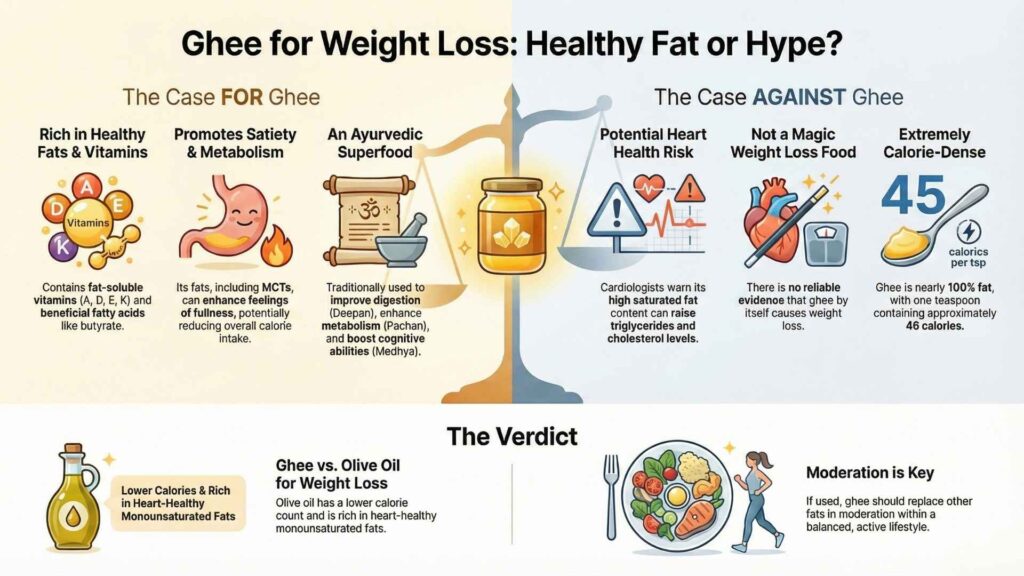
Understanding the biochemical makeup of clarified butter
Let’s simplify this technical side so you can make better choices at the grocery store. Ghee is essentially pure milk fat that has been clarified to remove all water and milk solids (lactose and casein). This makes it a 99.8% fat product, but the quality of that fat is what matters for your weight loss journey. It contains a unique mix of short-chain, medium-chain, and long-chain fatty acids that influence how your body stores energy.
| Nutrient Component | Cow Ghee (per 100g) | Buffalo Ghee (per 100g) |
| Energy (kcal) | ~810-820 | ~880-900 |
| Total Fat (g) | ~90-92 | ~95-98 |
| Saturated Fat (g) | ~55-60 | ~65-70 |
| MUFA (g) | ~25-30 | ~20-25 |
| PUFA (g) | ~4-5 | ~3-4 |
| Vitamin A (IU) | ~3000-4000 | ~2000-2500 |
| Vitamin E (mg) | ~15-20 | ~10-15 |
The presence of medium-chain triglycerides (MCTs) is particularly interesting for weight loss. Unlike long-chain fats, MCTs go straight to your liver to be used as instant energy. Think of them as high-quality fuel for your metabolic engine that is less likely to be stored as stubborn belly fat.
How does the type of ghee affect fat loss?
When you walk into a store, you are often faced with a choice between cow ghee and buffalo ghee. This choice is critical because their impact on your metabolism is quite different. Cow ghee is generally lighter, whiter in its liquid state, and easier to digest with a digestibility rate of about 96%. It is higher in unsaturated fatty acids, making it the preferred choice for those watching their weight.
Buffalo ghee, on the other hand, is richer and more calorie-dense. While it is fantastic for growing children or athletes who need massive amounts of energy, it might be too heavy for a sedentary professional or a homemaker trying to shed kilos. If your goal is specifically fat loss, I recommend sticking with cow ghee, particularly the A2 variety.

Is A2 ghee better for weight loss than regular options?
You may have noticed the growing buzz around “A2 Desi Ghee.” To put it simply, A2 ghee comes from indigenous Indian cow breeds like the Gir or Sahiwal. These cows produce milk containing only the A2 beta-casein protein, whereas modern hybrid cows (like Holstein Friesian) often produce A1 protein.
Research suggests that A1 protein can break down into a peptide called BCM-7, which is linked to gut inflammation and bloating. In simple terms, if your gut is inflamed, your metabolism slows down. A2 ghee is much gentler on the stomach and supports better nutrient absorption, which is vital when you are on a calorie-restricted diet.
The importance of the Bilona method
Another factor to consider is how the ghee is made. Most commercial brands use cream separation, which is a fast, industrial process. However, the traditional “Bilona” method involves curdling the milk into yogurt first, then hand-churning that curd to obtain butter, and finally slow-cooking that butter to make ghee.
This fermentation process increases the concentration of butyric acid, a short-chain fatty acid that is essentially “superfood” for your gut cells. A healthy gut communicates better with your brain about hunger and fullness, helping you avoid overeating.
Can ghee help reduce stubborn belly fat?
One of the most frequent questions I get from clients at DietDekho is whether ghee can specifically target abdominal fat. While no food can magically “melt” fat in a specific spot, ghee contains high levels of Conjugated Linoleic Acid (CLA).
CLA is a type of fatty acid that has been shown in clinical studies to improve fat metabolism and reduce fat storage. It essentially helps your body move stored fat out of the cells and into the bloodstream to be burned as fuel. What this means for your daily routine is that adding a little ghee to your lunch can actually help you utilize your energy stores more efficiently during your evening walk or household chores.
The science of satiety and weight management
The biggest challenge in weight loss isn’t just counting calories; it’s managing hunger. Ghee is an energy-dense fat that triggers the release of hormones that tell your brain you are full. When you add a teaspoon of ghee to a high-fiber meal like dal or khichdi, it slows down the digestion of carbohydrates.
This creates a stable blood sugar curve. Instead of the typical “sugar crash” that makes you crave biscuits or tea two hours after lunch, you feel sustained energy throughout the afternoon. For a busy professional, this is the difference between a productive day and a day spent fighting snack cravings.

Is ghee good for PCOD and PCOS weight loss?
Managing PCOD or PCOS can feel like an uphill battle because of insulin resistance and hormonal imbalances. Many women are told to avoid dairy, but pure A2 ghee is often an exception. Because the milk solids are removed, it doesn’t trigger the same insulin spikes as milk or cheese might.
The healthy fats in ghee are also the building blocks for hormone production. If you cut out all fats, your body may struggle to regulate cycles and maintain a healthy metabolism. In simple terms, ghee provides the “good cholesterol” your body needs to manufacture hormones that control your weight.
Managing insulin sensitivity with clarified butter
One of the key benefits for PCOS patients is that ghee may improve insulin sensitivity. When your cells respond better to insulin, your body is less likely to store the sugar you eat as fat. Adding a small amount of ghee to your roti or brown rice can lower the glycemic index of that meal, making it much friendlier for your blood sugar levels.
| Health Condition | Ghee Recommendation | Primary Benefit |
| PCOS / PCOD | 1 tsp per meal | Hormone balance and insulin sensitivity |
| Type 2 Diabetes | max 1 tsp per meal | Slows glucose absorption |
| Hypothyroidism | 1-2 tsp daily | Boosts metabolism and energy |
| Hypertension | 1/2 to 1 tsp daily | Provides Vitamin K2 for heart health |
What about ghee for thyroid and metabolism?
If you have a sluggish thyroid (hypothyroidism), you know how frustrating it is to gain weight even when you are eating very little. Hypothyroidism slows down your “Agni” or digestive fire, leading to weight gain and fatigue. In Ayurveda, ghee is used specifically to rekindle this fire.
The medium-chain fatty acids in ghee provide a quick source of energy that doesn’t burden your digestive system. What this means for your daily routine is that a small amount of ghee can help overcome the lethargy associated with thyroid issues, giving you the energy to stay active.
Supporting iodine absorption
Ghee also helps your body absorb fat-soluble vitamins like Vitamin A and D, which are critical for thyroid health. Many people with thyroid issues are also Vitamin D deficient, and without enough healthy fat in the diet, supplements won’t be absorbed effectively.
Can diabetics include ghee in an Indian diet plan?
If you are managing diabetes, the focus is always on the glycemic index (GI). High GI foods cause quick sugar spikes, which are then followed by insulin surges that promote fat storage. Ghee is a zero-carb food with a low GI.
When you add a teaspoon of ghee to a meal containing carbohydrates—like a bowl of dal or a whole wheat roti—the fat slows down the breakdown of starch into sugar. This creates a more controlled release of energy. However, I always tell my clients at DietDekho: do not mix ghee with high-sugar foods or deep-fried snacks, as that combination is what leads to complications.
Expert tips for using ghee with high blood pressure
There is a common myth that ghee causes high blood pressure because it is a saturated fat. However, recent research shows that moderate ghee consumption does not directly raise BP. In fact, grass-fed ghee is one of the best sources of Vitamin K2.
Vitamin K2 is essential because it helps “direct” calcium into your bones rather than allowing it to settle in your arteries. Hardened arteries are a major cause of hypertension. By keeping your blood vessels flexible, ghee actually supports heart health when used mindfully.

When is the best time to eat ghee for weight loss?
Timing can make a big difference in how your body uses these healthy fats. Many health-conscious individuals are now adopting the Ayurvedic practice of having ghee on an empty stomach.
The benefits of ghee on an empty stomach
Starting your day with a teaspoon of ghee in warm water can kickstart your metabolism. It acts as a lubricant for your digestive tract, helping to clear out toxins and reduce bloating.
For those practicing intermittent fasting, ghee can be a life-saver. Because it is pure fat, it provides energy to the brain without “breaking” your fast in the same way that a carb-heavy breakfast would. It keeps you feeling full until your first meal, making it easier to stick to your fasting window.
Ghee coffee: The modern Indian twist
I’m sure you’ve heard of “Bulletproof coffee,” which traditionally uses butter and MCT oil. Many of my clients, especially NRIs and busy professionals, find that switching to “Ghee Coffee” is more palatable and digestive-friendly.
The fat in the ghee slows down the absorption of caffeine, giving you a steady energy boost rather than a jittery spike followed by a crash. It also helps reduce the acidity of the coffee, which is great if you have a sensitive stomach.
How much ghee per day for weight loss is safe?
The golden rule for weight loss is always moderation. While we’ve established that ghee has many benefits, it is still very high in calories. One teaspoon (5ml) contains about 45 calories. If you add too much without reducing other fat sources, you will gain weight.
For most healthy adults looking to lose weight, I recommend:
- 1 to 2 teaspoons daily as part of a balanced diet.
- Replace your refined vegetable oils or butter with this amount of ghee rather than adding it on top of what you already eat.
Signs you are eating too much ghee
It’s important to listen to your body. If you notice persistent bloating, a feeling of heaviness after meals, or a sudden rise in your triglyceride levels, you might be overdoing it. In simple terms, if your digestion feels “clogged,” it’s time to dial back the portion size.
Ghee vs. other Indian cooking oils: Which is best?
In an Indian household, we often use mustard oil, coconut oil, or groundnut oil. So, how does ghee fit into the picture? One of the biggest advantages of ghee is its high smoke point (~250°C).
This means that even when you heat it to high temperatures—like during a tadka or shallow frying—it doesn’t break down into harmful compounds like trans fats or free radicals. Many refined oils, even if labeled “heart-healthy,” can become toxic when used for Indian-style cooking.
| Cooking Oil | Smoke Point | Best For | Healthy Fat Type |
| Desi Cow Ghee | ~250°C | Sautéing, Tadka, Roti | Saturated / MCTs |
| Cold-Pressed Mustard Oil | ~250°C | North/East Indian Curries | MUFAs / Omega-3 |
| Virgin Coconut Oil | ~177°C | South Indian Cuisine | MCTs / Lauric Acid |
| Extra Virgin Olive Oil | ~190°C | Salads, Light Sautéing | MUFAs |
The best approach is often a combination. Use ghee for your roti and daily tempering, and use cold-pressed mustard or coconut oil for your main vegetable curries. This ensures you get a wide balance of different fatty acids.

Practical Indian diet plan with ghee for weight loss
Let’s look at how a realistic day of eating might look. I know it’s hard to find time to cook elaborate meals, so focus on simple, home-based solutions.
- Early Morning (7:00 AM): 1 tsp of A2 cow ghee in a glass of warm water. Wait 20 minutes before having anything else.
- Breakfast (9:00 AM): Vegetable Poha or Oats Upma with a light drizzle of 1/2 tsp ghee.
- Lunch (1:00 PM): 1-2 Multigrain rotis (applied with a small amount of ghee), a bowl of dal (with ghee tadka), and a large seasonal salad.
- Evening Snack (4:00 PM): A handful of fox nuts (makhana) roasted in a little ghee and black pepper.
- Dinner (7:30 PM): Moong dal khichdi with plenty of vegetables and 1 tsp of ghee. Keep dinner light and finish at least 2 hours before bed.
Healthy Indian snacks using ghee for busy professionals
For those of you who work long hours or travel frequently, healthy snacking is where most weight loss plans fail. Instead of buying “fat-free” diet chips which are often full of salt and sugar, try these:
- Roasted Makhana: Fox nuts are very low in calories but high in protein and fiber. Roasting them in a teaspoon of ghee makes them crunchy and satisfying.
- Roasted Chana: Chickpeas roasted with a pinch of salt and ghee are a fantastic source of plant-based protein.
- Ragi Cookies (Homemade): If you have a sweet tooth, cookies made with finger millet (ragi) and a little ghee are much better than store-bought biscuits.
Myths vs. Facts about ghee and fat loss
There is a lot of misinformation out there. Let’s clear up some of the most common myths.
Myth: Ghee causes weight gain because it is high in fat. Fact: Fat alone does not make you gain weight; excess calories do. In fact, the MCTs in ghee can help you burn fat more efficiently by providing instant energy and increasing satiety.
Myth: Ghee clogs your arteries and raises cholesterol. Fact: Modern studies show that moderate ghee consumption (1-2 tsp/day) does not significantly raise bad cholesterol and may even increase your “good” HDL cholesterol.
Myth: You should only eat ghee if you are trying to gain weight. Fact: While it is used for weight gain in large quantities, in small, controlled amounts, it is a powerful tool for weight management and detoxification.
Safety considerations for medical conditions
While ghee is generally safe, your individual health history matters.
- High Cholesterol: If you have high LDL levels or a history of heart disease, stick to 1/2 teaspoon daily and monitor your lipid levels every few months.
- Fatty Liver: If you have been diagnosed with NAFLD (Non-Alcoholic Fatty Liver Disease), you may need to limit saturated fats strictly. Some studies suggest that replacing ghee with oils higher in unsaturated fats (like mustard or rapeseed oil) may be better in this specific case.
- Chronic Bloating: If you have very weak digestion (low Agni), ghee might sit heavy on your stomach. Start with just 1/4 teaspoon and see how you feel.
The expert verdict: Is Ghee Good or Bad for Weight Loss?
In my decade of experience at DietDekho, I have seen that the most successful weight loss journeys are those that embrace real, traditional foods. Ghee is not just a cooking fat; it is a metabolic catalyst when used correctly. It helps balance your hormones, keeps your gut healthy, and prevents the constant hunger that often derails diets.
What this means for your daily routine is that you don’t have to choose between your health and your heritage. You can enjoy that golden drizzle on your dal, knowing that you are fueling your body with the right kind of fat.

FAQs on Ghee and Weight Loss
1. How much ghee per day for weight loss is recommended?
Most nutritionists and experts recommend 1 to 2 teaspoons of pure ghee per day for weight loss. This provides metabolic benefits without adding excessive calories.
2. Can I eat ghee during intermittent fasting?
Yes, you can. Many people use ghee in their morning coffee or warm water during a fast. Since it contains no carbohydrates or protein, it provides energy and satiety without causing a significant insulin spike, helping you stay in fat-burning mode.
3. Does ghee reduce belly fat specifically?
While “spot reduction” isn’t possible through diet alone, the CLA (Conjugated Linoleic Acid) in ghee has been shown to improve fat metabolism and reduce fat storage, particularly in the abdominal area, when combined with a balanced diet and activity.
4. Is A2 ghee better for weight loss than buffalo ghee?
Yes, cow ghee (especially A2) is lighter and easier to digest than buffalo ghee. Buffalo ghee is higher in calories and saturated fat, making it more suitable for weight gain rather than weight loss.
5. What are the side effects of eating too much ghee?
Consuming excessive amounts of ghee can lead to weight gain due to its high calorie density. It may also raise bad (LDL) cholesterol levels in some individuals and cause digestive heaviness or lethargy.
Final Thoughts
Weight loss is a journey of small, sustainable habits. Replacing refined oils with a small amount of pure, A2 bilona ghee is one of the simplest shifts you can make today. It nourishes your body from the inside out, providing the energy you need to handle your busy schedule while supporting your long-term health goals.
If you are feeling overwhelmed by all the diet advice out there, don’t worry. We are here to help you simplify your routine and find a plan that works for your unique lifestyle and health needs.
Take the first step toward a healthier version of yourself. We can build a plan that includes your favorite traditional foods while helping you hit your targets.
Ready to start your customized weight loss plan? https://dietdekho.com/form/
Disclaimer: This blog post was written to help you make healthier food choices altogether. So, be aware and take care. The important thing to consider is your health before starting a restrictive diet. Always seek advice from a doctor or dietitian before starting if you have any concerns.
BOOK YOUR APPOINTMENT
Dr. Ritika is a nutrition and lifestyle expert with 2+ years of experience, helping clients manage weight and health through practical, personalized diet plans.