Are you tired of extreme diets that promise the world but leave you exhausted? Many Indians are looking for a way to lose 2 kg monthly while still enjoying home-cooked meals like dal-chawal. If you want to achieve this, the secret isn’t starvation—it’s following a sustainable Indian weight loss plan that fits your busy lifestyle. By choosing a realistic Indian diet for weight loss, you can achieve your healthy monthly weight loss goals without sacrificing your cultural heritage.
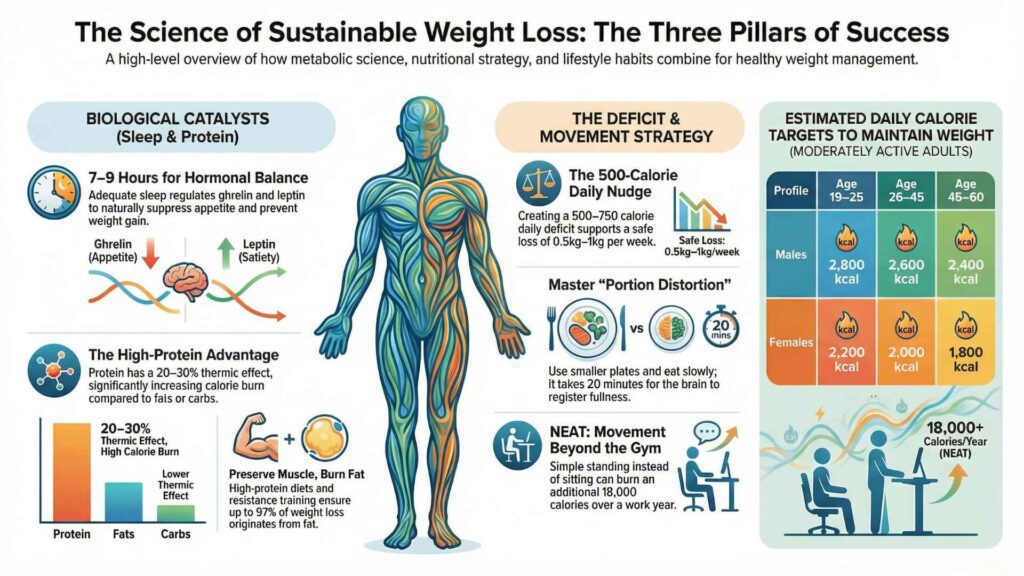
To lose 2 kg monthly, you must create a daily 500-calorie deficit through portion control and increased movement. This sustainable Indian weight loss plan involves swapping refined grains for millets, hitting 10,000 steps (NEAT), and prioritizing 0.8g–1.2g of protein per kg of body weight to achieve consistent fat loss without losing muscle.
The Struggle of Extreme Dieting: Why Fast Results Often Fail?
Table of Contents
- 1 The Struggle of Extreme Dieting: Why Fast Results Often Fail?
- 2 Is Losing 2 Kg a Month Enough? Understanding Healthy Progress
- 3 The “Rice is Bad” Myth and Other Indian Weight Loss Misconceptions
- 4 Practical Swaps for Your Desi Kitchen: From Poha to Protein
- 5 A Simple Daily Routine for Consistent 2 Kg Monthly Loss
- 6 Avoid These 3 Common Mistakes That Stall Your Progress
- 7 Take the First Step Toward a Healthier You: Consult a Diet Dekho Expert
I know it’s hard to find time for yourself when work and family take priority, but the urge to see rapid changes often leads to the trap of crash dieting. When we see advertisements promising a 10 kg loss in a week, our logical brain knows it’s a stretch, yet our tired bodies want to believe it. In reality, extreme restriction triggers a survival response. When you slash your calories too low, your metabolism slows down to conserve energy, making it much harder to lose 2 kg monthly in the long run.
Skipping meals, particularly breakfast, can disrupt your metabolism and often leads to excessive late-night eating. This is why a sustainable Indian weight loss plan is essential for long-term health. Scientific data suggests that losing weight too quickly—more than 1 kg per week—can lead to muscle wasting and the formation of painful gallstones. Your liver begins to secrete extra cholesterol into bile, which can form stones when weight drops too sharply.
In simple terms, rapid weight loss is mostly water and muscle, not the fat we actually want to lose. When you lose muscle, your Resting Metabolic Rate (RMR) drops. Since muscle burns more calories than fat even while you sleep, losing it makes you more prone to future weight gain. A steady approach to lose 2 kg monthly prevents this metabolic damage, keeping you energetic and strong.
The Rising Crisis of Obesity in the Indian Context
We are currently witnessing what health experts call a “silent crisis” in India. National data from the NFHS-5 survey shows that nearly one in four Indians is now struggling with excess weight. This trend makes finding a sustainable Indian weight loss plan more critical than ever. The shift towards processed snacks and a more sedentary lifestyle is a major driver of this trend.
| Population Segment (NFHS-5) | Overweight/Obesity Prevalence (%) | Change from NFHS-4 (%) |
| Adult Women (15–49 years) | 24.0% | +3.4% |
| Adult Men (15–49 years) | 22.9% | +4.0% |
| Children (<5 years) | 3.4% | +1.9% |
| Abdominal Obesity (Women) | 40.0% | N/A (High concern) |
This data highlights the need for a realistic Indian diet for weight loss that fits our cultural habits. Obesity is directly linked to nearly 60% of deaths in India due to diseases like heart disease and diabetes. Aiming to lose 2 kg monthly is a powerful way to reverse these risks without overwhelming your lifestyle.

Is Losing 2 Kg a Month Enough? Understanding Healthy Progress
You might feel that dropping only 2 kg a month is too slow, but let’s look at the math. To lose 1 kg of body fat, you need to burn approximately 7,700 calories more than you consume. To lose 2 kg monthly, your total monthly deficit needs to be 15,400 calories. This is the foundation of a sustainable Indian weight loss plan.
Daily Deficit = 15,400 calories / 30 days ≈ 513 calories per day
A daily deficit of around 500 calories is the “sweet spot” for healthy monthly weight loss goals. It allows you to eat enough food to get your vitamins while still tapping into your fat stores. This pace is what healthcare professionals recommend for effective and sustainable results.
The Clinical Benefits of Moderate Weight Loss
Even a small, consistent reduction in weight has massive benefits for your internal health. For instance, if you manage PCOS, diabetes, or hypertension, choosing to lose 2 kg monthly can significantly improve your condition. Let’s simplify what this means for your medical markers within a sustainable Indian weight loss plan.
| Medical Condition | Weight Loss Goal (%) | Expected Outcome |
| Type 2 Diabetes | 5%–15% | Lower HbA1c and reduced drug dependency |
| PCOS/PCOD | 5%–15% | Improved ovulation and reduced insulin resistance |
| Hypertension (BP) | 5%–15% | Lowered blood pressure and improved heart health |
| NAFLD (Fatty Liver) | 7%–10% | Significant reduction in liver fat |
| Sleep Apnea | 7%–11% | Fewer breathing interruptions during sleep |
Losing weight at this pace ensures that your skin has time to adjust, preventing the “saggy” look. It also keeps your hormones, like cortisol and ghrelin, in balance. High cortisol from extreme dieting can actually block fat loss, particularly around the belly. By following a sustainable Indian weight loss plan, you keep your stress hormones low and your energy levels high.
The “Rice is Bad” Myth and Other Indian Weight Loss Misconceptions
One of the biggest hurdles in a realistic Indian diet for weight loss is the fear of staple foods. You’ve probably heard someone say, “Stop eating rice if you want to lose 2 kg monthly.” But is rice really the villain? In simple terms, no. Weight gain is about excess calories, not a specific grain.
The problem isn’t the rice; it’s the quantity. In many Indian homes, we eat a large mound of rice with a tiny portion of vegetables. To lose 2 kg monthly, we just need to flip that ratio. White rice is stripped of its fiber, but when you pair it with fiber-rich dal and sabzi, the blood sugar spike is softened. This is a core part of any sustainable Indian weight loss plan.
Rice vs. Roti: Which is Better for Your Goals?
| Factor | White Rice | Whole Wheat Roti |
| Calories | ~200 kcal per cup | ~70-80 kcal per medium roti |
| Fiber Content | Low (unless brown/red rice) | Higher (due to bran) |
| Digestion | Fast (may feel hungry sooner) | Slow (keeps you full longer) |
| Best Practice | Pair with 1/2 plate of veggies | Limit to 2 per meal; avoid excess ghee |
What this means for your daily routine is that you don’t have to give up your comfort food. If you prefer rice, try switching to Basmati rice, which has a lower glycemic index, or Red/Brown rice for extra fiber. If you are a roti lover, avoid slathering them in excess ghee at night to ensure you lose 2 kg monthly. A sustainable Indian weight loss plan allows for variety while emphasizing portion control.

Practical Swaps for Your Desi Kitchen: From Poha to Protein
Let’s simplify your kitchen strategy. You don’t need expensive imported foods to lose 2 kg monthly. Our Indian kitchens are already stocked with superfoods like turmeric, ginger, and various lentils. The secret to a realistic Indian diet for weight loss lies in making smarter swaps that increase your protein and fiber while lowering empty calories.
Protein is your best friend when trying to lose 2 kg monthly. It keeps you full for longer and protects your muscles. For vegetarians, this can be a challenge, but incorporating more paneer, sprouts, and dal can make a huge difference. For NRIs and professionals, a sustainable Indian weight loss plan includes “one-pot” healthy meals like dalia or khichdi with extra vegetables.
Consistent Fat Loss Habits: Smart Kitchen Swaps
| Instead of… | Try… | The Benefit |
| Maida/White Bread | Multigrain Roti / Oats | More fiber, slower digestion |
| Fried Samosas | Roasted Makhana / Chana | Lower fat, higher protein |
| Sugary Sodas | Buttermilk (Chhachh) | Probiotics and hydration |
| Potato Stuffing | Paneer / Soya / Dal stuffing | Increased satiety from protein |
| Refined Oil | Cold-pressed Mustard Oil / Ghee | Healthier fats in moderation |
| Fruit Juice | Whole Fruit (Apple/Guava) | Essential fiber and less sugar |
These small changes develop consistent fat loss habits that significantly lower your calorie density. For example, replacing a fried potato snack with a bowl of roasted chana can save you 200 calories while giving you a protein boost. This is how you lose 2 kg monthly without ever feeling like you are on a “diet.”
A Simple Daily Routine for Consistent 2 Kg Monthly Loss
Having a ready-made structure helps you avoid “decision fatigue” that leads to unhealthy snacking. This routine is designed as a sustainable Indian weight loss plan, keeping in mind that most of us are busy in the mornings. To successfully lose 2 kg monthly, the key is consistency in your timings.
The ICMR guidelines suggest that maintaining a regular rhythm for eating and sleeping—the circadian rhythm—helps the body burn fat more efficiently. Let’s look at how you can structure your day from a morning detox drink to a light dinner.
Your Sample Daily Structure for Healthy Monthly Weight Loss Goals
- Early Morning (6:00 AM – 7:00 AM): Start with 1 glass of warm Jeera or Methi water. This helps reduce bloating and sets a positive tone for your sustainable Indian weight loss plan. Pair it with 5 soaked almonds.
- Breakfast (8:30 AM – 9:00 AM): Choose a high-protein option like Vegetable Moong Dal Chilla or 2 boiled egg whites with whole wheat toast.
- Mid-Morning (11:00 AM): One seasonal fruit like a medium apple or guava. This provides fiber for consistent fat loss habits.
- Lunch (1:00 PM – 2:00 PM): Use the 1/2 plate rule for vegetables. Include 1 small bowl of dal, 1 bowl of curd, and 1-2 multigrain rotis.
- Evening Snack (4:30 PM – 5:00 PM): A cup of green tea with a handful of roasted makhana or chana. This is a staple in a realistic Indian diet for weight loss.
- Dinner (7:30 PM – 8:30 PM): Keep it light. A vegetable soup with grilled paneer or a light Moong Dal Khichdi with plenty of veggies.
- Bedtime (10:00 PM): If you feel hungry, a small cup of warm turmeric milk (without sugar) can aid sleep and reduce inflammation.
Following this structure helps you lose 2 kg monthly by ensuring you are never ravenous. When you eat at regular intervals, your blood sugar remains stable, reducing the urge for biscuits or sweets.

Avoid These 3 Common Mistakes That Stall Your Progress
Sometimes, even when we think we are doing everything right, the scale doesn’t move. To successfully lose 2 kg monthly, you must be aware of these hidden progress-killers that can derail your sustainable Indian weight loss plan.
1. The “Healthy” Overeating Trap
Just because a food is “healthy” doesn’t mean it is calorie-free. Many people eat large quantities of nuts, seeds, or brown rice. While nutritious, they are still calorie-dense. Portion control is essential to lose 2 kg monthly. Using smaller plates can help you keep your portions in check naturally as part of a realistic Indian diet for weight loss.
2. Skipping the Most Important Meal
Many believe that by skipping breakfast, they can save calories and lose 2 kg monthly faster. However, this often backfires. Skipping meals can slow your metabolism and increase your hunger hormones, leading you to overeat at dinner. A protein-rich breakfast is a non-negotiable part of a sustainable Indian weight loss plan.
3. Underestimating the Power of Sleep
Sleep is the missing piece of the weight loss puzzle. When you don’t get 7–8 hours of quality sleep, your body produces more cortisol (stress) and ghrelin (hunger). This makes you crave sugary foods the next day. Research shows that people who sleep well lose fat more efficiently as they work to lose 2 kg monthly.
Take the First Step Toward a Healthier You: Consult a Diet Dekho Expert
I know it can feel overwhelming to navigate all this information, especially with a busy schedule. Personalized guidance is valuable. At Diet Dekho, we help you create a sustainable Indian weight loss plan that includes your favorite foods while ensuring you stay on track to lose 2 kg monthly.
Our experts focus on “food balance” rather than sacrifice. We understand the Indian kitchen and the NRI lifestyle, helping you find local solutions that work. Whether it’s managing PCOS or simply finding time to walk, we are here for you to help you meet your healthy monthly weight loss goals.
Conclusion: Your Journey to a Sustainable Future
To lose 2 kg monthly is a goal that respects your body’s natural pace. It isn’t about the latest “superfood”; it’s about the small, consistent choices you make in your kitchen. By embracing whole grains, prioritizing protein, and staying active through NEAT, you are building a sustainable Indian weight loss plan that will serve you for years to come.
Let’s simplify this: weight loss is a marathon, not a sprint. Every glass of water and every extra stair climbed brings you closer to your goal to lose 2 kg monthly. Be patient, stay consistent, and remember that gradual progress is the only progress that lasts.

FAQs for Your Weight Loss Journey
Is it possible to lose 2 kg monthly without exercise?
Yes, weight loss is primarily driven by your diet. While exercise is great for heart health, you can lose 2 kg monthly by focusing on a caloric deficit and increasing your daily steps (NEAT) within your sustainable Indian weight loss plan.
Can I eat white rice and still lose 2 kg monthly?
Yes, rice is not the enemy. You can include it in your realistic Indian diet for weight loss by controlling the portion size and pairing it with plenty of protein and fiber-rich vegetables to prevent blood sugar spikes.
Why is losing 2 kg a month better than losing 5 kg?
Losing weight slowly (0.5 kg per week) ensures that the loss comes from fat rather than muscle or water. This approach, central to a sustainable Indian weight loss plan, helps your metabolism stay strong and reduces the risk of weight regain later.
What is the best time to drink detox water?
Early morning on an empty stomach is generally the best time for drinks like Jeera or Methi water to kickstart your digestion. While they don’t “melt fat,” they are a great anchor for consistent fat loss habits.
Disclaimer:
This blog post was written to help you make healthier food choices altogether. So, be aware and take care. The important thing to consider is your health before starting a restrictive diet. Always seek advice from a doctor or dietitian before starting if you have any concerns.

Dr. Ritika is a nutrition and lifestyle expert with 2+ years of experience, helping clients manage weight and health through practical, personalized diet plans.