
Consider the experience of Anita, a 42-year-old marketing professional who has always taken pride in her health. For nearly two decades, her weight remained stable, but as she crossed the threshold of her forties, she noticed a frustrating shift. Despite maintaining her usual evening walks and salad-heavy lunch routine, her waistline began to expand. Her favorite jeans felt tight, and she felt a persistent puffiness that wouldn’t go away. Anita’s story is not unique; it is the shared reality of millions of women who struggle with how to lose belly fat for women as their bodies navigate the complex transitions of life.
Understanding the Two Faces of Abdominal Adiposity
Table of Contents
- 1 Understanding the Two Faces of Abdominal Adiposity
- 2 The Hormonal Drivers of Stubborn Belly Fat
- 3 Nutrition as a Metabolic Tool for Fat Loss
- 4 The Best Exercises for Belly Fat Loss
- 5 Navigating Belly Fat After 40 and Menopause
- 6 Post-Pregnancy Belly Fat Loss: A Gentle Approach
- 7 The Science of a Morning Routine for a Flat Tummy
- 8 Lifestyle Secrets: Sleep, Stress, and Hidden Sugars
- 9 Professional Guidance and Personalization
- 10 Summary of Actionable Strategies
- 11 Frequently Asked Questions
- 12 Conclusion
To address the challenge of reducing a woman’s midsection, one must first recognize that all fat is not created equal. The female body stores fat in two primary ways within the abdominal region. Subcutaneous fat is the layer located directly beneath the skin—the “pinchable” tissue that many women identify as a “muffin top”. While this fat can be aesthetically frustrating, it is relatively stable.
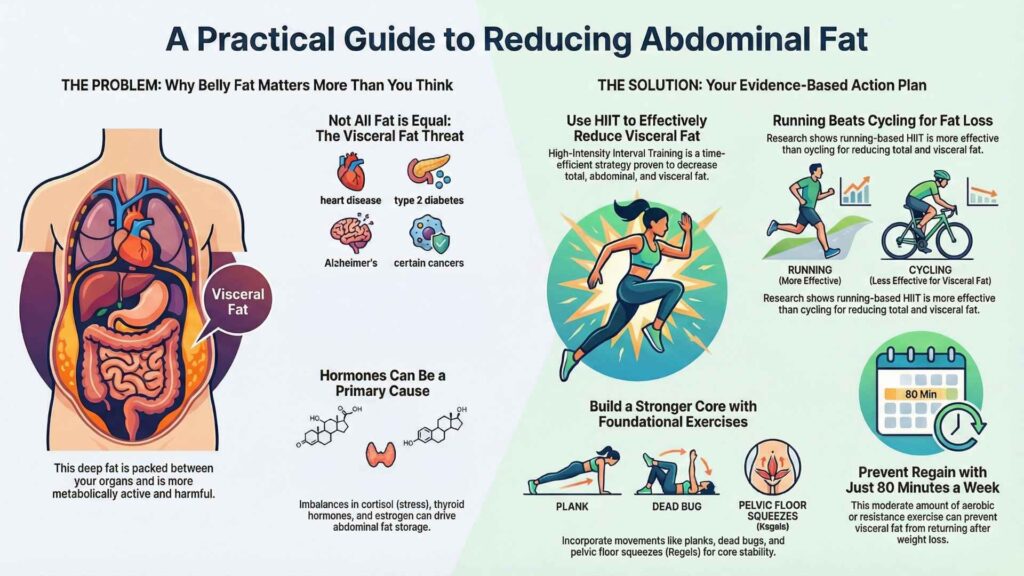
The more significant concern is visceral fat. This deep abdominal fat accumulates around vital organs like the liver, stomach, and intestines. Visceral fat is not just a storage site for energy; it functions as an active endocrine organ. It secretes pro-inflammatory chemicals known as adipokines that interfere with insulin sensitivity and systemic health. For most women, visceral fat accounts for 5% to 8% of total body weight before menopause, but this can climb to 15% to 20% in the postmenopausal years.
The Health Risks of Internal Fat Accumulation
Carrying excess visceral fat is more than a cosmetic hurdle. Clinical research consistently links high levels of deep abdominal fat to severe health complications. Unlike the fat on the hips or thighs, visceral fat is highly metabolically active and sensitive to lipolysis, which releases free fatty acids directly into the liver. This process contributes to a higher risk of heart disease, Type 2 diabetes, and certain cancers.
| Health Concern | Risk Increase from High Visceral Fat | Mechanism |
| Type 2 Diabetes | Significant | Increased insulin resistance |
| Heart Disease | 44% Higher | Elevated lipid levels and blood pressure |
| Cancer | Increased Risk | Chronic inflammation and hormone disruption |
| High Blood Pressure | 30% Higher | Fat pressing on kidneys and arterial inflammation |
A waist measurement exceeding 35 inches (89 cm) for women generally signals an unhealthy amount of belly fat and a heightened risk for these conditions. For Asian women, the threshold for concern is even lower, often starting at 31 inches. Understanding these numbers is the first step in moving from frustration to targeted action.
The Hormonal Drivers of Stubborn Belly Fat
For women, the distribution of fat is rarely a simple matter of calories. It is governed by a delicate hormonal symphony. When these hormones fall out of balance, the body receives a clear signal to store fat in the abdominal cavity rather than the periphery.
The Estrogen Factor and Fat Redistribution
Estrogen is the primary architect of the female figure. In the reproductive years, high estrogen levels promote fat storage in the hips and thighs—a “pear” shape that supports the energy demands of potential pregnancy. However, as estrogen levels drop during perimenopause and menopause, this protective mechanism vanishes. The body undergoes a predictable shift from a pear shape to an “apple” shape as fat storage migrates to the belly. This shift happens even if the woman’s total weight on the scale does not change.
Cortisol and the Stress Connection
Cortisol is the body’s primary stress hormone. When women experience chronic stress—whether from work, family, or lack of sleep—cortisol levels remain perpetually high. Abdominal fat cells possess four times more cortisol receptors than fat cells in other parts of the body. This means that when cortisol spikes, it essentially “unlocks” these cells to store more fat. High cortisol is also associated with lower growth hormone levels, a combination that predisposes girls and women to visceral adiposity and insulin resistance.
Insulin Resistance: The Storage Lock
Insulin is responsible for managing blood sugar levels. When a woman consumes excessive refined carbohydrates and sugars, the body must produce more insulin to process the glucose. Over time, cells can become less responsive to insulin, leading to insulin resistance. This condition is a major driver of hormonal belly fat, as elevated insulin levels act as a storage signal for the midsection. Menopause often exacerbates this issue, making it harder for women to use glucose effectively even if they carry a healthy weight.
Nutrition as a Metabolic Tool for Fat Loss
To achieve visceral fat reduction, a woman’s diet must focus on stabilizing blood sugar and reducing inflammation. It is not enough to eat less; one must eat strategically to work with the body’s changing physiology.
The Role of High Protein Intake
Protein is the most vital macronutrient for women looking to burn abdominal fat. As women age, they naturally lose muscle mass, which slows the metabolism. Consuming a high protein diet for fat loss helps preserve lean muscle, increases satiety, and boosts the metabolic rate through the thermic effect of food.
Clinical guidelines suggest women aim for 1.2 to 1.6 grams of protein per kilogram of body weight daily. This is roughly 25 to 30 grams of protein per meal.
| High-Protein Food | Protein Content (approx.) | Additional Benefits |
| Chicken Breast (86g) | 26.7g | Rich in B vitamins and zinc |
| Salmon Fillet (124g) | 30.5g | High in Omega-3 fatty acids |
| Greek Yogurt (7oz) | 19.9g | Probiotics for gut health |
| Lentils (100g cooked) | 9.02g | High in soluble fiber |
| Eggs (1 large) | 6.3g | Highly bioavailable nutrients |
Fiber and Gut Health
Fiber stays in the stomach longer than other nutrients, which helps you feel full. Soluble fiber, found in oats, beans, and berries, is particularly effective at reducing the accumulation of visceral fat. A diet high in fiber helps manage insulin levels and supports a healthy gut microbiome. Incorporating probiotics—like those found in kefir or sauerkraut—has been shown to reduce visceral fat by 35% in just 90 days for participants with a higher weight.

The Best Exercises for Belly Fat Loss
Many women waste time on endless sit-ups, hoping to target their stomach. Here’s the thing: you cannot “spot reduce” fat. To lose the belly, you must lower your overall body fat percentage through a combination of strength and metabolic conditioning.
Resistance Training: The Non-Negotiable Foundation
Lifting weights or using resistance bands is the most effective way for women to counteract the muscle loss that comes with age. Building muscle mass increases your resting metabolism, meaning you burn more calories even while you sleep. Experts recommend 2 to 3 full-body strength sessions per week.
HIIT for Belly Fat: Efficiency and Afterburn
High-Intensity Interval Training (HIIT) involves short bursts of intense activity followed by brief recovery periods. HIIT can burn up to 30% more calories than traditional cardio and is specifically powerful for targeting visceral fat. Clinical research has shown that high-intensity interval training (HIIT) and aerobic exercise both significantly reduced visceral fat in younger adults with a higher body weight or obesity. However, excessive HIIT can spike cortisol. The key for women is to use HIIT strategically—perhaps 1 to 2 sessions per week—while prioritizing strength training as the base.
The Importance of Consistent Movement
While high-intensity workouts are great, simple movement is equally powerful. Walking briskly for 30 to 60 minutes a day boosts the metabolism and lowers total body fat. Using the stairs instead of the elevator or standing while working can significantly increase your daily calorie burn.
When women reach their forties, the rules of weight loss change. The belly fat after 40 is often driven by the “inflammatory shift” in fat cells. These cells become larger and more resistant to standard dieting.
Addressing the Sarcopenia Trap
Sarcopenia is the gradual loss of muscle mass that accelerates after age 50. Less muscle means a slower metabolism. To fight this, women must combine heavy resistance training with adequate protein intake. This dual approach is the most effective non-pharmacological treatment for maintaining health in aging women.
Managing Menopausal Symptoms
Hot flashes, night sweats, and poor sleep can make it incredibly hard to stay active. In some cases, Menopausal Hormone Therapy (MHT) may help redistribute fat from the midsection back to the hips. While MHT is not a weight loss drug, it can make it easier to maintain the lifestyle habits needed for fat loss.

Post-Pregnancy Belly Fat Loss: A Gentle Approach
After childbirth, the body needs time to recover. New mothers are often eager to return to their pre-pregnancy shape, but rushing the process can hinder healing.
The Recovery Timeline
Most healthcare providers suggest waiting until the 6-week checkup before starting a weight loss journey. If you are breastfeeding, you need an additional 300 to 500 calories per day to maintain your milk supply. Rapid weight loss while nursing can reduce milk production and energy levels.
Safe Core Rehabilitation
Traditional crunches can be harmful if a woman has diastasis recti (abdominal separation). Instead, focus on gentle core-strengthening exercises:
- Pelvic Tilts: These strengthen the deep abdominal muscles without strain.
- Kegels: Essential for toning the pelvic floor muscles.
- Happy Baby Pose: A yoga stretch that helps relax pelvic muscles that may have tightened during birth.
Aim for a slow and steady loss of about 1.5 pounds per week. This pace is sustainable and ensures you are losing fat rather than muscle or fluid.
The Science of a Morning Routine for a Flat Tummy
Your habits in the first hour after waking can set your metabolic thermostat for the day. A morning routine for flat tummy results isn’t about magic; it’s about hydration and hormonal priming.
Hydration and Metabolic Activation
Drinking one or two glasses of plain water immediately upon waking rehydrates the body after an overnight fast. Water has no calories but can curb your appetite and boost your metabolism. Try swapping your morning coffee for green tea. Green tea contains catechins like EGCG that boost fat oxidation and target visceral fat.
Sunshine and Circadian Rhythms
Getting sunlight in the morning helps regulate your body’s internal clock. Research shows that women who soak up early rays tend to have a lower BMI than those who get sunlight later in the day. This simple act can also improve sleep quality, which is vital for keeping cortisol in check.

Lifestyle Secrets: Sleep, Stress, and Hidden Sugars
Beyond food and exercise, your environment and lifestyle choices play a massive role in how to lose stomach fat female patterns have established.
The Sleep-Hunger Axis
Poor sleep is a direct contributor to weight gain. When you don’t sleep enough, your body produces more ghrelin (the hunger hormone) and less leptin (the hormone that tells you you’re full). Studies show that getting less than five hours of sleep significantly increases the risk of gaining 30 pounds or more over time. Aim for 7 to 9 hours of quality rest every night.
Eliminating Liquid Calories
One of the fastest ways to reduce belly fat is to cut out sugary drinks—including fruit juices. Juicing removes the fiber from fruit, leaving only pure sugar that spikes insulin. Replacing these with water or unsweetened tea can dramatically reduce your sugar intake and help “shrink” visceral fat cells.
Professional Guidance and Personalization
At Diet Dekho, we understand that no two women are the same. A plan that works for a 20-year-old athlete won’t work for a 55-year-old woman managing thyroid issues or menopause. We specialize in healthy weight loss tips that fit into your actual life.
Our programs boast a 98% success rate because they are built on balanced nutrition and expert guidance. Whether you’re dealing with PCOS, thyroid imbalances, or post-pregnancy changes, our dietitians craft plans that are easy to follow and deliver real results. You don’t have to starve yourself to lose weight. In fact, most of our clients are surprised by how much they can eat when they choose the right nutrients.
To begin your transformation, it’s essential to understand where you are starting. We recommend beginning with a Free Health Assessment and Personalized Consultation to identify your specific metabolic needs. Our approach is particularly beneficial for individuals with a higher weight or those looking to improve their metabolic health without extreme restrictions.
Summary of Actionable Strategies
| Strategy Category | Action Step | Clinical Rationale |
| Nutrition | 30g protein at breakfast | Increases satiety and thermogenesis |
| Exercise | 3 days of lifting weights | Reverses muscle loss and boosts metabolism |
| Habits | Stop eating after 7 PM | Improves insulin sensitivity and sleep quality |
| Hydration | Water before meals | Reduces calorie intake and spikes metabolism |
| Recovery | 7+ hours of sleep | Balances ghrelin and leptin levels |

Frequently Asked Questions
What are the best exercises for belly fat if I am a beginner?
For beginners, the best exercises for belly fat include brisk walking, bodyweight squats, and planks. Walking for 30 minutes a day is an excellent entry point into aerobic fitness. As you get stronger, adding light weights for resistance training will help build the muscle needed to burn fat more efficiently.
How can I get a flat stomach diet for women started today?
The most effective flat stomach diet for women starts with eliminating added sugars and refined carbohydrates. Focus on “front-loading” your meals with fiber-rich vegetables and lean proteins. This keeps you full and prevents the insulin spikes that lead to fat storage in the abdomen.
Is it possible to lose stubborn belly fat causes by hormones?
Yes, but it requires a different approach than standard dieting. You must address the stubborn belly fat causes like high cortisol and insulin resistance. This means prioritizing stress management, getting enough sleep, and avoiding extreme “crash” diets that can further disrupt your hormones.
Does HIIT for belly fat work for women over 40?
HIIT for belly fat can be very effective for women over 40, but it should be used carefully. Since older women are more sensitive to cortisol, doing too much HIIT can actually lead to fat retention. Aim for one or two short HIIT sessions a week, paired with plenty of strength training and walking.
How long does post-pregnancy belly fat loss typically take?
Post-pregnancy belly fat loss usually takes six to nine months. It is important to be realistic; your body has gone through major changes, and your belly may be softer or your hips wider than before. Focus on consistency rather than speed to ensure you lose fat while keeping your energy up for your new baby.
Conclusion
Losing belly fat is a journey of reclaiming your health, energy, and confidence. It’s not just about the number on the scale; it’s about reducing the visceral fat that threatens your long-term vitality. By understanding your hormones, prioritizing protein and strength, and managing your lifestyle, you can achieve a flatter, healthier midsection.
Ready to stop guessing and start seeing results? Let our experts at Diet Dekho build a roadmap specifically for your body and goals. Start your journey today with a professional assessment.
BOOK YOUR APPOINTMENT

Abhinav is the Founder of Diet Dekho, helping people manage weight and lifestyle health through simple, practical nutrition and personalized diet plans.